Not every work by the great composers finds a spot in the repertoire.
There are many reasons why. Some are just uninteresting. Some are written for instrument combinations that never came into vogue. Some are early student attempts that are overshadowed by later, greater achievements. There are as many stories as there are neglected works.
Today, we’re taking a look at five examples of the least-heard works of the great composers – and trying to figure out why they never achieved the fame their origins might lead you to expect.
Bach: O Mensch, bewein dein Sünde groß, BWV 622 (ca. 1712)
The title of this organ prelude is “O Mensch, bewein dein Sünde groß” (“O man, bewail thy sin so great”).
The title comes from a sixteenth-century Lutheran chorale that Bach employs as his source material.
As is the case with many of Bach’s works, we don’t know exactly when this prelude was written. The only information we have is that it was written between 1708 and 1717, a period when Bach was working as an organist at the Weimar ducal court.
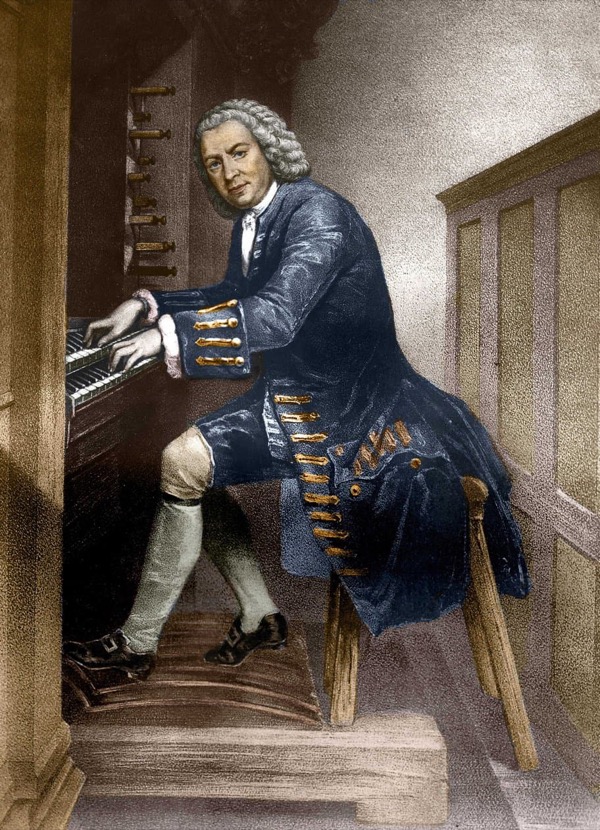
Johann Sebastian Bach playing the organ (c. 1881)
Many modern listeners haven’t delved into Bach’s works for solo organ.
This music was originally written for sacred purposes, and for an instrument that doesn’t exist in every modern concert hall – making it a tough sell for general secular audiences.
Mozart: Maurerische Trauermusik, K. 477 (1785)
“Maurerische Trauermusik” translates into “Masonic Funeral Music.”
Back in Mozart‘s day, the Freemasons held a great deal of cultural clout. In 1784, a few years after Mozart moved to Vienna, he was admitted to a Viennese lodge. The following year, he was promoted to “Master Mason.”
This particular organisation was incredibly popular with the Viennese aristocracy, and being a part of it allowed Mozart valuable opportunities to hobnob with potential patrons.
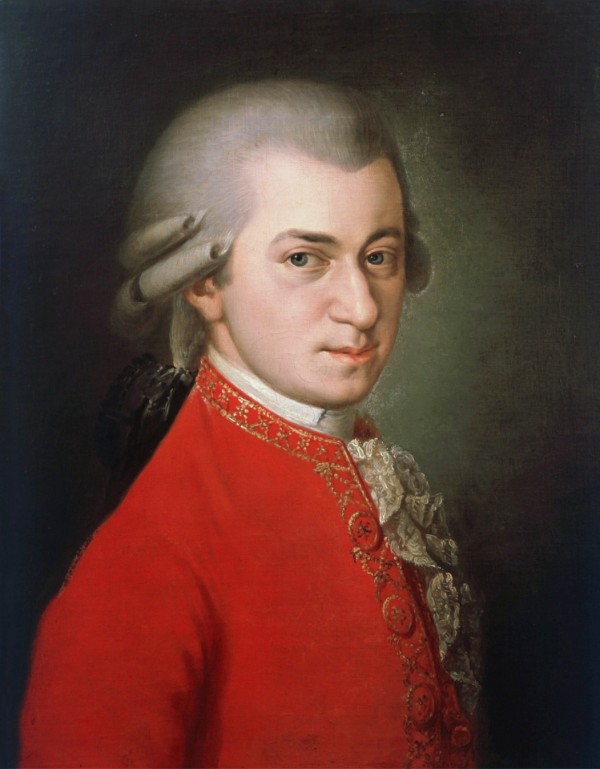
Barbara Krafft: W. A. Mozart, 1819 (Gesellschaft der Musikfreunde)
In 1785, Mozart wrote this piece for a Freemason funeral service.
However, fewer and fewer powerful people are Freemasons nowadays, meaning the general public has a limited appetite for music inspired by Freemasonry or used in its rituals.
This piece is still worth listening to, though. This is touching funeral music, and its C-minor drama verges on operatic.
Beethoven: 25 Scottish Songs, Op. 108 (1815-1818)
When you hear the phrase “Scottish folk songs”, you probably don’t think of Ludwig van Beethoven.
However, Beethoven ended up writing more folk song arrangements than any other kind of music (by the time he died, he’d composed 179!).
Why? In the late 1700s and early 1800s, at the dawn of the Romantic Era, there was a push to gather, transcribe, and rearrange folk songs.
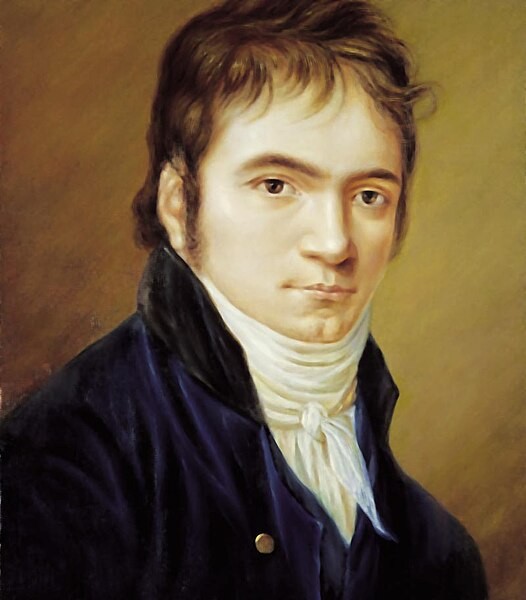
Christian Horneman: Ludwig van Beethoven, 1803 (Beethovenhaus Bonn)
A civil servant from Edinburgh named George Thomson began collecting folk songs in the 1790s, contacting the best composers and commissioning arrangements from them.
The twenty-five Scottish songs that make up the Op. 108 are written for piano, violin, cello, and voices. It’s surprising to hear Beethoven’s settings of English texts.
Unfortunately, Thomson felt the arrangements were too difficult. As you can imagine, that didn’t go down well with Beethoven, who had a very prickly response to the complaint:
“I am not accustomed to retouching my compositions; I have never done so, certain of the truth that any partial change alters the character of the composition. I am sorry that you are the loser, but you cannot blame me, since it was up to you to make me better acquainted with the taste of your country and the little facility of your performers.”
Despite their attractiveness, and Beethoven’s conviction of their worth, these works are rarely performed today – possibly because assembling a pianist, violinist, cellist, and singers for a little-known musical curiosity is a tough ask.
Chopin: Prelude in C-sharp minor, Op. 45 (1841)
Chopin wrote many preludes that became part of the standard repertoire, but this one has remained relatively obscure.
It was written in the summer of 1841, when Chopin was staying at the home of his lover, the writer Aurore Dupin (better known by her pseudonym George Sand).
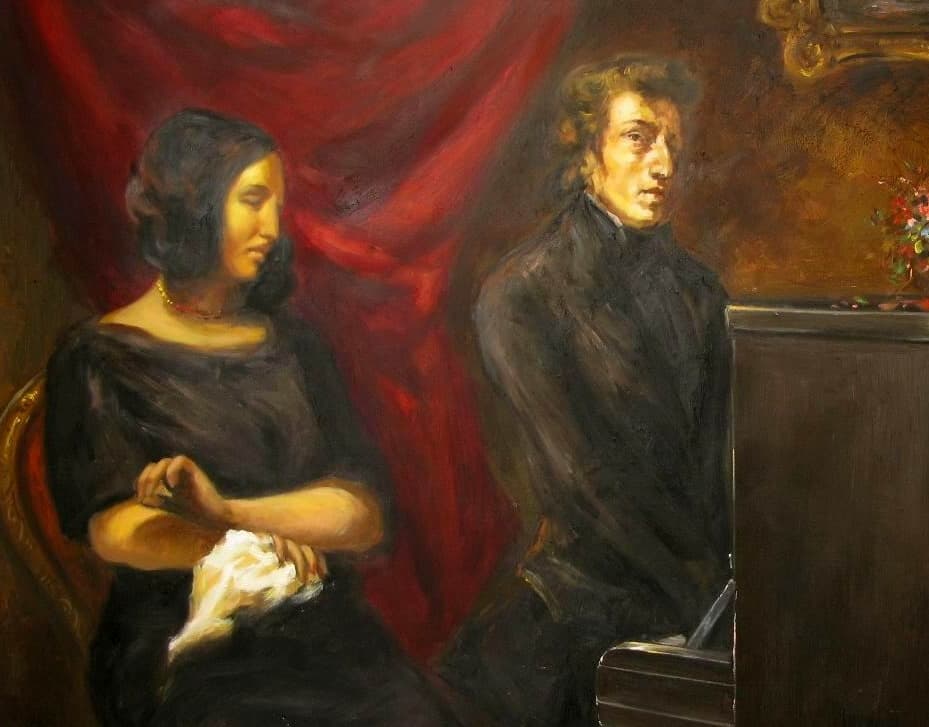
Portrait of Frédéric Chopin and George Sand by Eugène Delacroix
Although this prelude isn’t heard very often today, Chopin was pleased with it. When he was preparing it for publication, he wrote a note to the copier, commenting, “well-modulated!”
Chopin was famous for his transporting piano improvisations. In this gorgeously meandering work, we get a sense of what they might have sounded like.
The ever-shifting harmonies are especially atmospheric, evoking the effortless modulation of later French composers such as Debussy and Ravel.
One reason this work may never have taken off is its lack of a hummable melody; all of the drama happens in harmonies. This is a piece that rewards close listening rather than casual encounters.
Brahms: Variations on an original theme in D, Op. 21 No. 1 (1857)
The 1850s were a whirlwind for Johannes Brahms. In the fall of 1853, when he was just twenty years old, he met and befriended both Robert Schumann and his wife Clara.
Almost immediately, Robert published an article declaring Brahms the saviour of German music and a successor to Beethoven. While flattering, the prophecy weighed on Brahms for the rest of his life.
Tragically, Robert’s mental health, never good, began deteriorating rapidly at the end of 1853 and into early 1854.
After attempting to kill himself by jumping into the Rhine River in February, Robert was sent to a mental hospital.
From that time forward, Brahms would see him rarely. Clara didn’t see him at all until shortly before his death, which happened in the mental hospital in the summer of 1856.
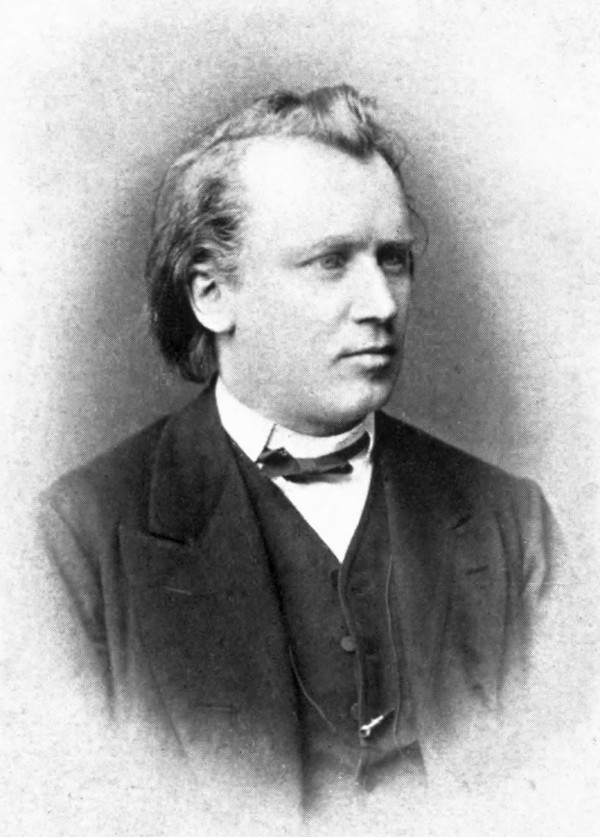
Johannes Brahms, c. 1872
To comfort a distraught and pregnant Clara, Brahms often played piano for her and looked after the Schumann children. (He also fell in love with her – but that’s a story for another day!)
In the meantime, one of the ways Brahms tried to fulfill Robert’s prophecy was by writing sets of themes and variations, a genre that Beethoven was especially famous for.
These variations are not some dry technical exercise (although they are masterfully written). They’re deeply heartfelt, and a pure love letter to the art that he and the Schumanns shared – as well as a signal that, given time and practice, he would be capable of wearing Beethoven’s crown.
It’s unclear why they aren’t brought out more frequently today. Over the years, Brahms’s later solo piano works have had a greater impact – and themes and variations generally don’t have the prestige they once did.
Conclusion
The works on this list have one thing in common: they deserve more attention than they get.
Whether it’s the sacred origins of Bach’s organ music, the faded cultural power of Freemasonry, or the simple bad luck of an unfashionable genre, the reasons for obscurity are rarely about quality.
If you enjoyed this list, you might also enjoy our series Minors of the Majors, where we explore more rare and neglected works by the composers you love.
Here’s one about Schubert‘s Mass No. 1, written for a soprano he had a crush on: https://interlude.hk/minors-majors-franz-peter-schubert-mass-1-f-major-d-105/
For more of the best in classical music, sign up for our E-Newsletter