Marguerite Long (1874–1966) was a trailblazing French pianist, pedagogue, and champion of French music, often hailed as the “grande dame” of the French piano tradition. Her life spanned pivotal moments in 20th-century music, from intimate collaborations with composers like Debussy, Ravel, and Fauré, to founding one of the world’s most prestigious competitions.
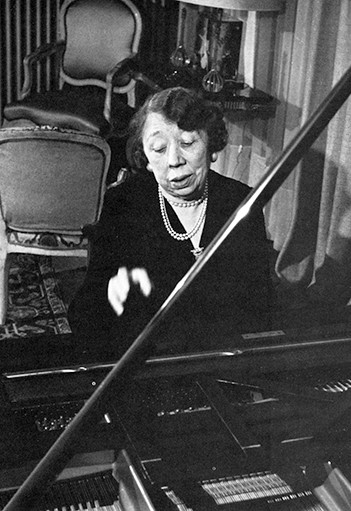
Marguerite Long
In 1919, already a legend for her crystalline renditions of Debussy and Ravel, Long published Le Piano, a slender volume that would ignite a quiet revolution in French pianism. “The hand must be light,” she wrote, “as if it were not touching the keys at all, but caressing the air above them.”
To celebrate her birthday on 13 November 1874, let’s explore how her piano method, influencing generations, countered the Germanic thunder of Lisztian showmanship with quintessentially French finesse.
Marguerite Long plays Chopin: Fantasie Impromptu, Op. 66
Silver Thread vs. Volcanic Thunder
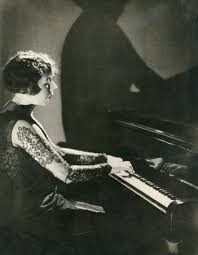
Marguerite Long
Marguerite Long’s playing was described by critics as “a silver thread spun in sunlight,” her touch so even that individual notes seemed to dissolve into a single, luminous phrase. Yet across town, in the grand halls of the Conservatoire, Alfred Cortot thundered through Liszt with his wrists held high and a tone best described as volcanic.
Two pianists, two philosophies, one instrument. The battle for the soul of French piano had begun. The divide was not merely stylistic; it was cultural. The 19th century belonged to the Germanic tradition, marked by Beethoven’s hammer blows, Liszt’s demonic virtuosity, and Wagner’s orchestral thunder.
Humiliated in the Franco-Prussian War of 1870, the country sought a musical identity that was lighter, more refined, more French. And Marguerite Long became the standard-bearer of this new aesthetic.
Marguerite Long plays Milhaud: Piano Concerto No. 1
Poetry at the Piano
Le Piano was not a dry treatise but a poetic manifesto. Long’s exercises read like surrealist prose. One task asked students to imagine each key as a “bewitched princess” who must be awakened by the gentlest possible touch.
Another required practicing finger substitution while reciting Baudelaire “to make the hand dream.” She forbade heavy arm weight, insisting that tone must come from the fingers alone, “like water dripping from a fountain.”
Her students, among them Samson François and Jacques Février, learned to play with wrists low, elbows relaxed, and forearms parallel to the floor, creating a sound that was transparent yet resonant, like champagne bubbles rising in a flute.
Marguerite Long plays Debussy: Arabesque No. 1 & 2
Rival Courts on the Rue de Rome
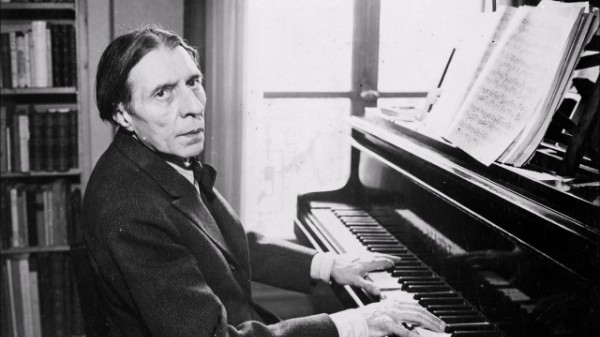
Alfred Cortot
The rivalry between Long and Cortot was personal as well as philosophical. They had once been colleagues at the Conservatoire, but by the 1920s, their studios were rival courts. Long’s attracted the élite, aristocrats, poets, and composers like Poulenc, who called her “the priestess of French music.”
Cortot’s drew the ambitious virtuosos, including Vlado Perlemuter and Clara Haskil, who later defected to Long’s camp. The two rarely spoke ill of each other in public, but the subtext was clear. When Long premiered Ravel’s Le Tombeau de Couperin in 1919, Cortot was conspicuously absent.
When Cortot recorded the work in 1931, Long dismissed it as “too heavy, like a German waltz.” Long saw herself as the guardian of a specifically French tradition, one that prized clarity, wit, and restraint over excess.
Marguerite Long plays Fauré: Nocturne No. 6 in D-flat Major
Two Legacies
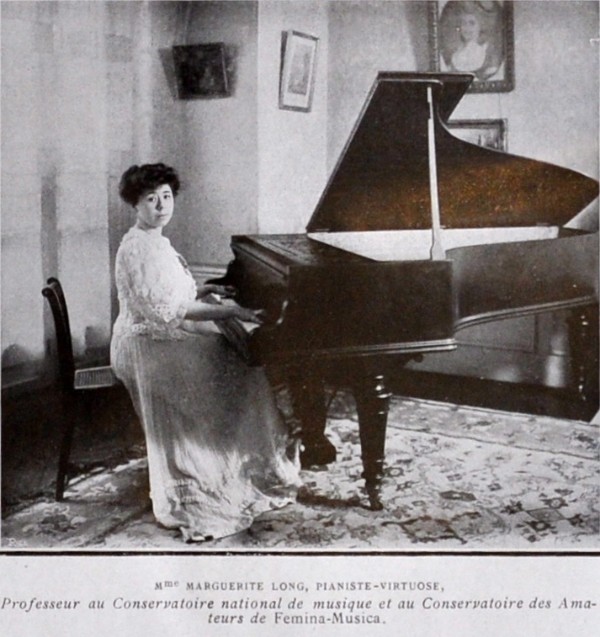
Marguerite Long
She championed living composers, premiering works by Milhaud, Honegger, and Poulenc, while Cortot focused on the Romantic canon. Long’s influence spread beyond Paris. In 1932, she toured the United States, astonishing American critics with her “weightless” Beethoven. The New York Times wrote, “Mme. Long plays as if the piano were made of glass and she was afraid to break it.”
Her students won prizes at the Long-Thibaud Competition, while Cortot’s students dominated the Chopin Competition in Warsaw. The philosophical divide persists with modern pianists choosing sides. Yuja Wang’s fleet-fingered Ravel owes a debt to Long, whereas Lang Lang’s thunderous Liszt echoes Cortot.
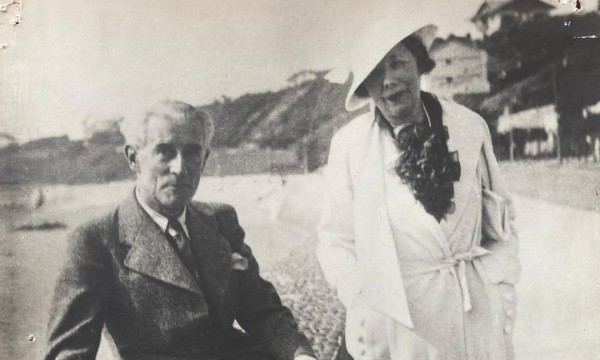
Marguerite Long with Maurice Ravel
Long’s La Petite Méthode de Piano, written when she was 89, remains in print, its exercises as whimsical as ever. Cortot’s editions of Chopin, annotated with fingerings and dynamic markings, are standard in conservatories worldwide. Yet, Long’s legacy is probably more subtle, as she taught pianists to listen to the silence between notes. As her student Radu Lupu recalled, “She didn’t teach technique. She taught poetry.”
For more of the best in classical music, sign up for our E-Newsletter