“Beauty can only be found at the edge of catastrophe,” declared conductor Nikolaus Harnoncourt. It’s a provocative statement, suggesting that beauty is not necessarily serene, perfect or comfortably achieved, but rather something that emerges from uncertainty, risk and vulnerability.
The quotation serves as the title and starting point for Beauty at the Edge of Catastrophe, a book by the cellist, performance coach and mindfulness teacher Ruth Phillips, which explores the complex relationship between music-making and our inner lives.
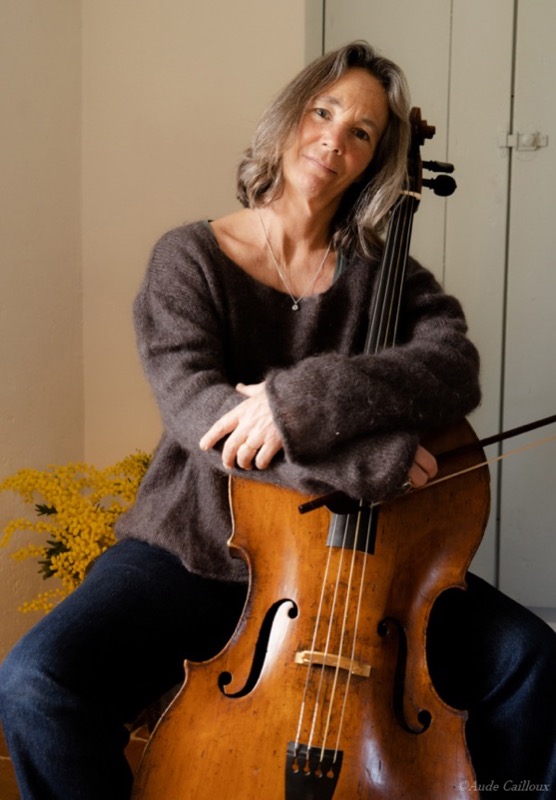
Ruth Phillips
For musicians, “catastrophe” need not be a great external calamity. It can be the moment when the mind goes blank during a performance, when an unexpected mistake unsettles our confidence, when injury interrupts our musical lives, or when the relentless pursuit of perfection begins to undermine the very pleasure that drew us to music in the first place.
There is a curious paradox at the heart of musical performance. We may spend months, even years, preparing a work, attending to every detail of phrasing, articulation, dynamics and expression, yet when we finally perform it, all that careful preparation must somehow be released. We cannot control everything that happens in performance, nor should we wish to. Music is a living art, unfolding in real time, and part of its fascination lies in its unpredictability.
Yet musicians are trained to control. We learn to discipline our bodies, regulate our movements, manage our breathing and refine our technique. We are encouraged to notice mistakes, identify weaknesses and correct them. These are necessary aspects of becoming a musician, but they can also foster an unforgiving inner critic, one that follows us into the practice room and onto the concert platform.
Ruth Phillips describes this experience with disarming candour. Preparing to perform Bach, she finds herself overwhelmed by a barrage of negative thoughts, physical discomfort, and increasingly desperate attempts to control her anxiety. The music she loves has become almost obscured by the fear of performing it.
Beauty at the Edge of Catastrophe, Cultivating Mindful Presence in Musical performance
It’s an experience many musicians will recognise, regardless of their level of accomplishment. Indeed, one of the more pernicious myths surrounding performance anxiety is that it affects only the inexperienced or inadequately prepared. In reality, it can trouble even the most accomplished performers.
What particularly interests me about Phillips’ approach is that she does not advocate eliminating fear altogether. Rather, she suggests that we can learn to change our relationship with it. Anxiety need not be regarded as an enemy to be defeated or as evidence of inadequacy; it is part of being human and perhaps part of caring deeply about what we do.
I used to tell my piano students that feeling nervous before a performance was a sign that they cared about the music and wanted to communicate it well. The important thing was not to allow those nerves to overwhelm their enjoyment of playing.
This brings us to another paradox: the pursuit of perfection can become the enemy of musical expression.
Of course, there is nothing wrong with striving for excellence. Serious music-making demands discipline, patience, commitment and attention to detail. But perfectionism is different. It suggests that anything less than flawless execution is a failure, and that our worth as musicians depends on achieving an impossible ideal. Such thinking leaves little room for spontaneity, experimentation or the unexpected discoveries that make music-making so rewarding.
There is also the question of identity. For those who have devoted a significant part of their lives to music, playing an instrument is rarely merely an activity. It becomes part of who we are. When playing is interrupted by injury, illness or other circumstances, the consequences can extend far beyond the immediate loss of musical activity.
Phillips’ insistence that musicians are human beings first seems particularly important in a culture that often measures artistic worth by achievement, recognition and professional success. Music-making should surely be about more than proving ourselves. It is about curiosity, connection, pleasure and the desire to share something meaningful with others. These things matter whether we are professional performers, committed amateurs, teachers or simply people who love to make music.
Phillips suggests that musicians already possess many of the qualities associated with mindfulness: practising requires sustained attention, bodily awareness, careful listening, and the ability to inhabit the present moment. Perhaps the challenge is not to acquire an entirely new set of skills, but to approach the familiar ones with greater kindness and openness. I am particularly drawn to the idea that musical freedom comes not from eliminating uncertainty but from learning to live with it.
There are moments in performance when everything seems to fall into place: when the music flows, when we cease to be preoccupied with ourselves, and when the distinction between technical execution and expressive intention dissolves. Such moments cannot be summoned at will. They are gifts, made possible by preparation but not guaranteed by it.
Perhaps this is what Harnoncourt was getting at. Beauty does not necessarily reside in the perfectly polished performance, but rather somewhere closer to the precarious boundary between control and surrender.
Based on her own experiences, Ruth Phillips shows how her discovery of mindfulness equipped her with an approach to practice and performance that restored her physical, mental and emotional well-being, and enabled her to delight in performing for the first time. A practical handbook for musicians, Beauty at the Edge of Catastrophe outlines the basics of mindfulness from a musician’s perspective, bringing theory to life with anecdotes from Phillips’ experience as a musician and performance coach, interwoven with over thirty embodied practices.
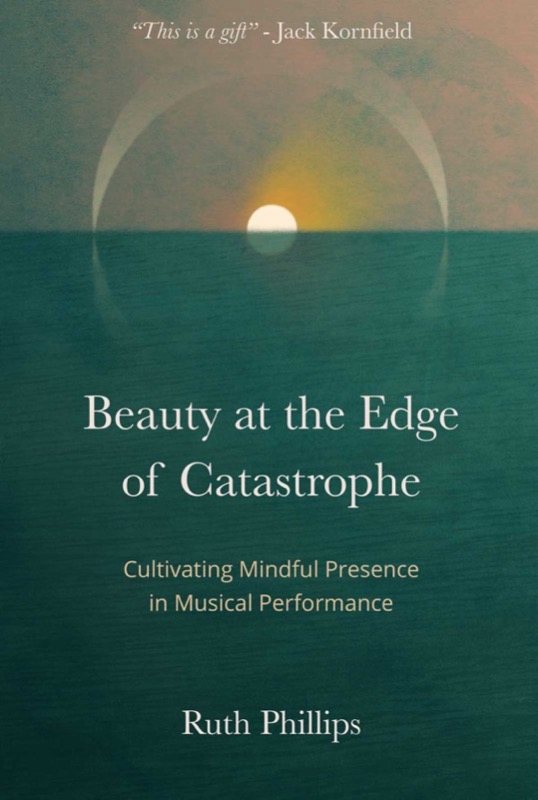
Beauty at the Edge of Catastrophe by Ruth Phillips
Beauty at the Edge of Catastrophe by Ruth Phillips is published by Red Ochre Press and is available in paperback and eBook editions.
For more of the best in classical music, sign up for our E-Newsletter