The Paris Conservatoire was founded in 1795 after the French Revolution. Since then, many of classical music’s greatest figures have passed through its doors.
Initially, women weren’t allowed to benefit from the Conservatoire’s rigorous education. In fact, women weren’t admitted outside vocal classes until 1849, when French violin prodigy Camilla Urso broke that glass ceiling at the age of nine.
Urso proved to the institution that women could be extraordinary students, and hundreds of women followed in her footsteps.
Today we’re looking at five largely forgotten women composers who studied at the Paris Conservatoire.
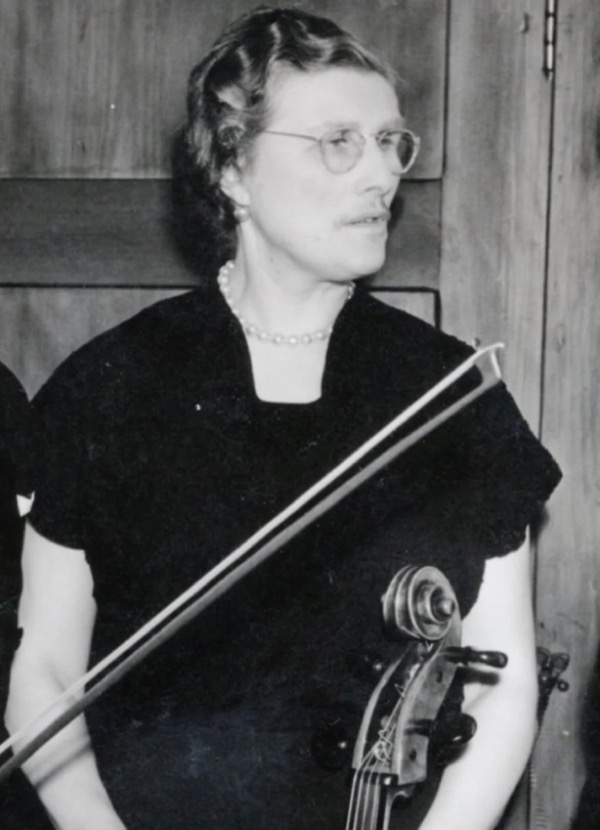
Grace Becker Vamos
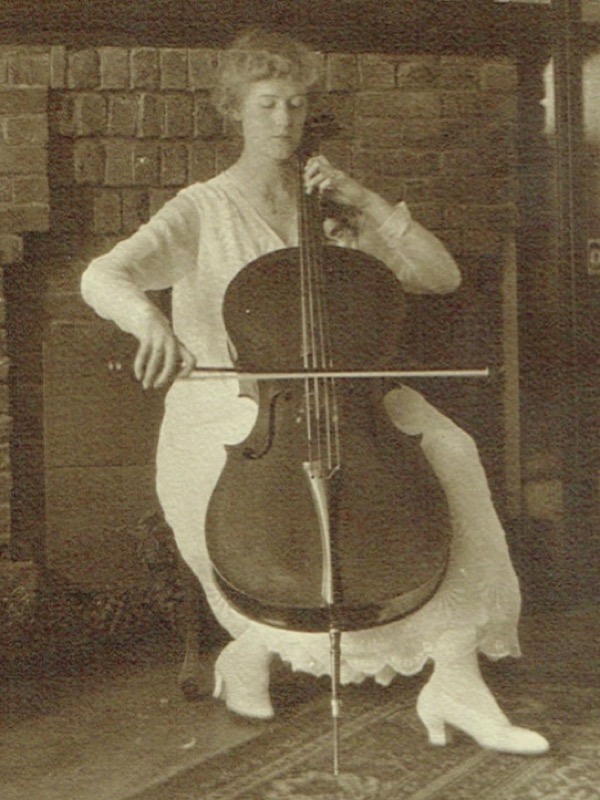
Grace Vamos
Fontainebleau Suite
Grace Becker was born in 1898 in California to a violinist father and pianist mother. The musical couple had a spare cello that Grace started playing as a child.
As a young woman, she studied at the Paris Conservatoire and the Fontainebleau School of Music.
In 1937, she moved to Hungary to study with composer Zoltán Kodály, then returned to America when World War II broke out in the summer of 1939.
She spent most of the rest of her career in California, interspersed with frequent visits to Mexico.
Her piano concerto was the first orchestral piece ever written by a woman to be performed in California.
In addition to composing, she also founded a trio called the Trio Moderne, an all-woman ensemble featuring Becker Vamos, flautist Christine Howells Pfund, and harpist Marie Hughes Marguarrie.
In 1946, she married Ernest Vamos, a dentist and an amateur cellist. They never had any children. Instead, she focused on her career, teaching countless students and endowing multiple scholarships and competitions.
Today, the scores of Grace Becker Vamos’s works are available through Vamos Publishing.
Koharik Alis Gazarossian
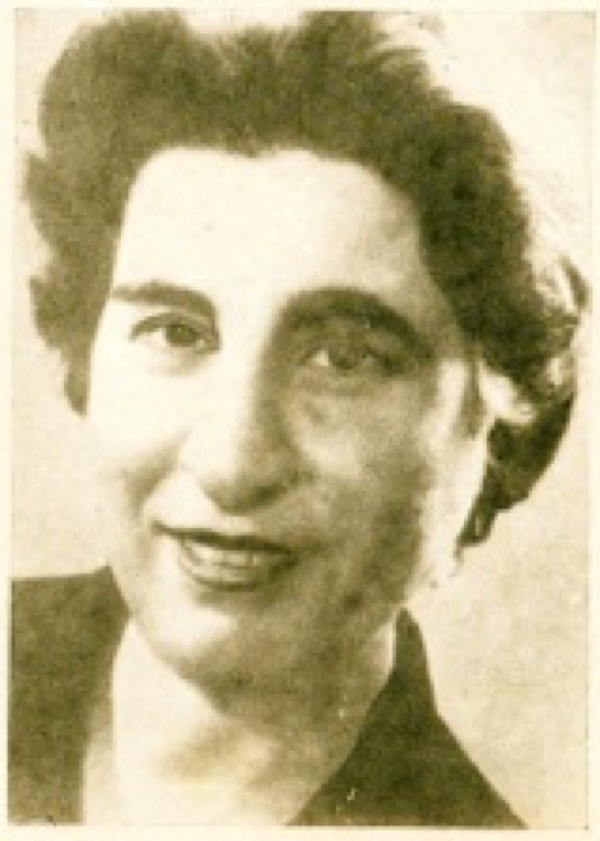
Koharik Alis Gazarossian
Koharik Alis Gazarossian was born to Armenian parents in Constantinople (present-day Istanbul) in 1907.
As a child, she took piano lessons from a former student of Franz Liszt.
In 1926, at nineteen, she moved to Paris and began studying at the Conservatoire.
Her piano teacher was Lazare Lévy, whose other pupils included John Cage, Clara Haskil, and Monique Haas.
She also studied composition with Paul Dukas, composer of the tone poem The Sorcerer’s Apprentice.
Her own work often drew upon Armenian folk influences. Among her fans was fellow Armenian composer Aram Khachaturian.
Her set of 24 Etudes, finished in 1958, covered the twelve major and minor keys. Each one is dedicated to a friend or pupil. Listeners can hear influences of pianists like Scriabin, Rachmaninoff, and Prokofiev.
These works were recorded in 2022 by Armenian pianist Naré Karoyan.
Koharik Gazarossian: 24 Etudes (Nare Karoyan, piano)
Jeanne Demessieux
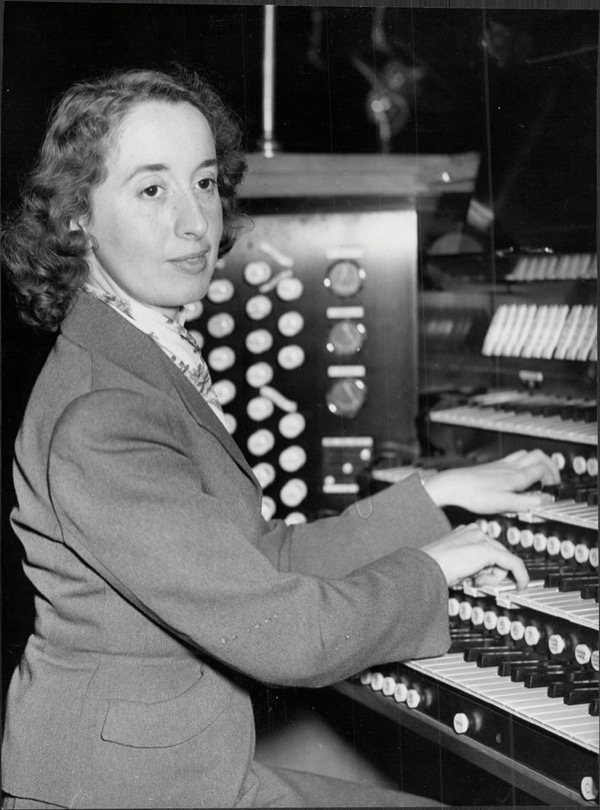
Jeanne Demessieux
Te Deum
Jeanne Demessieux was born in 1921 in Montpellier. She was a musically talented child and began studying at the Montpellier Conservatoire at age seven.
In 1933, at twelve, she began studying at the Paris Conservatoire. Three years later, she began studying organ with Marcel Dupré. The organ soon became her primary instrument.
In 1941, at the age of twenty, she earned a first prize in organ performance and improvisation at the Conservatoire.
In 1947, she became the first female concert organist to sign a record deal.
She was especially famous for her memory. Apparently, she memorised 2,500 pieces over her career, including the entire organ output of J.S. Bach.
She was also a composer, writing works for solo organ, piano, and vocal music.
She died in November 1968 of throat cancer. She was only 47 years old.
Sylvia Soublette
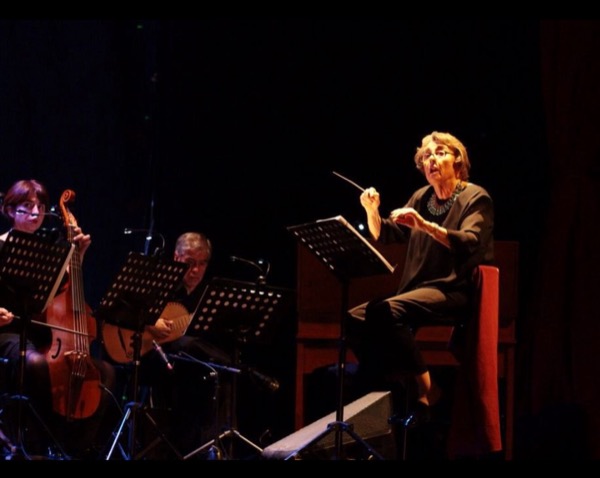
Sylvia Soublette
Pequeña Suite para Violín y Piano
Sylvia Soublette was born in 1924 in Viña del Mar, Chile. Music ran in the family: both of her parents were musical, and her paternal grandmother was a composer.
In 1941, as a teenager in college, she founded the Coro Femenino Viña del Mar (the Viña del Mar Women’s Choir). She also began composing.
In 1951, she earned a scholarship from the French government to study at the Paris Conservatoire. While there, she studied under Milhaud and Messiaen.
After her studies in Paris, she returned to Chile. In 1960, she founded the Ancient Music Ensemble and led it until the 1973 military coup.
She married politician Gabriel Valdés in 1945, and he served as Chile’s Minister of Foreign Affairs from 1964 to 1970. After Pinochet came to power, Valdés, Soublette, and their four children travelled to the United States and Venezuela.
The family returned to Chile in 1981, and Soublette resumed her musical career there.
In 1991, she founded the Santiago Music Institute and toured internationally.
Toward the end of her long life, she said, “I am a composer, but from another time. Not from the 21st century, but from the 20th century. However, at this point, what I feel most like is an educator.”
She died in January 2020 at the age of 95.
Édith Canat de Chizy
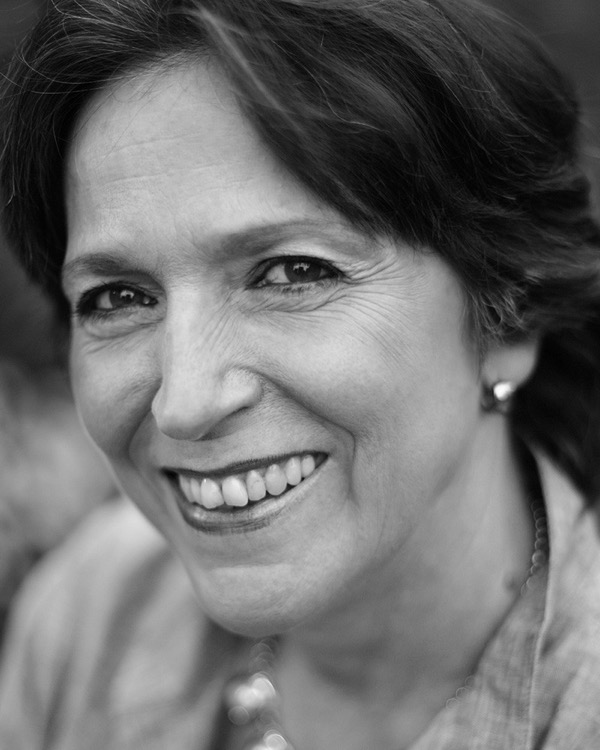
Édith Canat de Chizy
Édith Canat de Chizy was born in Lyon, France, in 1950.
As a college student, she studied at the Sorbonne and the Paris Conservatoire. She won half a dozen first prizes in analysis, composition, counterpoint, fugue, harmony, and orchestration.
In 2006, she began teaching at the Regional Conservatory of Paris. She has published over a hundred opus numbers’ worth of music.
In 2005, she became the first female composer to be elected to the prestigious Académie des Beaux-Arts.
For more of the best in classical music, sign up for our E-Newsletter
The violin is her main instrument. Here’s her fourth quartet, “En noir et or” (In black and gold).