Mozart‘s love life was as dramatic as any opera he ever wrote.
He carried on a raucous correspondence with his cousin, fell hard for a teenage soprano who rejected him, and married his first love’s younger sister.
Some music lovers have also raised eyebrows at his friendships with a star English singer and the wealthy wife of his landlord, wondering if they meant something more.
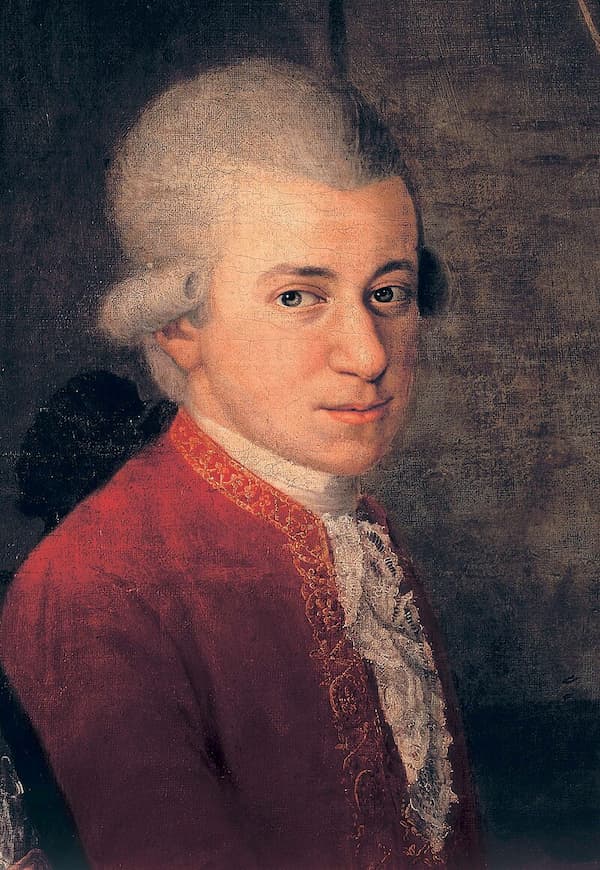
Wolfgang Amadeus Mozart
What we know for sure is that the women in Mozart’s orbit shaped and inspired him.
Here’s the full story, starting with the three women whom we know Mozart had some level of romantic feelings for.
Maria Anna Thekla Mozart
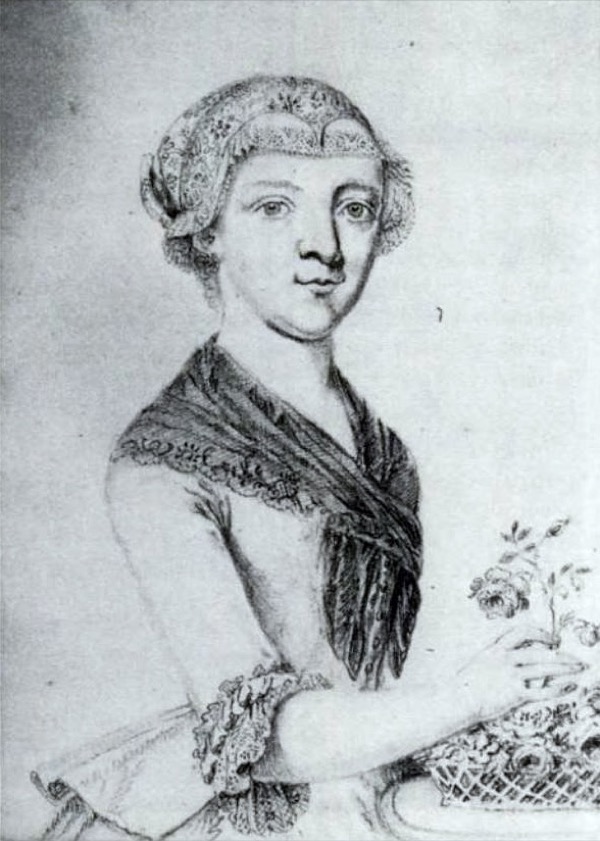
Maria Anna Thekla Mozart
Maria Anna Thekla Mozart (nicknamed “Bäsle”) was born on 25 September 1758 in Augsburg, Germany, two years after Wolfgang Mozart.
Her bookbinder father, Franz, was Wolfgang’s paternal uncle, making the two cousins.
Much of Mozart’s childhood was spent on the road as a travelling prodigy. Because of this – and the fact that Wolfgang grew up in Salzburg, 225 kilometres from Augsburg – he and Thekla didn’t spend much, if any, time together as children.
However, in October 1777, the 21-year-old Mozart and his father, Leopold, travelled to Augsburg in search of a position for Mozart. During the visit, the cousins got along well.
After Wolfgang’s departure, he wrote a handful of filthy letters to her, full of sexual and scatological humour, leading historians to believe their bond was erotic.
Two years later, in January 1779, Thekla met Mozart in Munich, the major city between their hometowns, and then travelled back with him to Salzburg. Mozart’s mother had died unexpectedly just five months earlier, permanently shattering the shape of the family. Thekla may have provided distraction and entertainment during that difficult time; she stayed with them for two months.
Their final meeting took place in Augsburg in the spring of 1781, when Mozart travelled there after the Munich premiere of his opera Idomeneo.
Mozart’s Idomeneo overture
Between 1777 and 1781, Mozart sent Thekla nine racy letters, and in December 1778, mailed her a miniature portrait.
But soon after, their connection fizzled out. In late 1781, Mozart relocated to Vienna – which is much further away from Augsburg than Salzburg is. His father was angry at him about the move, and he fell out of contact with his extended family.
As for Thekla, she began a relationship with a priest, and she gave birth to their illegitimate daughter in February 1784. She remained a single mother for the rest of her life.
Mozart’s wife suppressed the Bäsle letters because they were so unseemly, but they were ultimately brought to light, partly in the nineteenth century, and fully in the twentieth.
Aloysia Weber
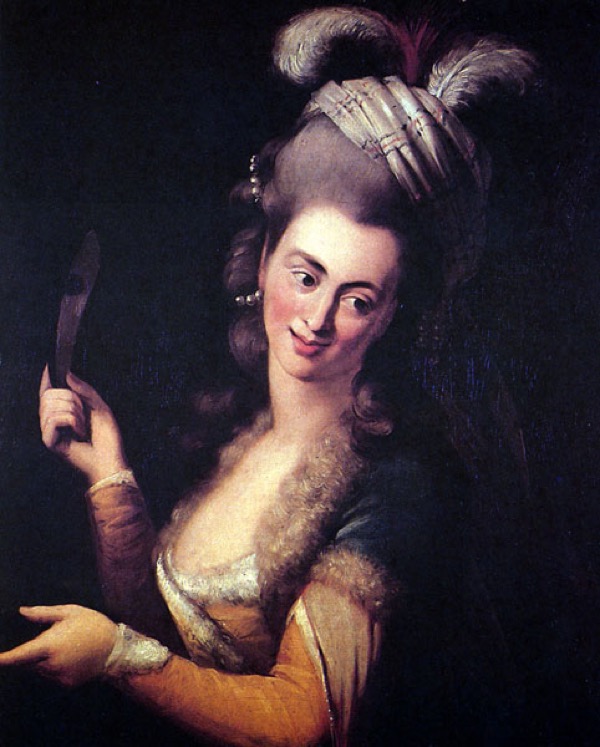
Aloysia Weber
Aloysia Weber was born around 1760; she was one of four sisters who were singers. Her father was a bass player, music copyist, and prompter at the local opera house.
She and her sisters grew up in Mannheim. In 1777, their paths crossed with Mozart when he came through town looking for work.
Although the teenage Aloysia was already an extremely accomplished singer, Mozart gave her singing lessons. Soon he began composing specifically for her voice. (One aria, “Popoli di Tessaglia!” included the highest note in the classical repertoire: a G6.)
He was delighted with her progress, and ended up falling in love with her – although we don’t know if those feelings were reciprocated.
Mozart’s aria “Popoli di Tessaglia!”
In 1778, Aloysia and her family moved to Munich so she could make her operatic debut.
When Mozart came through Munich, he visited her, sat down at the piano, and sang bawdy lyrics to her: “Leck mir das Mensch im Arsch, das mich nicht will” (“the one who doesn’t want me can lick my arse”). Not surprisingly, this move didn’t win her over. (She would marry an actor named Joseph Lange in October 1780.)
In 1779, Aloysia got a job in Vienna, and the family moved with her. But just a month after they arrived, their father died.
To get by financially, the Weber women took in boarders. In May 1781, Mozart, just starting his freelance career in Vienna, began renting from them – and he got to know Aloysia’s younger sister Constanze.
Constanze Weber
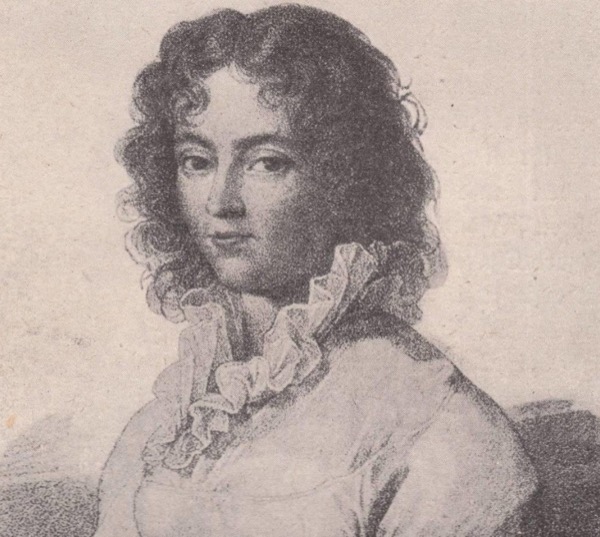
Constanze Mozart
Soprano Constanze Weber is the one woman whom we know for sure that Mozart had a serious, committed, long-term romantic relationship with.
He met her for the first time in 1777, when he was 21, and she was 15. They reunited four years later when he began boarding with the Webers in May 1781.
He initially meant to stay only a week, but his departure kept getting pushed back. Her mother finally realised he was falling for Constanze, and in September she asked him to leave for propriety’s sake.
Their courtship did hit a rough patch. Mozart’s father, already furious with him for leaving Salzburg to work as a freelance musician, didn’t approve of the match.
Then, in April 1782, the spirited young Constanze played a parlour game with a boy that involved measuring her calf – a transgression that led to a brief breakup.
Mozart’s Mass in C minor, inspired by Constanze’s voice
However, the two ultimately reconciled, and by the end of July, Constanze had left her parents’ house to move in with Mozart: a daring move that prompted her mother to threaten to involve the police.
Wolfgang made an oblique reference to their physical relationship when writing to his father on July 31:
“All the good and well-intentioned advice you have sent fails to address the case of a man who has already gone so far with a maiden. Further postponement is out of the question.”
They married on 4 August 1782 and had their first baby in 1783. They went on to have six children in all, but, sadly, only two survived infancy.
Historians believe it was a happy marriage because of the contented tone of surviving, occasionally bawdy letters. One read, “I kiss you and squeeze you 1095060437082 times.”
After Mozart died in 1791, Constanze helped promote and popularise his music, both to preserve her husband’s legacy and so she and her two surviving sons could live comfortably.
Her second husband, whom she married in 1809, helped her and worked on a major Mozart biography.
Mozart’s Rumoured Lovers
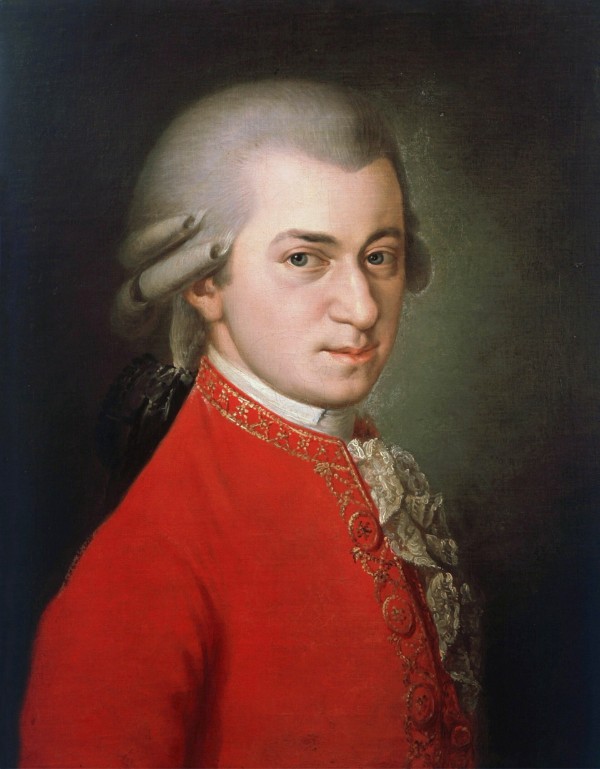
Wolfgang Amadeus Mozart
There is no evidence that Mozart ever really fell in love with anyone besides Aloysia and Constanze. Thekla seems to have been more of a crush or partner in physical experimentation than a traditional lover.
However, some historians have wondered if he was attracted to a couple of other women. Here’s why.
Nancy Storace
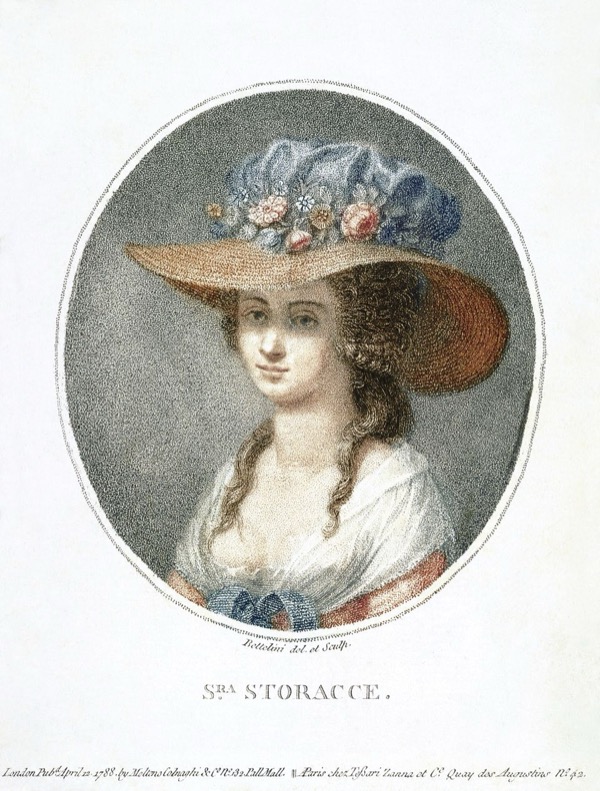
Nancy Storace
Nancy Storace was born in London in 1765, nine years after Mozart. She was a child prodigy singer and studied in Italy as a teenager.
In 1782, she landed a prestigious position in Emperor Joseph II’s Italian opera company and relocated to Vienna, where she became a star.
While there, she went through a gauntlet of tragedy. She married an abusive, much older composer; he was banished from Austria; and she lost her baby daughter in the summer of 1785.
Then, that June, she was onstage singing a role in an opera by her brother when suddenly she lost her voice.
It took five months for her to heal enough to return to the stage – but even then, listeners felt her voice was never the same.
Mozart’s aria “Deh vieni, non tardar” from The Marriage of Figaro
Mozart was clearly deeply inspired by her, even with her vocal struggles. She partnered with him to create the role of Susanna in The Marriage of Figaro, which premiered on 1 May 1786. He deliberately wrote her part in a register that was comfortable for her, that wouldn’t strain her voice.
No hard evidence shows that Storace and Mozart ever had an affair. Indeed, even if they had, it wouldn’t have been able to go anywhere; neither could have divorced without devastating social consequences.
That hasn’t kept some historians from theorising about their potential attraction to one another. But he certainly connected with her artistically.
Theresia von Trattner
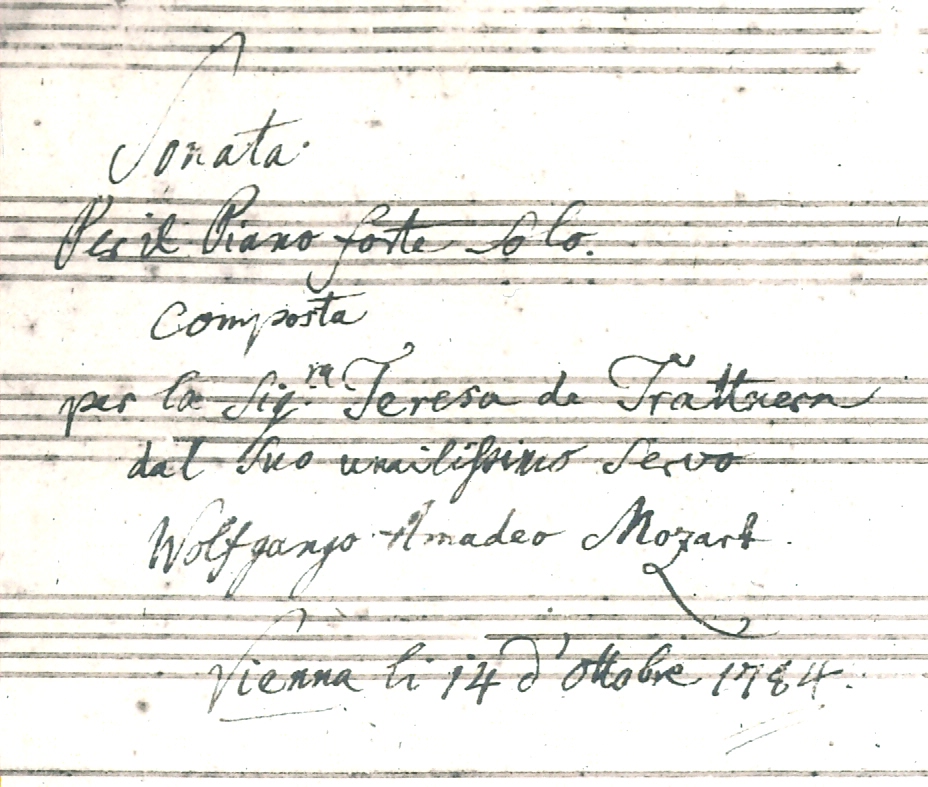
Mozart’s dedication to Theresia von Trattner of his Sonata No. 14 © mozartschildren.wordpress.com
Theresia von Trattner was born in 1758 to a mathematician and his wife.
At 18, she married a wealthy 59-year-old court publisher named Johann Thomas von Trattner. They had ten children together; only one survived to adulthood.
Theresia was among the first to hire Mozart as a piano teacher in Vienna, in December 1781.
She continued taking lessons from him for years, and some have speculated – especially given the advanced age of her husband – that their friendship and frequent lessons might have been a cover for a romance.
Whatever their relationship was, she used her husband’s wealth to help establish Mozart in Vienna. For a few months, he and Constanze moved into the Trattnerhof building that the couple owned. He also gave important concerts that Theresia helped organise in the building’s attached hall, introducing him to Vienna’s wealthy luminaries.
Mozart’s Piano Sonata No. 14
In recognition of all she had done to help him, Mozart dedicated his Piano Sonata No. 14 to Theresia: a very public declaration of appreciation. It’s a dramatic, aristocratic, soul-searching work.
There is no evidence they had any love affair. But it seems certain that, much like with Nancy Storace, Mozart connected with her on an artistic level – which maybe, to them, was more intimate than any love affair ever could be.
For more of the best in classical music, sign up for our E-Newsletter