
In recent years, there has been increased interest in the works of women composers, many of whom are in the process of being rediscovered.
So if you have an interest in this burgeoning area of programming and are a musician or listener who wants to be introduced to string quartets by women composers, this list is for you!
These works chart the history of the string quartet, from its beginnings in the mid-eighteenth century all the way up to the present day.
Keeping in mind that there are many hundreds more out there, here are fifteen of our favourite string quartets by women composers.
Maddalena Laura Lombardini Sirmen: String Quartet No. 5 in F-major (published in 1769)
Maddalena Laura Lombardini Sirmen was a celebrated violin soloist who trained in Venice and studied under Tartini.
In 1769, when she was twenty-four, she published a collection of six string quartets. They were published the same year that she gave birth to a daughter, so it’s possible that they were written during or immediately after her pregnancy, when she wasn’t able to perform.
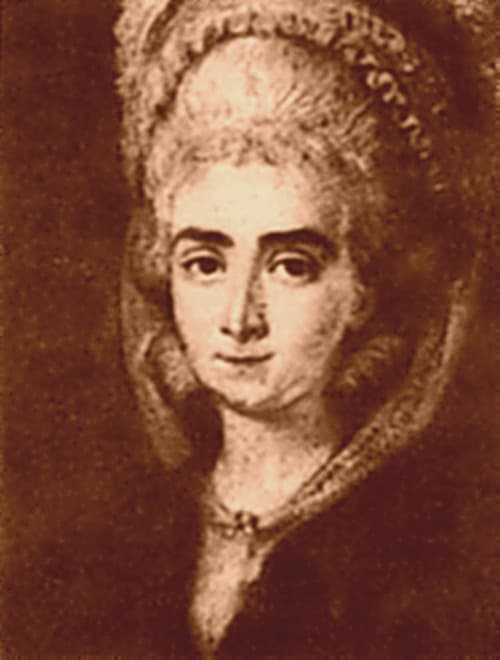
Maddalena Laura Sirmen © Wikipedia
Joseph Haydn, widely considered to be the father of the string quartet, began writing his quartets in the 1750s and publishing them in the mid-1760s.
With these six string quartets, Lombardini Sirmen proved she was on the cutting edge of this new genre.
Fanny Mendelssohn Hensel: String Quartet (written in 1834)
Fanny Mendelssohn Hensel was Felix Mendelssohn’s older sister, who was arguably just as talented as he was. However, societal and familial conventions dictated that she confined her music-making to private spaces.
This string quartet was written shortly after her marriage and the birth of her son, and took inspiration from Beethoven and her brother.
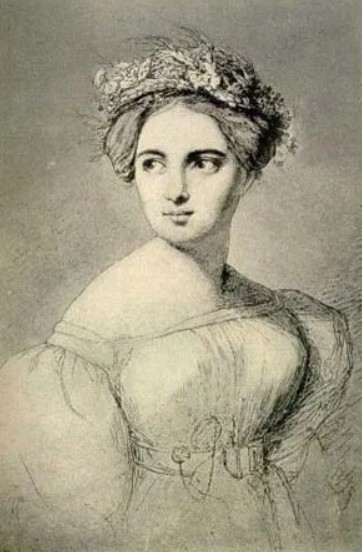
Fanny Mendelssohn
The HenselPushers website describes the work: https://henselpushers.org/string-quartet-1834
Fanny’s string quartet exhibits a tonal ambiguity and freedom of form uncharacteristic of her classical training, which Felix objected to.
Fanny took her brother’s critiques extremely seriously, and she did not write another piece of multi-movement chamber music for over a decade.
Emilie Mayer: String Quartet in G-minor (written ca. 1840s-1850s)
German composer Emilie Mayer has been nicknamed the “female Beethoven.” She was one of the few Romantic Era women (that we currently know of) who wrote in large-scale forms, with an impressive eight symphonies to her name.
She also loved writing chamber music, composing seven string quartets.
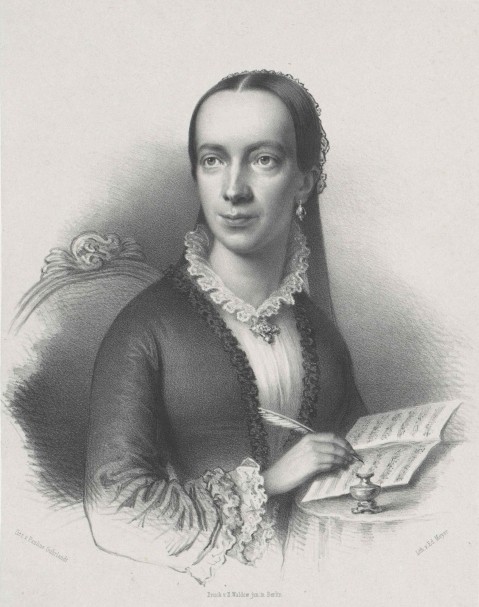
Emilie Mayer
This is the only string quartet she published during her lifetime. Although it was published in 1858, more scholarship needs to be done to know when exactly it was written.
Ethel Smyth: String Quartet in E-minor (written in 1881)
Strong-willed British-born composer Ethel Smyth was born in 1858. Against her parents’ wishes, she studied in Germany during the 1870s. There she befriended Brahms, Clara Schumann, and members of their musical circle.
She would go on to become famous for her suffragist activism and her remarkably candid memoirs, which discussed her love affairs with both men and women.
She once referred to string quartets as “an exquisite omelette” because in larger orchestral works, there were “so many ingredients a rotten egg can pass undetected.”
String quartets, however, required all parts to be fresh and skillfully prepared, with no way to hide a composer’s weaknesses of technique.
Teresa Carreño: String Quartet in B-minor (written in 1896)
Pianist and composer Teresa Carreño was born in Venezuela in 1853.
She became an international superstar, celebrated both for her astonishing musicianship and her colourful personal life (she was married four times!).
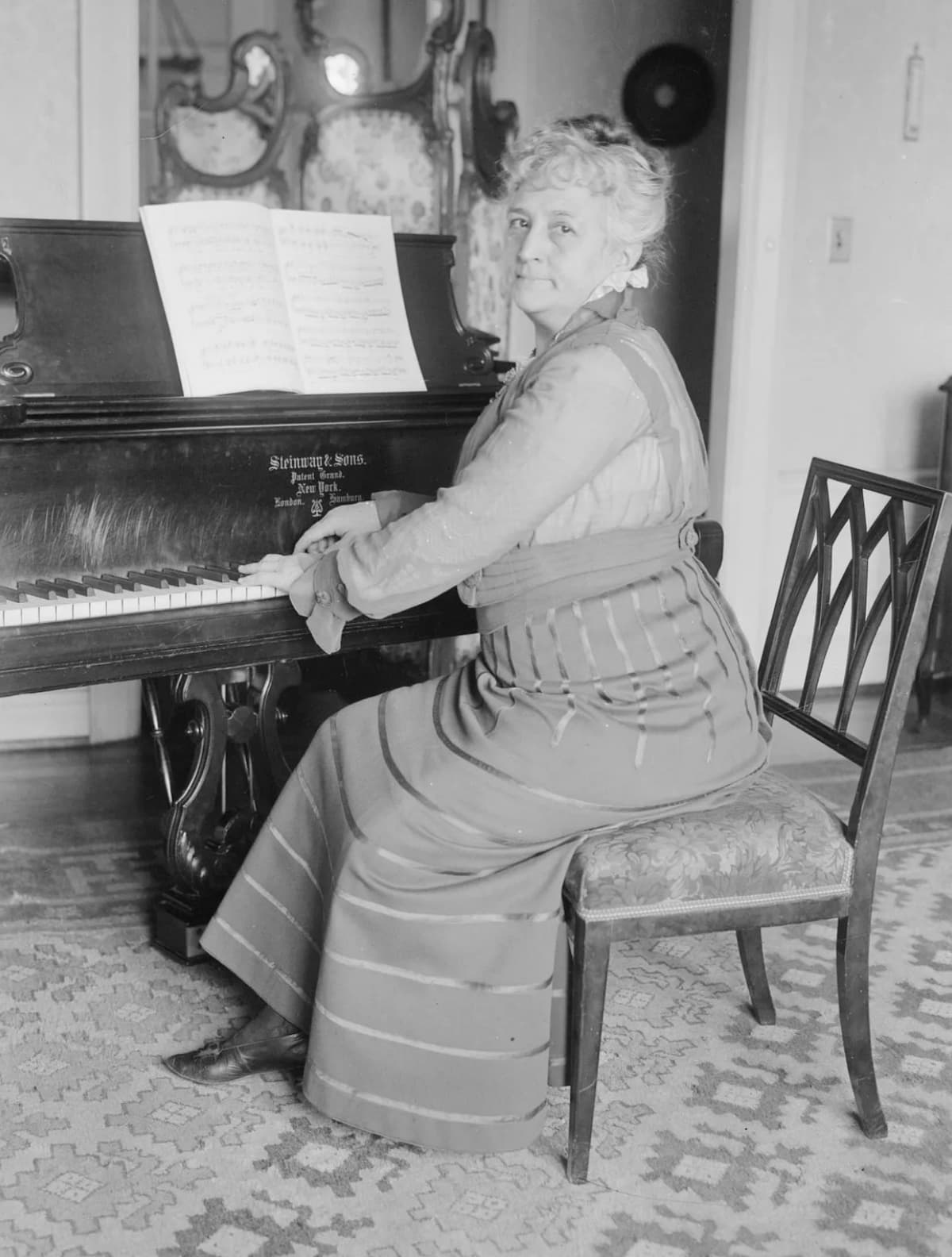
Teresa Carreño
She began composing when she was just six years old. She usually wrote for piano, but her string quartet is confident and dynamic, and was premiered at the famous Gewandhaus in Leipzig.
Germaine Tailleferre: String Quartet (written between 1917-1919)
Germaine Tailleferre was a member of Les Six, a group of six composer-friends who were colleagues in France during the 1910s.
They were fascinated by neoclassicism and prioritising simplicity after the aesthetic excesses of the late Romantic era.
There are intriguing echoes of Claude Debussy and Maurice Ravel in this quartet. But the work still maintains Tailleferre’s distinctive creative voice, with its delightful French accent.
Henriëtte Bosmans: String Quartet (written in 1927)
Henriëtte Bosmans was a Dutch composer born in 1895.
As a young woman, she was inspired by a number of composers like Debussy, Ravel, and maybe even Vaughan Williams.
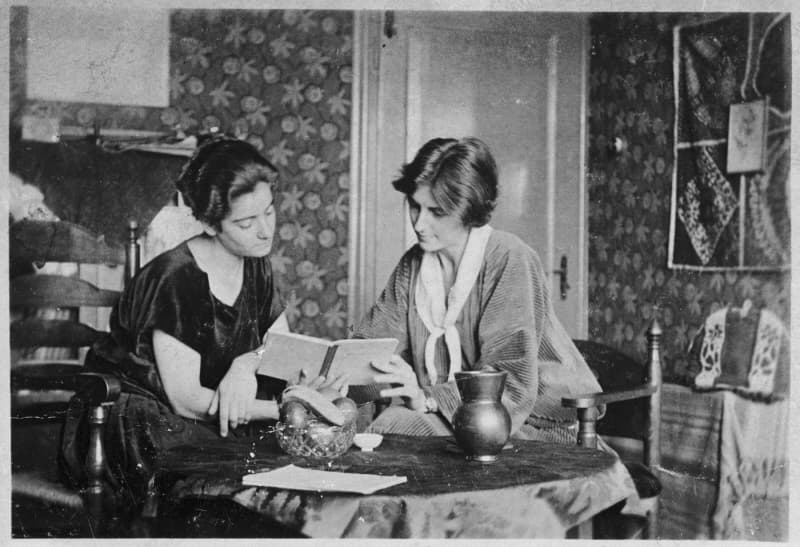
Henriëtte Bosmans and Frieda Belinfante
Bosmans had romantic relationships with both men and women, and throughout much of the 1920s, she lived with lesbian cellist Frieda Belinfante, who became her creative partner and musical inspiration.
However, their intense relationship was winding down by 1927. Maybe some of the wistfulness surrounding their breakup found its way into this brief and dreamy string quartet.
A decade later, both Bosmans and Belinfante would go on to become part of the anti-Nazi resistance: one reason why Bosmans’s output never got the foothold in the repertoire that it deserved.
Amy Beach: Quartet for Strings (In One Movement) (written between 1921-1929)
Amy Beach was born in 1867 in New Hampshire and was one of the most impressive child prodigies in American music history.
She initially made her name as a piano virtuoso, but after her marriage at the age of eighteen, her much older husband discouraged her from performing in public. So she turned to composition instead.
In 1896, her Gaelic Symphony became the first symphony by a woman to be played by a major American orchestra.
After she was widowed in 1910, she began performing again, traveling the world as a virtuoso pianist, often playing her own piano concerto.
In her later years, she began exploring a terser, more modern sound, as evidenced by this compact quartet in one movement.
Ruth Crawford Seeger: String Quartet (written in 1931)
Ruth Crawford Seeger was born in 1901 in Ohio and trained as a pianist and composer in Chicago.
In 1930, she became the first woman composer to win a Guggenheim Fellowship, which enabled her to travel to Paris and Berlin, where she met with a number of great European composers active in that decade.
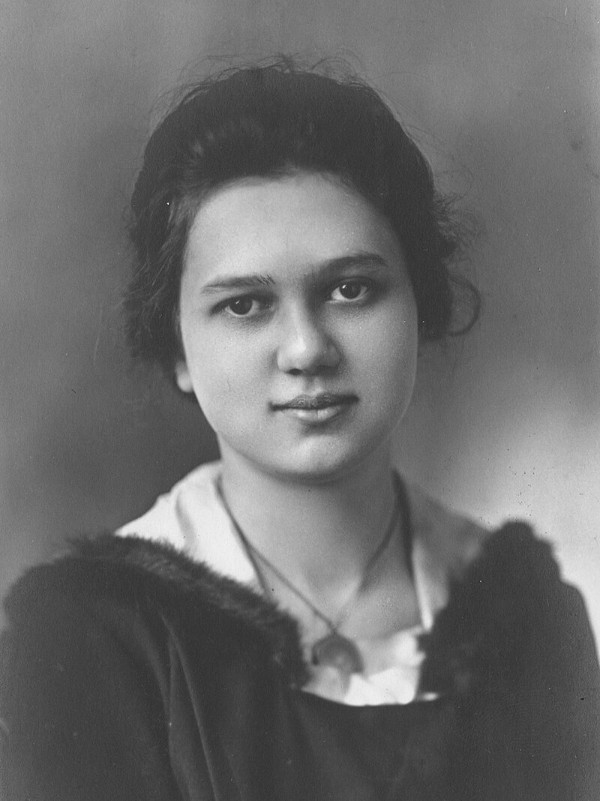
Ruth Crawford Seeger
This quartet was written in 1931 while she was in Berlin, soaking up the avant-garde Weimar Republic atmosphere there. It has become her most famous work and is possibly the most famous string quartet by any American woman.
Florence Price: String Quartet No. 2 in A-minor (written in 1935)
Florence Price was a composer of Black descent born in Little Rock, Arkansas, in 1887. She studied at the New England Conservatory of Music, studying organ and piano.
Her family was forced to flee the South during the terrorism of the Jim Crow era, and she settled in Chicago in 1927.
In 1932, her Symphony in E-minor won a Wanamaker Foundation Award. This award led to a patron funding a performance of the symphony by the Chicago Symphony, making her the first Black woman to have her symphony played by a major American orchestra.
Price often drew inspiration from the rich tradition of African-American folk music and spirituals. That influence can be heard in this lovely quartet.
Elizabeth Maconchy: String Quartet No. 3 (written in 1938)
Composer Elizabeth Maconchy, born to Irish parents and a longtime resident in England, has been described as one of the greatest musicians the British Isles has ever produced.
Over the course of her long career, she composed thirteen exquisite string quartets, written between 1932 and 1983.
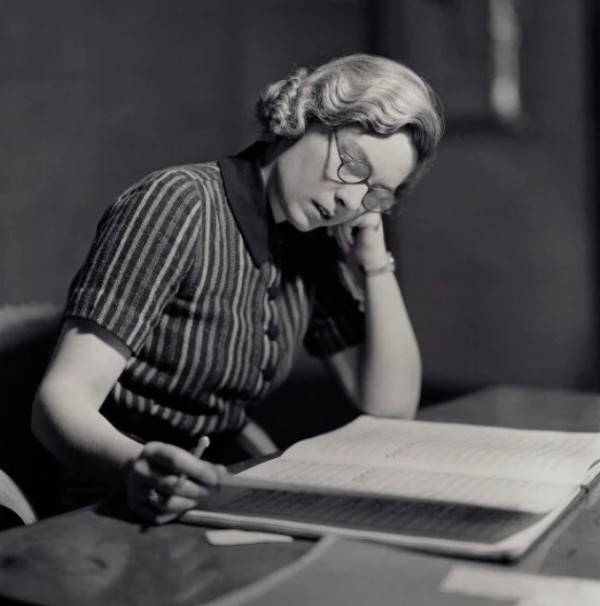
Elizabeth Maconchy
This output is somewhat analogous to Dmitri Shostakovich’s cycle of fifteen, written between 1938 and 1974. Of course, his brilliant quartets have entered the canon…while hers still require more advocacy.
This genre was close to her heart, and every string quartet she wrote is worth listening to, but we chose the third because it had the best performance on YouTube. (For her part, Maconchy thought her fifth was the best thing she’d ever written…so check that one out next!)
Grażyna Bacewicz: String Quartet No. 4 (written in 1951)
Grażyna Bacewicz was a staggeringly talented violinist and composer born in Poland in 1909. She was a first-rate composer as well as an orchestral violinist and solo artist.
As you can imagine, her career was colored by the wars and tragedies of the twentieth century. Despite the political tumult that surrounded her, she was incredibly prolific, writing four symphonies, seven violin concertos, and seven string quartets.
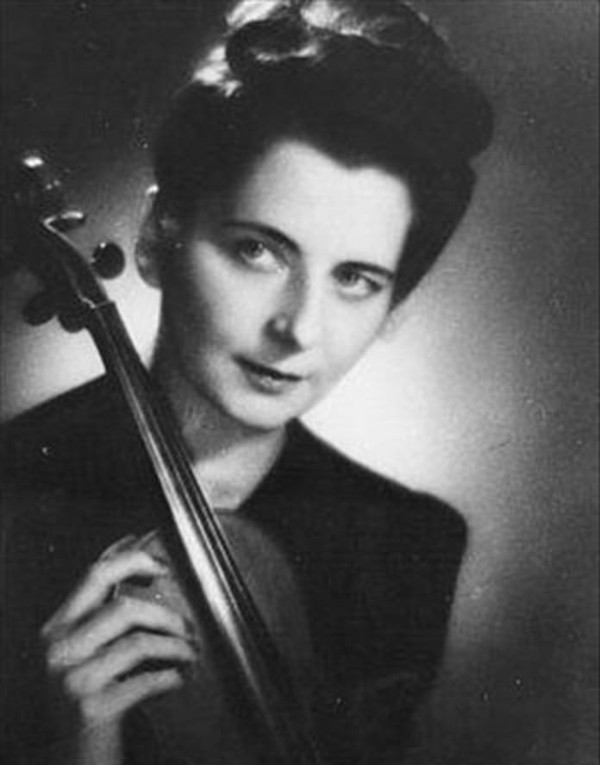
Grażyna Bacewicz
This dazzling and imaginative work is considered to be among her best and earned first prize at the 1951 International String Quartet Competition.
Dorothy Rudd Moore: Modes for String Quartet (written in 1968)
Dorothy Rudd Moore was born in 1940 in Delaware.
She attended Howard University, one of the most storied HBCUs (Historically Black Colleges and Universities) in the United States. Initially, she pursued a music education degree, but she eventually switched to composition.
In 1968, the year this piece was written, she co-founded the Society of Black Composers in New York City. She often drew on Black history when writing her music.
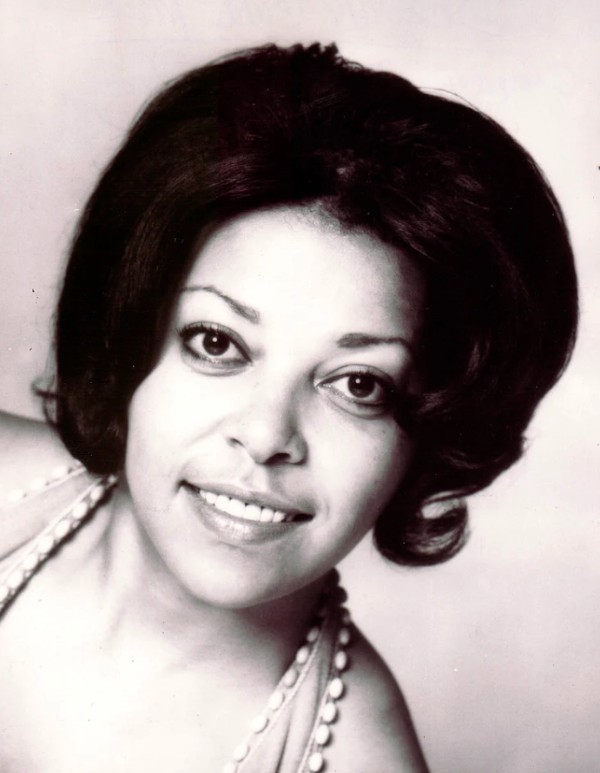
Dorothy Rudd Moore
In 2023, Gwen Krosnick, the cellist of the Cassatt String Quartet, described Moore’s Modes ahead of a performance at Columbia University: https://www.classicalmusiccommunications.com/cmc-coverage/2023/3/6/8i7xk7v1wkqbweizc77wgv4jjhinqk
My colleagues listened to the work and were drawn in, as I had been, by her chromatic language, the deeply personal voice there, and her incredible skill at writing for string quartet. This quartet is unusual for many reasons, especially how much she is able to accomplish – emotionally and compositionally – in such a brief form. This is a short piece with the impact of a monument.
Ellen Taaffe Zwilich: String Quartet No. 2 (written in 1998)
Ellen Taaffe Zwilich was born in Miami in 1939, studying at Florida State University and Juilliard. In 1983, her first symphony won the Pulitzer Prize for Music, making her the first woman to ever achieve the honour.
The American Record Guide wrote of her second string quartet:
The Zwilich quartet held listeners spellbound (coughless and quiet) for 25 minutes. The first movement is curiously passionate and emotional; the second fascinates with suddenly shifting harmonies; the plaintive third goes straight to the heart and pierces it; the fourth has an ecstatic apotheosis before a coda that stays with you after music’s end… [Zwilich] certainly knows how to weave a spell, tell an interesting story. You hang on her every note.
Gabriela Lena Frank: Milagros, for string quartet (written in 2010)
Gabriela Lena Frank was born in 1972 in Berkeley, California, to a Lithuanian father and a Peruvian mother (of Chinese descent).
Frank often finds inspiration in her culturally rich heritage. She once said, “I think the music can be seen as a by-product of my always trying to figure out how Latina I am and how gringa I am.”
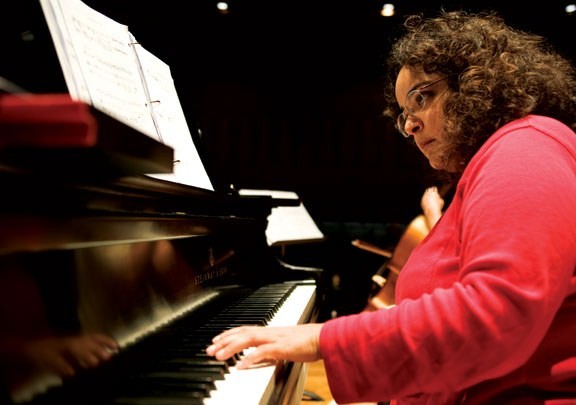
Gabriela Lena Frank
She has written of Milagros:
Milagros (“Miracles”) is inspired by my mother’s homeland of Perú. It has been a remarkable, often difficult, yet always joyous experience for me to visit, again and again, this small Andean nation that is home to not only foggy desert coasts but also Amazonian wetlands. Usually a religious and marvelous occurrence, milagro here refers to the sights and sounds of Perú’s daily life, both past and present, that I’ve stumbled upon in my travels. While probably ordinary to others, to me, as a gringa-latina, they are quietly miraculous, and are portrayed in eight short movements as follows…
Reference: https://www.wisemusicclassical.com/work/44966/Milagros–Gabriela-Lena-Frank/
Conclusion
These fifteen works for string quartet by women are just a drop in the bucket. There are hundreds – likely thousands – more where these came from, and historians, musicians, and composers are rediscovering and creating more all the time.
We wish you happy listening as you explore and program these wonderful, often underappreciated works!
For more of the best in classical music, sign up for our E-Newsletter





EXCELLENT choices