Classical music history is full of great love stories – but not all of them began in entirely respectable circumstances.
Some composers fell for women who were already married, while others found romance with women they had first met as students.
In an era when marriage, reputation, and social convention carried enormous weight, these relationships could provoke genuine scandal and years of gossip.
Today we’re looking at the stories of six composers whose unconventional romances became an unforgettable part of their personal – and oftentimes professional – legacies.
Composers Who Married Another Man’s Wife
Richard Wagner and Cosima von Bülow, 1870
Wagner’s “Winterstürme” and “Du bist der Lenz” from Die Walküre, premiered in 1870
Franz Liszt’s daughter Cosima married pianist and conductor Hans von Bülow in 1857, when she was nineteen years old.
Although the couple had two children, they weren’t very well-suited to each other, and the marriage was not particularly passionate.
Hans von Bülow advocated Wagner’s music. In the summer of 1862, they stayed with the composer. Over the following months, Richard and Cosima fell in love.
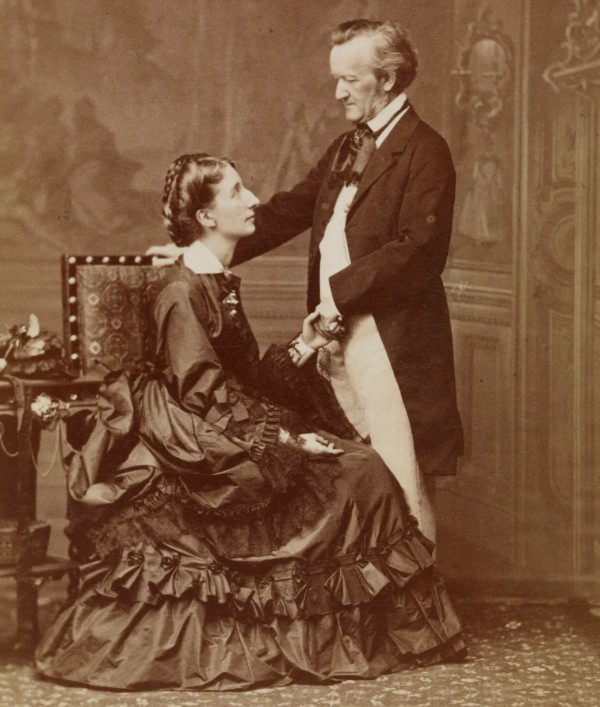
Richard Wagner and Cosima Liszt von Bülow
Their relationship was doubly scandalous, as Wagner was still married, too (albeit estranged from his wife since 1858).
Despite the scandal, Richard and Cosima had three children together between 1865 and 1869, and they began living together in November 1868.
After resisting the inevitable, Hans von Bülow finally agreed to a divorce in 1870, and Wagner and Cosima were married the same year.
She devoted the rest of her long life to championing his music.
We looked at the story of Richard Wagner and Cosima Wagner here: https://interlude.hk/it-only-happens-every-5000-years-wagner-cosima-and-judith/.
Claude Debussy and Emma Bardac, 1908
Debussy’s Children’s Corner, 1906–1908
Claude Debussy married Lilly Texier in 1899. For a while, the two were happy, despite her lack of interest in music.
But just a few years later, in October 1903, Debussy met Emma Bardac, the mother of one of his piano students. She was a wealthy banker’s wife – and a talented amateur soprano.
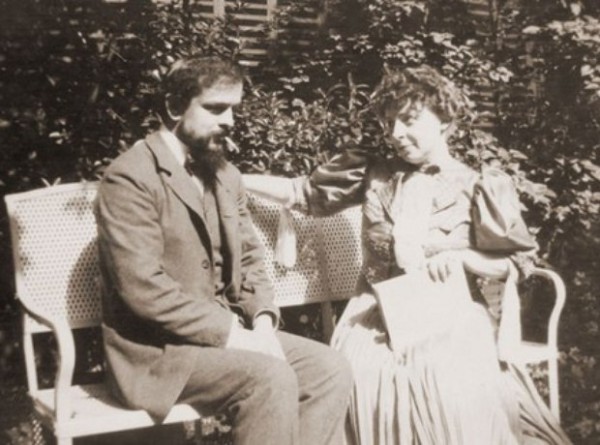
Claude Debussy and Emma Bardac
By the spring of 1904, Debussy’s interest in Texier had completely waned (although Texier was among the last to realise it). He sent Texier off on holiday with her parents, and left Paris for the summer…with Emma.
Texier, distraught, attempted suicide over his conduct. Debussy remained unmoved, to the horror of the Parisian music world.
Both Debussy and Bardac’s divorces were finalised in 1905. They had a daughter that October, married in 1908, and remained together until Debussy’s death from cancer in 1918.
We wrote about Debussy’s two wives here: https://interlude.hk/debussys-wives/.
Igor Stravinsky and Vera de Bosset, 1940
Stravinsky’s Symphony in C, 1938–1940
Igor Stravinsky met Vera de Bosset in the summer of 1921, when both were already married: Stravinsky to his cousin Katya, and Vera to painter Serge Sudeikin. They began an affair, and de Bosset even left her husband.
Stravinsky, however, did not leave his wife, who was still raising their four children. Instead, he maintained de Bosset as his mistress.
After Katya found out about the affair, she was devastated but agreed to stay with him for the sake of the children.
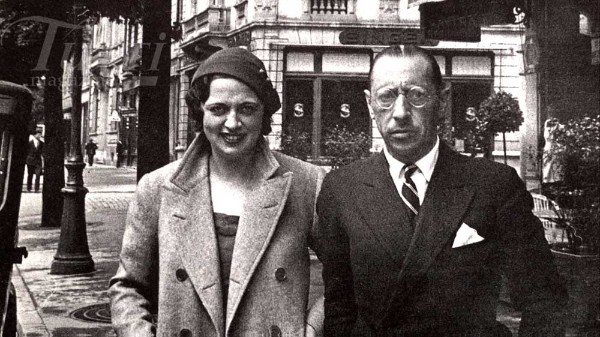
Igor Stravinsky and Vera de Bosset
Stravinsky encouraged the two women to get along. Cruelly, he even put Katya in charge of Vera’s support payments. In the end, against all odds, the two women became friendly.
After years of illness and mental suffering, Katya died of tuberculosis in 1939. That same year, Stravinsky and Vera left Europe for America and finally married in March 1940.
We wrote about Stravinsky’s relationships here: https://interlude.hk/igor-stravinsky-and-his-maidens/.
Composers Who Married Their Student
Leoš Janáček and Zdenka Schulz, 1881
Janáček’s Zdenka Variations, 1880
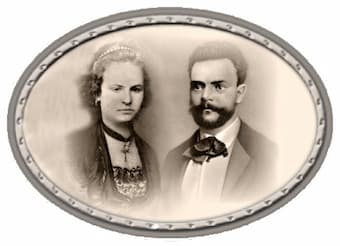
In 1876, 22-year-old composer Leoš Janáček began teaching music at Brno’s Teachers’ Institute.
Janáček owed his job to his boss, the Institute’s director Emilian Schulz, who had secured the position for the young impoverished composer.
Fatefully, Schulz also hired Janáček to teach his 12-year-old daughter Zdenka piano. It wasn’t long before Janáček developed a romantic interest in her; he wrote his first piece for her when she was just 14.
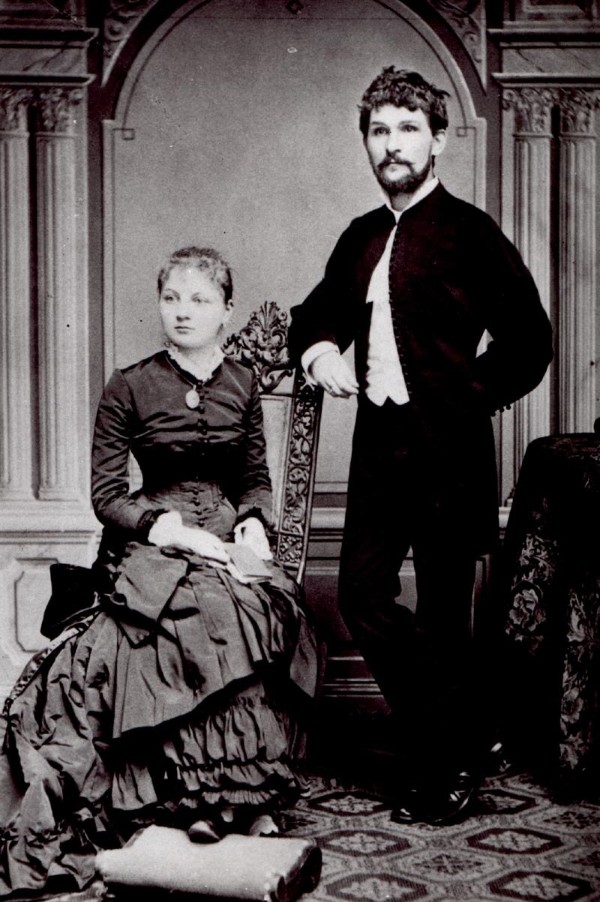
Leoš and Zdenka Janáček
After a short trip to Vienna to study music, he returned to Brno. Upon his return, he proposed to Zdenka and married her in July 1881, days before her 16th birthday.
Their marriage deteriorated quickly. They had their first baby in August 1882, and he refused to be present for the birth. In fact, he only went to see the baby after a priest scolded him.
Edward Elgar and Caroline Alice Roberts, 1889
Elgar’s Salut d’Amour
In 1886, 38-year-old author Caroline Alice Roberts began taking accompaniment lessons from the local music teacher, Edward Elgar.
She was the daughter of a military man and came from a wealthier, more prominent family than he did.
Despite that (and an eight-year age difference), they fell in love, and she was independent enough to ignore her horrified relatives to accept his marriage proposal.
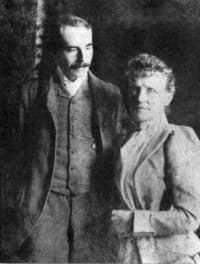
Edward and Alice Elgar, circa 1891 © Wikipedia
During their engagement, Elgar gifted her a piece for violin and piano, called “Salut d’Amour” (“Love’s Greeting”). It was a sweet gesture that nodded to her accompaniment lessons, especially since his primary instrument was the violin.
They married in 1889, and Alice gave birth to their only child, Carice, in 1890. She remained a major supporter of his career until she died in April 1920.
We wrote about the Elgars’ love story here: https://interlude.hk/poetic-muse-edward-elgar-caroline-alice-roberts/.
Béla Bartók and Márta Ziegler, 1909, and Ditta Pásztory, 1923
Bartók’s Bluebeard’s Castle, 1911
Béla Bartók met both of his wives when they were his piano students.
He met his first, Márta Ziegler, in 1907, when she was 14 and he was 26; he taught both Márta and his sister.
After being rejected by another young woman, a virtuoso violinist, Stefi Geyer, he set his sights on Márta instead. She accepted his proposal, and they were married in a surprise private ceremony in November 1909. They had one child, a son, in 1910, and he dedicated his opera Bluebeard’s Castle to her.
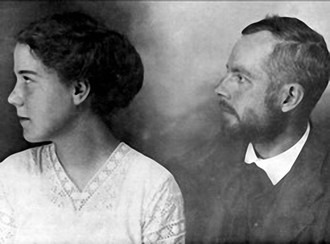
Béla Bartók and Márta Ziegler Bartók
We wrote about Bartók and Ziegler’s relationship here. https://interlude.hk/rebound-break-bela-bartok-marta-ziegler/
In June 1923, Bartók divorced Márta. Two months later, he proposed to another young piano student, Ditta Pásztory, while walking her home after her lesson. He gave her three days to give her answer. She ended up accepting. At the time, she was 19, and he was 42. She went on to become a virtuoso pianist who specialised in two-piano repertoire and helped to advocate for her husband’s piano music.
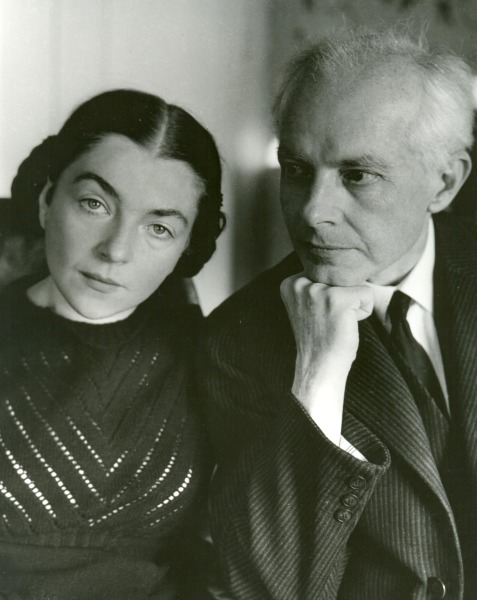
Ditta Pásztory and Béla Bartók
We wrote about Bartók and Pásztory’s relationship here: https://interlude.hk/service-music-bela-bartok-ditta-pasztory/.
Conclusion
The romantic lives of these composers prove that the people behind classical music’s greatest works were every bit as messy and imperfect as anyone else – and in many cases, more so.
For Wagner, Debussy, and Stravinsky, falling in love with another man’s wife created years of emotional turmoil before marriage was finally possible. For Janáček, Elgar, and Bartók, relationships that began in the studio crossed boundaries between teacher and student – with outcomes that ranged from lifelong love to unmitigated disaster.
For more of the best in classical music, sign up for our E-Newsletter