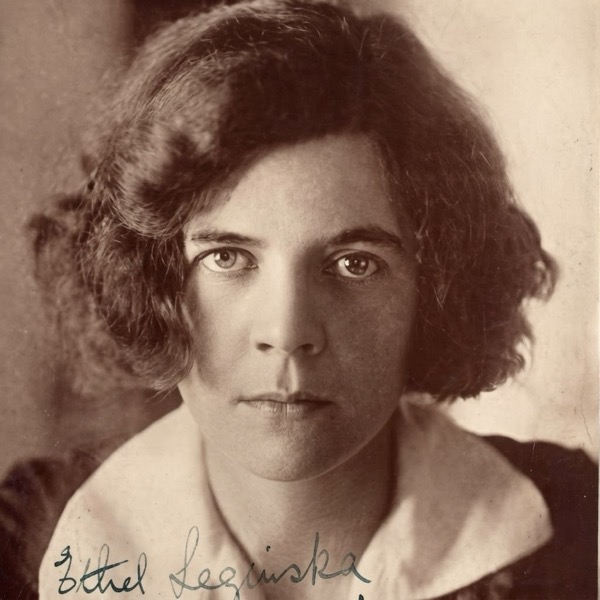
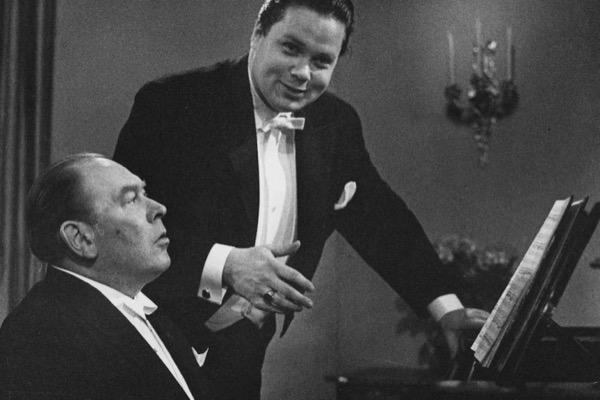
The received wisdom is that Clara Schumann hated Franz Liszt: a rivalry, a grudge, an ageing woman’s bitterness toward a flashier rival. The real story is far more interesting: a friendship that curdled slowly, alongside an ideological war in which Clara was a combatant in her own right – not as Robert’s grieving widow or Brahms’s loyal ally, but with firm convictions of her own. Later accounts have too often reduced her stance to simple jealousy of a more celebrated musician.
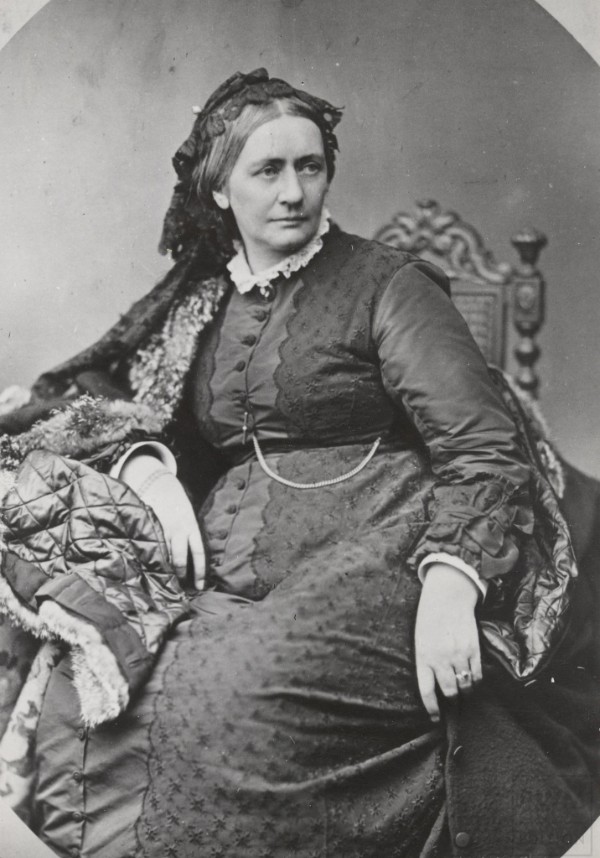
Clara Schumann
Whatever came between them later, it did not begin as competition. The first time they met was in April 1838, in Vienna, at a moment when both were already attracting extraordinary attention as pianists. Franz Liszt was 26, already a sensation. Clara Wieck was 18, a prodigy touring without the man she would not marry for another two years. They stayed at the same hotel and played for each other privately and at soirées.
There was genuine admiration. Clara wrote to Robert that Liszt was an artist one had to see for oneself and that Robert would get on with him well, since Liszt rated his compositions “extraordinarily highly”. In her diary, she went further: “Liszt could not be compared to any other pianist” – he aroused “fear and astonishment” and yet was “a very kind artist”. When she played him Schumann’s Carnaval, Liszt reportedly exclaimed, “What a mind! That is one of the greatest works I know”.
Schumann – Carnaval (Eliso Virsaladze)
That same Vienna trip made Clara something of a phenomenon. The Austrian Empress named her Imperial Court Virtuosa, the first young person, the first Protestant, and the first woman to receive the title. The city’s critics started what became known as the “Clara war” – a public argument over who was the superior pianist: Clara, Liszt, or the Austrian virtuoso Sigismond Thalberg. Neither Clara nor Liszt showed much interest in the manufactured rivalry.
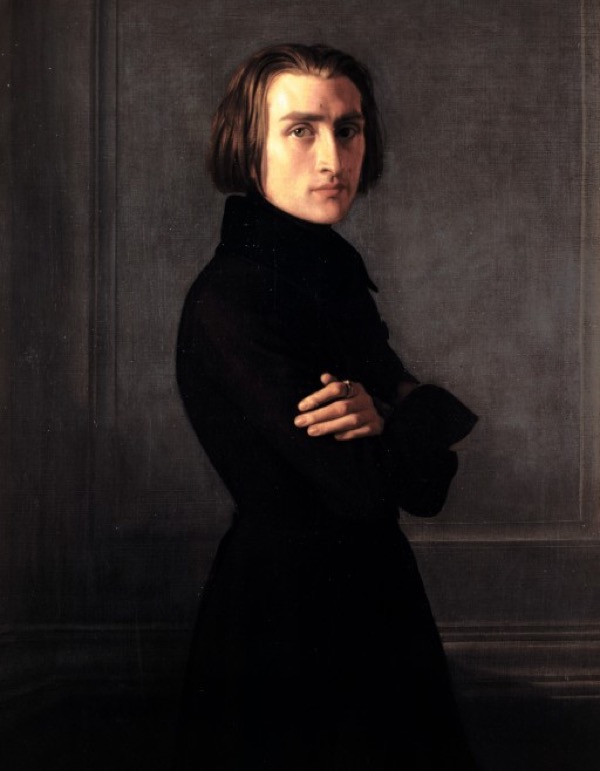
Franz Liszt
The first real fracture came a decade later, in June 1848, at the Schumanns’ house in Dresden. Liszt had been invited to an evening gathering. He arrived two hours late. Then, after hearing Robert’s Piano Quintet performed, he dismissed it as “too Leipzig” – a jab at the city’s more conservative musical culture, closely associated with Schumann. Robert, characteristically more forgiving, soon resumed his friendship with Liszt. Clara did not. She had already expressed reservations about Liszt’s compositions and now also rejected his showmanship at the keyboard.
Schumann Piano Quintet Op. 44 (International Chamber Music Festival Utrecht)
Liszt’s regard for Clara, however, remained strong. In 1854, he organised a concert for her in Weimar, where she performed Robert’s Piano Concerto while Liszt conducted two of Robert’s other major works. That same year, he wrote a substantial essay on the Schumanns for the Neue Zeitschrift für Musik, spread across three issues. Whatever Clara felt about Liszt as a composer, Liszt felt no corresponding need to diminish either her or her late husband.
So what explains the coldness, if not a single social slight? The Dresden soirée mattered, but the real fault line runs through something far larger: the mid-19th-century civil war in European music now known as the War of the Romantics, in which Clara Schumann was not a bystander but a general.
Two camps had formed. The New German School – Liszt, and increasingly Wagner, soon to marry Liszt’s daughter Cosima – pushed programme music and the symphonic poem, breaking with classical form in favour of narrative and harmonic experiment. Berlioz, though French, was generally claimed by this same experimental camp for his own commitment to programmatic writing.
Liszt: Les Préludes • Thielemann • Berliner Philharmoniker
Against them stood the defenders of what they called absolute music: Brahms, the violinist Joseph Joachim, and Clara herself, who remained committed to the classical forms Robert Schumann had worked within and wary of what they saw as theatrical excess.
This second camp traced its lineage to Felix Mendelssohn, founder of the Leipzig Conservatoire, who had died in 1847 – before the split fully hardened, but whose name the conservatives claimed as their own. Liszt’s jab at Robert’s Quintet as “too Leipzig” was therefore more than a casual dismissal.
Mendelssohn: Étude in B-flat Minor Op. 104 No. 1 – Sergio Fiorentino
The split went beyond matters of musical taste: it reflected fundamentally different ideas about what serious music should be and what values it ought to embody. Like political factions, the two camps increasingly came to define themselves against each other, making neutrality feel impossible.
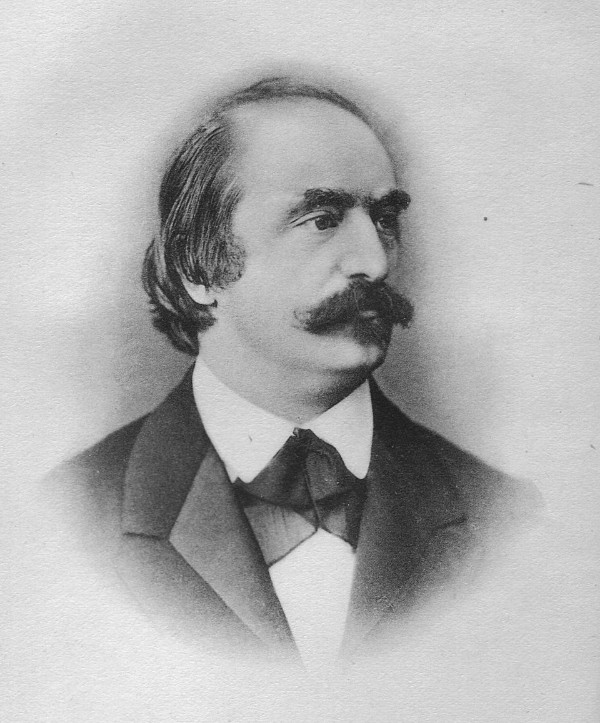
Eduard Hanslick
The critic Eduard Hanslick became the traditionalist camp’s most influential voice in print, publishing a treatise in 1854 arguing that music’s beauty lay in its own formal structure, not in its capacity to depict a story or scene. For all the excitement and innovation of the so-called New School, there is, to my ear, something much more profound in the inwardness of the Mendelssohn–Schumann–Brahms tradition.
Brahms: Intermezzo Op. 117 No. 2 – Horowitz
Joachim’s own path to the conservative side was not straightforward: as a young man, he had served as concertmaster of the Weimar orchestra under Liszt’s direction, only to grow disillusioned with his approach and end up firmly in the opposing camp within a few years.
Johannes Brahms had his own history with Liszt, and it did not begin well. In June 1853, aged 20 and not yet a published composer, Brahms was given an entrée to Liszt’s circle in Weimar through a letter of introduction from Joachim. Liszt sight-read through Brahms’s early piano pieces and praised them generously. Asked in turn to play something of his own, Liszt sat down and played his recently completed Piano Sonata in B minor – a piece he would go on to dedicate to Robert Schumann. Partway through, those in the room noticed that Brahms had fallen asleep in his chair. Liszt finished playing the sonata, stood up and left the room without a word. Whether it was travel exhaustion or plain boredom has never been settled, but the young Brahms had managed to insult one of Europe’s most celebrated composers.
Liszt: Piano Sonata B Minor – Lazar Berman
In 1860, Brahms and Joachim co-signed a public manifesto denouncing the New German School’s principles, condemning what it called a “perversion” of musical values by a school it accused of producing novelty without merit. It named no names but left no doubt about its target. It was also, by most accounts, a public-relations disaster: poorly timed and thinly supported, its wording was leaked and mocked in the press before it was even properly published. But it shows how seriously the argument was taken.
Clara never signed a public document herself, but her letters and her programming left no doubt which side she was on. Her opposition to Wagner hardened into something close to boycott. She generally refused to attend concerts where his music was performed. When Wagner invited her personally to a staging of Das Rheingold, she went – then wrote to Brahms afterwards: “How posterity will marvel at an aberration like this spreading all over the world!“
Wagner: Das Rheingold – Rhinemaidens (Excerpt)
It has often been irresistible to later commentators to interpret the Clara-Liszt feud as jealousy: Clara’s musical convictions recast as personal resentment. The framing, however, is deeply unfair. Nobody describes Brahms’s decades-long refusal to perform Liszt’s music as jealousy – it is treated as a principled conviction, worthy of a serious composer. Clara’s identical stance, on the other hand, gets reduced to a personality flaw.
The same pattern shows up in how history has treated Clara’s closeness with Brahms himself. When Robert attempted suicide in early 1854 and was committed to an asylum, Brahms rushed to Clara’s side and stayed near her for months. Biographers have spent a century and a half speculating about whether the relationship was romantic or simply devoted, while the question of its possible sexual nature has often overshadowed the depth of their friendship and intellectual alliance. Most serious biographers conclude the relationship was almost certainly platonic, however emotionally intense.
It is another version of the same instinct: to reduce a woman’s life to a question about her feelings towards a man, rather than taking her values and principles seriously.
Mao Fujita performs Clara Schumann’s Three romances op. 21
This is not to say that personal feelings played no part. Clara’s fondness for Liszt in 1838 was real, and so was her disappointment a decade later. The Dresden slight undoubtedly stung more for coming from someone she had once admired without reservation. But treating the relationship as a simple hate story obscures a far more complex and interesting reality.
We tend to look for a single reason when friendships end, but often there isn’t one: just accumulated disappointments, changing loyalties, and two people gradually moving in different directions. What makes Clara Schumann and Franz Liszt’s story unusual is not that their friendship deteriorated, but that its deterioration became entangled with one of the defining aesthetic battles of the Romantic era.
Clara Wieck-Schumann: Piano Concerto in A minor, Op. 7: II. Romanze – Beatrice Rana
Nico de Napoli is a pianist and writer whose articles have appeared in publications on classical music, applied linguistics, psychology and wellbeing. He is also an integrative coach and yoga therapist.
For more of the best in classical music, sign up for our E-Newsletter