Pianist Minyoung Rho’s new recording, à la manière de…, brings together six piano preludes by composer Clifton Callender. Released by Manus Label, the album grew out of a connection that began at Florida State University, where Rho first encountered Callender’s music and later sought out his scores.
Rho was introduced to Callender while performing with the university’s new music ensemble. The following year, she heard one of his compositions at FSU’s biennial Festival of New Music and was immediately drawn to the music. She contacted Callender about obtaining his scores, and he was happy to send them.
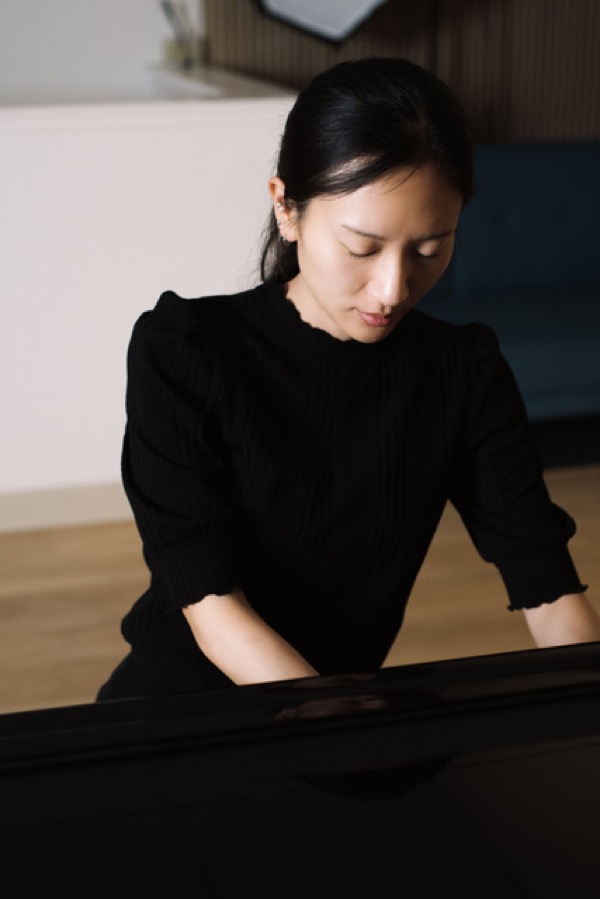
Minyoung Rho
Callender remembers their first meeting differently. Rho had been brought in at the last minute to replace an ill pianist in a piano duo performance. After hearing her play and listening to the two musicians interact, he was convinced the performance was in good hands. “I knew from the start that Minyoung was an exceptional musician and pianist,” he recalls.
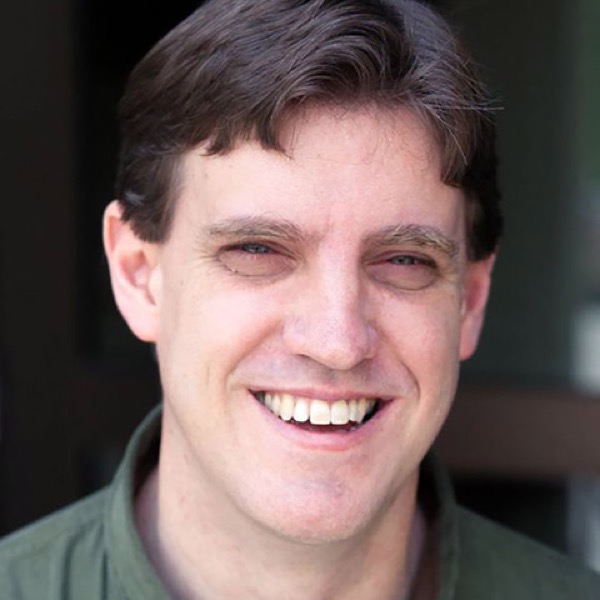
Clifton Callender
Since then, Rho has performed several of Callender’s works and ultimately recorded à la manière de…. The title, meaning “in the manner of,” reflects the composer’s approach to musical influence. Each prelude draws on a different composer or musical figure, but rather than simply imitating the original, Callender transforms these references through his own contemporary musical language.
The idea for the cycle developed gradually. Callender initially wrote the Chopin prelude simply because he wanted to write a short piano piece. A Bach prelude followed, written for the retirement of his teacher, composer Shulamit Ran, from the University of Chicago. With two short pieces already written, he began to wonder what might happen if he continued the idea, creating piano music inspired by other composers.
The cycle eventually expanded to six preludes. Chopin and Bach are joined by jazz pianist Art Tatum, Liszt, American modernist Ruth Crawford Seeger, and a final movement bringing together references to David Lang, György Ligeti, and Louis Andriessen.
For Rho, the attraction was precisely this combination of familiarity and discovery. She recognised connections to Chopin, for example, but found that Callender did not simply imitate his model. “The piece reminds [me] of Chopin’s Prelude No. 19 and the Finale of Sonata No. 2,” she explains, “but at the same time it is completely different.”
She was particularly drawn to how Callender’s music looks backwards while speaking in a distinctly contemporary language. The references give the listener something to recognise, while the music itself remains original and often avant-garde. As a performer, Rho also appreciated the combination of technical demands and musical ideas, making the cycle an appealing work for recital programming.
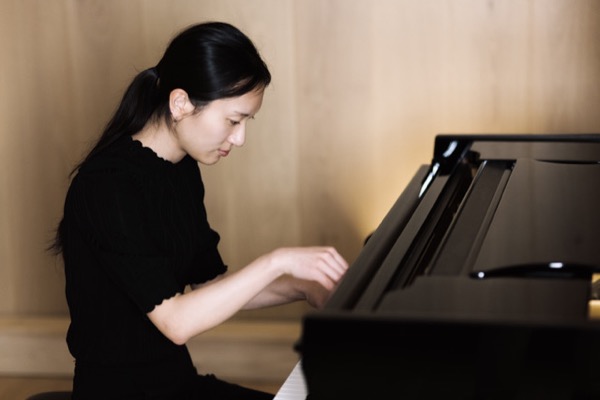
Minyoung Rho
Rho first performed the complete à la manière de… several years ago. When she returned to the cycle to record it, her experience with other Callender works had given her a deeper understanding of his musical language. Details she had missed before began to emerge, and the music felt more natural in her hands.
“The more I play it, the more I know it,” Rho says. Returning to the cycle after several years gave her a clearer sense of its character and how to communicate Callender’s ideas. The process reminded her of returning to a work she had learned much earlier in her career. With time and experience, the same notes can reveal something entirely different.
Her preparation also included conversations with David Kalhous, a pianist and professor at Florida State University who had originally been given the work and had played it. Rho sought his thoughts on some of the references within the cycle. In the fourth movement, “Tatum,” for example, Kalhous pointed her toward connections with Ligeti’s “Fanfares” from Études, Book 1, No. 4, which she had not previously known. Once she heard the piece, the connection became clear.
Kalhous’ experience as a pianist was also useful in approaching the Art Tatum movement, particularly its rhythmic character. Rho spent time listening, experimenting, and exploring the movement from different perspectives.
For Callender, hearing Rho return to the cycle over the years has been equally revealing. He had heard her first performance, but when a performer lives with a work for an extended period, something changes. The music gradually settles into the performer’s own interpretation.
“She played an amazing [performance] the first time,” Callender says, but hearing her return to the music later was particularly satisfying because she had had the opportunity to “sit with a piece” and make it her own. For a composer, he says, that is deeply gratifying. As Rho’s former teacher, it was also a source of pride.
The pianist and composer are already looking toward their next collaboration. Callender is developing a larger project addressing the climate crisis, including works for orchestra, voice, piano, and other instruments. Rho will participate in a forthcoming recording of Dear Matafele Peinam, a work for piano and mezzo-soprano based on a poem by Marshall Islands poet and climate activist Kathy Jetñil-Kijiner.
For now, à la manière de… captures an important stage in a musical relationship that began almost by chance. What started with a new music ensemble at Florida State University developed into a friendship and artistic partnership, with Rho returning repeatedly to Callender’s music and Callender watching one of his works gradually become part of a pianist’s own musical voice.
The album is therefore more than a recording of six contemporary preludes. It is also a record of an ongoing conversation between composer and performer, between the music of the past and the present, and between a piece as it was first imagined and what it becomes through years of performance.
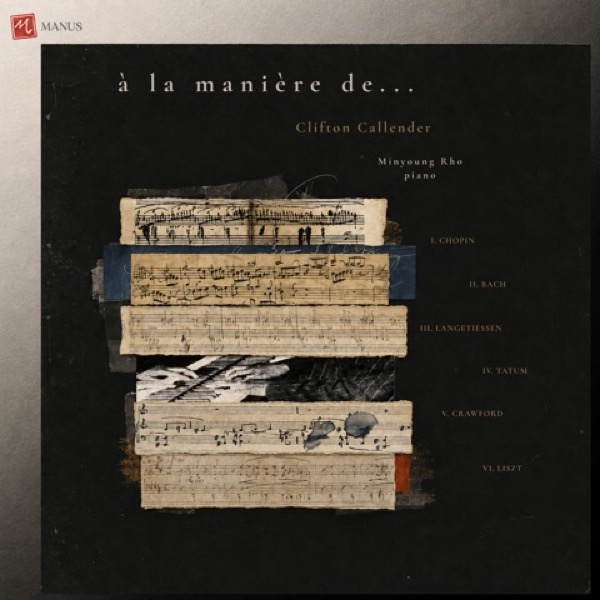
Performer: Minyoung Rho
Composer: Clifton Callender
Label: Manus Label
Release Date: August 7, 2026
For more of the best in classical music, sign up for our E-Newsletter