History has a reliable habit of erasing women who made their mark – and the history of classical music is no exception. Some were too inconvenient to remember.
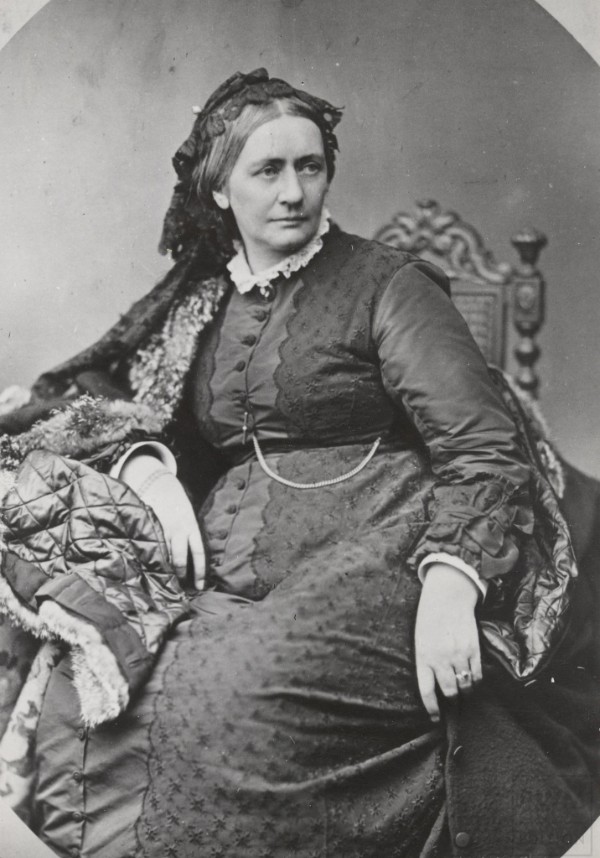
Ethel Leginska (13 April 1886 – 26 February 1970) was one of them.
Ethel Leginska • Chopin: Waltz Op Posth in E Minor
One of the most famous pianists in America in the 1920s, she conducted major orchestras on two continents and founded multiple symphony orchestras. She also composed three operas – Gale (1935), The Rose and the Ring (1932, premiered 1957) and Joan of Arc (premiered 1969), and a substantial body of orchestral, chamber music and solo piano works. Yet you have almost certainly never heard of her.
Leginska was born Ethel Liggins in 1886 in Hull, a working-class port city in the northeast of England – the kind of place where, at the time, a girl with a gift for the piano was more likely to end up entertaining at church socials than performing in the world’s great concert halls.
The daughter of a builder and a governess, Ethel was different. By the age of six, she was performing entire concert programmes from memory. The city took notice, and so did Mary Emma Wilson, the wife of a shipping magnate, who became Ethel’s patron and funded her studies at the Frankfurt Conservatoire and then in Vienna with Theodor Leschetizky – the most sought-after piano teacher of the era.
When the time came to launch an international career, a well-connected socialite advised young Ethel that “Ethel Liggins from Hull” wasn’t going to cut it in concert halls still dazzled by the mystique of Russian and Polish virtuosos. So Ethel Liggins became Ethel Leginska – a name that suggested Slavic glamour. It was a small act of reinvention in service of a much larger ambition, and it worked.
Leginska debuted in London at the age of 16, toured Australia at 19, and by her 20s she was a fixture on European concert stages. In 1913, she arrived in New York for her official American debut, and the city went a little wild.
Bach: Prelude & Fugue N° 3 (Book 1) • Ethel Leginska
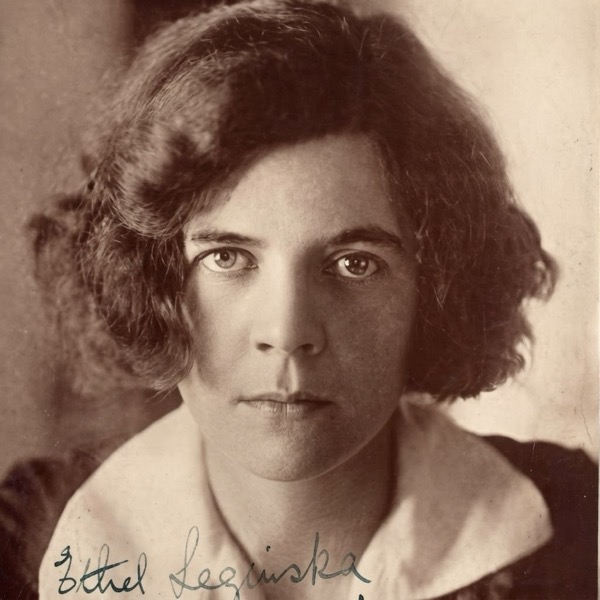
Ethel Leginska
There’s a tendency to imagine early 20th-century classical audiences as stiff and reserved, but Leginska’s American career played out more like a pop phenomenon than a polite recital series. Her concerts were sold out. She once performed an entire recital at Carnegie Hall without an interval, a novelty that added to her reputation for doing things differently.
Her programmes – which included the Germanic canon, Chopin, Liszt and Rachmaninoff – were delivered with a physical freedom and emotional intensity that seemed to defeat the usual critical vocabulary. One reviewer resorted to calling her “a musical Joan of Arc, a genius moved by unseen powers.”
Leginska also looked unlike anyone else on stage. While other women performers of the era wore the obligatory bare-shouldered evening gown, Leginska showed up in what amounted to a tuxedo: a black velvet jacket, slim skirt, and white shirt. Her hair was bobbed before bobbed hair was fashionable.
Her young fans copied her look so thoroughly that critics described seeing “numerous little Leginskas” in the audience. She later explained that her signature look was “always the same and always comfortable, so that I can forget my appearance and concentrate on my art.”
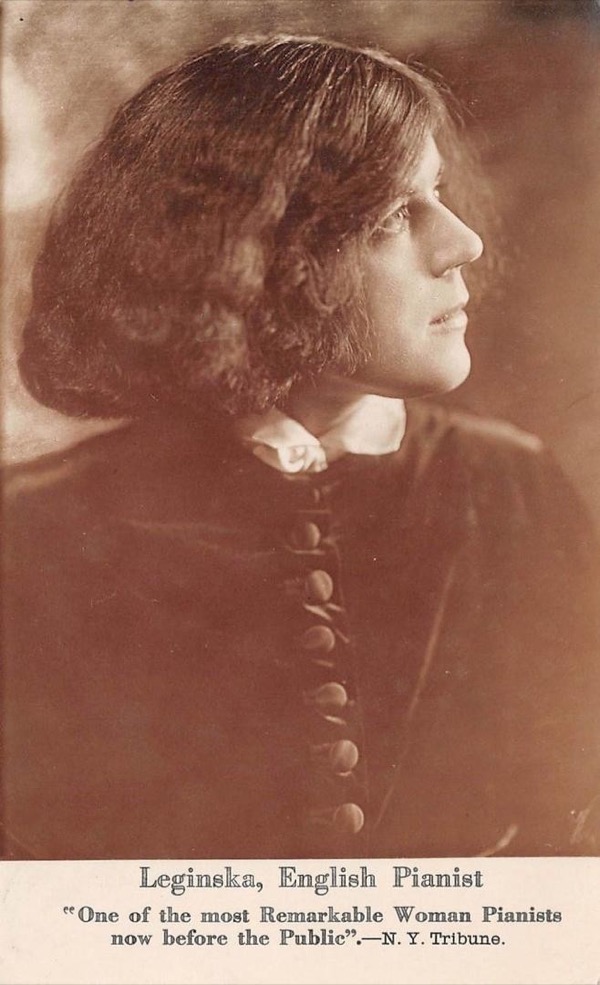
Ethel Leginska
Rameau–Leschetizky: Gavotte and Variations – Ethel Leginska
But beneath the persona of the glamorous iconoclast was a woman under considerable professional and psychological pressure. The breakdowns, when they came, were dramatic and very public. In January 1925, she set out in a taxi for an appearance before a crowd of 2,000 at Carnegie Hall and simply vanished. A substitute was found at the last minute. The police searched for her for four days. She was eventually found in Boston, having wandered the city in a daze with, as she later described it, “music singing” in her head, stopping at a friend’s apartment to write the melody down.
The following year, she abandoned a performance before 4,000 people in Indiana, having complained the previous day about the concert hall, which she had called “an old barn”, and the absence of a proper orchestra. Doctors diagnosed a severe nervous breakdown and ordered her to rest for at least a year.
The press was not kind. In the 1920s, nervous breakdowns were widely considered the victim’s fault; the circumstances of a person’s life were largely discounted.
For a woman operating without the institutional support or management infrastructure available to her male counterparts, breakdowns were perhaps inevitable. The remarkable thing is that she kept going.
Ethel Leginska plays Chopin: Ballade N° 1 (Piano roll)
Her marriage to the American composer Emerson Whithorne, whom she had met while studying in Vienna, produced a son, Cedric, and then a custody battle that she, predictably, lost.
This was an era when a woman who chose a career over domestic life was seen as morally suspect.
Leginska responded by declaring that self-sacrifice for the family’s sake was “overrated” and that “it is impossible for a woman with a career to be unselfish.”
In the early 20th century, that was practically revolutionary.
What came next was even more radical. By her late 30s, Leginska had pivoted. She studied conducting in London and Munich and traded on her fame as a pianist, offering to perform piano concertos in exchange for the opportunity to conduct. It was a savvy workaround for a field that had no real mechanism for letting women in through the front door.
It worked. She guest-conducted in Munich, Paris, London and Berlin, including a landmark performance with the Berlin Philharmonic in November 1924, where she appeared as pianist, conductor and composer.
Picture a slight woman wearing a black tuxedo jacket striding to the podium. The audience murmurs. Women do not conduct orchestras. They play in parlours or might perform as soloists if they’re very talented, but they certainly don’t stand in front of the New York Symphony Orchestra and raise a baton.
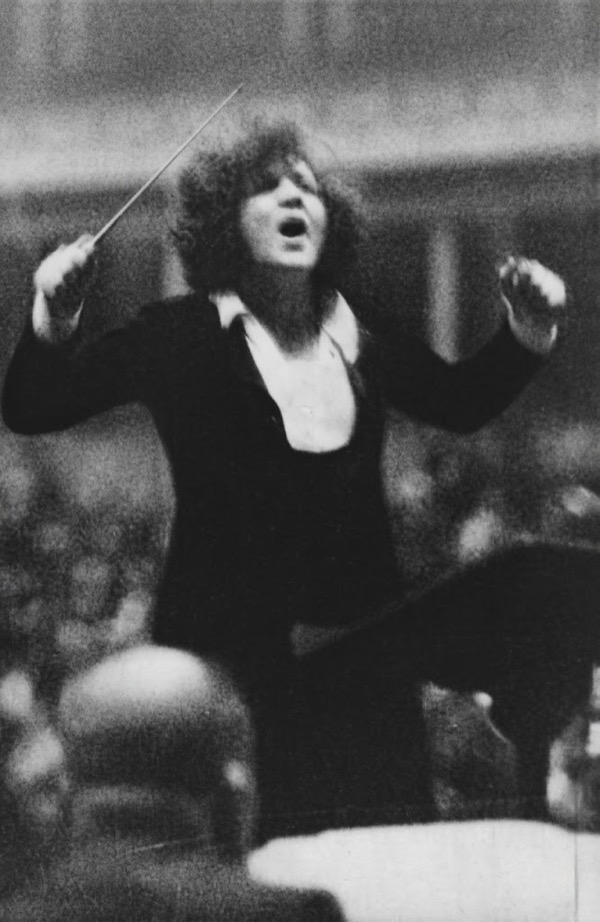
Ethel Leginska conducting
In 1925, Leginska did exactly that, making her American conducting debut at Carnegie Hall.
The Christian Science Monitor in Boston wrote that she “knew what she was about and had definite notions of what she wanted, as well as the means to impress her desires on the players.” At the Hollywood Bowl that summer, 30,000 people were in the audience, and the applause grew into what one critic described as “a veritable ovation culminating with cheers and bravos.”
The New York Herald Tribune, meanwhile, offered the backhanded compliment that nothing “serious” had occurred to mar the performance. Detractors in the press argued, without apparent irony, that women simply did not possess the intellectual rigour to handle the complexities of conducting.
None of which stopped her – quite the opposite. She founded the Boston Women’s Symphony Orchestra, took them on two major tours, established the National Women’s Symphony Orchestra in New York in 1932, and directed the Chicago Women’s Symphony Orchestra.
These weren’t consolation prizes for a woman locked out of the mainstream – they were deliberate acts of institution-building, creating spaces for female musicians at a time when women were still largely excluded from the orchestras that mattered.
In 1935, she conducted her own opera, Gale, at the Chicago Civic Opera House – the first time a woman had ever conducted her own opera in that city’s history. Many years later, at the age of 71, she conducted, in Los Angeles, another opera she had written decades earlier, The Rose and the Ring.
Ethel Leginska died in Los Angeles in 1970, aged 83, teaching piano nearly until the end.
And then she was more or less forgotten.
The orchestras she founded didn’t survive her; the operas she composed were never taken up by the mainstream repertoire; and the institutions she challenged had little interest in preserving her legacy.
She simply slipped away.
A 2002 reissue of her mid-1920s Columbia recordings introduced her playing to a new generation, to considerable acclaim. One critic described the recordings as revealing “a superior musical mind coupled to an unerring technique.”
The Naxos label included her in an anthology of historic women pianists, but her compositions remain largely unperformed. A biography published in 2002 by Marguerite and Terry Broadbent remains the only substantial account of her life, and is itself little known.
Ethel Leginska: 3 Victorian Portraits (Jeaneane Dowis, piano)
The baton she carried, however, has been picked up by others. Women conductors like Marin Alsop – the first woman to serve as music director of a major American orchestra – and, in the UK, Alice Farnham, who runs a dedicated women’s conducting programme at the Royal Philharmonic Society, are doing now what Leginska was doing a century ago: fighting for space, building institutions and making room for others.
Ethel Leginska didn’t wait for permission. She didn’t wait for orchestras to decide they were ready to let a woman stand at the podium; she bargained her way in, and when that wasn’t enough, she built her own. She had no interest in softening her opinions about what women in the arts deserved, nor in performing the gracious, self-effacing persona the world expected of successful women. She wore a tuxedo, said what she thought, broke down occasionally under the weight of it all, picked herself up and kept going.
The structural barriers she was fighting – the assumption that serious composition and conducting were male domains, and the expectation that a woman should choose between her art and her family – are not entirely over. Women conductors are still rare enough that their appointments make news; women composers are still chronically underrepresented in concert programmes; and even women pianists are still in the minority in international competitions and major concert halls.
The conversation about how institutions support (or fail) creative women is still very much alive. Ethel Leginska was having that conversation in 1916.
It’s well past time we remembered her name.
Nico de Napoli is a classical pianist whose writing has appeared in several international publications, including Pizzicato and Classic Voice. He is also an integrative coach specialising in performance anxiety and stress management, drawing on his experience as a yoga therapist.
For more of the best in classical music, sign up for our E-Newsletter