Complete Bach Cello Suites are not foreign to concert halls, but playing all six in one concert in sequential order remains rare. I have always believed that the six suites progress sequentially in difficulty and depth, and it is unusual to hear them presented in this way.
Jean-Guihen Queyras does exactly this for his 12 September Wigmore Hall concert, sold out despite the BBC Proms Last Night taking place out there on the same evening. He leads the audience through Bach’s searching writing for the cello from the latter’s Köthen years, offering a performance which maintains uncompromising supreme quality despite its marathon length.
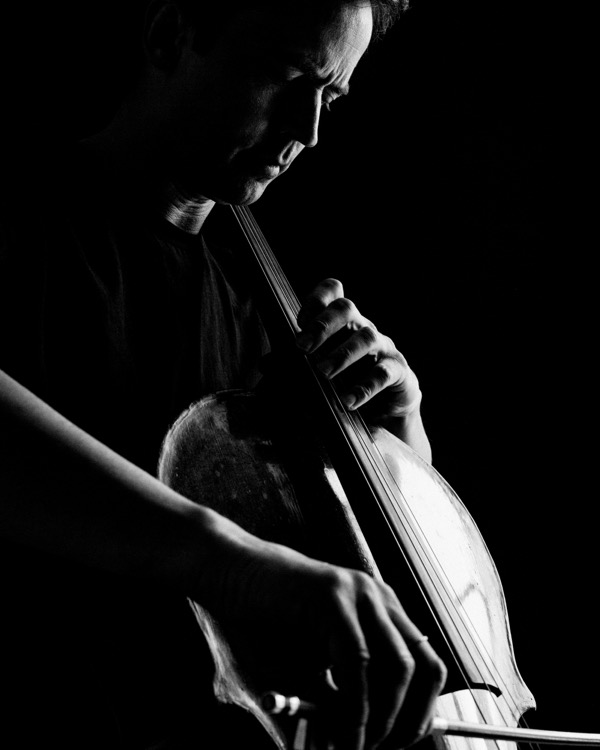
Jean-Guihen Queyras
Queyras divides the two-and-a-half-hour concert into two halves, playing the first four suites before the interval and the heavier, more difficult Suites Nos. 5 and 6 in the second. It is indeed a considerable amount of playing, enough even to exhaust the strings: Queyras’ A string occasionally squeaks in the final suite (possibly because he has tuned it back after the scordatura Fifth Suite), but the uncompromising desire to express is never lost.
There are so many intricacies to admire in rhythm and articulation in Queyras’ reading. He uses a light Baroque bow on his modern cello, allowing for flexible articulation while retaining expressive colouring. One no doubt hears the influence of historically informed practice, but is also struck by the sheer power of Queyras’ long phrasing, which might not work in quite the same way on a Baroque cello. Queyras’ conception of Bach is, having said that, far removed from a romanticised fashion, and the sense of flow is never absent. Bach’s suites are known for incorporating elements of dance and speech, and Queyras knows how to balance the expressive force of both.
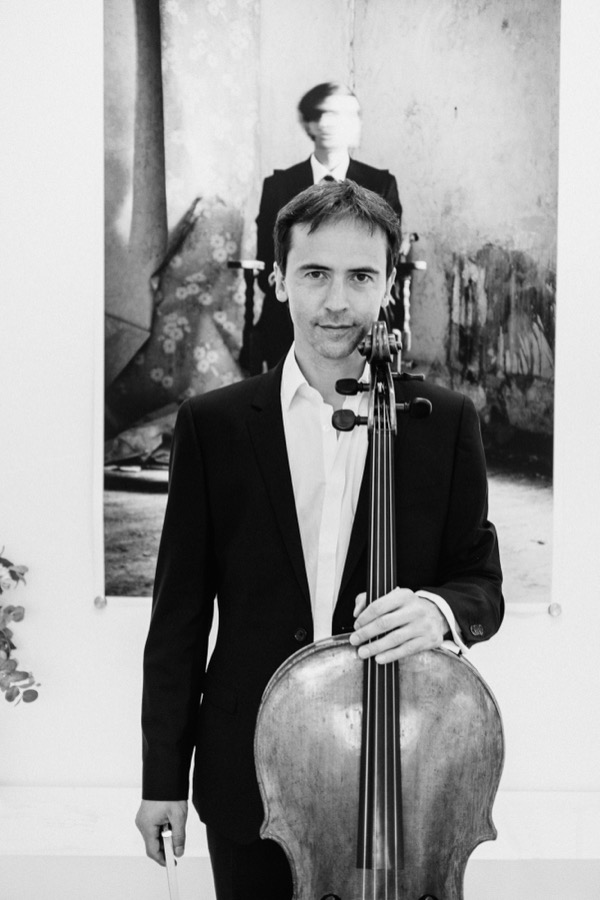
Jean-Guihen Queyras
His Courante in Suite No. 2 is extremely fast, and the electrifying sense of catharsis remains uncompromising even at the price of some loss of dance character. There is much drive and bite in his pouring articulation – the plunge into the still greater emotional depth of the following Sarabande therefore carries exceptional weight. Syncopation is particularly emphasised in the Courante of No. 5, another movement of great emotional force preceding a Sarabande of even more profound tragic power; Queyras’ control of bow colour brings out the dramatic inner struggle within the harmonic progression. The technically easiest and musically most straightforward Suite No. 1, on the other hand, is perhaps the best example of the breadth and depth Queyras can achieve.
Johann Sebastian Bach: Suite for Solo Cello No. 2 in D Minor, BWV 1008: III. Courante (Jean-Guihen Queyras, cello)
Queyras, though almost 60, displays impeccable technical control sustained throughout the evening. The sweeping arpeggios in the Prelude of No. 3 are executed with remarkable precision while the dramatic upheaval of the movement is fully captured, even though the cello’s endpin slips midway through and Queyras has to continue in an uncomfortable position—you could hardly tell by listening alone. Particularly admirable is his playing in the Fourth Suite Prelude, where the tension of the arpeggios is built with extraordinary nuance and continuity through a gradual, large-scale crescendo, and the change of figuration after the emotional apex is masterfully rhetoricated.
Johann Sebastian Bach: Suite for Solo Cello No. 4 in E-Flat Major, BWV 1010: I. Prelude (Jean-Guihen Queyras, cello)
Nowhere is the contrast in dynamics and colour more striking than in the dramatic Fifth Suite. The faintest, tenderest pianissimi in the simplest yet most profound of the Sarabandes carry enormous weight, while the pressing energy of the faster movements shows the density of sound Queyras can achieve with his Baroque bow. The particularly challenging high notes on the A string in the Sixth Suite, originally intended for a fifth E string, are also delivered with glorious evenness of sound and glamorous colour.
Johann Sebastian Bach: Suite for Solo Cello No. 5 in C Minor, BWV 1011: IV. Sarabande (Jean-Guihen Queyras, cello)
Queyras is rather brief and unpredictable with da capo repetitions. When he does repeat a section—which happens only occasionally, as in the opening sections of the Courante or Gigue of the final suite—it sounds more like an instantaneous revisiting than a pre-set recapitulation. In the same suite, however, he deliberately omits the repetition of the first Gavotte and plunges into the final Gigue with decisive joy.
That omission may partly be explained by the treatment of the second Gavotte, which in particular features exciting ornamentation heard nowhere else, enriching the hurdy-gurdy effect to new heights. Another genuinely inspired moment comes in the fifth movement of the Second Suite: after the heart-rending Sarabande, Queyras begins the Minuette theme in the softest pizzicato, creating a place of consolation and repose after the emotional intensity of the preceding movement.
One may be tempted to compare Queyras’ live performance with his recent 2023 studio recordings, but the immediacy and spontaneity of the moment in his playing are irreplaceable, even if the broader perspective remains similar. The technical errors, few as they are, together with the slipping cello, only reinforce what makes this live marathon distinctive – an undertaking that could only be carried with such conviction by a cellist of Queyras’ craftsmanship.
For more of the best in classical music, sign up for our E-Newsletter