Ludwig van Beethoven is one of the most famous composers who ever lived – but how much do you really know about him?
Beyond his iconic symphonies and the legendary deafness, he lived a life full of mystery, heartbreak, and surprising twists.
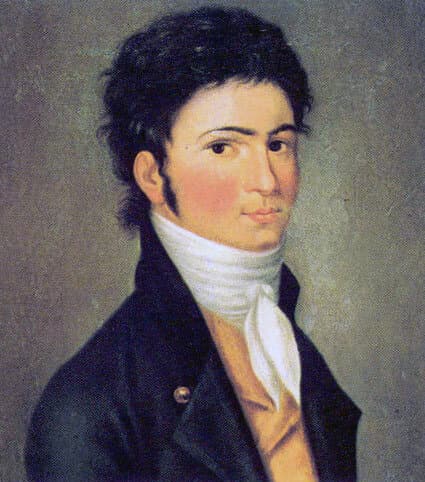
Beethoven as a teenager
Here are 13 Beethoven facts that might just change how you hear his music.
We’re only guessing what Beethoven’s birthday was.
Records show that Ludwig van Beethoven, the second child of court composer Johann von Beethoven and his wife Maria, was baptised on 17 December 1770 in the town of Bonn in present-day Germany.
It was traditional for babies to be baptised within 24 hours of their birth, so historians assume he was born on 16 December – but it is not impossible that he was born on another day.
We wrote about Beethoven’s birth and young adulthood here: https://interlude.hk/on-this-day-17-december-ludwig-van-beethoven-is-born/
Beethoven may have studied with Mozart – but we don’t know for sure.
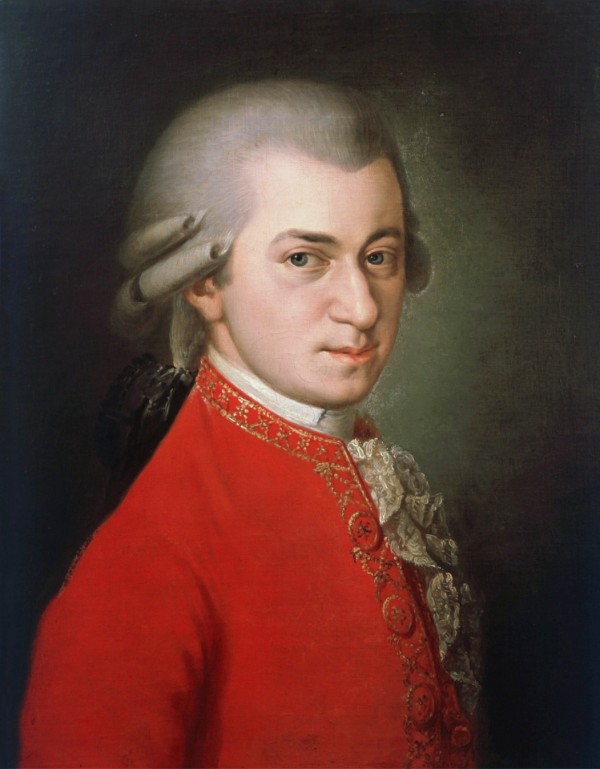
Barbara Krafft: W. A. Mozart, 1819 (Gesellschaft der Musikfreunde)
In April 1787, when Beethoven was a 16-year-old prodigy, he travelled to Vienna to study music, aiming to work with Mozart. However, we don’t know if the two ever met.
Just two weeks after his arrival in Vienna, word reached Beethoven that his mother’s illness had worsened.
He was the eldest surviving sibling, and his father was abusive and alcoholic, so he hurried back to be with his mother and younger siblings. She died of tuberculosis on 17 July 1787.
He spent the next five years in Bonn, helping to provide for his grieving father and younger brothers.
By the time Beethoven returned to Vienna to study with Haydn in 1792, Mozart was dead.
We answered a question about Beethoven and Mozart’s relationship here: https://interlude.hk/fifteen-of-the-most-frequently-asked-questions-about-beethoven/
Beethoven never married, despite being in love multiple times and proposing at least once.
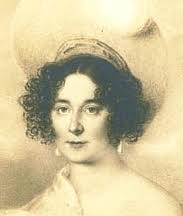
Therese Malfatti (Beethoven House, Bonn)
Beethoven never married – but that doesn’t mean he didn’t fall in love. In fact, he fell in love multiple times, and deeply.
The reason it never worked out was that he invariably fell in love with young aristocrats, and a young aristocrat marrying a working composer – no matter how talented – would have been unthinkable.
He proposed at least once to Therese Malfatti, around 1810 (the woman who some believe inspired Für Elise), but she turned him down and married a nobleman instead.
We looked at the relationship between Beethoven and Malfatti, and her potential relationship to Für Elise: https://interlude.hk/for-who-beethoven-bagatelle-a-minor-fur-elise/
Scholars have argued over who Beethoven’s famous “Immortal Beloved” was.
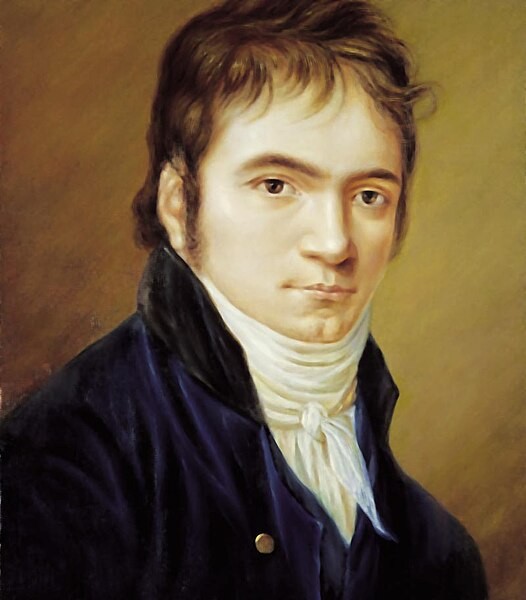
Christian Horneman: Ludwig van Beethoven, 1803 (Beethovenhaus Bonn)
Although he never married, after his death, a passionate, unsent love letter was discovered in Beethoven’s desk, dedicated to his “Immortal Beloved.”
We don’t know who she was or why he never sent it.
The two leading candidates are Antonie Brentano (a friend and married woman) and Josephine Brunsvik (a student and widowed love interest).
The 1994 film Immortal Beloved dramatises the story – with an eyebrow-raising reveal.
We looked at who the most likely candidates are here: https://interlude.hk/beethovens-immortal-beloveds/
Beethoven may have had an illegitimate daughter.
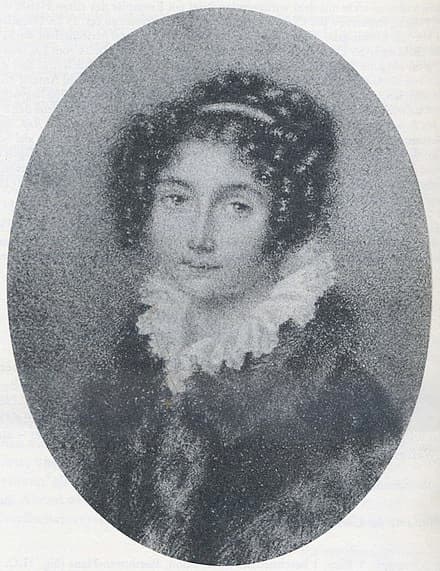
Josephine von Brunsvik before 1804
After the death of her first husband, Josephine Brunsvik and Beethoven had a secret relationship. However, in part due to pressure from her family, she did not marry him.
Instead, she married an Estonian baron in 1810, but that marriage was unhappy. He left her in the summer of 1812: the same summer that Beethoven wrote his Immortal Beloved letter.
Nine months later, she gave birth to a baby girl named Minona. Historians have speculated that the child may have been Beethoven’s – especially since Minona, spelt backwards, is Anonim: i.e., Anonymous.
We looked at the truly tragic story of Josephine Brunsvik and her children: https://interlude.hk/josephine-von-brunsvik-was-this-tragic-figure-beethovens-immortal-beloved/
Beethoven dedicated his third symphony to Napoleon before becoming disenchanted by him and scratching out the dedication – and you can see that mark in the manuscript today.
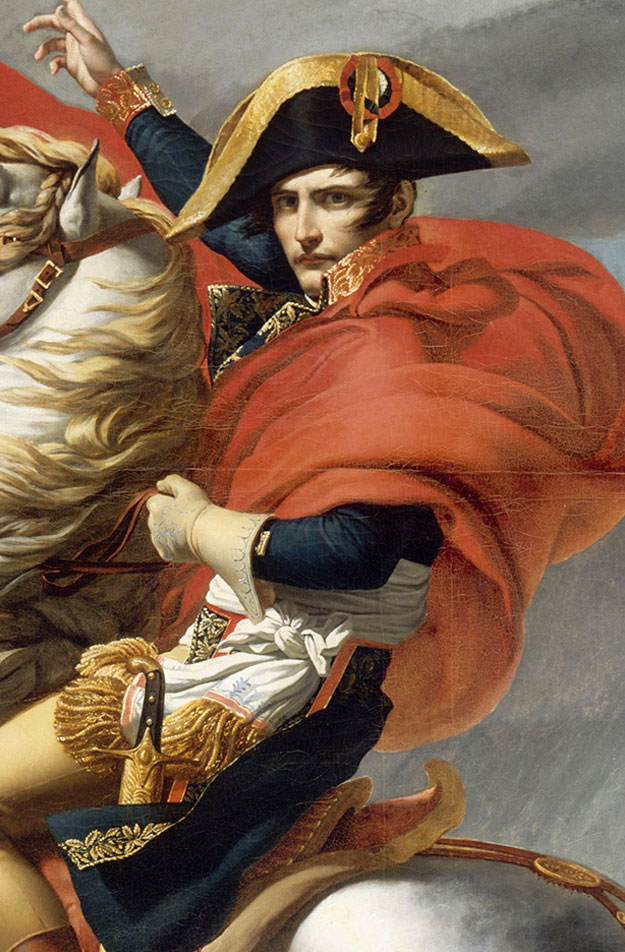
Napoleon Bonaparte
Initially, Beethoven admired Napoleon, seeing him as a man of the people who had risen to power based on talent rather than birth.
It’s impossible not to note the similarities to Beethoven’s own career, and his belief that his talent made him just as worthy of respect as aristocrats.
Beethoven went so far as to dedicate his third symphony to Napoleon. However, when Napoleon declared himself Emperor in 1804, Beethoven felt betrayed.
He scratched out the dedication on the manuscript so violently that he tore through the paper. The marked-up manuscript survives today.
He renamed the symphony the “Eroica” (“Heroic”) and dedicated it to “the memory of a great man” – not a great man, period.
We looked at seven ways that Beethoven changed classical music: https://interlude.hk/seven-ways-that-beethoven-changed-classical-music-forever/
Beethoven’s Symphony No. 3, Movement 1
Beethoven didn’t go deaf all at once; he suffered from tinnitus and similar symptoms – and it deeply affected his mental health.
In October 1802, Beethoven wrote a remarkable unsent letter to his brothers called the Heiligenstadt Testament, pouring out his internal turmoil surrounding his hearing loss, and even toying with the idea of suicide because of it.
In this letter, he described how his hearing had been deteriorating for six years, which in turn led to unbearable feelings of estrangement from society.
His deafness did not manifest as peaceful silence. It started as high-pitched noises and relentless ringing – a kind of physical and mental torture that went on for years.
We don’t know what caused Beethoven’s hearing loss.
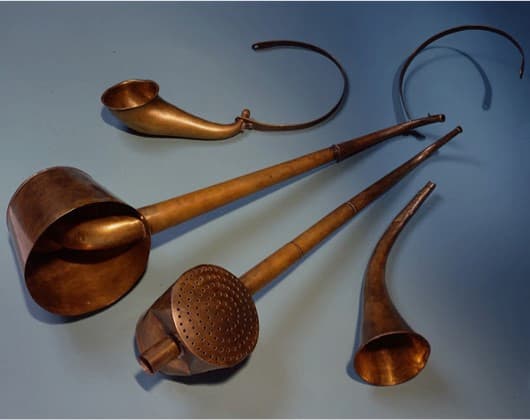
Beethoven’s ear trumpets
What caused Beethoven’s hearing loss?
Despite centuries of inquiry, we still don’t know for sure. Theories range widely: lead poisoning (suggested by analysis of his surviving hair), childhood physical abuse at the hands of his father, sarcoidosis, Paget’s disease, lupus, Cogan syndrome, and even tertiary syphilis.
But the honest answer is that we may never know for sure.
We looked at what Beethoven’s hearing loss was really like for him – and what might have caused it: https://interlude.hk/ludwig-von-beethoven-the-sounds-of-silence-the-cause-of-beethoven-hearing-loss-and-series-of-treatment/
Beethoven could still compose after going deaf because he could hear music internally.
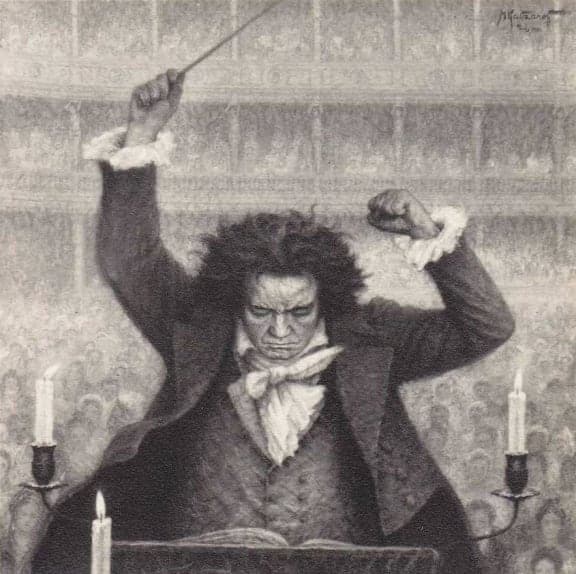
Beethoven conducting
Beethoven could still compose after losing his hearing because he could hear music internally.
Even though it seems like magic, this is a learned skill.
Over their years of study, musicians develop what’s called an inner ear: the ability to read, write, and hear music entirely in the mind, the same way you might read words silently without speaking them aloud.
Impressive? Yes. Magic? No.
We covered how Beethoven’s inner ear worked: https://interlude.hk/ludwig-von-beethoven-the-sounds-of-silence-the-cause-of-beethoven-hearing-loss-and-series-of-treatment/
Beethoven’s final string quartet, written when he was completely deaf
Beethoven fought a years-long legal battle to win custody of his nephew Karl, who attempted suicide in part because of the stress of the situation and difficulty of living with his uncle.
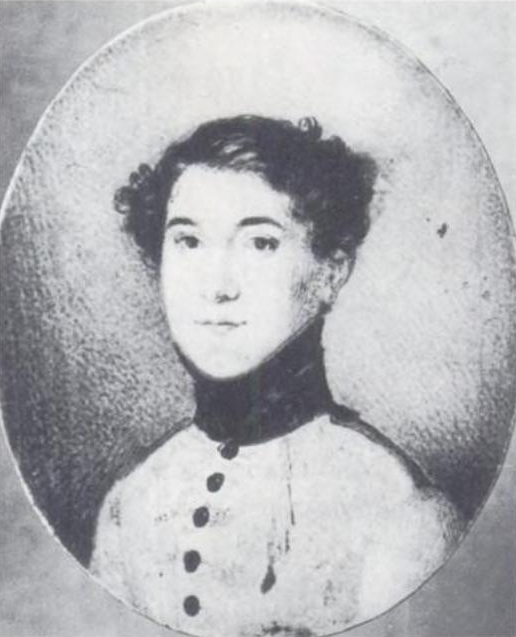
Karl van Beethoven, Beethoven’s nephew
After the death of his brother Kaspar in 1815, Beethoven fought a years-long legal battle to win sole custody of Karl – cutting out Karl’s own mother in the process.
Some have wondered why he pursued guardianship of Karl so intensely, but it’s important to remember that Ludwig had helped to raise his brothers after the early death of his mother, so he felt responsible for Karl after Kaspar’s death.
The experience was deeply traumatic for Karl, who was repeatedly separated from his mother against his will. In 1826, feeling trapped and tormented, he attempted suicide.
Beethoven was shaken, and he softened. But the damage was done. The custody battle had consumed years that Beethoven might otherwise have spent composing – and he died the year after Karl’s suicide attempt.
We wrote about the devastating court battle over Karl here: https://interlude.hk/composers-in-the-court-roombeethoven-versus-beethoven/
Beethoven’s hair was saved after his death and has been scientifically analysed. That’s actually how we know about his lead poisoning, which may have contributed to his death.
After Beethoven’s death, locks of his hair were saved by admirers – a common practice in the 19th century. Centuries later, scientists were able to analyse those surviving strands.
What they found was striking. Beethoven’s hair contained extraordinarily high levels of lead: up to 100 times the normal amount.
This has led scholars to theorise that lead poisoning may have contributed to both his hearing loss and his death.
How he was exposed to such levels of lead remains unclear. Theories range from wine and drinking glasses (Beethoven drank a lot) to medical treatments.
Beethoven died during a thunderstorm.
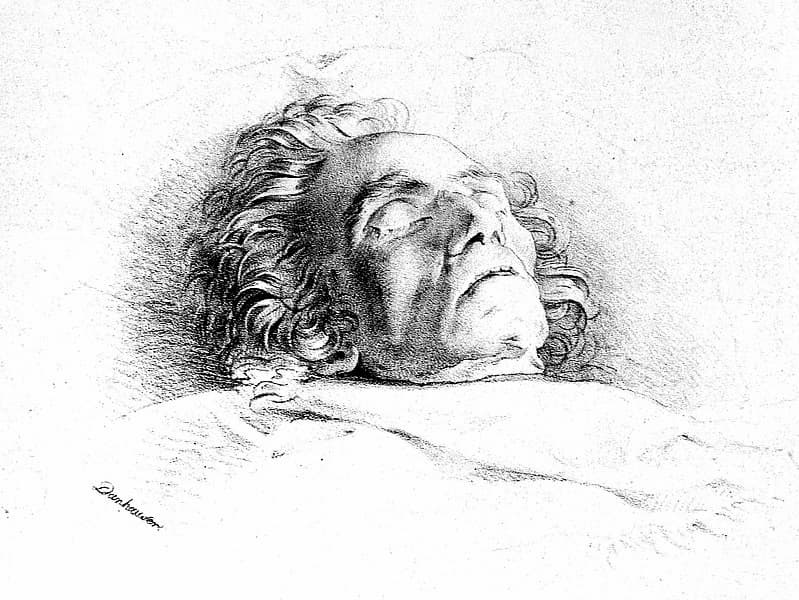
Beethoven on his deathbed
Beethoven died at the age of 56 on the afternoon of 26 March 1827.
We don’t know the details of what exactly proved fatal, but we know he had liver failure and other chronic health issues.
According to his friend Anselm Hüttenbrenner, who was keeping vigil at Beethoven’s deathbed, a thunderclap sounded, Beethoven clenched his fist at it, and then died.
This scene – of the musical rebel defying nature even unto death – has entered Beethoven mythology.
Find out more about Beethoven’s final illness and death: https://interlude.hk/behind-the-curtain-beethoven-funeral-music/
Für Elise – one of Beethoven’s most popular pieces – was only published forty years after his death.
The score to Für Elise was uncovered by a German writer and musicologist named Ludwig Nohl, whose primary claim to fame in life was discovering a manuscript version of this piece. He published it in his book New Beethoven Letters in 1867.
This charming piano work was dated 1810 and had been passed down through a few different owners – meaning that it sat unpublished for over half a century.
It has since become one of the most recognisable pieces that Beethoven wrote – an outcome that he would no doubt have been surprised by.
We looked at the history behind Für Elise and twelve other celebrated Beethoven works here: https://interlude.hk/beethoven-for-beginners-13-works-to-make-you-love-beethoven/
“Für Elise” Performed by Lang Lang
Conclusion
Beethoven’s life was as dramatic and turbulent as his music – full of unanswered questions, impossible loves, and hard-won triumphs.
If these facts have left you wanting to know more, we have plenty more Beethoven reading for you here at Interlude.
For more of the best in classical music, sign up for our E-Newsletter