All seven careers on this list stopped for years, sometimes decades – for wildly different reasons. Vladimir Horowitz suffered from nervous exhaustion. Leon Fleisher and Murray Perahia lost the use of their hands. Ivo Pogorelić withdrew from the stage after his wife’s death.
All of them returned, but none of them did so unchanged. Some, like Fleisher, never fully recovered the abilities they’d lost. Others found success and critical acclaim they never dreamed of.
Here are the stories of seven great pianists who were forced to take a break – then made their comebacks on their own terms.
Vladimir Horowitz: Scarred by Stage Fright
1936–1938; 1953–1965; 1968–1974; 1983–1985
A 1968 recording of a Carnegie Hall performance
Vladimir Horowitz, one of the greatest pianists of the 20th century, suffered from debilitating stage fright throughout his career.
The stage fright, combined with his precarious mental health, led to four separate breaks in performing.
The most infamous occurred between 1953 and 1965. The early 1950s were excruciating years for Horowitz. He had undergone electroshock therapy in the 1940s to address his attraction to men; it didn’t work, and his marriage – to Wanda Toscanini, daughter of the conductor Arturo Toscanini – was on the rocks.
Matters reached a boiling point in 1953, when “nervous exhaustion” ground his career to a stop. Wanda returned to his side, organising his life so that he could recover. He started making recordings at home, but it was unclear whether he’d ever play in public again.
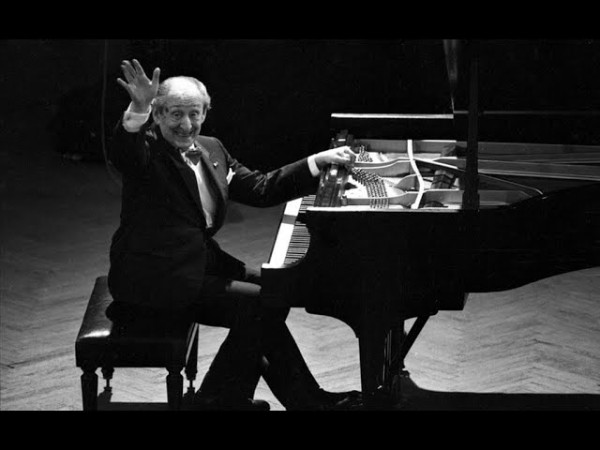
Vladimir Horowitz
In 1965, he felt well enough to schedule a performance at Carnegie Hall. To Horowitz’s disbelief, demand for tickets was astronomical. His career entered a new era, and he continued performing on and off for two more decades.
João Carlos Martins: The Bionic-Handed Pianist
1995–1996; 2000–2020 (intermittently)
Interview with João Carlos Martins
Brazilian pianist João Carlos Martins made a splash early in his career. He debuted in Washington, D.C., playing all 48 preludes and fugues from Bach‘s Well-Tempered Clavier to acclaim. He went on to record that repertoire; eventually, he recorded Bach’s complete works for keyboard.
His career was forever changed in 1995. While travelling in Bulgaria, he was assaulted by a man wielding a metal pipe, leaving him with severe skull and brain injuries. With biofeedback therapy, he recovered enough to play at Carnegie Hall in 1996.
However, as often happens to people with these kinds of complicated injuries, Martins’ condition waxed and waned, and he underwent 24 surgeries in an attempt to heal.
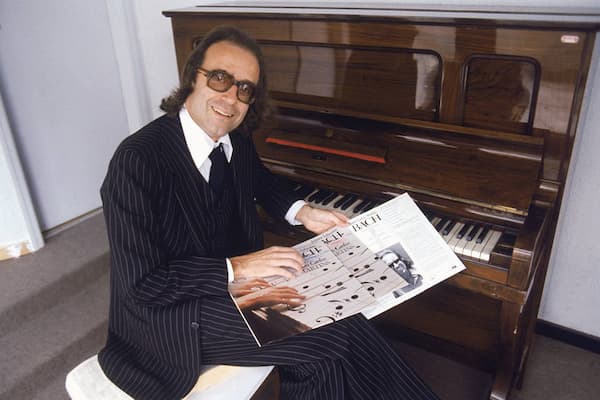
João Carlos Martins
He faced a major setback in 2000 when a corrective surgery resulted in him losing control of his right hand outright. He also developed focal dystonia in his left hand and became unable to play even left-hand repertoire. Instead of giving up music, he focused on conducting instead.
Then, in 2020, at age 80, a designer approached him and offered to create custom-made bionic gloves. The gloves enabled him to play with both hands for the first time in decades.
Leon Fleisher: Treated with Botox
1964–1990s (intermittently)
Fleisher playing Bach’s “Sheep May Safely Graze”
Leon Fleisher started playing piano at four, debuted at eight, and began studying with legendary pianist Artur Schnabel at nine.
As a young man, he won the Queen Elisabeth of Belgium competition and signed a prestigious recording contract with Columbia Masterworks.
In 1964, at the age of 36, his career was halted by focal dystonia, which made him unable to use his right hand.
For years he searched for a cure – and in the meantime, began learning left-hand repertoire. He also began conducting.
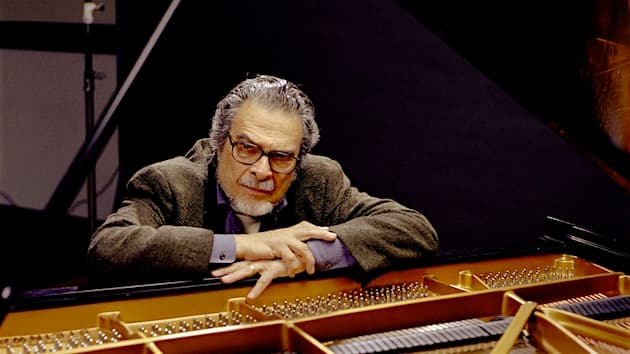
Leon Fleisher
In 1995, he was allowed to receive experimental therapeutic Botox injections. The results, combined with a massage technique known as Rolfing, were dramatic. After a great deal of time and work, he became able to play with both hands for the first time in three decades. It was not a complete recovery, but it enabled him to return to two-handed repertoire.
In 2004, at the age of 76, he commemorated that return with his album Two Hands.
Ivo Pogorelich: Pianist in Mourning
1996–2019
Pogorelich plays Rachmaninoff’s Moment musicaux in E minor, Op. 16, No. 4
Ivo Pogorelich began piano lessons at age 7 in Belgrade and later graduated from the Moscow Conservatory.
Career highlights included winning the Montreal Competition, as well as causing a scandal when he was cut in the third round of the Chopin Competition – causing Martha Argerich to quit the jury in protest.

Ivo Pogorelich © Bernard Martinez, Sony Classical
The year he turned 22, he married his mentor and teacher, fellow pianist Alisa Kezheradze, who was 43. Their marriage was happy until Kezheradze’s liver cancer diagnosis and her death in 1996.
The death was deeply traumatic (he later remembered in an interview how her liver burst and covered him in blood), and Pogorelich stepped back from concertizing. In his words, “I couldn’t touch the piano because my memories flooded out like Niagara Falls.”
Although he made intermittent concert appearances in the following years, his calendar was largely empty compared to his early career.
He made his first recording in 21 years in 2019: Beethoven’s 22nd and 24th piano sonatas and Rachmaninoff’s second sonata. His return was met with mixed critical reaction.
We wrote about Pogorelich here: https://interlude.hk/on-this-day-20-october-ivo-pogorelichh-was-born/.
Ruth Slenczynska: Victim of Burnout
1940–1951; 1963–2022
Ruth Slenczynska – A Tribute
Ruth Slenczynska was born in California in 1925. Pushed by her abusive father, she became a famous child prodigy. She subbed for Rachmaninoff and studied with him while still a girl.
During her teens, the pressures of a life in the spotlight took their toll. She retired from music at 15 and married in 1944.
However, the piano kept calling her. She returned to the stage in 1951, and between 1956 and 1963, she made around a dozen recordings for Decca. But as the recording industry shifted, the label dropped her after her contract ran out.
In 1964, she took a job teaching at Southern Illinois University Edwardsville. From then on, she spent most of her career teaching.
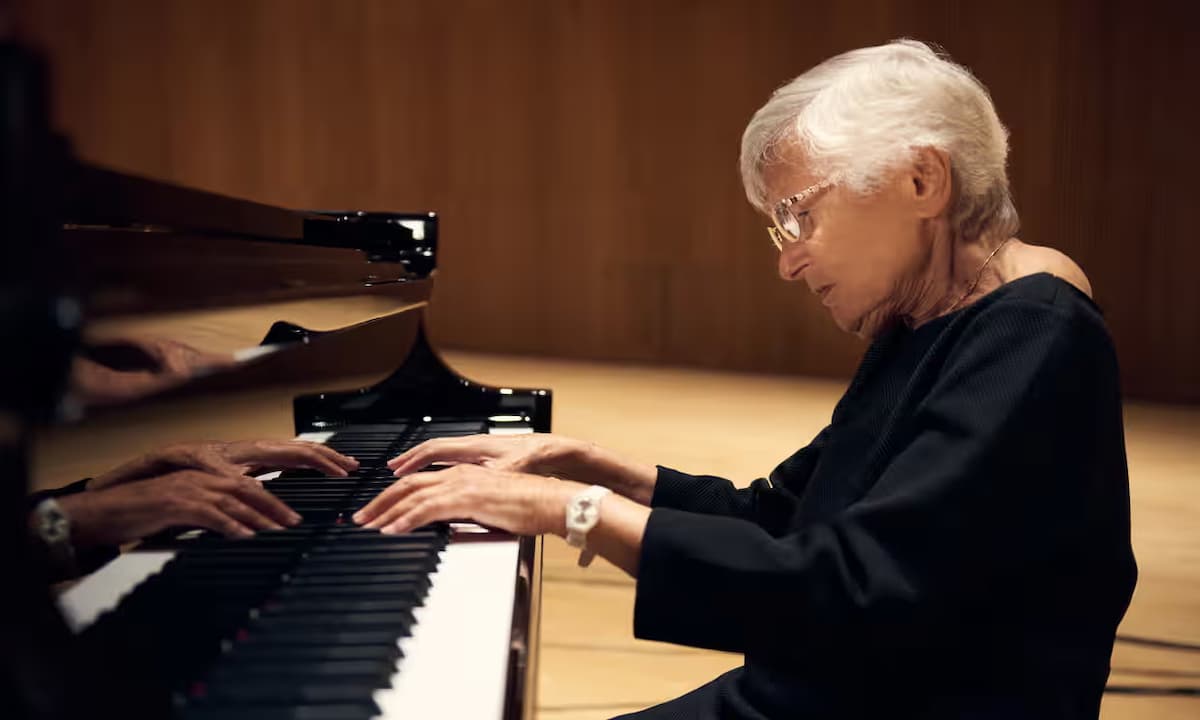
Ruth Slenczynska © Meredith Truax/PA
Fast forward nearly six decades to 2022, when Decca re-signed her and released her new album, My Life in Music, before she passed away in 2026 at the age of 101. She played until her death.
We profiled Ruth Slenczynska here: https://interlude.hk/rachmaninoffs-last-student-98-year-old-pianist-ruth-slenczynska/.
Murray Perahia: A Career Cut Short
1990–present (intermittent)
Perahia plays Beethoven’s Piano Concerto No. 5
Pianist Murray Perahia was born in 1947 and began playing piano at the age of four.
He studied at the Mannes School of Music and went on to win prestigious prizes from the Young Concert Artists International Auditions and the Leeds Piano Competition.
He was on top of the musical world in 1990, when, at the age of 43, he cut his right thumb and the injury went septic. Two years later, a bone abnormality forced him to quit the concert stage entirely to undergo a series of surgeries.
By 1999, he’d recovered enough to record the English Suites: repertoire he had turned to during his recovery. It seemed like a happy ending, but the injury flared again in 2005, then again in 2008.
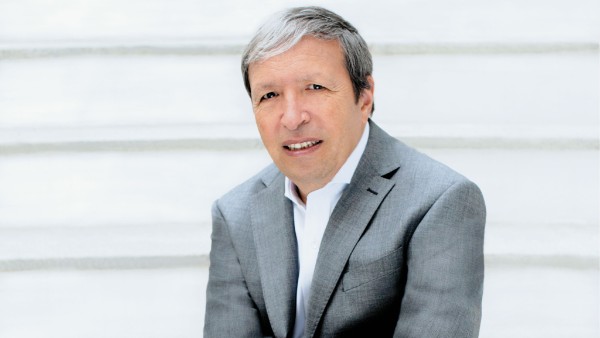
Murray Perahia
He has been on and off the concert platform ever since. As of this writing, he is active, having just returned to the stage after a six-year hiatus for a Wigmore Hall chamber music program in April 2024, at the age of 77.
Clara Haskil: Sidelined by Chronic Pain
1913–1950s (intermittently)
Haskil plays Chopin’s Piano Concerto No. 2 in 1960
Clara Haskil was born in Bucharest in present-day Romania in 1895. She was a talented pianist from an early age, studying in Vienna and Paris before graduating from the Paris Conservatoire at 15 with a premier prix.
She began her touring career as a teenager. Just as she started to make headway, in 1913, she began treatment for scoliosis, which necessitated living in a cast for a period of years.
Like Horowitz, she also suffered from severe stage fright, which, combined with her chronic pain and other health issues, stymied her on-again, off-again career.
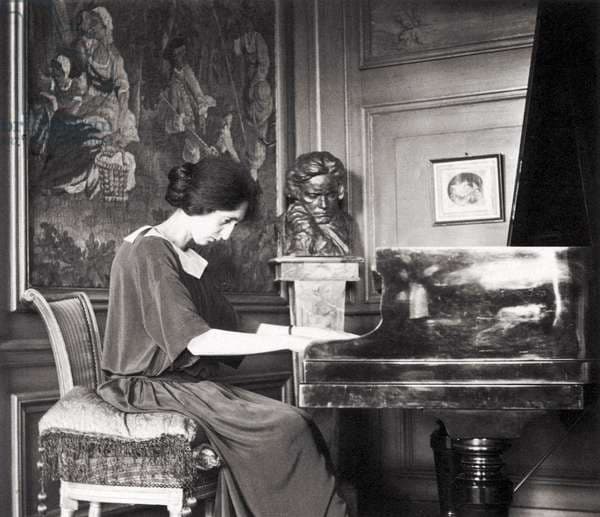
Clara Haskil
Due to her Jewish ancestry, she fled from Paris during World War II to escape the Nazis. While away, she underwent groundbreaking experimental brain surgery to address a tumour on her optic nerve. During the surgery, she remained conscious and imagined playing to help the surgeon assess her cognitive function.
After the war, in her 50s, word began to spread about her extraordinary musicianship. She was even offered a record contract with Decca.
After returning from her mental and physical challenges, her career reached heights she’d never dreamed possible. Bewildered, she once asked, “Why does everyone want to hear me suddenly? I don’t seem to play differently from before.”
By the late 1950s, she was touring internationally with major orchestras to rave reviews. The French government named her a Chevalier of the Legion of Honour, an honour that signalled the success of her comeback.
Conclusion
None of these pianists planned for their careers to unfold this way. The breaks came from grief, injury, war, and burnout – not from any grand plan.
But taken together, their stories show that a music career, unlike a performance, doesn’t have to happen in one unbroken take.
For more of the best in classical music, sign up for our E-Newsletter