Filmmaker and journalist Tim van Beveren’s documentaries Women Composers and DORA – Escape into Music explore the lives and music of composers whose work has largely disappeared from the standard classical repertoire. Made in collaboration with pianist Kyra Steckeweh, the films focus on composers including Fanny Hensel, Emilie Mayer, Mel Bonis, Lili Boulanger, and Dora Pejačević. The films have also received international recognition, with Women Composers winning several documentary awards and the 2020 Opus Klassik for audiovisual music production, while DORA – Escape into Music received awards including Best Documentary at the Florence Film Awards and Filmtage Oberschwaben, as well as the 2024 Opus Klassik. In a conversation with Interlude, van Beveren reflects on how making these films changed his understanding of musical history, the challenges of bringing overlooked composers to audiences, and the role performers, conductors, programmers, and record labels play in determining what music gets heard.
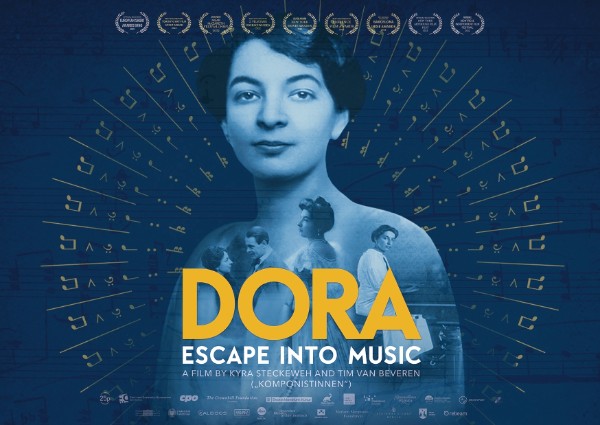
DORA – Escape into Music
Around 2016, Steckeweh asked van Beveren to make a few short films to accompany her concert program of music by women composers. She had already been researching their lives and works and bringing their music back to the concert stage. Van Beveren, by contrast, knew next to nothing about the subject then. “I had never heard of female composers before,” he recalls. He knew Clara Schumann and Fanny Hensel by name but had never given serious thought to the wider history of women who composed, “because they were simply not performed in concert halls.”
Steckeweh opened that largely unknown world to him. During a drive from Berlin to Paris, she began telling him about the composers she had encountered through her research and performances: about their music, their lives, and the obstacles they had faced in their struggle to be taken seriously as professional composers. What had begun as a conversation about a few short concert films was turning into something far larger. As Steckeweh told their stories, van Beveren realised that the real subject lay less in a list of forgotten names than in the circumstances that had allowed so much of their music to vanish from public memory. For women composers of earlier generations, recognition had been hard to come by. They lived in societies that did not regard women as equal to men and denied them the same legal and social standing; only a few held the public’s attention for long.
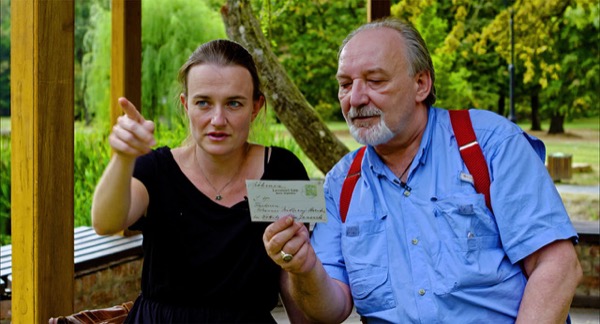
Kyra Steckeweh and Tim van Beveren
“I said, well, stop right here,” he recalls. “This is stuff which is much more interesting for a full-blown documentary than just a two- or three-minute clip.”
That conversation became the starting point for Women Composers, a documentary by van Beveren and Steckeweh that traces the lives and music of Mel Bonis, Lili Boulanger, Fanny Hensel, and Emilie Mayer. The film travels across Europe to the places where these women lived and worked, weaving historical research and interviews together with performances of their music.
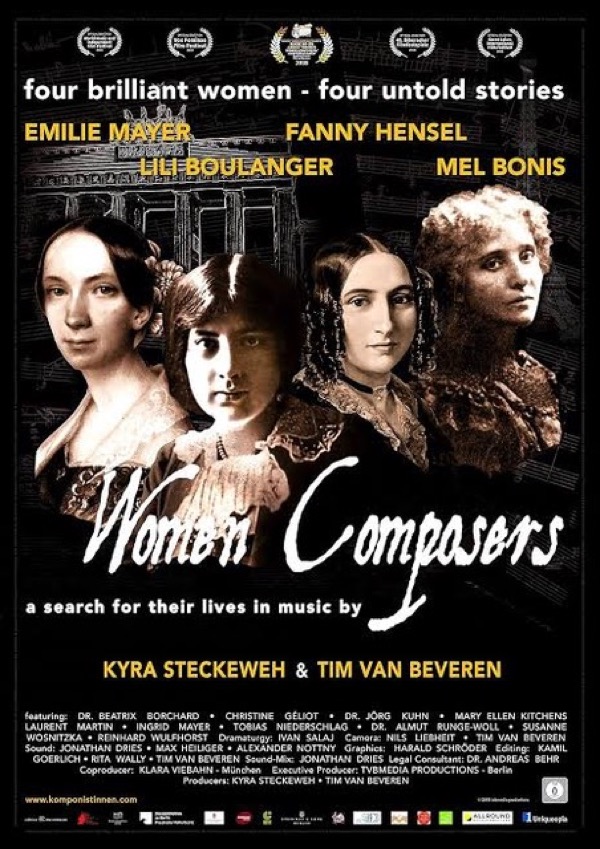
Women Composers
WOMEN COMPOSERS – Theatrical Trailer
One composer who particularly affected van Beveren was Emilie Mayer. She had written eight symphonies, yet her name was largely unfamiliar to the public. Van Beveren was struck that, as early as 1850, Mayer had managed to present a concert devoted entirely to her own compositions at Berlin’s Royal Theatre with royal approval. Even the location of her grave had become difficult to identify, and her music had faded from public awareness.
The experience made van Beveren question how musical history is preserved and, perhaps more importantly, how it is heard. For him, recordings and performances are essential because audiences cannot form an opinion about music they never have the opportunity to hear.
“Only a very small percentage of the population can read music – provided the scores have even been published. So how can people decide what they like if they can’t hear it?” he asks.
While filming Women Composers, van Beveren and Steckeweh also gathered reactions from audiences in Berlin. They asked concertgoers to name composers and sing or whistle a melody by them. Mozart was easy. Beethoven was easy. But when they asked about women composers, the responses were very different.
“For female composers? None,” van Beveren recalls.
The experiment demonstrated something that had already become apparent during their research: the problem was not simply that audiences had forgotten these composers. Many had never been introduced to them in the first place.
After Women Composers, van Beveren and Steckeweh began considering another film. Their next subject became Dora Pejačević, the Croatian composer whose music had once been performed in major European cities but disappeared from the repertoire after her death in 1923. Pejačević’s privileged background gave her opportunities that many women composers of her time did not have. She grew up in a noble family; her household supported music, and the family held concerts at the castle. Yet these advantages did not prevent her music from being forgotten.
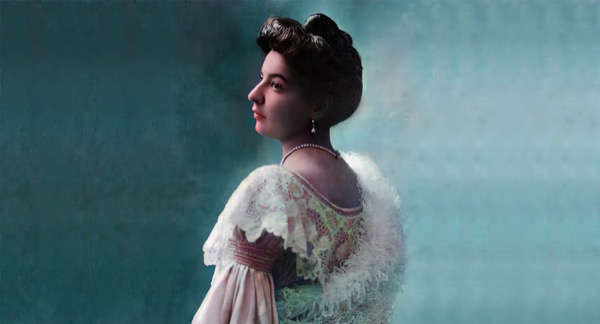
Dora Pejačević
While reading about Pejačević, van Beveren again recognised the potential for a much larger story.
“I said this again,” he remembers. “She is a fascinating subject for a full-blown documentary.”
His interest deepened when he began hearing Pejačević’s music. After learning about her from a friend in Zagreb, he searched for her scores and sent them to Steckeweh. She began studying the piano works, among them the Sonata in D minor, and recorded them for Deutschlandfunk.
“The first time Kyra played it,” van Beveren says, “I was shivering.”
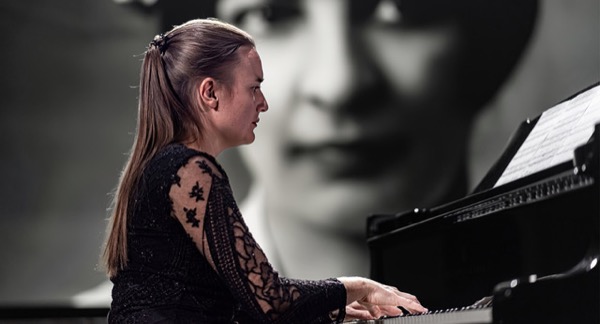
Kyra Steckeweh
DORA – Escape into Music
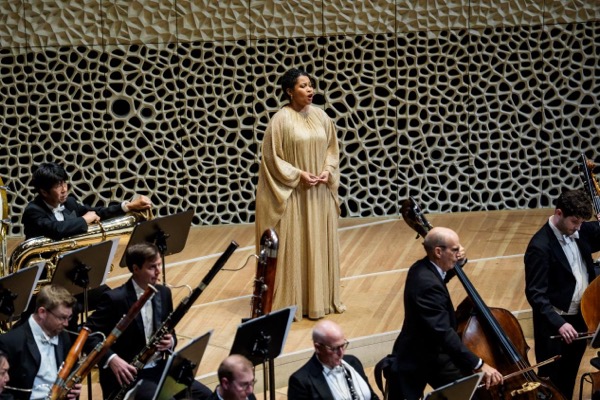
The resulting film, DORA – Escape into Music, follows Pejačević’s life, her music, and the European world she lived in. It also documents an extraordinary attempt to bring one of her major orchestral works back into the concert hall. During their research, van Beveren and Steckeweh discovered a 1921 newspaper article indicating that Pejačević’s Symphony was scheduled to be performed by conductor Arthur Nikisch in 1922. Their research eventually led to the Symphony’s first performance by the Gewandhausorchester, conducted by Andris Nelsons in 2022. The COVID-19 pandemic complicated the production, and the planned concert nearly fell through. The film nevertheless incorporated the performance story into its larger exploration of Pejačević’s life and musical legacy.
Before making the films, van Beveren says he was “totally unaware” of the vast body of music written by women. Now he describes it as an “enormous treasury” of compositions that are still rarely performed in a concert repertoire dominated by familiar male names. But he is careful not to suggest that every forgotten work deserves attention simply because its composer was a woman. The important thing, he believes, is to give the music a genuine opportunity to be heard and judged.
Some pieces, he says, are extraordinary. Others may not be. But without professional performances, audiences cannot make that distinction for themselves. For van Beveren, that responsibility extends beyond individual performers. Programmers, conductors, record companies, and major concert institutions all influence which works enter the musical landscape. “You need professional performers,” he says, emphasising that forgotten works need the same level of attention, quality, and commitment as established repertoire.
He also sees a generational shift. Younger musicians, he believes, are less and less concerned with whether a man or a woman wrote a piece. What matters to them is whether the music speaks to them and deserves to be played.
That change can begin with relatively simple choices. After screenings of their films throughout Europe, Steckeweh and van Beveren encouraged audiences to ask their local radio stations to play music by women composers. For them, rediscovery need not remain an academic project or a documentary subject. It can happen through the ordinary ways people encounter music: a concert, a recording, a radio broadcast, or a performer’s recommendation.
A vast amount of music still awaits discovery. Van Beveren points to the Archiv Frau und Musik in Frankfurt, a library that holds works by thousands of women composers, as an indication of how much remains to be explored. When women’s music is left out of the repertoire, he says, “you’re missing half of the cultural heritage of mankind.”
Both films make that absence visible. More importantly, they invite us to consider what might happen when we finally hear this missing music.
The films are available to stream on demand or to buy at:
DORA – Escape into Music (original title: “DORA – Flucht in die Musik”)
WOMEN COMPOSERS – full-length director’s cut (original title: “KOMPONISTINNEN”)
For more of the best in classical music, sign up for our E-Newsletter