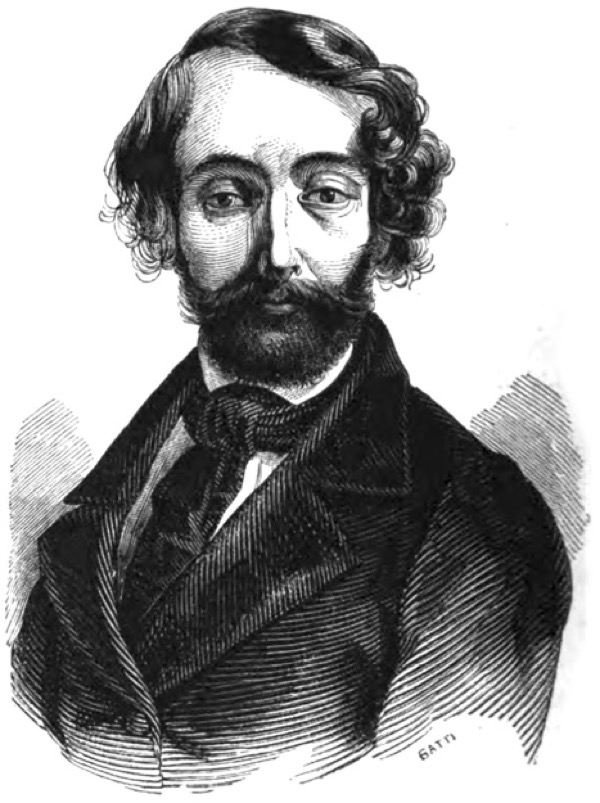
Ernesto Cavallini in 1847
Recently I heard Dario Brignoli—principal clarinet of Chicago’s Grant Park Orchestra and the Tucson Symphony Orchestra—introduce a famous clarinet solo by Verdi before performing it. He mentioned that the solo was written for Ernesto Cavallini, “the Paganini of the clarinet.” For some reason, an audience member laughed. “No, it’s true,” Brignoli said, that he was both a player and composer, and that, like himself, Cavallini graduated from the Milan Conservatory.
I wondered why I’d never heard Cavallini’s music in six decades of concertgoing, including plenty of clarinet recitals. Long ago, when preparing for my doctoral orals—it’s kind of like getting ready to go on Jeopardy—I hadn’t even bothered to memorise the dates of his life. Now, listening to and enjoying his music, I became even more puzzled. Clarinettists know his teaching material—his 30 Caprices for unaccompanied clarinet—but they don’t perform his music in concert. Yet even those exercises would delight listeners as encores. Are clarinettists conspiring to keep him to themselves? Probably not—but the question nags. Perhaps Cavallini is so precious—like a $20,000 bottle of wine—that they only share him behind doors at clarinet conventions?
Ernesto Cavallini (1807–74) was the most celebrated Italian clarinet player of the Romantic Era. Donizetti, Verdi, Rossini—they all knew and admired him. His music shines with bel canto melody and drama. At the age of 25, Cavallini was appointed principal clarinet at Milan’s Teatro alla Scala. He played there for 20 years, while touring much of Europe to great acclaim. Cavallini was called “the Paganini of the clarinet” (Gazzetta Musicale di Milano), “the greatest clarinettist in the universe” (Revue de Paris) and “the Liszt of the clarinet” (L’Italia musicale).
Incredibly, Cavallini performed his magic on an antiquated 6-key boxwood instrument, only adopting a 13-key model in 1860—years after the modern Boehm system became widespread. It’s the 19th-century equivalent of Lionel Messi scoring all his goals in loafers.

The British clarinet in C pictured here, built in the early 19th century, would be similar in appearance to Cavallini’s
(collection of The Met, Object Number 1997.219.10).
When La Scala encountered financial difficulties in the 1850s, Cavallini took his talents elsewhere. He made his way to St. Petersburg, where the tsar appointed him soloist in the Imperial Theater and Anton Rubinstein named him the first clarinet professor at the St. Petersburg Conservatory. In 1862, Giuseppe Verdi was in St. Petersburg composing for the premiere of La forza del destino. Hearing that Cavallini was in town, he wrote a soliloquy and cadenza just after the start of Act III—the very music I’d heard Brignoli play so beautifully. There’s proof that Cavallini’s reputation wasn’t just hype. Perhaps the most famous clarinet solo in all of opera, the music paints Don Alvaro’s heartbreak from the belief that his love, Leonora, is dead, continuing through the aria, O tu che in seno agli angeli.
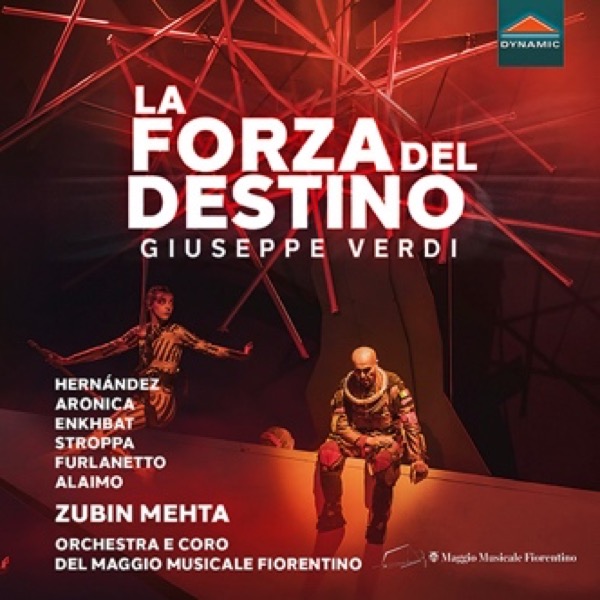
Hear Verdi’s La forza del destino, Act III Scene 1, O tu che in seno agli angeli. Zubin Mehta conducts Roberto Aronica, tenor, with the Fiorentino Maggio Musicale Orchestra. Lorenzo Paini, clarinet solo.
Giuseppe Verdi: La forza del destino, Act III Scene 1: O tu che in seno agli angeli (Alvaro) (Roberto Aronica, tenor; Fiorentino Maggio Musicale Orchestra; Zubin Mehta, cond.)
Cavallini published the first six of his 30 Caprices in 1827 when he was still a student at Milan Conservatory. Technical difficulties pile up: awkward fingerings, brilliant tonguing, legato and staccato interposed in perpetual motion. Long passages require circular breathing. Gymnastic leaps between registers increase with each repetition to extreme levels. And yet they require a cantabile vocal style with melismas worthy of Bellini. Often, Cavallini creates the illusion of multiple players—the clarinet playing both melody and harmony, or imitating an operatic dialogue between two characters.
I’ve been enchanted by every Caprice but frustrated by the available recordings. Even in our era of great artists, there’s no complete recording that, to my ears, fully reveals this music. Op. 1 No. 1 is perhaps the most Paganini-like of all the studies, and Nicolas Baldeyrou certainly plays at that highest artistic level.
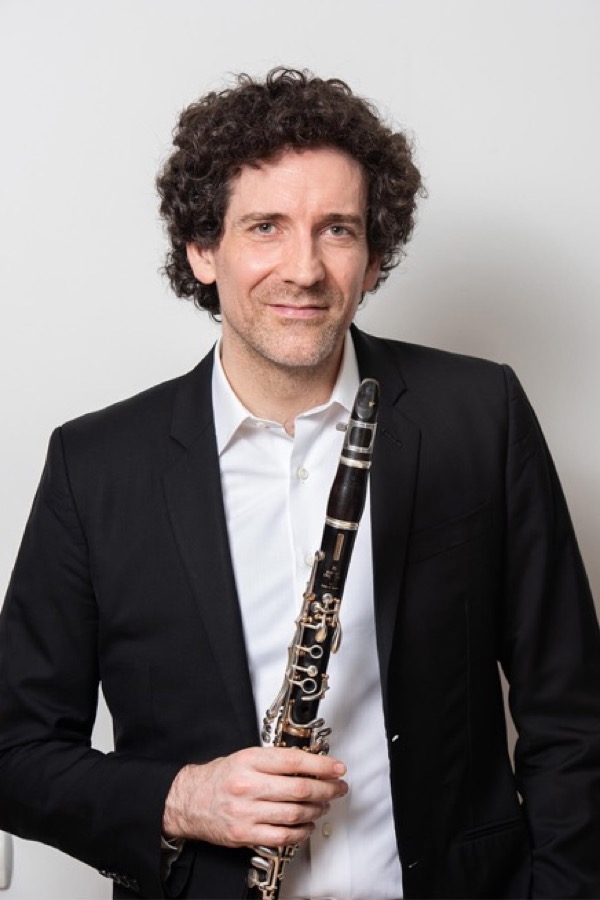
Nicolas Baldeyrou
Hear Nicolas Baldeyrou play Cavallini’s Op. 1 No. 8 Caprice
Browse the commercial recordings and YouTube videos of the Caprices, and you’ll find some to recommend but few that go beyond technical mastery. Several years ago, a young student at Beijing Conservatory, Huijing Yu, recorded half of the Caprices with art and skill. Huijing Yu, if you’re reading this, please finish the set! Here’s a single example:
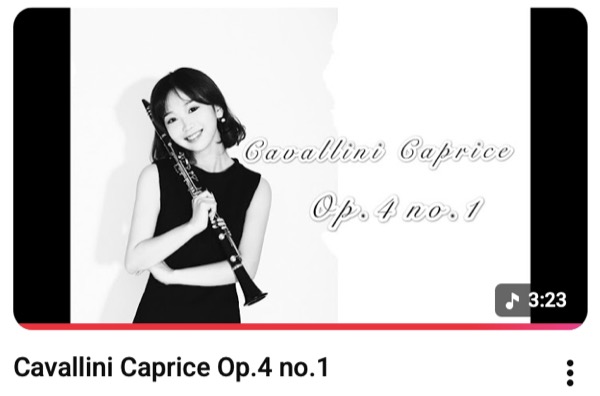
Huijing Yu
Hear Huijing Yu, clarinet, in Cavallini’s Caprice Op. 4 No. 1
Many of Cavallini’s concert pieces look to the world of opera. Cavallini cited Gioachino Rossini as the greatest influence on his own composition. In 1846, the Ricordi publishing house wished to commemorate a bust of Rossini at La Scala, and Cavallini created a piece for the occasion called Fiori Rossiniani (Rossinian Flowers). Cavallini overlaid dazzling clarinet figures on a potpourri of themes: The Thieving Magpie, The Barber of Seville, William Tell, Moses in Egypt, Matilde of Shabran, Otello, Stabat Mater and Zelmira.
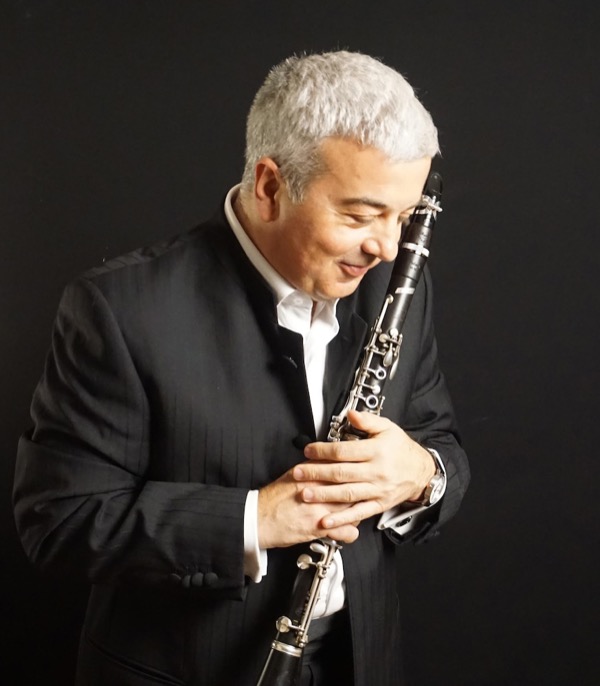
Sergio Bosi
Hear Sergio Bosi, clarinet, and Riccardo Bartoli, piano, in Fiori Rossiniani.
Ernesto Cavallini: Fiori Rossiniani (Sergio Bosi, clarinet; Riccardo Bartoli, piano)
Such showpieces based on popular operas were standard fare for touring instrumentalists in the 19th century. Like Paganini and Liszt, though, Cavallini invented new ways to play his instrument in order to achieve his musical ends. Imaginative arpeggiated decoration, extravagant register changes and elaborate vocal lines lift his operatic fantasies above the mundane examples by other clarinet composers.
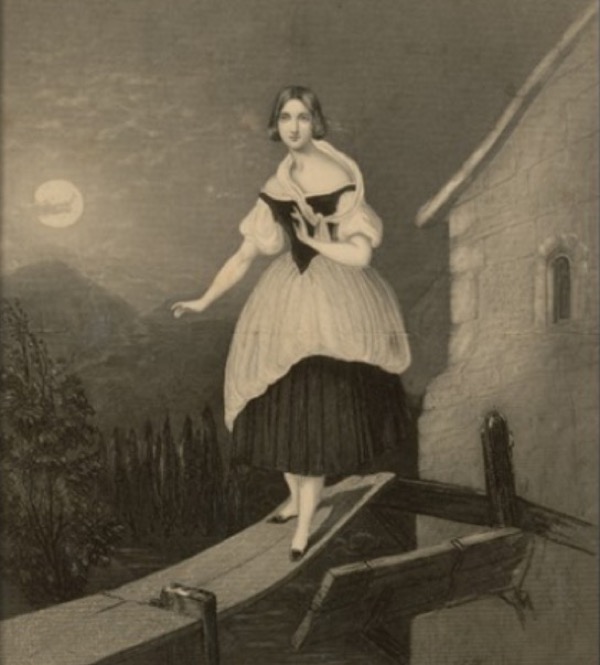
1831 illustration of Jenny Lind sleepwalking in the title role.
Hear Nikolaus Friedrich, clarinet, and Thomas Palm, piano, play Ernesto Cavallini’s Concert Fantasia on motives from Bellini’s La sonnambula.
Ernesto Cavallini: Concert Fantasia on motives from Bellini’s La sonnambula (Nikolaus Friedrich, clarinet; Thomas Palm, piano)
Of all Cavallini’s music, the piece you’ll most frequently encounter in concert today is his Adagio and Tarantella. Why this piece rather than the more inventive operatic fantasies? Perhaps it’s because it’s less likely to humiliate the musician. Ecco! No one could equal Cavallini in his day, and clarinettists still seem hesitant to try.
For more of the best in classical music, sign up for our E-Newsletter