Specific cities have inspired a huge amount of classical music over the years.
Today, we’re looking at a selection of classical works explicitly connected to major cities, examining how each composer responded to each place.
Some pieces reflect civic pride and cultural identity, while others confront the noise, speed, politics, or even trauma of urban life.
Together, these ten compositions reveal how various cities have influenced classical composers and music historically, aesthetically, and emotionally.
Wolfgang Amadeus Mozart – Symphony No. 38, “Prague” (1786)
Prague audiences adored Mozart to the point where his success in Prague outstripped his Viennese reception. His opera Le nozze di Figaro achieved extraordinary success there in 1786.
We don’t know for sure, but this symphony may have been written with Prague’s sophisticated musicians and audiences in mind.
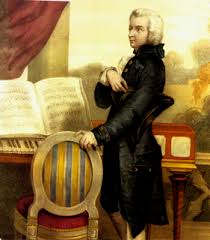
Mozart in Prague
In any case, it ended up with the nickname “Prague” and premiered in the city early the following year.
Its grand, slow introduction, contrapuntal richness, and brilliant wind writing all suggest a composer composing for a particularly discerning musical public.
Consequently, although the work may not portray Prague pictorially, it still reflects the city’s intellectual seriousness and its role as one of the great musical centres of late-eighteenth-century Europe.
Johann Strauss II – Wiener Blut (1873)
The waltz “Wiener Blut” (“Viennese Blood”) is a musical portrait of the city.
Written to celebrate the 1873 wedding of the Archduchess Gisela Louise Maria to Prince Leopold of Bavaria, the music celebrates the city’s social rituals: the dances, the promenades, the cultivated elegance of imperial life.
The waltz’s lilting pulse and expansive melodies embody the elegant and effortlessly musical character Vienna became famous for.
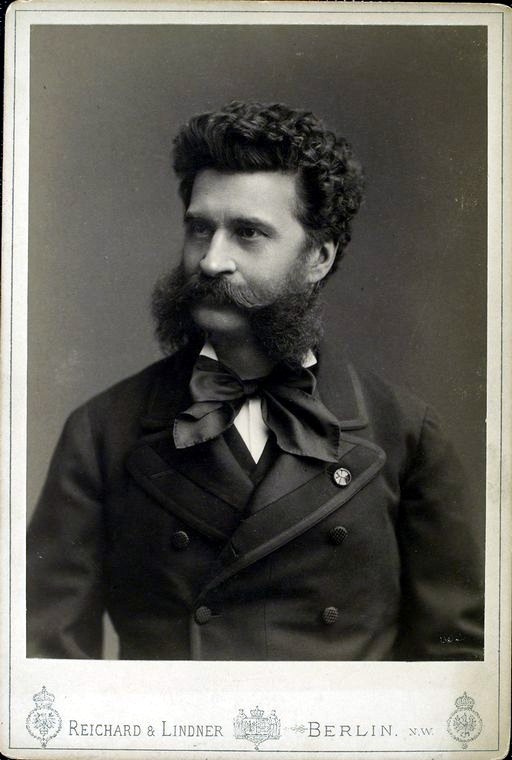
The young Johann Strauss II
Strauss’s portrait of Vienna is less about physical landmarks and more about its attitude and atmosphere.
We wrote about composers who were born in Vienna here: https://interlude.hk/eleven-classical-music-composers-who-lived-in-vienna/.
Franz Liszt – Venezia e Napoli from Années de pèlerinage (1859)
Liszt‘s Venezia e Napoli forms a supplemental book to his piano work Années de pèlerinage (Years of Pilgrimage). It reflects his Romantic fascination with the history, beauty, and sensuality of Italy.
He portrays Venice with barcarolle rhythms and shimmering textures, calling to mind the city’s famous canals. Next, he evokes Naples with exuberant, folkish, dance-inspired material.
Ralph Vaughan Williams – A London Symphony (1912–1913)
Few orchestral works attempt to portray a city as comprehensively as A London Symphony.
Vaughan Williams conceived the piece as a musical depiction of a day spent in London, from a misty dawn along the Thames to nocturnal crowds and distant clock chimes.
The first movement portrays dawn and, according to Vaughan Williams, the “memory of Bloomsbury Square on a November afternoon.” His friend composer George Butterworth described the second movement as “an idyll of grey skies and secluded byways.”
Meanwhile, according to Vaughan Williams, the third movement evokes “standing on the Westminster Embankment at night,” and the finale contains the chimes of Big Ben.
Ottorino Respighi – Fountains of Rome (1916)
Each movement of Respighi’s Fountains of Rome depicts a specific Roman fountain at a particular hour of the day, from quiet dawn to brilliant midday to mysterious night.
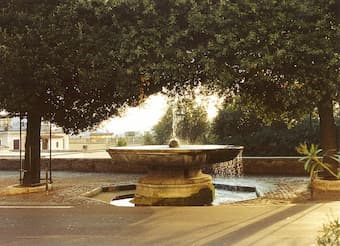
Fountain in front of Villa Medici on Pincio, Rome
In this four-movement tone poem, Respighi’s Rome comes across as monumental and intimate by turns.
The result is one of the most pictorial urban works in the orchestral repertoire, featuring specific portrayals of four major individual landmarks: the Fountain of Valle Giulia, the Triton Fountain, the Trevi Fountain, and the Villa Medici Fountain.
We put together a playlist of Rome-inspired classical music here: https://interlude.hk/destination-rome/.
Edgard Varèse – Amériques (1918–1921)
Amériques represents a radical break from Romantic city portraiture.
Written shortly after avant-garde French composer Edgard Varèse emigrated to the United States, the work reflects his overwhelming response to New York: its noise, scale, machinery, and relentless energy.
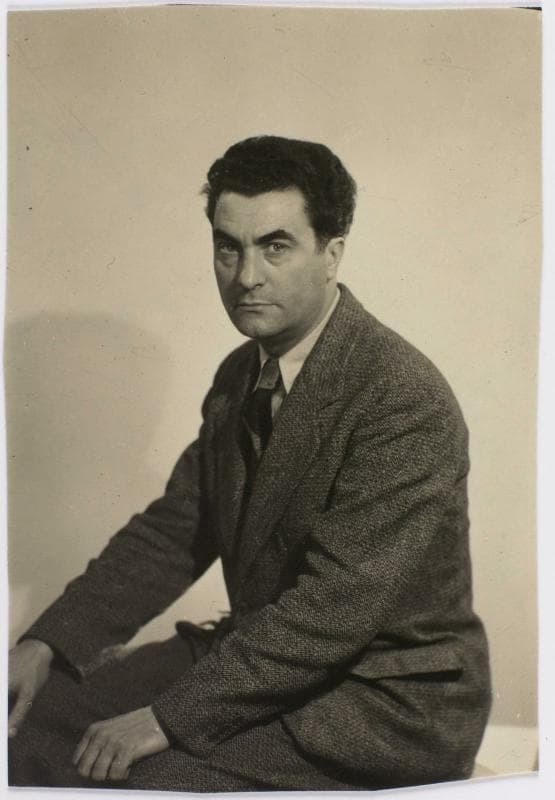
Man Ray: Edgar Varèse, ca. 1930 (Paris: Centre Pompidou)
Sirens, massive percussion forces, and dense textures transform the orchestra into an urban sound machine, exhilarating and terrifying in equal measure. It’s not just a portrait of a city; it’s a portrait of an entire era.
We wrote about composers from New York City here: https://interlude.hk/famous-music-composers-new-york/.
Kurt Weill – The Berlin Requiem (1928)
Weill’s cantata The Berlin Requiem presents the city in its messy reality, as opposed to any kind of idealised version.
Setting texts by Bertolt Brecht, the work reflects Berlin’s instability, poverty, militarism, and social disintegration in the aftermath of World War I.
The music is spare, ironic, and unsentimental. In Weill’s score, Berlin is not portrayed as any kind of romantic capital, but as a site of moral reckoning, written on the brink of the fascist catastrophe to come.
George Gershwin – An American in Paris (1928)
Although it was inspired by Paris, Gershwin‘s famous tone poem was also spurred by the idea of being an observant outsider: an American navigating a European capital during the height of the exuberant 1920s.
In this work, taxi horns, blues harmonies, and jazz rhythms collide with sparkling French-style orchestral colour.
An American in Paris became a mirror through which Gershwin explores American identity abroad. In the end, the work captures the thrill and excitement of being a tourist as much as the city itself.
Dmitri Shostakovich – Symphony No. 7, “Leningrad” (1941)
Shostakovich‘s Seventh Symphony is inseparable from the Siege of Leningrad.
Written during the city’s encirclement by Nazi forces during World War II, the work became a symbol of the Leningrad citizens’ resistance and endurance during unimaginable hardship.
The infamous march theme, banal and growing inexorably in volume, evokes the invasion and oppression of the city by the Nazis. The symphony as a whole memorialises the collective trauma of the experience.
Astor Piazzolla – The Four Seasons of Buenos Aires (1965–1970)
Astor Piazzolla‘s Four Seasons of Buenos Aires is a work inspired by Antonio Vivaldi‘s famous set of four violin concertos named the Four Seasons.
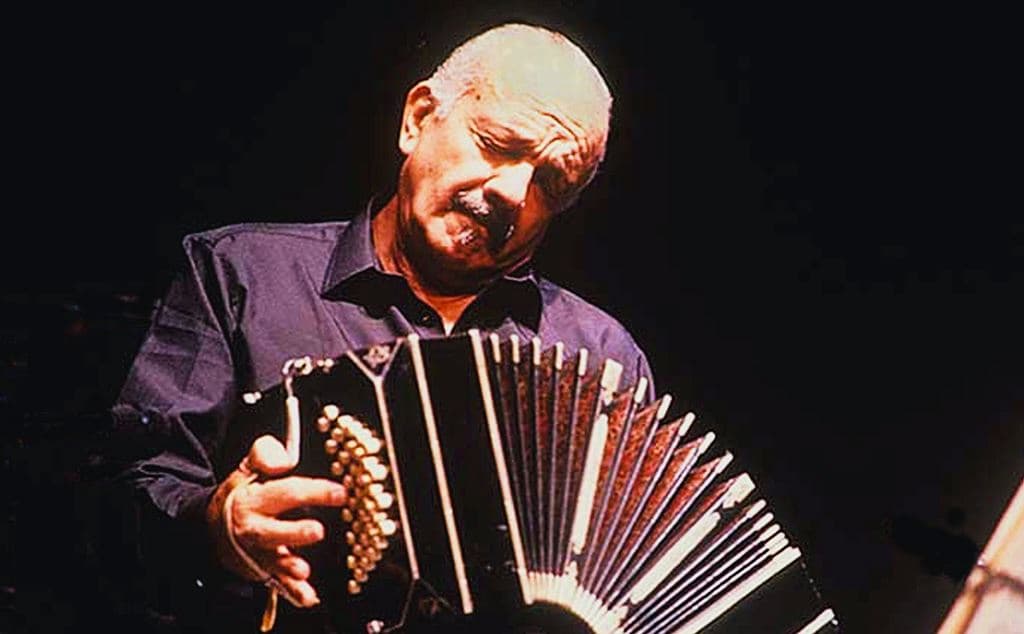
Astor Piazzolla
Drawing on both tango traditions and modern classical techniques, the music captures the pulse of urban Argentina.
Unlike Vivaldi’s seasons, these are not particularly pastoral works. Instead, Buenos Aires appears as a restless, volatile, romantic place, shaped by its dance and nightlife.
Conclusion
From eighteenth-century Prague to twentieth-century Buenos Aires, these works show how deeply cities have influenced classical music.
Sometimes composers responded to a city’s cultural confidence and musical sophistication; other times they confronted its noise, contradictions, political tensions, or historical trauma.
As long as cities continue to evolve and reinvent themselves, history suggests they will remain powerful catalysts of new musical inspiration.
For more of the best in classical music, sign up for our E-Newsletter