
The opening song of Taylor Swift’s 2020 album Folklore contains the lyric “You know the greatest films of all time were never made.”
Sometimes I wonder if the greatest classical music was never made.
Every classical music lover is going to have different pieces on their wishlist of “Classical Music I Wish Existed”, but here’s my try at making a top ten.
Symphony No. 10 by Ludwig van Beethoven (1820s)
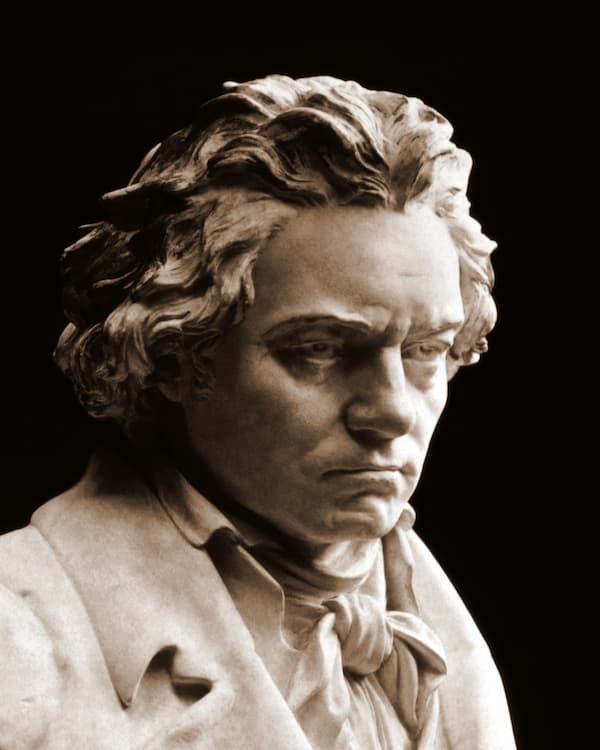
Photograph of bust statue of Ludwig van Beethoven by Hugo Hagen
I’m starting with classical music’s great white whale: Beethoven’s tenth symphony.
After Beethoven wrote his groundbreaking ninth symphony, he devoted much of his remaining creative energy to writing his late string quartets…many of which feel symphonic in scope, if not instrumentation.
It’s impossible not to dream about what a symphony in the style of one of his inscrutable string quartets might have sounded like.
In 1827, Beethoven agreed to write a symphony for Britain’s Royal Music Society, and he even wrote around 250 measures of music for the project.
However, he died in March of that year, leaving us to guess what a finished tenth symphony would have actually sounded like.
There were two paths he could have taken: to try to out-innovate the Ninth and create a symphonic version of the chaos found in his late string quartets, or to return to a more conventional style. Maybe the understated wit and elegance of the fourth symphony – which came after the similarly pathbreaking Third – would have been a model for him. Or maybe not. Who knows?
We have a dreadful AI recreation of what the tenth might have sounded like. If the real thing was on track to sound anything like this, it’s a good thing that Beethoven prioritised working on his string quartets.
What we have instead of Beethoven’s tenth symphony:
Beethoven X (Beethoven’s tenth symphony as completed by AI)
Beethoven’s String Quartet No. 15 (1825)
Beethoven’s Symphony No. 4 (1806)
Symphony by Richard Wagner (1870s)
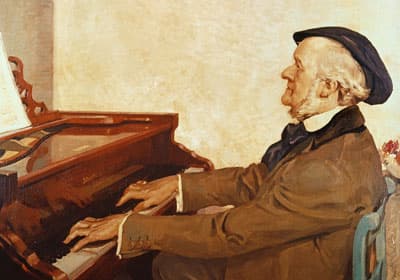
Richard Wagner
Of course, Richard Wagner is famous for his many operas, and especially for his massive four-opera Ring Cycle.
However, as he was writing his final opera Parsifal, he was contemplating writing a purely instrumental work.
In 1878, his wife Cosima wrote in her diary that “nothing comes into his head but cheerful themes for symphonies.”
Although the two shared very different ideas about aesthetics, Wagner’s old rival Johannes Brahms, along with his own father-in-law, Franz Liszt, had each proven the relevance of absolute music in their own ways.
However, Wagner died in 1883, leaving only fragments of a potential symphony behind.
The only other Wagner symphony we have is a student effort from 1832, when he was just nineteen; it is energetically derivative of Beethoven, and exhausting to listen to. Maybe his second symphony would have been something between the energy of his first, combined with the long lines of the Vorspiel from Parsifal.
What we have instead of Wagner’s second symphony:
Wagner’s Symphony, WWV 29 (1832)
Wagner’s Vorspiel from Parsifal (1882)
Piano Concerto No. 3 by Johannes Brahms (1890s)
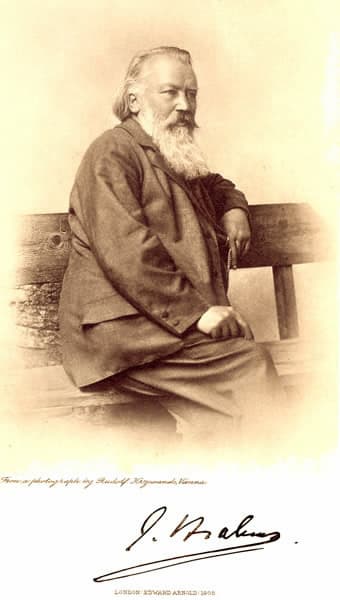
Johannes Brahms by Rudolf Krziwanek
I can hear what you’re saying already: we already have two piano concertos by Brahms. Why would you want another one?
First off, the world can’t have enough Brahms. And second, we have piano concertos by Brahms from his early years (1858, when he was 25) and middle age (1881, when he was 48).
What we don’t have is a piano concerto from Brahms’s autumnal late period in the 1890s.
What would such a concerto have sounded like? I’m thinking of a work with the heartbreaking sincerity of the clarinet sonatas. Maybe something less technically demanding and with a smaller orchestra, to contrast with the other two piano concertos.
What we have instead of Brahms’s third piano concerto:
Brahms’s Piano Concerto No. 2 in B-flat major (1881)
Brahms’s Clarinet Sonata No. 1 (1894)
Piano Concerto by Claude Debussy (1900s)
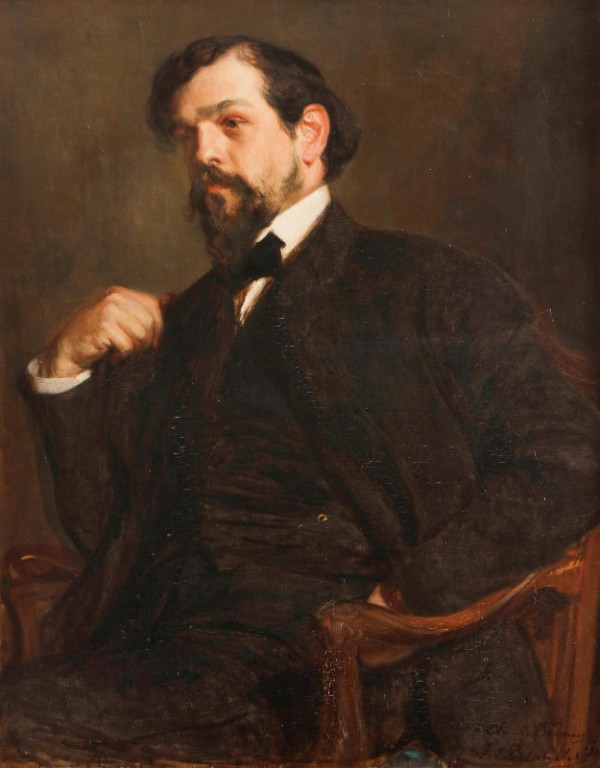
Claude Debussy
Claude Debussy is another composer whose piano concerto I’d be interested to hear, given his masterly solo piano works and his colourful orchestral works.
The closest thing we have to an official Debussy piano concerto is a three-movement Fantaisie for piano and orchestra. The premiere performance was canceled after the conductor ran out of time to prepare it.
Apparently, Debussy was never completely satisfied with it, despite tinkering with it for years. He ultimately decided to abandon it.
To my ears, something about it doesn’t quite work. It’s pleasant, but it doesn’t grab your throat like so many of Debussy’s works do (like the Images pour orchestre, for instance!).
I think Debussy just needed more time to mature as a composer.
What we have instead of a Debussy piano concerto:
Debussy’s Fantaisie pour piano et orchestre (1889-90, published posthumously)
Debussy’s Images pour orchestre (1905–12)
Violin (or Viola) Concerto by Maurice Ravel (1920s)
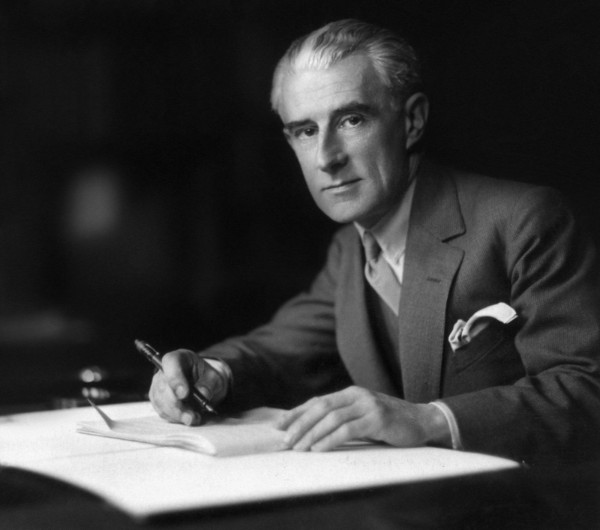
Maurice Ravel, c. 1928
If you ask orchestra dorks who the greatest orchestrator of the twentieth century was, many of those dorks will tell you “Maurice Ravel.”
My favourite instrument is either the violin or the viola (depending on my mood), so my reasoning here is simple: I want to hear a concerto for my favourite instrument, written by the greatest orchestrator of the twentieth century.
Yes, we do have Tzigane, an unforgettable showpiece inspired by the spirit of Hungarian folk tunes. But in the end, it’s a one-movement showpiece, not a concerto.
I’d be fascinated to hear what Ravel’s writing for violin would sound like if he’d been primarily concerned with tone colour and timbre rather than technical fireworks.
It’s clear, based on the writing in his violin sonata, that he thought a huge amount about these kinds of aesthetic considerations.
What we have instead of a Ravel violin concerto:
Ravel’s Tzigane (1924)
Ravel’s Sonata for Violin and Piano (1923–27)
Viola Concerto by Rebecca Clarke (1920s)
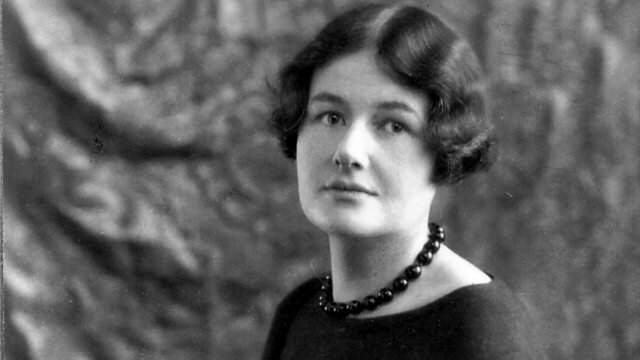
Rebecca Clarke
In 1919, British composer Rebecca Clarke wrote one of the greatest works ever written for viola: her brilliant three-movement Sonata.
Unfortunately, because of sexism and her own self-doubt, Clarke wrote fewer and fewer works as she aged, and no concerto followed.
The Clarke Sonata is extravagant and colourful, but contains countless carefully considered moments of intimacy. It also lays beautifully in the hand and is a thrill to play. And there aren’t enough truly first-rate viola works. Therefore, I wish we had a Clarke concerto.
The Clarke Sonata has a rich piano part that makes it tempting to imagine as a concerto. Ruth Lomon has transcribed it for viola and orchestra. Although it’s certainly a fascinating concept, the transcription doesn’t hit in the same way as the original (for me, at least).
I just wish Clarke had lived in a world where it was easier to be a woman composer and had gotten all of the praise and encouragement she so richly deserved. Maybe we could have gotten a concerto then.
What we have instead of a Clarke viola concerto:
Clarke’s Viola Sonata (1919)
Clarke’s Viola Sonata (1919), rearranged for viola and orchestra by Ruth Lomon
Song Cycle by Cole Porter (1930s)
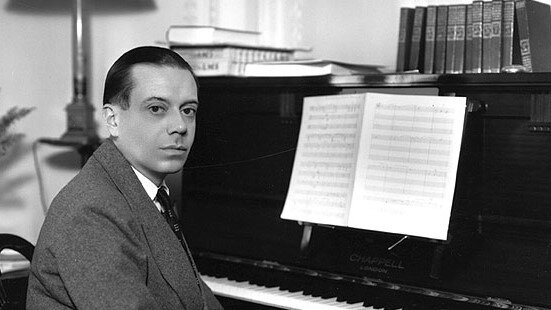
Cole Porter
American composer Cole Porter is celebrated for his contributions to the Great American Songbook.
However, at one point in his career, he had aspirations to become a Serious Composer (™). He wrote his first operetta at ten.
He married his wealthy and well-connected wife, Linda, in 1919, who made it her project to promote her new husband.
Linda tried to get him in for lessons with Stravinsky. That never worked out, but Cole did take lessons from Vincent d’Indy for a while. In 1923, he actually wrote a sixteen-minute ballet that was a synthesis of jazz and classical styles…four months before Gershwin debuted his Rhapsody in Blue.
So it’s not the wildest thing in the world to imagine what might have happened if Porter had developed his more “classical” language alongside his work for Broadway. Maybe he was always going to gravitate toward writing musicals, and maybe an artistic song cycle project would have been a mess in the end. But I wish I could hear what it would have sounded like, anyway!
What we have instead of a Porter song cycle:
Cole Porter Medley
Cole Porter’s “So In Love”
Watch Renée Fleming sing “So in love” at the Nobel Prize 2006 here.
Flute Concerto by Igor Stravinsky (1930s)
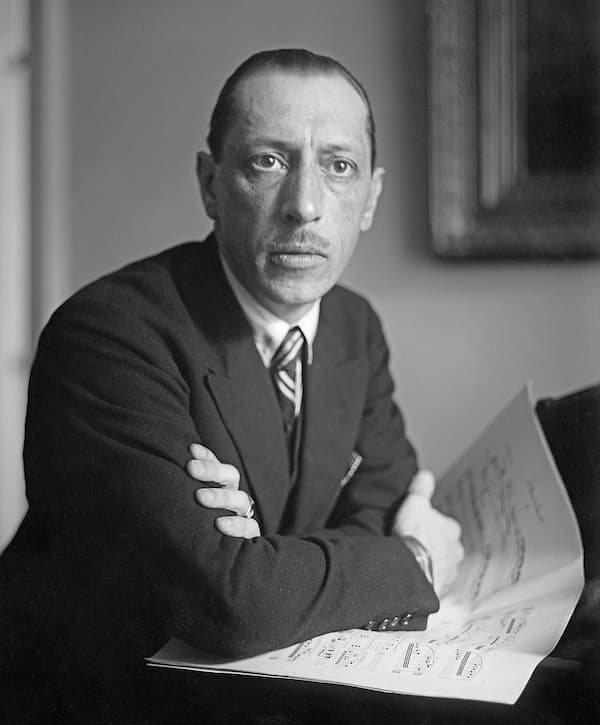
Photo of Igor Stravinsky. Taken by George Grantham Bain’s news picture agency.
I don’t really have a great explanation for why I want to hear this. I just think Stravinsky’s sparse and spiky neoclassical language sounds great interpreted by wind players.
Imagine what he could have done with tone colour if he’d created a solo part that went back and forth between flute and piccolo.
What we have instead of a Stravinsky flute concerto:
Stravinsky’s Ebony Concerto (1945)
Stravinsky’s Wind Octet (1923)
Violin Concerto by George Gershwin (1930s)
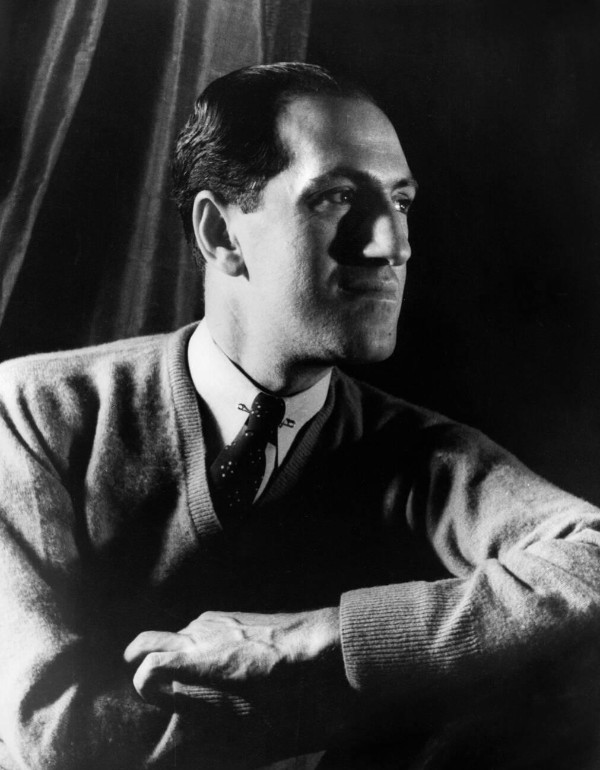
Portrait of George Gershwin
Shortly before George Gershwin died at the age of 38, violinist Jascha Heifetz asked him to compose a violin concerto.
Of course, it’s unclear if Gershwin would have ever followed up on the request if he had lived, but it’s certainly tempting to think about it. Violinists would have loved to have their own version of Rhapsody in Blue.
The Heifetz transcriptions of Gershwin works are a great hint of what might have been.
What we have instead of a Gershwin violin concerto:
Gershwin’s “It Ain’t Necessarily So” from Porgy and Bess, arranged by Jascha Heifetz (1935)
Gershwin’s Rhapsody in Blue (1924)
Hollywood Film Score by Dmitri Shostakovich (1950s)
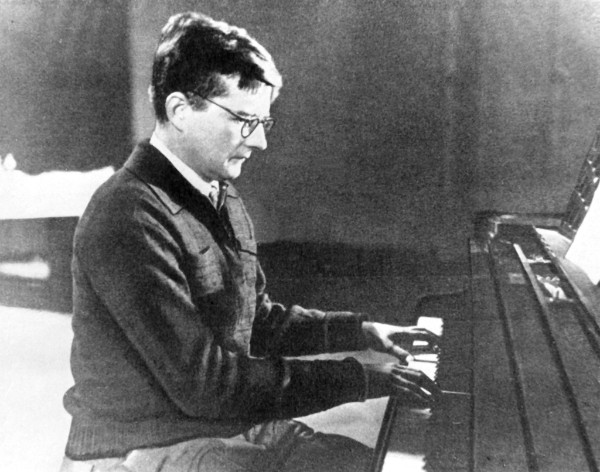
Dmitri Shostakovich
Yes, Shostakovich wrote a lot of film scores for Soviet productions, but none for American films.
Imagine an alternate universe where Shostakovich had fled the Soviet Union and worked alongside Erich Korngold during the Golden Age of Hollywood.
What might have happened if he had had the chance to write the score for a gritty, fatalistic 1940s American noir film?
Or what might a Shostakovich score for an Alfred Hitchcock picture sound like? (Composer Bernard Herrmann certainly took inspiration from Shostakovich while writing the score for Psycho.)
Would the end result have been successful? I don’t know, and I certainly wouldn’t want to give up the symphonies he made in the Soviet Union. But it’s fun to think about.
What we have instead of a Shostakovich Hollywood score:
Shostakovich’s Suite from The Gadfly (1955)
Shostakovich’s Gallop from The Nose (1928)
Shostakovich-ian elements in the score to Psycho
Those are my ten picks. What are your pieces that you wish existed?
For more of the best in classical music, sign up for our E-Newsletter





I am Rebecca Clarke’s great-nephew by marriage, the owner of her rights, and the editor of more than eighty of her works. The notion that she faced overwhelming sexism is an invention of academic musicology, dating from the early 1990s, when Clarke was more than a decade dead. She had a glittering career, both as a composer and as a performer, and she was able to write what she wanted, when she wanted, and how she wanted: had she wished to write a viola concerto, she almost certainly would have done so. The Lomon orchestration is inauthentic and unidiomatic, as can be heard from the opening chord—wet, messy, flatulent, unlike anything in Clarke’s own music. Clarke saw chamber music as the “highest form of all”—she had no interest in writing for orchestra, and she said so, in published sources. In this era of “Believe women,” perhaps more of us should consider believing Rebecca Clarke.