Louise Farrenc is one of the most unjustly neglected composers of her generation.
But despite the challenges of working as a woman musician in the nineteenth century, she carved out an extraordinary multi-pronged career for herself as a professor, performer, and composer.
Today, we’re looking at the life and achievements of Louise Farrenc and exploring some of the incredible music she left behind.
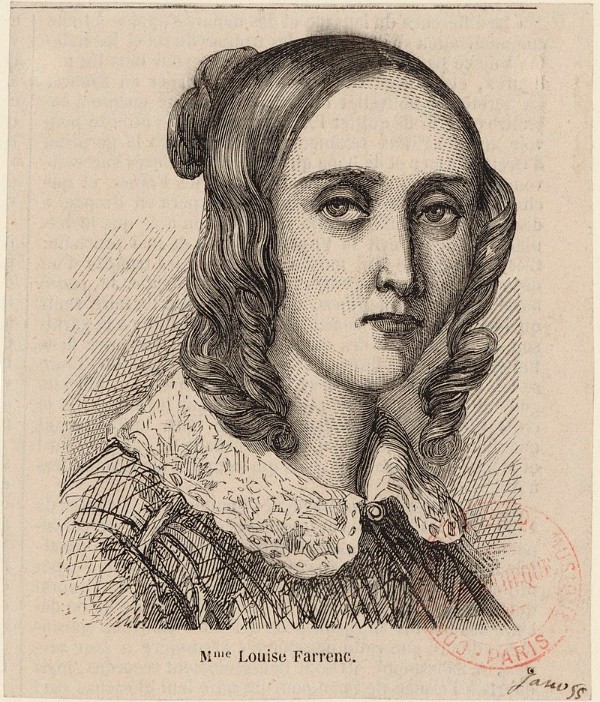
Louise Farrenc
Louise Farrenc’s Artistic Family Background
Louise Farrenc was born Louise Dumont on 31 May 1804. This was six months after fellow French composer Hector Berlioz, and a few years before Mendelssohn, Schumann, and Chopin.
Her father was Jacques-Edme Dumont, a sculptor from a long line of professional sculptors.
Her family tree also included several accomplished women painters who worked alongside their husbands and fathers in the family business. The family clearly valued and nurtured female artistic achievement.
Louise Farrenc’s Early Musical Studies
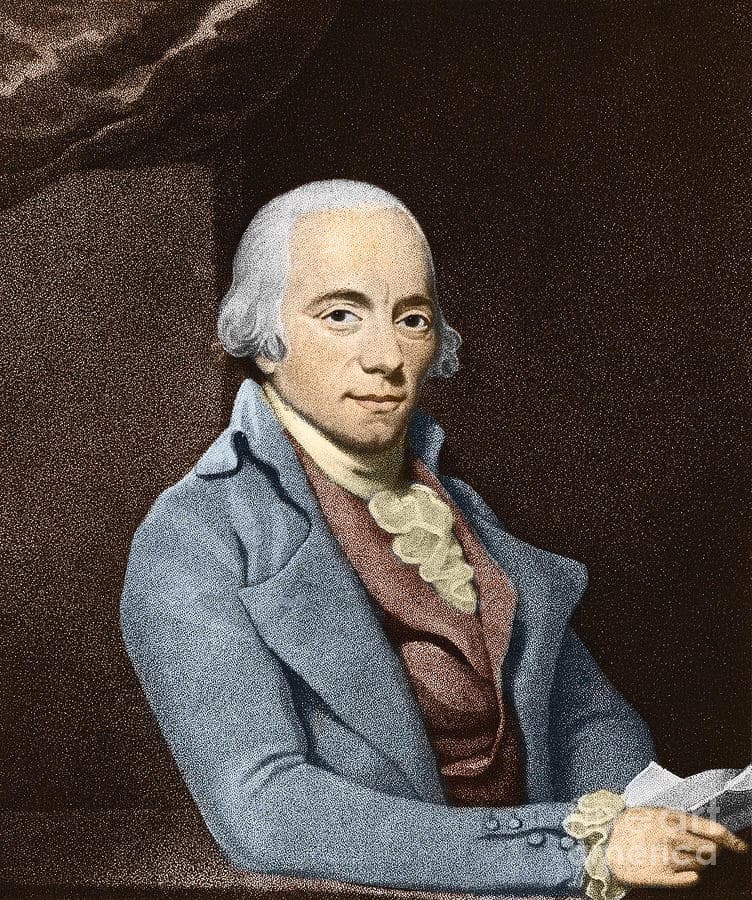
Muzio Clementi
Louise began studying piano as a child. Her first teacher was a woman named Cecile Soria, who had studied with Italian composer and keyboard virtuoso Muzio Clementi.
As Louise advanced, she began studying with Ignaz Moscheles, the teacher of Felix Mendelssohn and his sister Fanny. She also worked with Johann Nepomuk Hummel, who had studied with Mozart.
Soon Louise became interested in composing, too.
Being a woman, she was barred from officially studying composition at the Paris Conservatoire. However, when she was fifteen, her parents arranged for her to start taking private lessons with a Conservatoire teacher named Anton Reicha.
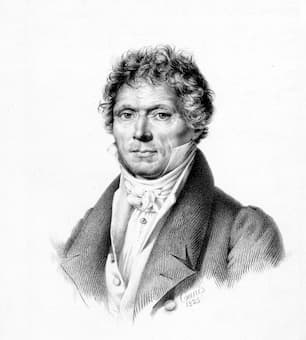
Anton (Antoine) Reicha
Reicha was a friend of Beethoven and would go on to teach Liszt and Berlioz. He became Louise’s primary pedagogical influence.
Louise Farrenc’s Etude in F Sharp Minor, op. 26 no. 10
Meeting and Marrying Aristide Farrenc
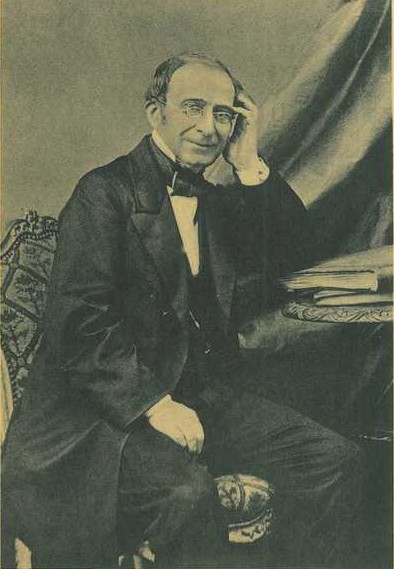
Aristide Farrenc
In 1821, Louise married flute student Aristide Farrenc, a Conservatoire student and orchestral flautist at the Théâtre Italien in Paris. Louise was seventeen and Aristide was twenty-seven.
At the time, it was common for married women to retire from serious musical life, or to continue it privately by establishing home-based salons.
However, public performance remained central to Louise’s life. In fact, after their marriage, the Farrencs went on tour together.
Settling Down and Having a Baby
After a few years of working as a performing musician, Louise became pregnant, and the couple decided to settle down in Paris. There she resumed her studies with Reicha.
In February 1826, when she was twenty-one, she gave birth to a daughter named Victorine. Victorine would be the couple’s only child.
Victorine also became a piano prodigy and composer, and studied with her mother beginning in 1831.
Louise Farrenc’s Trio for flute, cello and piano, Op. 45
Founding Éditions Farrenc
Around the same time, Louise and Aristide also began tackling an ambitious new project: working together to found a music publishing house.
Aristide understood what a talented composer his wife was, and he wanted to help propagate her works.
They named their company Éditions Farrenc, and it became one of the most respected music publishing houses in France.
After publishing twenty piano works by his wife, the Farrencs dissolved the publishing business in 1837.
Louise Farrenc’s Growing Success
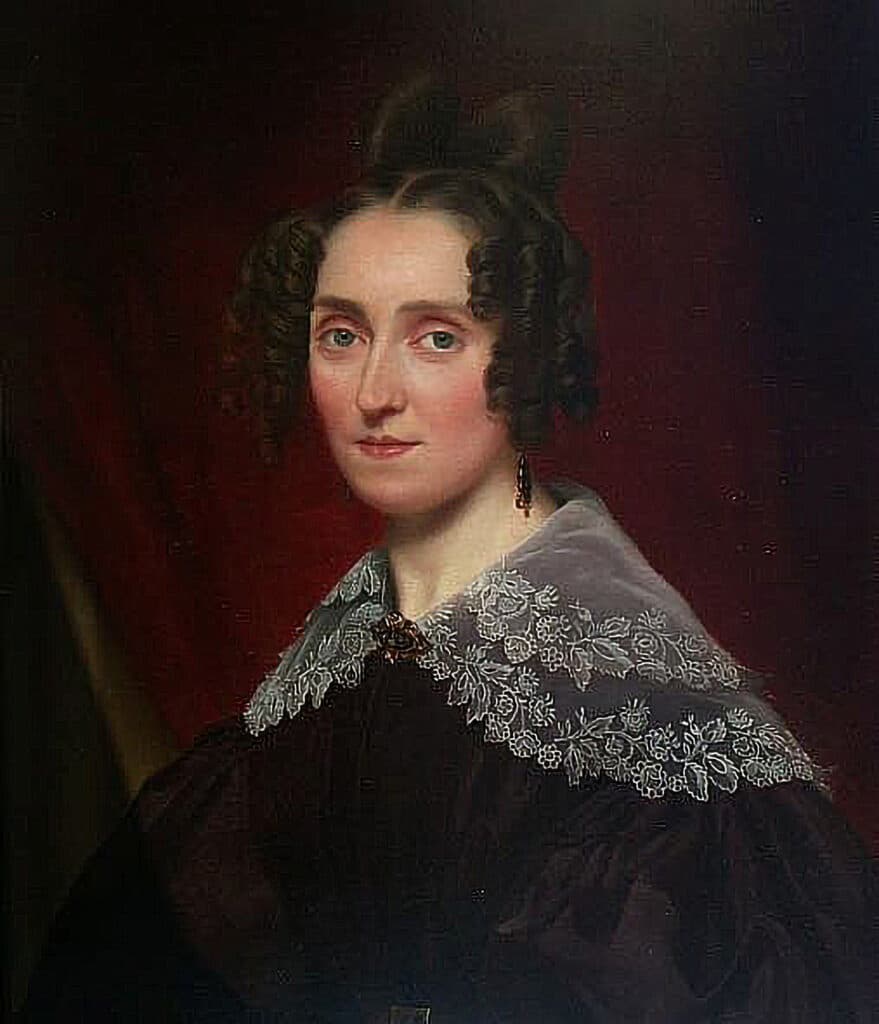
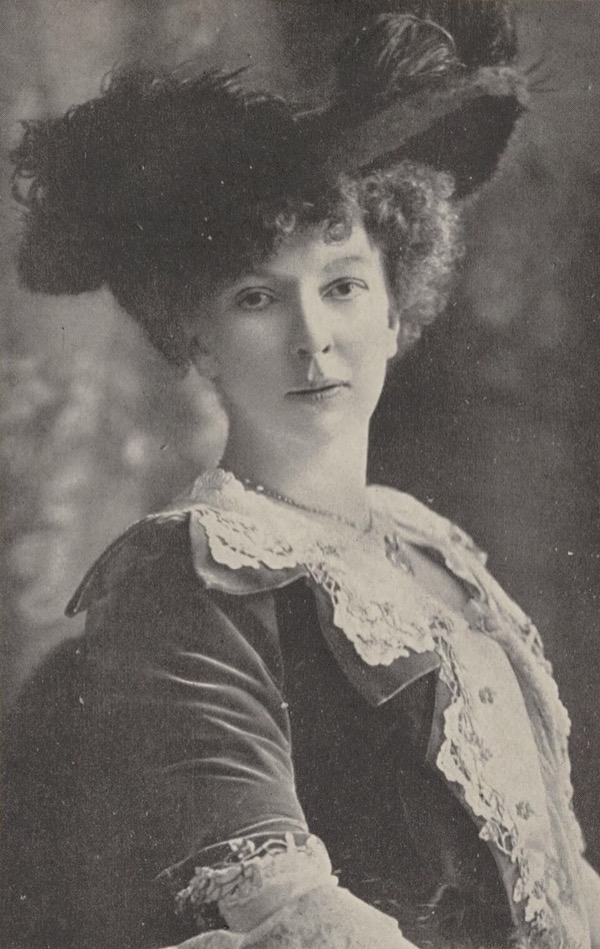
Louise Farrenc
Meanwhile, Louise continued to enjoy success throughout the 1830s.
Composer Robert Schumann, the editor of the Neue Zeitschrift für Musik, praised a set of her piano variations in 1836:
Were a young composer to submit to me variations such as these by L. Farrenc, I would praise him highly for the auspicious talent and fine training everywhere reflected in them.
I soon learned the identity of the author – rather, authoress – the wife of the renowned music publisher in Paris, and I am distressed because it is hardly likely that she will ever hear of these encouraging lines.
Small, neat, succinct studies they are, written perhaps still under the eye of the master, but so sure in outline, so logical in development – in a word, must fall under their charm…especially since a subtle aroma of romanticism hovers over them.
As is well known, themes which lend themselves to imitation are most suited for variation, and so the composeress utilises this for all kinds of delightful canonic games.
She even manages to carry off a fugue – with inversions, diminutions, and augmentation – and all this she manages with ease and songfulness.
Only in the finale would I have wished the calm bearing I had been led to expect after what came before.
Louise Farrenc’s Variations Brillantes, Op. 15
Writing for Orchestra and Chamber Music Ensembles
Confidence buoyed by positive feedback, Farrenc began to write for larger forces. Her first works for orchestra – two concert overtures – date from 1834.
Louise Farrenc’s Overture No. 2
In 1840, Berlioz reviewed the second overture, writing that it was “well written, and orchestrated with a talent rare among women.”
In the late 1830s and early 1840s, she also began to tackle chamber music. She wrote two piano quintets in 1839 and 1840, followed by two piano trios between 1841 and 1844.
However, her greatest accomplishment as a chamber music composer came in 1849 with her Nonet in E-flat Major, published as her Op. 38.
In this work, she used instrumentation conventions established by violinist and composer Louis Spohr: two violins, viola, cello, bassoon, clarinet, flute, French horn, and a bass part played by either a string bass or a contrabassoon.
Louise Farrenc’s Nonet
Joining the Paris Conservatoire Faculty
In 1842, she was named to the piano faculty of the Paris Conservatoire.
Although there were other women working in the school’s vocal department, Farrenc would be the only woman to hold this particular position for the rest of the nineteenth century.
She achieved fabulous results. Over the years, many of her piano students won prizes. All were women, as classes at the Conservatoire were segregated by gender.
Prizewinners included her daughter Victorine, who enrolled as a piano student in 1843 and won a premier prix the following year.
Negotiating Equal Pay for Equal Work
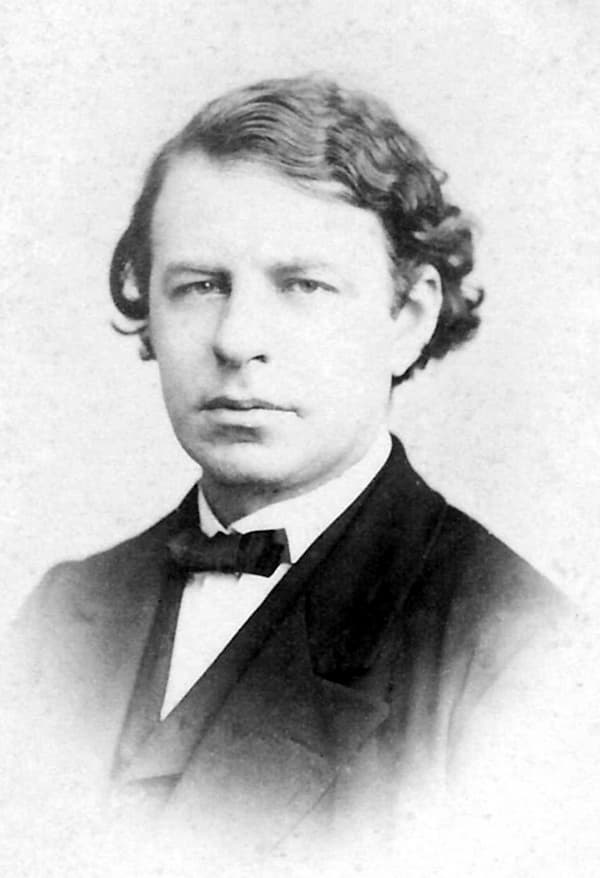
Joseph Joachim
In 1850, Farrenc’s Nonet was performed in Paris by, among others, up-and-coming violinist Joseph Joachim. It was a huge hit.
She used the renown the work brought her to negotiate a salary on par with her male counterparts. For years, she had been paid less than them solely because of her gender.
She wrote to her boss:
I dare hope, M. Director, that you will agree to fix my fees at the same level as these gentlemen, because, setting aside questions of self-interest, if I don’t receive the same incentive they do, one might think that I have not invested all the zeal and diligence necessary to fulfill the task which has been entrusted to me.
Her appeal was successful.
Writing Symphonies
After Farrenc was named to the Conservatoire faculty, she also began writing symphonies.
This was a striking thing for a French composer to do. Symphonies loomed much larger in the German musical tradition than in the French one, and there weren’t many symphony orchestras in Paris.
It was especially unusual for a woman to try this genre, given the professional credentials usually necessary to convince an orchestra to play one’s work.
Nevertheless, between 1842 and 1847, Farrenc wrote three symphonies. Today her best-known is her third in G minor.
Louise Farrenc’s Symphony No. 3
Its elegant emotional restraint, technical rigour, and sheer beauty will remind modern listeners of Mendelssohn’s symphonies.
The work was premiered in 1849 by the Orchestre de la Société des concerts du Conservatoire, an orchestra made up of both professors and students.
That night her symphony was programmed alongside Beethoven’s Fifth, an endorsement of the Conservatoire’s high opinion of her.
Putting Her Work in Context
It’s astonishing to think of how brilliant her orchestral works are, considering how few times she actually got to hear them performed.
Most of the great composers of this era heard and conducted their works multiple times in performance before writing more.
Farrenc never had that opportunity. And yet she wrote multiple staggeringly accomplished orchestral works in a time when few women were attempting the challenge.
The Barriers of Writing for Opera
Farrenc wanted to write opera, too, but it was exceedingly difficult for emerging composers to have operas approved to be mounted in Paris in the mid-1800s, especially if they were women.
In 1862, French critic François-Joseph Fétis wrote in his book Biographie universelle des musiciens:
Unfortunately, the genre of large-scale instrumental music to which Madame Farrenc, by nature and formation, felt herself called involves performance resources which a composer can acquire for herself or himself only with enormous effort.
Another factor here is the public, as a rule, not a very knowledgeable one, whose only standard for measuring the quality of a work is the name of its author.
If the composer is unknown, the audience remains unreceptive, and the publishers, especially in France, close their ears anyway when someone offers them a halfway decent work; they believe in success only for trinkets.
Such were the obstacles that Madame Farrenc met along the way, and which caused her to despair.
The Tragic Death of Victorine
Despite her works’ high quality and the fact that they remained in print for seventy-five years after their initial publication, they were largely forgotten by the early twentieth century.
It is tempting to wonder if things might have been different if she’d had a family member outlive her and advocate for her work, as pianist Clara Schumann advocated for the work of her husband Robert.
Victorine could have been that person for her mother, but she died in her mid-thirties in 1859 of tuberculosis.
Louise Farrenc’s Cello Sonata in B-Flat Major, Op.46
Focusing On Le Trésor des pianistes
While grieving the devastating loss of their only daughter, Louise and Aristide Farrenc worked together on a massive collection of piano music called Le Trésor des pianistes (The Pianists’ Treasure).
Aristide did much of the research, while Louise focused on Baroque ornamentation. She became increasingly interested in forgotten Baroque music for harpsichord, and was working to popularise now-beloved composers like Couperin and Scarlatti.
After Aristide died in 1865, Louise continued the project alone. It would ultimately grow to become a twenty-three-volume collection: an impressive capstone on a long career.
Louise Farrenc’s Death and Legacy
Louise Farrenc died in 1875.
After her death, the Concert National played the slow movement of her third symphony in tribute. Her music remained in print for years afterwards before slipping out of the increasingly male canon.
Nowadays, Farrenc is thankfully experiencing a much-deserved revival and reassessment. More and more of her works are being recorded and appearing on concert programs.
Hopefully, this trend will continue for many years to come, securing the permanent place in the canon that she so richly deserves.
For more of the best in classical music, sign up for our E-Newsletter