From the very beginning of the history of classical music, composers have found flowers to be an irresistible inspiration.
Today we’re celebrating the musical portrayal of all kinds of flowers, from roses to lilies to jasmine and more.
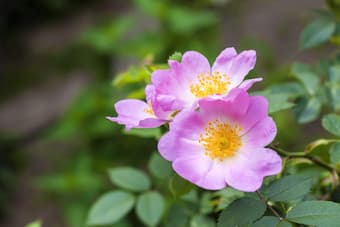
Here are twenty-five pieces of classical music about flowers:
Guillaume de Machaut: Rose, liz, printemps, verdure (ca 1350)
French composer Guillaume de Machaut (c 1300-1377) is regarded as possibly the greatest composer and poet of the fourteenth century. He wrote many kinds of music, from short songs to lengthy masses.
His song “Rose, liz, printemps, verdure” (“Rose, lily, spring, greenery”) serves as a metaphor for a woman whom the narrator adores and seeks to court, per the practices of courtly love.
Franz Schubert: Heidenröslein (1815)
“Heidenröslein”, translated into English, means “Wild Rose.”
In this song, Schubert sets a poem by Goethe. That poem tells the story of a boy who sees a red rose growing in the heather. He says he is going to pick the rose. The rose replies that she has thorns to prick him with if he does. However, “her cries of pain were to no avail; / she simply had to suffer.” The rose is forced to bear the consequences of the boy’s cruel whim.
Robert Schumann: Die Rose, die Lilie, die Taube, die Sonne from Dichterliebe (1840)
Dichterliebe (A Poet’s Love) is Schumann’s most famous song cycle. It was written in 1840 and set to music the poetry of Heinrich Heine.
“Die Rose, die Lilie, die Taube, die Sonne” (“Rose, lily, dove, sun”) is a quick, bright little song in which the narrator celebrates his love.
Heinrich Wilhelm Ernst: Last Rose of Summer (1864)
“The Last Rose of Summer” is an Irish folk song that was especially popular in the nineteenth century.
Violin virtuoso Heinrich Wilhelm Ernst used it as the basis of a set of near-impossible variations for solo violin. Some people believe that this is the most difficult piece ever written for the instrument!
We wrote about other variations on the “Last Rose of Summer”.
Nikolai Rimsky-Korsakov: The Nightingale Enslaved by the Rose from 4 Romances
Rimsky-Korsakov wrote this song early in his career: he was just twenty-two years old, and it was part of his opus 2!
In the song, a nightingale has fallen in love with a rose and sings to it. The rose, however, doesn’t respond. Meanwhile, a young man sings to his love…who, like the rose, also doesn’t respond.
The wistful idea of these mirrored missed connections imbues the fleeting song with a sense of loss.
Georges Bizet: La fleur que tu m’avais jetée from Carmen (1875)
In the opera Carmen, the seductive eponymous character throws a flower at the soldier Don José to indicate her romantic interest in him.
Later, she attacks another woman with a knife. It is now Don José’s professional duty to restrain her, but he is seduced by her instead, and he is arrested for dereliction of duty.
When he’s released from prison two months later, the two share a private moment during which he confesses that he kept her flower while jailed.
He sings:
On my eyes closing my eyelids
From this smell I would get drunk
And in the night I saw you.
Johann Strauss II: Roses From the South (1880)
“Roses from the South” is a medley of melodies taken from Strauss’s operetta The Queen’s Lace Handkerchief, based on the life of Miguel de Cervantes, the Spanish author of Don Quixote.
One of the numbers used in this reimagining was “Where the Wild Rose Blossoms”, which, combined with the original operetta’s Spanish theme, as well as the waltz’s dedication to King Umberto I of Italy, gave this arrangement its name.
Léo Delibes: Flower Duet from Lakmé (1881-82)
The famous “Flower Duet” is sung by two characters – the daughter of a Brahmin priest and her servant – who are on their way to pick flowers by a riverbank. As they walk, they describe enchanting jasmine, rose, and lotuses.
The two women sing very similar phrases together and to each other, highlighting their connection with one another and the natural world around them.
Gabriel Fauré: Fleur jetée from 4 Songs (1884)
Unusually for Fauré, who specialised in very subtle music, this is an outwardly dramatic song, boasting a virtuosic piano part.
The title translates to “Discarded flower.” The narrator compares love to a flower and sings regretfully of carelessly picking one, an action that will doom the blossom. “May the wind that withers you wither my heart,” the narrator sings to the flower.
Richard Strauss: Mädchenblumen (1888)
In his “Mädchenblumen” (Girl-flowers), Richard Strauss sets four poems by German author Felix Dahn that compare different types of girls to different types of flowers.
For instance, so-called “cornflower girls” are “gentle girls with blue eyes, / who simply and serenely impart / the dew of peace.” Meanwhile, “poppy girls” are “the round,
red-blooded, healthy girls” who tease the cornflower girls!
Emmanuel Chabrier: Toutes les fleurs (1889)
In Emmanuel Chabrier’s exuberant song “Toutes les fleurs”, the narrator ticks off a list of all of the flowers he loves: lilies, cornflowers, lilacs, roses… The list goes on and on.
At the end, he sings of his lover:
Most of all I’m in love
in your dear lips in bloom.
Giacomo Puccini: Crisantemi (1890)
Chrysanthemums symbolise loyalty. So when Puccini’s friend, Amadeo di Savoia, Duke of Aosta, died at the age of forty-four and Puccini wrote this brief work for string quartet in his memory, he named it after the flower.
Puccini wrote “Crisantemi” over the course of a single night. It is not only an expression of loyalty to his friend, but also his grief at his death.
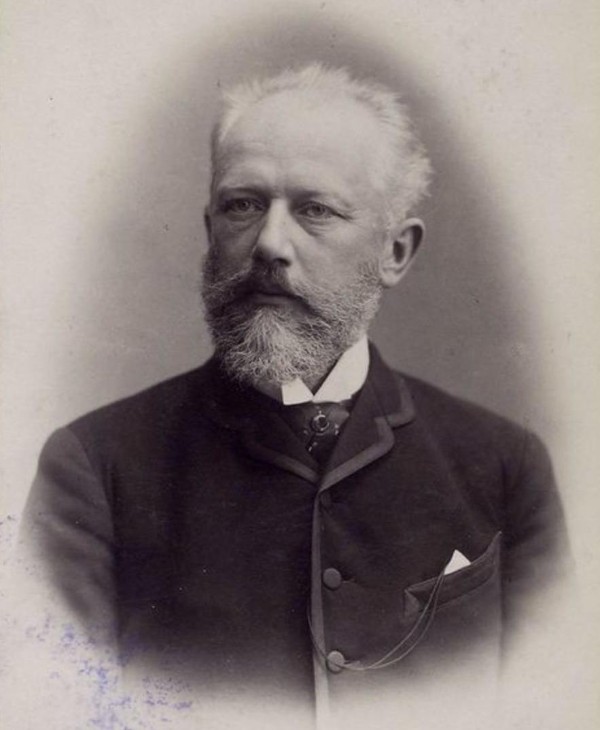
Pyotr Ilyich Tchaikovsky: Waltz of the Flowers from The Nutcracker (1892)
The Nutcracker is a holiday staple. The ballet follows a little girl named Clara as she attends a Christmas party. She is gifted a magical nutcracker who transforms into a prince and escorts her into a fantasy world.
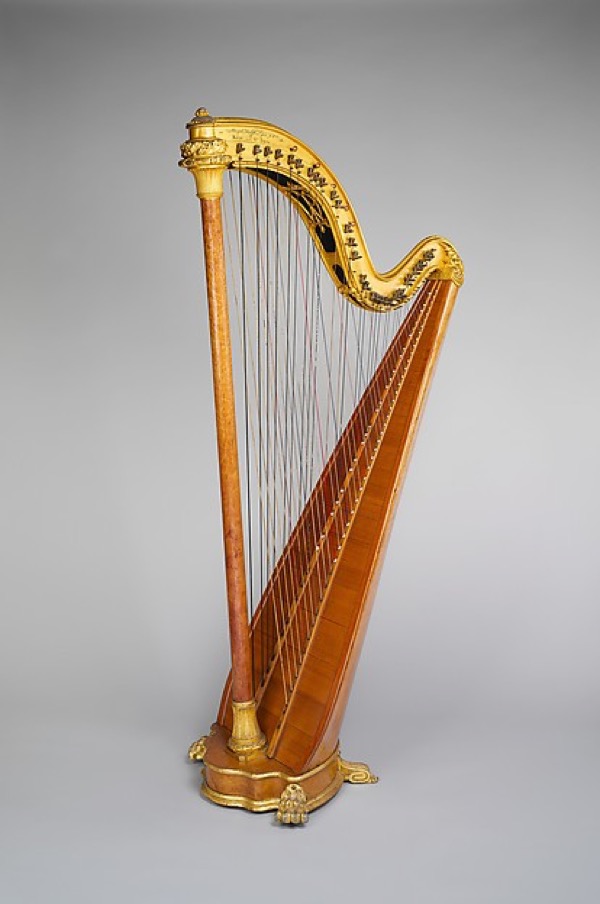
A famous harp cadenza signals the fantastic “Waltz of the Flowers”, in which blooms come to life and dance.
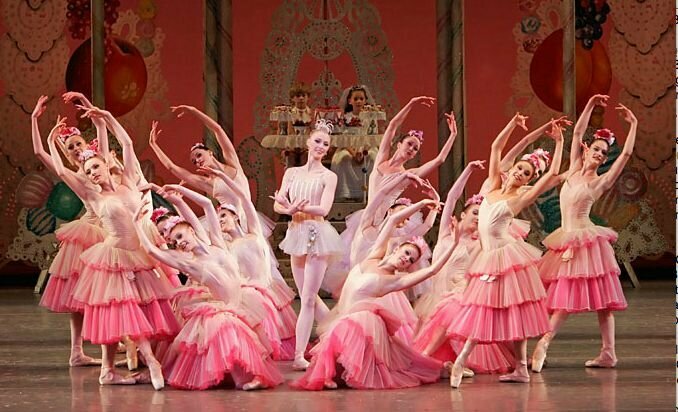
The Nutcracker: Waltz of the Flowers
Edward MacDowell: To a Wild Rose (1896)
In 1896 American composer Edward MacDowell moved to a house in the New Hampshire countryside.
That summer, he challenged himself to compose a small piece every morning. These were often inspired by the natural world around him. “To a Wild Rose” was one of those pieces.
Believe it or not, MacDowell initially threw “To a Wild Rose” into the trash, but luckily, his wife told him to take it out! It became his most famous composition.
Sergei Rachmaninoff: “Daisies” (1916) and “Lilacs” (1900-02)
Rachmaninoff’s two flower-inspired works are “Daisies” from his op. 38 and “Lilacs” from his op. 21. Both are songs for voice and piano that are heard here in solo piano arrangements.
“Lilacs” was part of a collection of songs that came out in 1902, the year of his marriage. Rachmaninoff hoped that “Lilacs” and the other songs in the collection could pay for his honeymoon!
Claude Debussy: Bruyères from Préludes Book II (1912-13)
French composer Claude Debussy wrote twenty-four Préludes for solo piano, split across two books. “Bruyères” is the fifth prelude from the second book. The word translates into English as “heather.”
Debussy’s friend, pianist Marguerite Long, claimed that this piece was reminiscent of sea mist and pine trees. What do you hear in it?
Ralph Vaughan Williams: Flos Campi (1925)
Flos Campi translated, means “Flower of the Field.” It was written for the unusual combination of solo viola, chorus, and small orchestra.
It consists of six movements with no break in between. Each movement uses a phrase from the Song of Solomon from the Bible as a title.
The Song of Solomon uses a lot of floral imagery when describing two lovers, who are known to each other as “the beloved.” Later, this writing and these floral metaphors were adapted by the Christian church to symbolise the relationship between Christ and the church.
Germaine Tailleferre: Fleurs de France (1930)
Composer Germaine Tailleferre was born in 1892. She faced difficulty pursuing a musical career because of her gender. She gained fame in the 1920s when she was named as one of “Les Six”, an informal group of influential Parisian composers.
This work portrays eight flowers found around France: lavender, jasmine, cornflower, rose, sunflower, purple wreath, chamomile, and poppy.
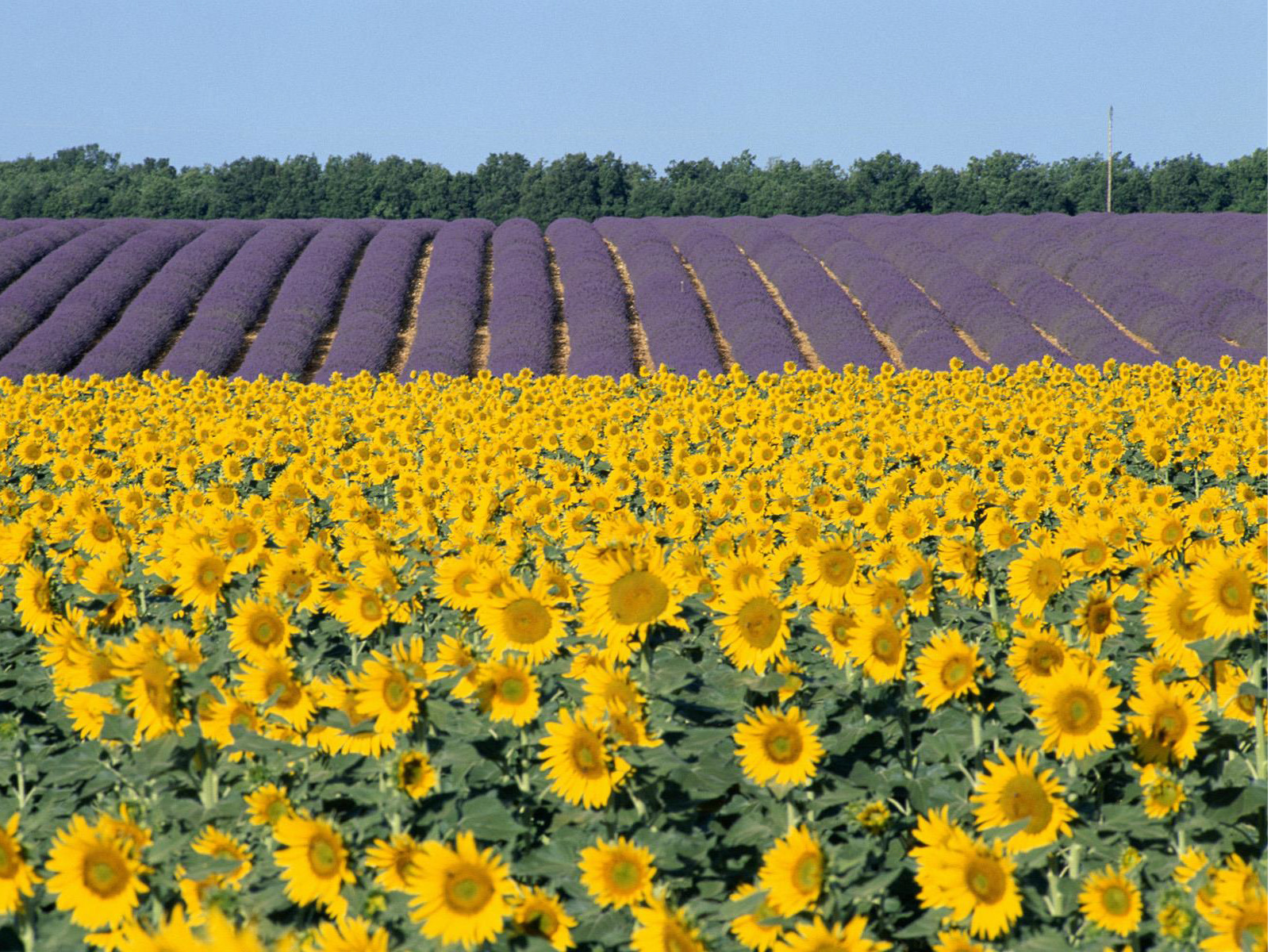
sunflowers and lavendar
Learn more about the poignant life of Germaine Tailleferre.
Florence Price: Dance of the Cotton Blossoms (ca. 1938)
When composing, African-American composer Florence Price drew heavily on her heritage.
The “Dance of the Cotton Blossoms” is no exception, calling to mind the cotton plantations of the American South.
The main melodic theme seems to reference the famous folk song “Shortnin’ Bread.” However, Price’s interpretation of the folksong employs “classical” techniques like employing a rondo structure.
Learn more about the boundary-breaking life of Florence Price.
Benjamin Britten: There Is No Rose from A Ceremony of Carols (1942)
British composer Benjamin Britten and his lover, tenor Peter Pears, toured America in the early years of World War II, but eventually became so homesick that they decided to return home. On the dangerous ocean voyage back, Britten wrote the quintessentially English A Ceremony of Carols.
The portion of the text called “There Is No Rose” dates from the early 1400s. It speaks of the singularity of the birth of Christ: “There is no rose of such vertu / As is the rose that bare Jesu.”
Sergei Prokofiev: The Tale of the Stone Flower (1948-1953)
The Tale of the Stone Flower was Prokofiev’s final ballet. The main character is a stone-cutter from the Ural Mountains named Danila. His dream is to carve a realistic flower out of stone. Fantastical adventures ensue.
Benjamin Britten: Five Flower Songs (1950)
Britten’s lovely “Five Flower Songs” were composed as an anniversary gift for friends. “Five Flower Songs” consists of five songs that mention flowers, all composed for choir a cappella. The work sounds modern and medieval simultaneously.
The poems that Britten chose to set praise daffodils, marsh flowers, primroses, and other flowers.
Mieczysław Weinberg: Symphony No. 8 “Polish Flowers” (1964)
This hour-long choral symphony by Mieczysław Weinberg is a huge artistic statement. It uses texts from the lengthy poem Polish Flowers by Polish poet Julian Tuwim.
In his poem, Tuwim tells the story of Polish history, touching on many of Poland’s profound political and economic struggles.
Weinberg, who was also born in Poland but ultimately emigrated to the Soviet Union to escape the Nazis, wrote this deeply personal and political symphony using Tuwim’s words.
Jane Stanley: Desert Rose (2010)
This brief, dreamlike work for flute and marimba was written by Australian composer Jane Stanley.
Max Richter: Flowers of Herself (2021)
Composer Max Richter wrote Flowers of Herself for the Royal Ballet’s Virginia Woolf-inspired ballet Woolf Works.
Richter wrote about the work:
“Flowers of Herself’ is about the energy of going through a bustling city. The piece has this perpetual motion a little bit like if you’re walking down the street, you’ll see a bus then you’ll see another bus in a different space so there’s a shifting of perspective. “Flowers for Herself” is a celebration of London, the orchestra emulates a busy, vibrant city, fuelled by excitement and pace.
Conclusion
© classicalfm.ca
The beauty and symbolism of flowers have inspired composers for generations, as this list very clearly attests. We hope you’ve enjoyed our tour of twenty-five of the most striking examples of classical music about flowers!
Did we miss any flower-inspired works? Share your favourite in the comments.
For more of the best in classical music, sign up for our E-Newsletter