Romantic Era composer Robert Schumann had one of the most tragic life trajectories of the great composers.
In his twenties, he fell in love with his piano teacher’s daughter, Clara Wieck. Her father disapproved of the match, and the young couple spent dramatic years in the 1830s fighting to be permitted to marry.
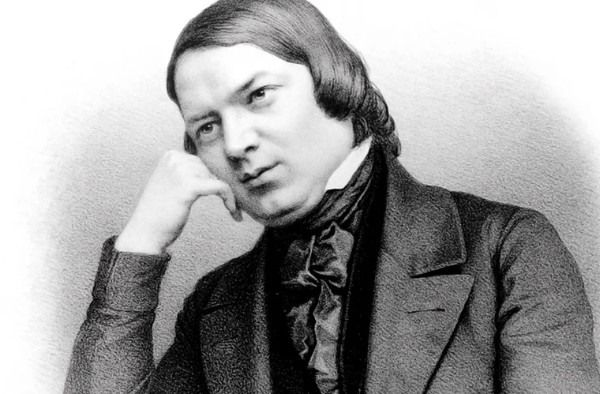
Robert Schumann
By the 1850s, Robert’s mental health – never robust – began deteriorating severely.
A suicide attempt in February 1854 signaled the end of his professional life. He lived in a mental hospital for the rest of his life before dying in the summer of 1856.
Over the course of his relationship with Clara, Robert translated the emotions of his life experiences into a number of pieces that were melancholy, tragic, and bittersweet.
Today, we’re looking at six of the saddest works Robert Schumann ever wrote and the stories behind each one.
“Romance” from 3 Romanzen, Op. 28, No. 2 (1839)
In 1839, the year before they married, Robert Schumann gave Clara Wieck a set of three romances.
She loved them. She felt a special connection to the second, later writing that it was “the most beautiful love duet.”
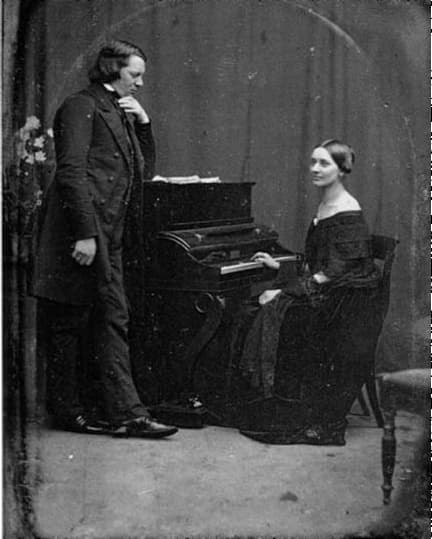
Robert and Clara Schumann
Its gentle rocking accompaniment and long, suspended melodic lines take a listener’s breath away.
Robert died in the summer of 1856, and Clara spent the following forty years promoting her husband’s work.
In 1896, when she was on her deathbed, she asked her grandson Ferdinand to play this piece for her. He did, and it became the last music she ever heard before she died.
“Mondnacht” from Liederkreis, Op. 39
In May 1840, Robert wrote a song cycle called, appropriately enough, Liederkreis (Song Cycle), employing poems from Joseph von Eichendorff‘s poetry collection Intermezzo.
The translation of the fifth song, “Mondnacht” (Moonlit Night), is this:
It was as if the heavens had
Silently kissed the earth,
So that in a shower of blossoms she
Must only dream of him.
The breeze wafted through the fields,
The ears of corn waved gently,
The woods rustled faintly,
So starry-clear was the night.
And my soul stretched
its wings out far,
Flew through the quiet lands,
as if it were flying home.
Schumann captures the wistful melancholy and aching longing of such a starry night perfectly.
Piano Quartet, Movement 3, Op. 47
Schumann wrote his piano quartet for violin, viola, cello, and piano in 1842.
Remarkably, that was the first year that Schumann had ever written any chamber music as a mature composer.
His inspiration came all at once in a concentrated burst. In 1842 alone, he wrote three string quartets, his piano quintet, the Fantasiestücke for piano trio, and this piano quartet. The piano quartet took just a month to complete.
The work’s heart is found in its slow movement, which features a bittersweet theme originating in the cello part. That theme is vocal in character, sounding like a tender opera aria.
Dichterliebe, Op. 48 (1840)
Schumann wrote his song cycle Dichterliebe (A Poet’s Love) in 1840. It is based on the poetry of Heinrich Heine and consists of sixteen movements drawn from poems Schumann himself selected.
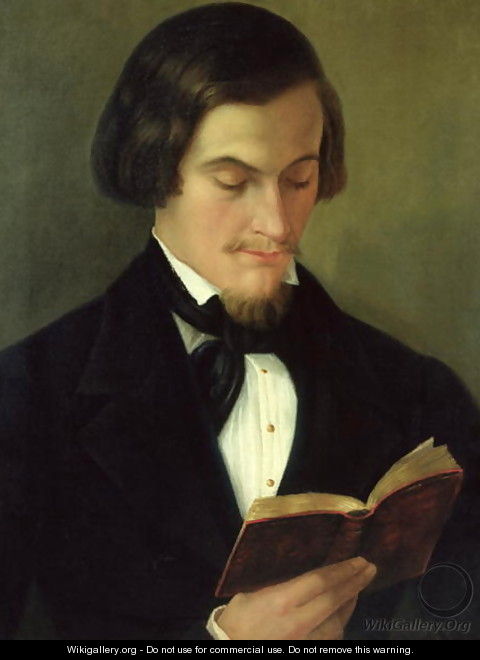
Portrait of Heinrich Heine by Amalia Keller
© Wikipedia
The poems Schumann employed trace the emotions of a poet whose romantic relationship is crumbling.
For the first six songs, the narrator sings primarily of the lover’s positive qualities and their attraction. However, starting in the seventh, he reveals their love has been shattered.
Over the next cluster of songs, the natural world offers comfort to the narrator.
By the last few songs, he is miserable, loudly weeping and dreaming of the beloved in the grave. He bitterly asks the listener to build a massive coffin:
“Do you know why the coffin must be so big and heavy? I will put both my love and my suffering into it.”
Gesänge der Frühe, Op. 133
Gesänge der Frühe (Songs of the Morning) was one of Schumann’s final compositions, composed in October 1853. (Interestingly, this was just days after Johannes Brahms came to visit him and Clara for the first time in late September of that year.)
The opening movement sounds like an unsettling chorale. It is lovely but unusual. Surprising dissonances are scattered throughout the rest of the piece.
Clara reported in her diary that they were “dawn-songs, very original as always, but hard to understand, their tone is so very strange.”
Looking back and knowing what we do about how Robert Schumann’s story ended, it’s easy for this music’s pathbreaking ambiguity to be interpreted as an early warning sign of confusion, disorientation, or even dissociation.
However, given the decline of his health, we’ll never know for certain.
“Geistervariationen” (Ghost Variations), WoO 24
This was the work that Schumann was working on before he fled his home in February 1854 and threw himself into the Rhine.
He was rescued, returned home, and finished the variations.
As he was composing them, Schumann believed he was surrounded by musical spirits, who shared music with him that was alternately beautiful or terrible. According to him, these same spirits threatened to send him to hell.
The sadness in this piece comes less from the music itself and more from the circumstances surrounding its creation.
After finishing the piece, knowing that his health was deteriorating, Schumann agreed to move to a mental hospital. He feared becoming a danger to Clara or his children.
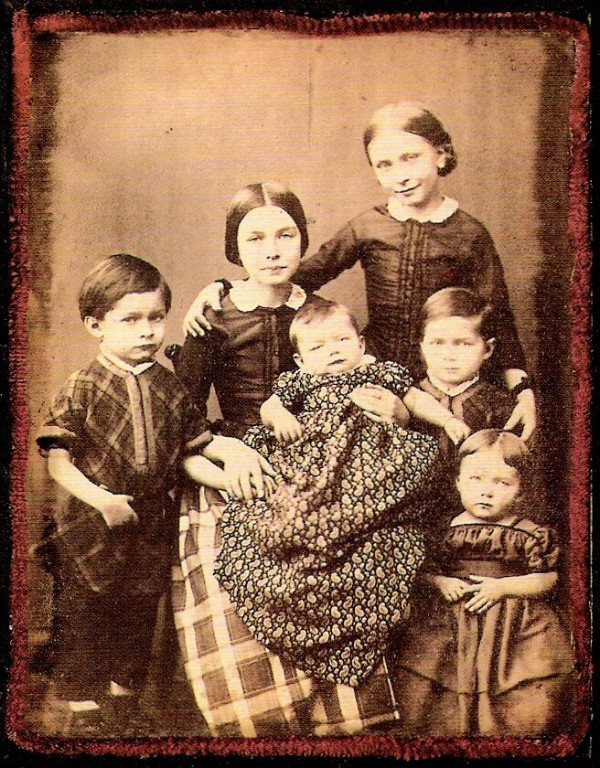
Robert and Clara Schumann’s children
Conclusion
Taken together, these six works paint a deeply moving portrait of Robert Schumann’s saddest music, demonstrating how closely his creative life was entwined with the emotions he felt.
From the tender intimacy of the Romance and the piano quartet, to the aching resignation of Dichterliebe, to the unsettling ambiguity of his final solo piano works, Schumann repeatedly returned to themes of loss and yearning over the course of his too-short career.
For listeners drawn to sad classical music or tragic composer stories, these melancholy works of Schumann’s are among the most powerful and heartbreaking in the repertoire.
Each of them offers moments of fragile beauty that are all the more moving because of the struggle and tragedy he endured.
For more of the best in classical music, sign up for our E-Newsletter