Piano etudes don’t have to be dry technical drills. In the hands of a talented composer, they can become miniature works of art.
While names like Chopin, Liszt, and Debussy tend to dominate discussions of the genre, women composers across the past 250 years have contributed some of the most challenging and expressive etudes ever written.
From Hélène de Montgeroult’s revolutionary harmonic language to Grażyna Bacewicz’s electrifying mid-century modernism, these etudes reveal a vibrant pedagogical tradition that can totally reshape our understanding of piano history.
Today, we’re looking at ten of the best piano etudes by women composers, spanning from the late eighteenth century to the twentieth.
Hélène de Montgeroult (1764–1836)
Etudes No. 37, 28, 55, 74, 36, 38, 111
Hélène de Montgeroult was a French aristocrat, pianist, and innovative composer whose life reads like a novel.
She survived the French Revolution – as one urban legend has it, by improvising variations on “La Marseillaise” to save herself from the guillotine – and went on to become the first female professor of piano at the Paris Conservatoire in 1795.
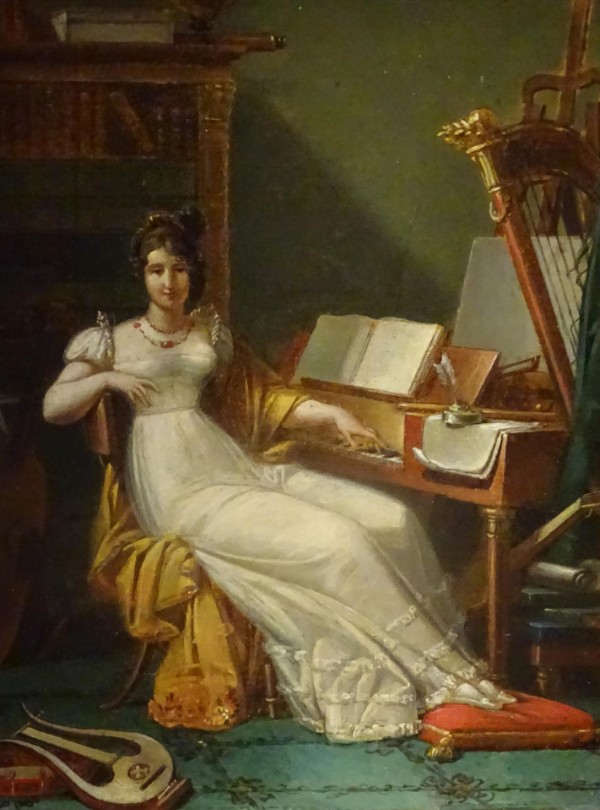
Hélène de Montgeroult
Montgeroult composed an extensive body of piano music, including a whopping 114 piano études published within her comprehensive piano method, Cours complet (1816).
These études were composed between 1788 and 1812 and are considered her magnum opus.
Montgeroult’s music was decades ahead of its time; in fact, she has been called “the missing link between Mozart and Chopin.” She was only eight years younger than Mozart, but her harmonic language and lyrical style clearly anticipate Mendelssohn, Schumann, and Chopin.
Read everything about Hélène de Montgeroult’s colourful life.
Marie Bigot (1786–1820)
Etude No. 2 in A-minor
Marie Bigot de Morogues was a French pianist-composer who was admired by the likes of Haydn and Beethoven.
In fact, Bigot impressed Beethoven so greatly with her pianism (she was the first to sight-read his Appassionata Sonata for him) that he gave her the manuscript as a gift. She was one of the first pianists to play it and a fierce champion of Beethoven’s works in general.
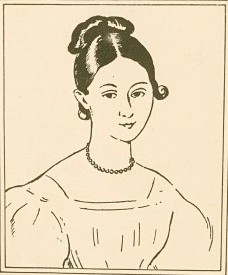
Marie Bigot
She later became a well-respected teacher in Paris, giving piano lessons to both Fanny and Felix Mendelssohn in 1816.
Bigot composed a handful of works, among which her Suite d’études (a set of six piano etudes) stands out.
Published in Paris after her departure from Vienna, this set solidified her reputation as a talented composer.
Contemporary accounts note that she had written more music than she ever published, but the etudes were the music she chose to share with the world.
Louise Farrenc (1804–1875)
Etude in F-sharp-minor, Op. 26, No. 10
Louise Farrenc was a French composer, virtuoso pianist, and professor who achieved considerable renown in her lifetime.
She was the only woman appointed a full professor at the Paris Conservatoire in the nineteenth century, and she tirelessly championed both contemporary and early music.
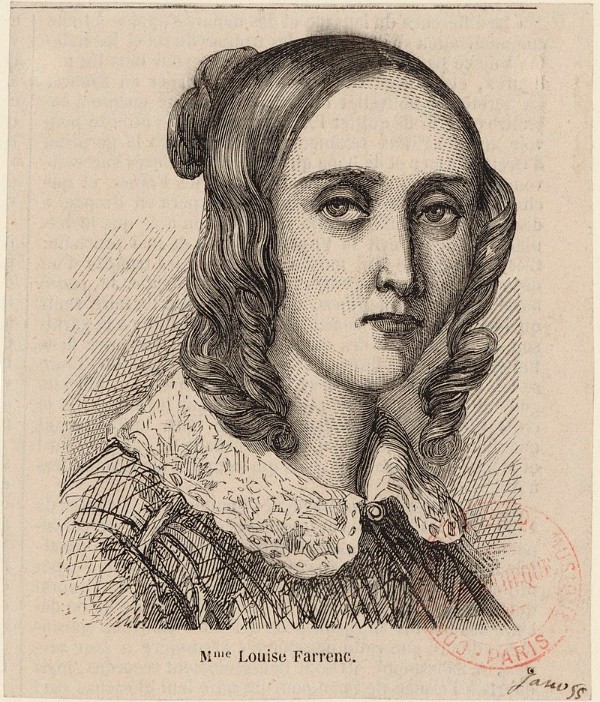
Louise Farrenc
Farrenc’s own compositions include three symphonies and a huge amount of chamber music, but for pianists, her Etudes hold special significance.
She composed a widely praised set of 30 Études, Op. 26, that systematically covers all major and minor keys, as well as a later set of 25 easier etudes, Op. 50, for intermediate students.
The etudes in Farrenc’s Op. 26 were composed between 1835 and 1838. They belong firmly in the tradition of the great nineteenth-century piano etudes.
They were admired by critics, including Robert Schumann, and were even adopted into the Paris Conservatoire’s curriculum.
For comparison, Chopin’s etudes were written between 1829 and 1839.
We wrote about Farrenc’s groundbreaking career, and how she fought for equal pay for equal work.
Kate Loder (1825–1904)
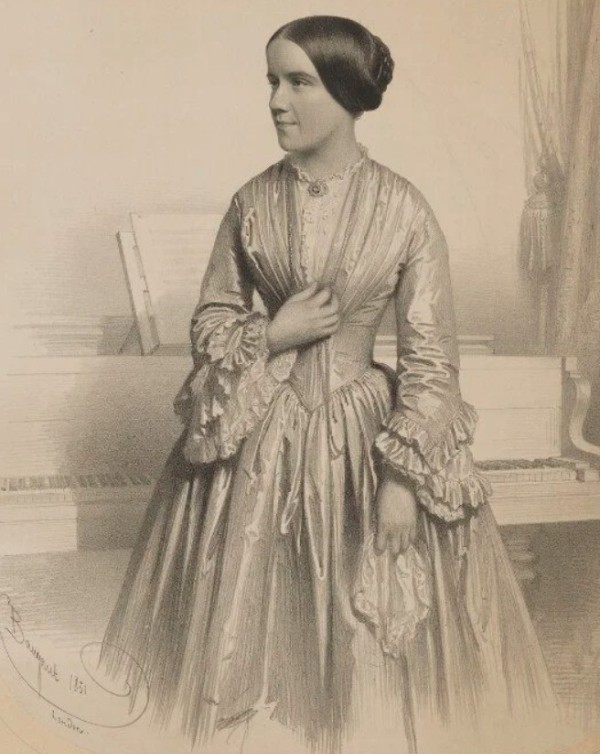
Kate Loder
Kate Loder: 12 Studies, Book 1 (Ian Hobson, piano)
Kate Loder (later Lady Thompson) was an English pianist and composer.
A child prodigy from a prominent musical family, she studied at the Royal Academy of Music in London and became the Academy’s first female Professor of Harmony at the age of eighteen.
Unfortunately, Loder’s performing career was cut short after her marriage to famous surgeon Henry Thompson.
At the time, it was considered unseemly for the wife of a prominent gentleman to appear on the stage, so she retired from performing. However, she continued to teach and compose.
Her Two Books of Twelve Studies for piano are particularly noteworthy. While writing her etudes, she enthusiastically embraced the Romantic era idea of turning technical challenges into appealing music.
Laura Netzel (1839–1927)
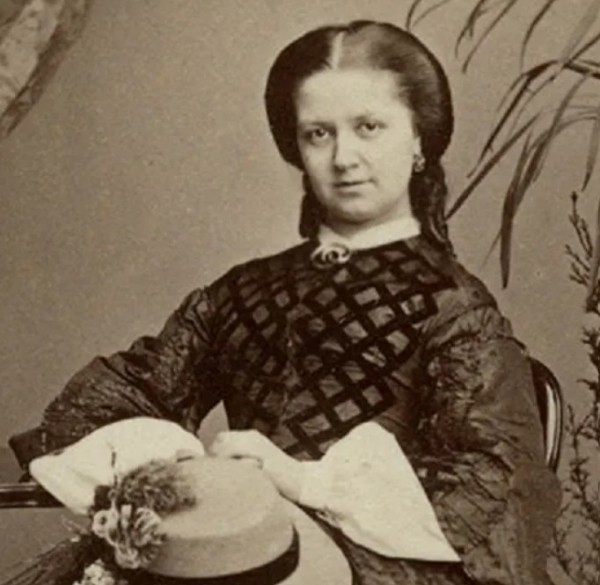
Laura Netzel
Laura Netzel: Etude, Op. 52: No. 1. La Fileuse (Fredrik Ullén, piano)
Laura Netzel was a Finnish-Swedish composer (born in Finland but raised in Stockholm) who, like many Nordic composers of her time, went abroad to study.
She traveled to Paris and studied composition with organist Charles-Marie Widor.
Her output was prolific, spanning vocal works, chamber music, and orchestral pieces.
Relevant here are her Deux Etudes de Concert, Op. 52, published in 1895.
The first is subtitled “La Fileuse”, or “The Spinner.” It features a rippling accompaniment suggestive of a spinning wheel’s constant motion. Above it, a gentle, singing melody unfolds.
It was likely inspired by other spinning-wheel-inspired pieces popular in Romantic piano literature at the time. Netzel, however, puts her own spin – no pun intended – on the genre.
Agathe Backer Grøndahl (1847–1907)
Etude in D-flat-major, Op. 11, No. 2
Agathe Backer Grøndahl was a Norwegian pianist-composer and one of the leading musical figures in Norway in the late nineteenth century.
A student of Franz Liszt and Hans von Bülow, Backer Grøndahl enjoyed a stellar career as a concert pianist and earned acclaim for her compositions.
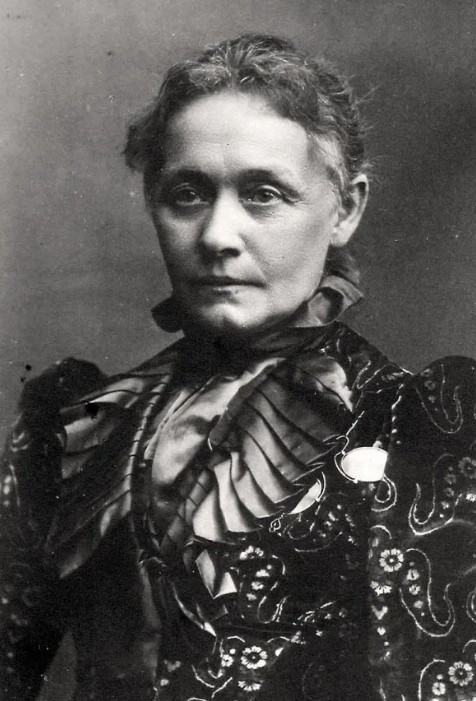
Agathe Backer Grøndahl
She wrote numerous piano pieces, songs, and orchestral works, often infusing them with Norwegian romanticism, much like her friend and colleague Edvard Grieg.
Among her works for piano are the 6 Concert Etudes, Op. 11, published in 1881.
These aren’t easy etudes for up-and-coming players; they’re thrilling virtuoso works intended for advanced pianists, and perfect for a concert setting.
Teresa Carreño (1853–1917)
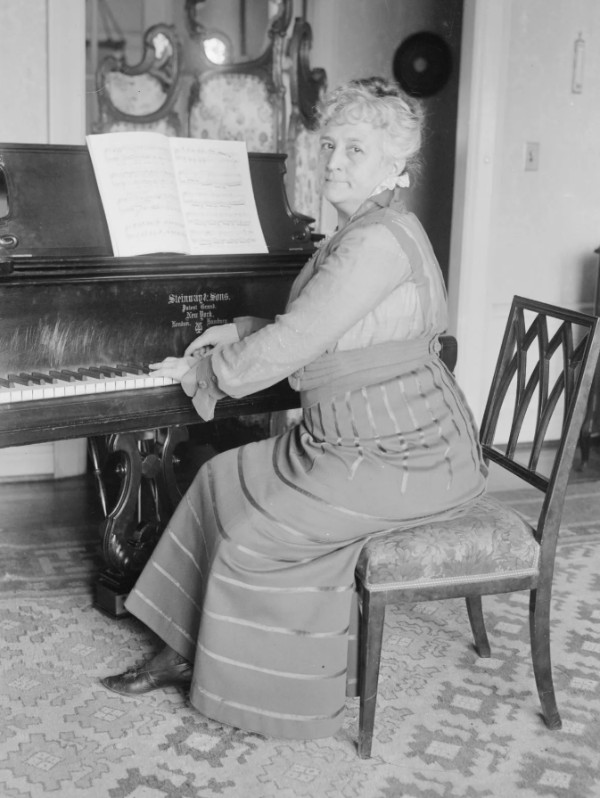
Teresa Carreño
Teresa Carreño: Caprice-Etude No. 1, Op. 4 (Alexandra Oehler, piano)
Teresa Carreño was a Venezuelan-born piano virtuoso and composer. She was one of the most famous pianists of the late nineteenth century, male or female.
Dubbed the “Valkyrie of the Piano”, she enjoyed a dazzling performing career. As a child prodigy, she played for President Lincoln at the age of ten. A few years later, she played for Liszt, who was deeply impressed by her.
She would be a fixture on concert stages for decades to come and wouldn’t let marriage or motherhood stop her. (In fact, she married four husbands.)
In the middle of her hectic career and personal life, she found time to compose a number of piano works, mostly salon pieces and virtuosic showpieces.
One of them was her Caprice-Etude No. 1, Op. 4. It is unknown exactly what date this Caprice-Etude was written, but she would have been very young. Her Op. 5 is dated 1863, when she was ten, so, remarkably, this work likely dates from that time, too.
Discover 13 facts about Teresa Carreño’s life and career.
Cécile Chaminade (1857–1944)
Études de concert, Op. 35 No. 2, “Automne”
Cécile Chaminade was one of the most successful female composers of the late nineteenth and early twentieth centuries.
A French composer-pianist, she was both prolific and popular: she wrote nearly 200 piano pieces, plus songs, chamber music, and a ballet.
Her music was embraced by a massive female audience. In fact, “Chaminade Clubs” dedicated to performing her music sprang up across America during her lifetime.
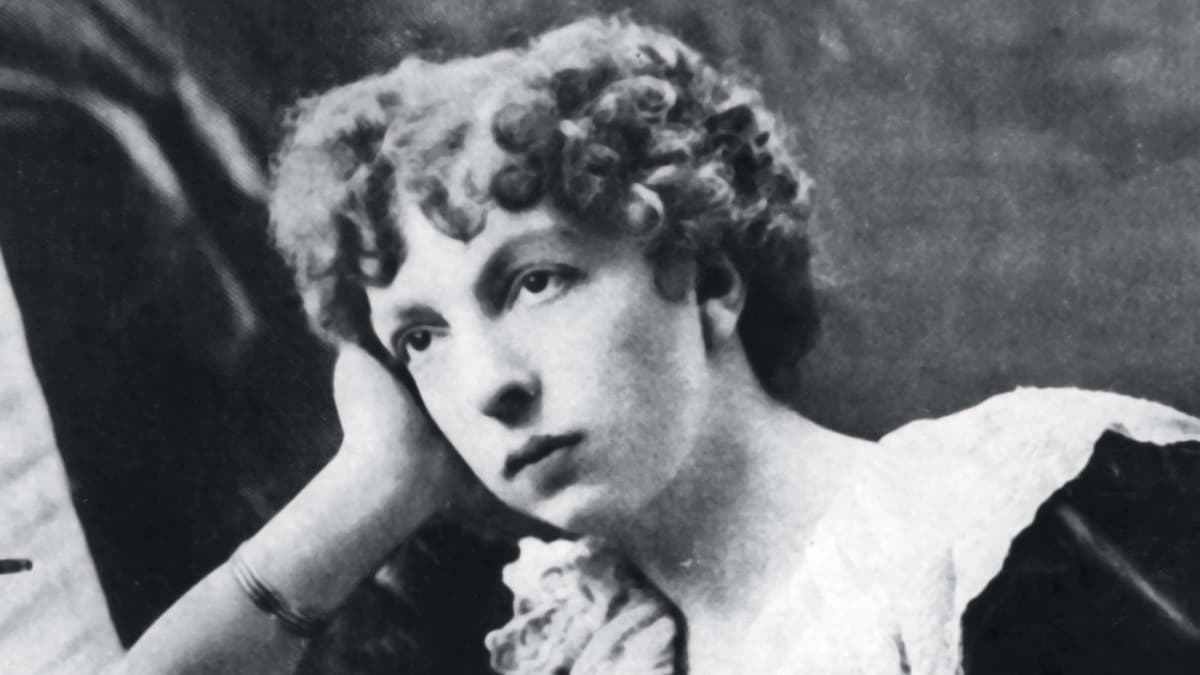
Cécile Chaminade
Though her output has often been dismissed by (male) critics as mere “salon music”, many of Chaminade’s works demonstrate genuine craft and deep thoughtfulness.
Among her best works are her Etudes de Concert, Op. 35, a set of six concert études composed around 1886.
The most famous of the set is “Automne” (“Autumn”), Op. 35 No. 2. This miniature masterpiece is certainly not a work by a second-rate composer.
Mana-Zucca (1885–1981)
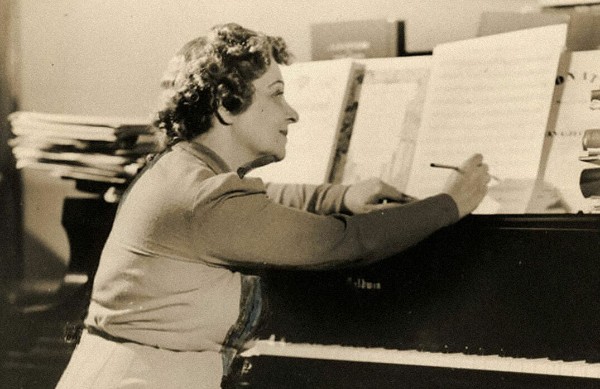
Mana-Zucca
Mana-Zucca Cassel: Etude d’hommage (Joanna Goldstein, piano)
Mana-Zucca was an American composer, pianist, singer, and even actress.
Born as Gussie Zuckermann in New York to Polish immigrants, she adopted the stage name “Mana-Zucca” (a playful rearrangement of the letters in her surname) for her musical career.
Mana-Zucca debuted at Carnegie Hall at the age of eleven. She went on to study with renowned teachers, including Ferruccio Busoni and Leopold Godowsky.
Although largely forgotten today, she was quite famous in her youth. At one point, she was nicknamed the “Chaminade of America.”
Over the course of her career, Mana-Zucca composed over a thousand works, including two operas, a ballet, orchestral and chamber pieces, and hundreds of piano solos.
One extraordinary project of hers was My Musical Calendar, a collection of 366 piano pieces (one for each day of the year), illustrating her endless inventiveness and pedagogical bent.
Read about Mana-Zucca’s many talents.
Grażyna Bacewicz (1909–1969)
10 Concert Etudes
Grażyna Bacewicz was a Polish violinist. She was also one of the most talented composers of the twentieth century, male or female.
Although her violin works and string quartets are perhaps best-known today, Bacewicz was also a fine pianist, and she wrote a significant amount of music for the instrument.
In 1956, she composed her 10 Etudes for piano (sometimes called 10 Concert Etudes), which were first performed in 1957 in Kraków by the pianist Regina Smendzianka.
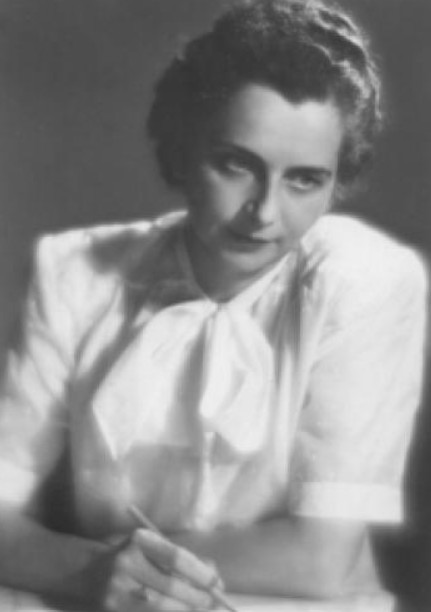
Grażyna Bacewicz
These études date from Bacewicz’s postwar period, when she was blending neo-classical clarity, Polish folk tradition, and a modernist harmonic language.
Here she follows in her countryman Chopin’s footsteps: every etude isolates technical or rhythmic challenges, but never at the expense of overall musical integrity or inventiveness.
Conclusion
Exploring piano études by women composers not only enriches our understanding of the repertoire but also fills major historical gaps and introduces pianists to fresh, exciting works that deserve to stand alongside the canonical études of Chopin, Liszt, and Debussy.
So whether you’re listening, studying, or preparing your next recital, remember these etudes. They contain some of the most compelling piano writing you’ve probably never heard!
For more of the best in classical music, sign up for our E-Newsletter