The history of classical music is full of gay composers: men whose sexuality was an open secret, a source of torment, a creative engine, or simply a fact of life they navigated as best they could.
We’ve written before about which composers were gay and how we know.
This list takes a different approach: ten must-hear works by gay composers, chosen for their greatness, emotional power, and, in many cases, their direct connection to the composers’ identities.
From Tchaikovsky‘s devastating final symphony to John Corigliano’s AIDS memorial, these are not just great works by gay composers; they’re great works, period.
Pyotr Ilyich Tchaikovsky – Symphony No. 6
Tchaikovsky conducted the premiere of his Symphony No. 6 just nine days before he died in 1893.
He dedicated the work to his nephew Vladimir Davydov, whom surviving letters reveal Tchaikovsky had romantic feelings for.
The final movement – a slow, despairing Adagio lamentoso that ultimately fades into silence – breaks every convention of symphonic form.
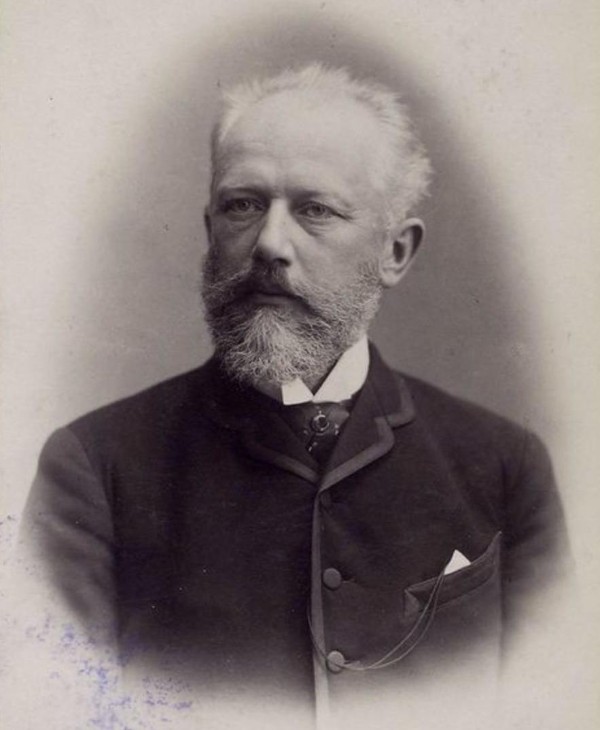
Pyotr Ilyich Tchaikovsky
The music, combined with how quickly he died, has led to speculation over the years. Some believe his death wasn’t due to cholera, but rather was a suicide triggered by shame over his homosexuality. Although there are still holdouts, most scholars today believe the cholera theory.
Regardless of his cause of death, the fact that he died nine days after its premiere makes its emotional nakedness impossible to shake.
Camille Saint-Saëns – Symphony No. 3
In 1875, Camille Saint-Saëns married a former pupil half his age. The couple had two sons, both of whom died in infancy in 1878.
After these devastating losses, he abandoned her. He began decamping to North Africa for extended periods, never explaining. Algeria was famous at the time for being a haven for men with same-sex attractions, and he would return there repeatedly.
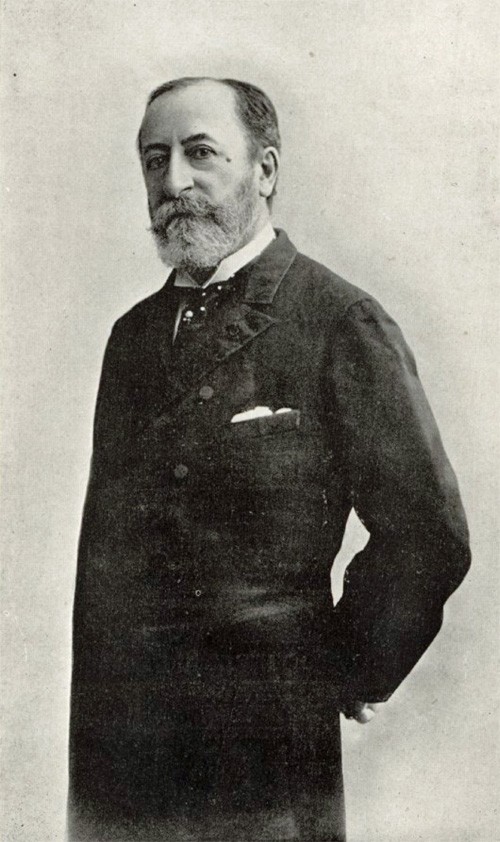
Charles Reutlinger: Saint-Saëns, ca 1880 (Paris: Bibliothèque nationale)
His Symphony No. 3 was written a few years later, between 1885 and 1886. It stands as his most impressive achievement, with the organ taking a starring role that makes the work both unique and grandiose.
Reynaldo Hahn – Chansons grises
Reynaldo Hahn is best remembered today as the lover of Marcel Proust, whom he began dating in 1894.
But even after their romantic relationship fizzled out, their ensuing friendship endured as one of the most artistically vital of the Belle Époque.
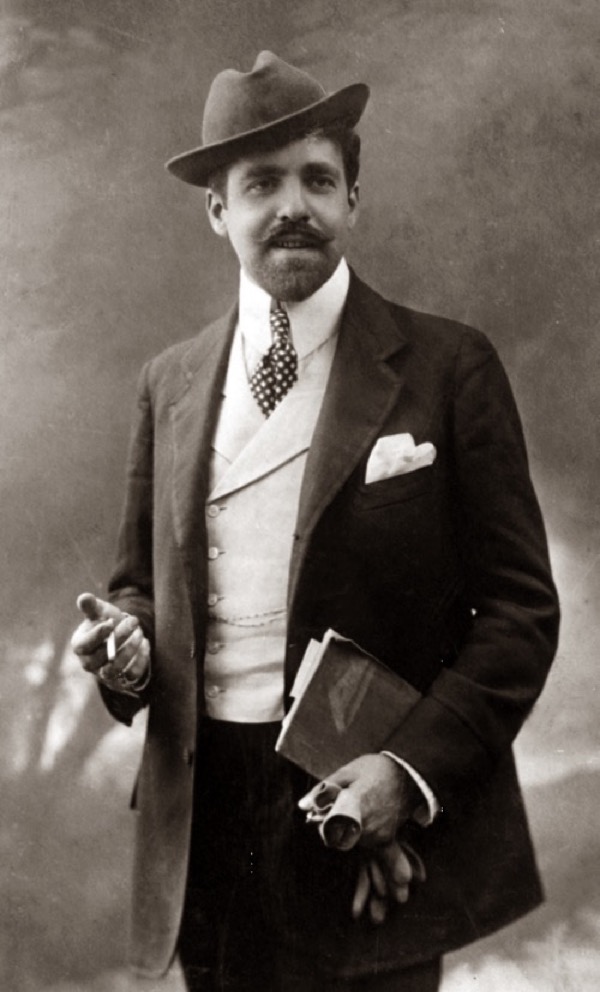
Reynaldo Hahn (1906)
Born in Venezuela and raised in Paris, Hahn moved in the most glittering artistic circles of the era, equally at home in both salon and concert hall.
His Chansons grises, settings of poems by Paul Verlaine (himself a queer artist), are among the most exquisite French mélodies ever written – intimate, melancholy, and intricately crafted. They may be small in scale, but they’re emotionally enormous.
Karol Szymanowski – Symphony No. 3
Karol Szymanowski‘s homosexuality is well-documented in his diaries and correspondence, and his mature works are infused with a sensuality that feels drawn from life.
His Symphony No. 3, completed in 1916 and subtitled Song of the Night, sets a poem by the Persian mystic Rumi for tenor, chorus, and orchestra.
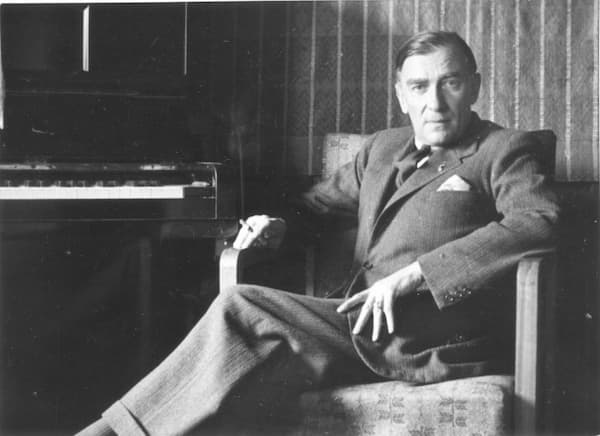
Karol Szymanowski
Polish conductor Piotr Deptuch describes it as “an ecstatic night-time love song in which eroticism and transcendence meld into an indissoluble whole.”
Francis Poulenc – Dialogues des Carmélites
Francis Poulenc was one of the first major composers to be openly gay. He was also Catholic, and lived with the tension between those two identities.
That tension is arguably a major animating force behind Dialogues des Carmélites, his 1957 opera about a group of Carmelite nuns who choose martyrdom rather than renounce their faith during the French Revolution.
The final scene, in which the nuns are led one by one to the guillotine while singing, is one of the most devastating conclusions in operatic history.
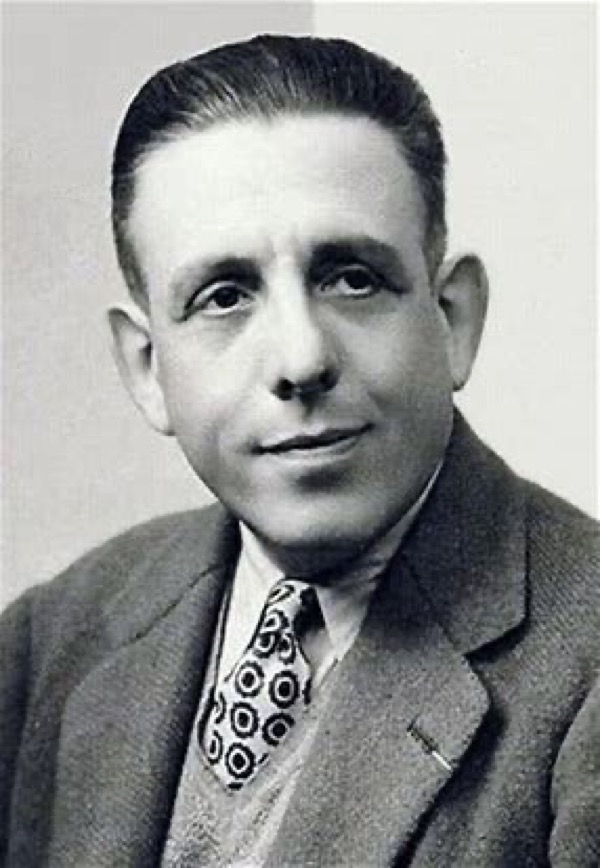
Francis Poulenc
It is a work about faith, fear, and the courage it takes to hold fast to your identity – written by a man who knew something about all three.
Samuel Barber – Adagio for Strings
Samuel Barber lived for forty years with fellow composer Gian Carlo Menotti, who wrote the libretti for two of his three operas. It was one of classical music’s great creative partnerships – and one of its great love stories.
Barber wrote his Adagio for Strings in 1936, when he was just twenty-six, and he and Menotti were staying together in Austria.
Conductor Arturo Toscanini asked to see the score of the work, then returned it without comment – which Barber perceived as a snub.
But Menotti followed up with Toscanini to clarify what the gesture had meant. As it happened, Toscanini had already memorised the score and scheduled a performance – he was returning the score as a favour.
It would become Barber’s breakthrough piece, securing a place in American culture; it is often performed at high-profile events commemorating national tragedies.
Aaron Copland – Appalachian Spring
Aaron Copland is often regarded as the great American composer: the man who defined what American classical music sounds like.
His music has often been used in conservative political campaigns, but the irony is that Copland was a gay Jewish man from Brooklyn who was involved with far-left groups during the 1930s and 1940s.
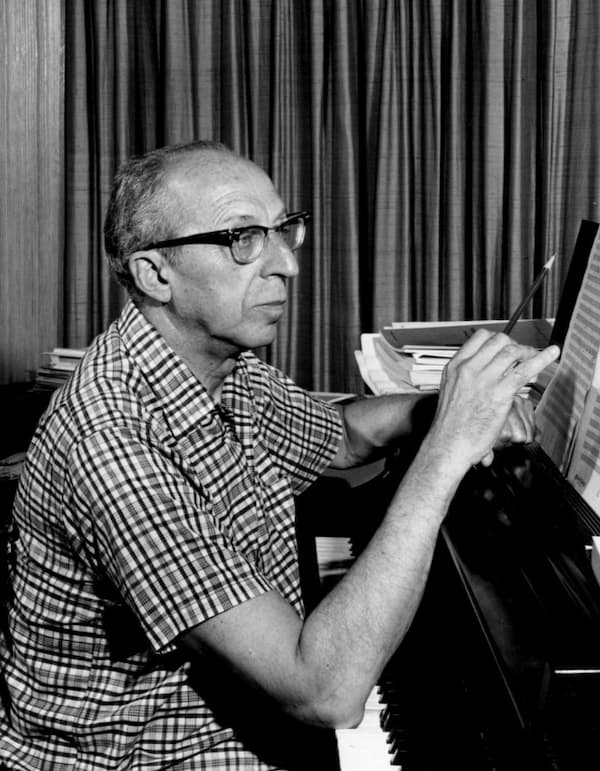
Aaron Copland, 1962
His ballet Appalachian Spring, written in 1944 for Martha Graham, is his most beloved work, and his most quintessentially American.
It depicts a young couple settling on the Pennsylvania frontier, and its central theme – a set of variations on the Shaker hymn “Simple Gifts” – has become one of the most recognisable melodies in American music.
Benjamin Britten – Peter Grimes
Benjamin Britten and tenor Peter Pears were personal and professional partners for nearly forty years, and their relationship was one of the most creatively fertile in music history.
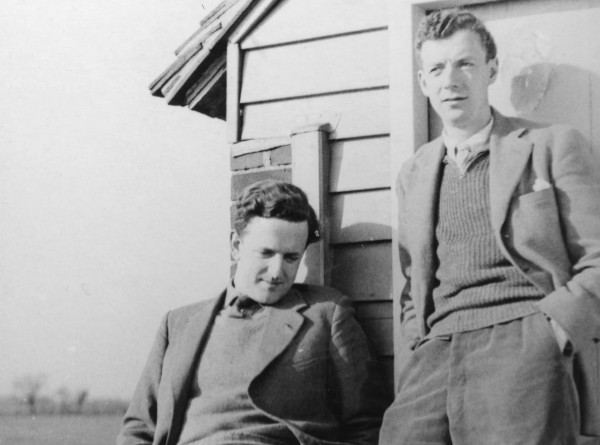
Benjamin Britten and Peter Pears
Pears endlessly inspired Britten. He wrote role after role for his distinctive tenor voice, and the two performed together constantly: an artistic partnership so all-encompassing that it becomes impossible to separate Britten’s music from their love story.
Peter Grimes, which premiered in 1945, was the work that announced Britten as a major operatic voice. It tells the story of a fisherman (played by Pears in the premiere) whose inability to conform to his community’s expectations leads to his destruction.
The parallels to Britten’s own experience as a gay man in mid-century England are not subtle – or accidental.
Leonard Bernstein – Symphony No. 2, The Age of Anxiety
Leonard Bernstein married actress Felicia Montealegre in 1951. Both went into the marriage with their eyes open about the fact that he preferred men.
Bernstein became one of the most charismatic and commanding figures in American musical life, working tirelessly as a conductor, composer, educator, and celebrity. He spent decades navigating the gap between his public image and his private self, fully understanding that no conservative orchestra boards would ever tolerate hiring an openly gay music director.
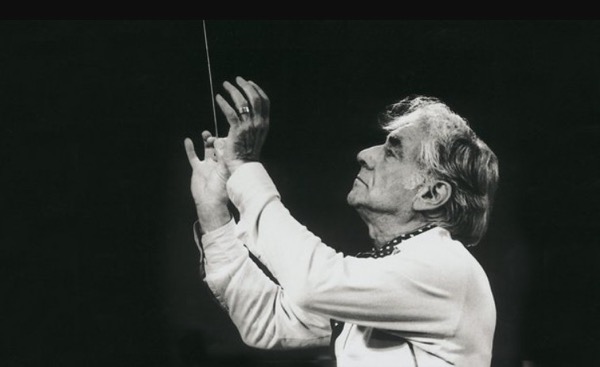
Leonard Bernstein
His Symphony No. 2, subtitled The Age of Anxiety, is based on W.H. Auden’s poem of the same name. The poem, itself written by a gay man, grapples with questions about modern alienation, isolation, and the search for connection – the same kinds of issues Bernstein himself had dealt with in his personal life.
The symphony is brilliant and ultimately restless, which feels appropriate; Bernstein never totally resolved the questions about identity that Auden raised.
John Corigliano – Symphony No. 1
John Corigliano composed his Symphony No. 1 in 1988 as a response to the AIDS crisis, dedicating it to friends he had lost – and was losing – to the epidemic.
By that point the death toll in the American gay community was catastrophic, and the silence from the government and mainstream culture was deafening.
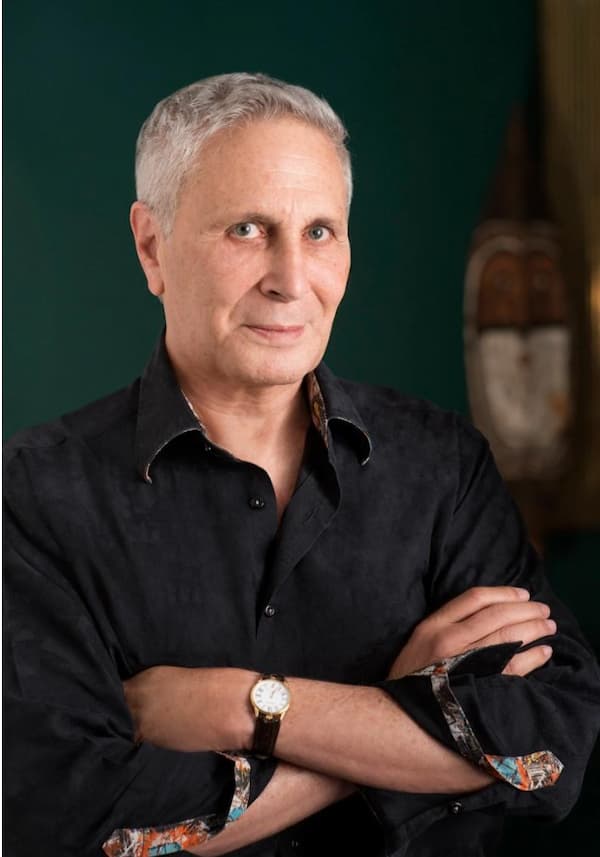
John Corigliano
Its first movement is subtitled “Apologue: Of Rage and Remembrance.”
Corigliano’s Symphony No. 1 is one of the few major orchestral works to emerge directly from the AIDS crisis, and one of the most powerful. Its emotional immediacy makes it a must-hear work.
Conclusion
Gay composers have been present at every stage of classical music history, from the courts of Louis XIV to the concert halls of the 20th century.
Their sexuality shaped their music in ways both direct and oblique – sometimes as a source of anguish, sometimes as a quiet fact of life, and sometimes (as with Corigliano) as an explicit subject.
All of these works can stand on their own; no one needs to know their composers were gay to appreciate them.
But knowing more about their stories can help deepen our connection to composers and music alike.
For more of the best in classical music, sign up for our E-Newsletter