The Italian organist and composer Marco Enrico Bossi (1861-1925) was the first internationally famous Italian concert artist. The Kingdom of Italy bestowed on him the highest ranks, and he became an honorary member of the most prestigious foreign and Italian academies.
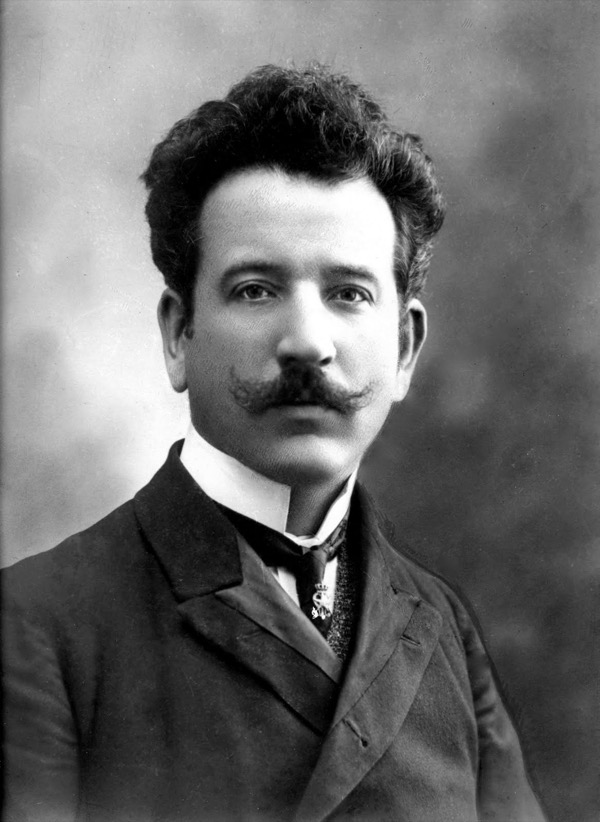
Marco Enrico Bossi, 1905
Bossi died unexpectedly on 20 February 1925 in the mid-Atlantic, returning home from a successful series of concerts, having played recitals at the Wanamaker department store organs in New York and Philadelphia.
Marco Enrico Bossi: Scherzo in G minor, Op. 49, No. 2
Return to Como
His death caused great consternation, as Federico Mompellio wrote in his biography of Bossi. “By order of our government, the body was brought ashore on 28 February to an official reception, and eight sailors carried the coffin in front of the whole of the ship’s crew and a silent and grieving crowd of Le Havre’s Italian residents.”
The Italian flag was flown at half-mast. The body was transported to Como by road at the expense of the Italian State, amid cries of admiration and expressions of sorrow, where, on 28 October 1925, he was laid to rest in the family tomb, whilst his “Inno di Gloria” was played.
Marco Enrico Bossi: “Inno di Gloria”
The Making of an Organist
Marco Enrico Bossi was born in Salò, Lake Garda, on 25 April 1861, the year of Italian unification. He was born into a family of musicians, with his father, Pietro, serving as organist at Salò Cathedral. He initially studied with his father, and at the age of ten, Bossi entered the Liceo Musicale in Bologna, then the Milan Conservatory, where he studied with Polibio Fumagalli.
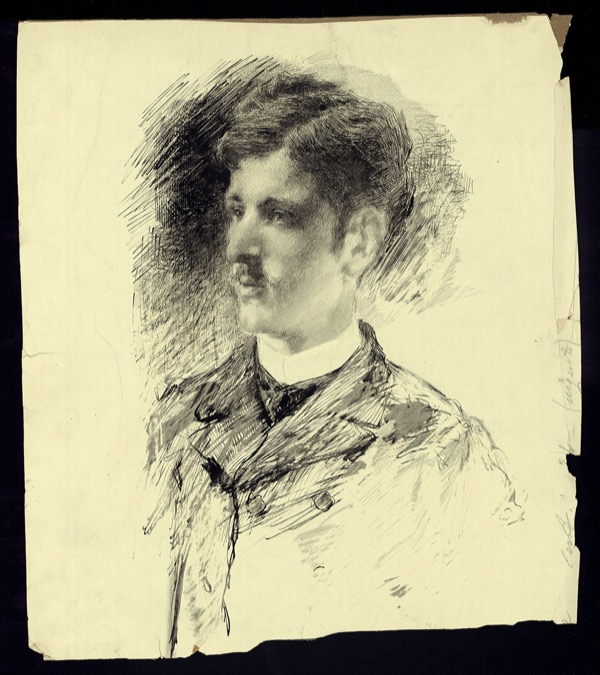
Portrait of Marco Enrico Bossi (1861-1925), Archivio Storico Ricordi
He received diplomas in piano and composition, but he never finished his organ studies. Instead, he began to play recitals throughout Europe and established ties with well-known colleagues. In 1881, he was appointed organist at Como Cathedral and, in due course, won worldwide renown as one of the finest organists of the day.
Marco Enrico Bossi: Marcia Festiva, Op. 118, No. 8
Building a New Organ Tradition
In 1890, Bossi moved to Naples as a teacher of harmony and organ at the conservatory, later becoming director of the Conservatories of Venice, Bologna, and Rome. His most notable students included Giorgio Federico Ghedini and Gian-Francesco Malipiero. His organ method, published in 1893, paved the way for modern organ practice and the literature in Italy.
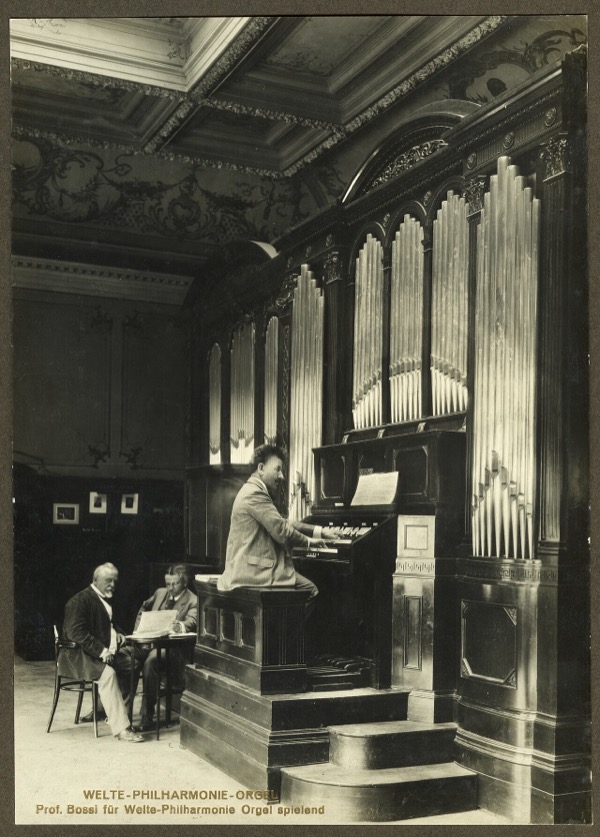
Marco Enrico Bossi at the Welte organ
Bossi composed roughly 150 works in various genres, including five operas, oratorios, and several chamber pieces. However, he won lasting respect, particularly in Italy, for his organ and choral compositions. He was part of a movement that advocated the revival of Italian non-operatic music at the turn of the century.
Marco Enrico Bossi: Konzertstück in C Minor, Op. 130a (Pier Damiano Peretti, organ)
A Voice Rediscovered
Bossi turned to northern Europe for the main sources of his style, and his musical influences ranged from Mendelssohn to Liszt, and from Franck to Reger. A review of 1900 suggests “the superior artistry of Bossi manifests itself most clearly in a fresh and original invention that blends with technical sublime.”
Bossi’s symphonic works “abruptly fell out of favour after World War II,” with their decline linked to his rather conservative style and his joining the Fascist Party in 1921. Recent recordings, including releases of his chamber music and the complete organ works, have initiated a selective revival of his oeuvre.
For more of the best in classical music, sign up for our E-Newsletter