In the 19th century, Giuseppina Strepponi was one of the most famous sopranos in the world.
She starred in the premieres of operas written specifically for her voice, supported her widowed mother and sisters with her earnings, and used her influence to champion the work of a then-unknown composer named Giuseppe Verdi.
Then she gave it all up.
She retired at 31, moved to a hostile small town where she was openly scorned, and spent the next five decades as Verdi’s companion, collaborator, and eventually wife – a woman whose name survived history primarily as a footnote to his.
So what actually happened to Giuseppina Strepponi?
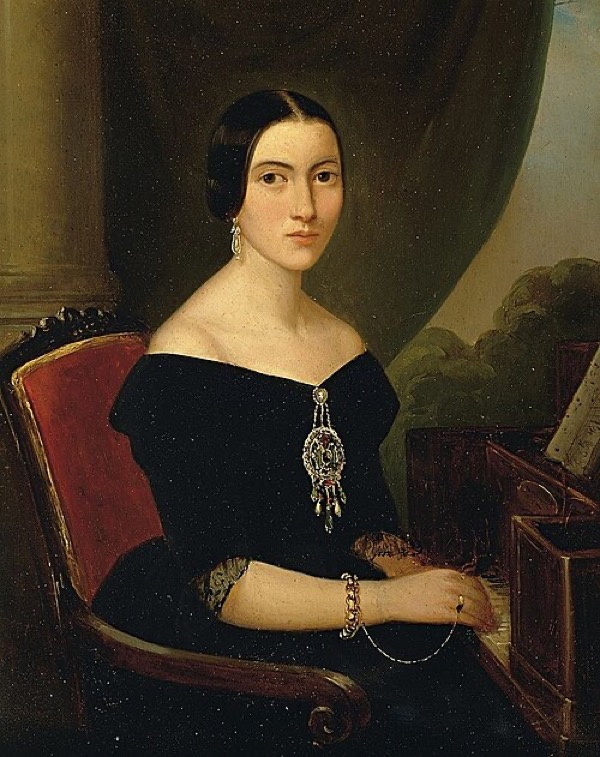
Giuseppina Strepponi
Who Was Giuseppina Strepponi?
Giuseppina Strepponi was born in northern Italy in 1815, the daughter of an organist and opera composer who also served as his talented daughter’s first teacher.
He died when she was 17, while she was studying at the Milan Conservatory. She threw herself into her studies and won a first prize for bel canto performance.
She made her debut in December 1834. Within a few years, she was a superstar of Italian opera, famous for her interpretations of Rossini, Bellini, and Donizetti. In fact, the latter would go on to write the title role of his opera Adelia for her.
In an era when leading sopranos were expected to perform dozens of roles a season across multiple cities, she displayed great ambition and determination, using her newfound fame and fortune to pay for housing for herself, her widowed mother, and two of her sisters.
How Did Strepponi and Verdi Meet?
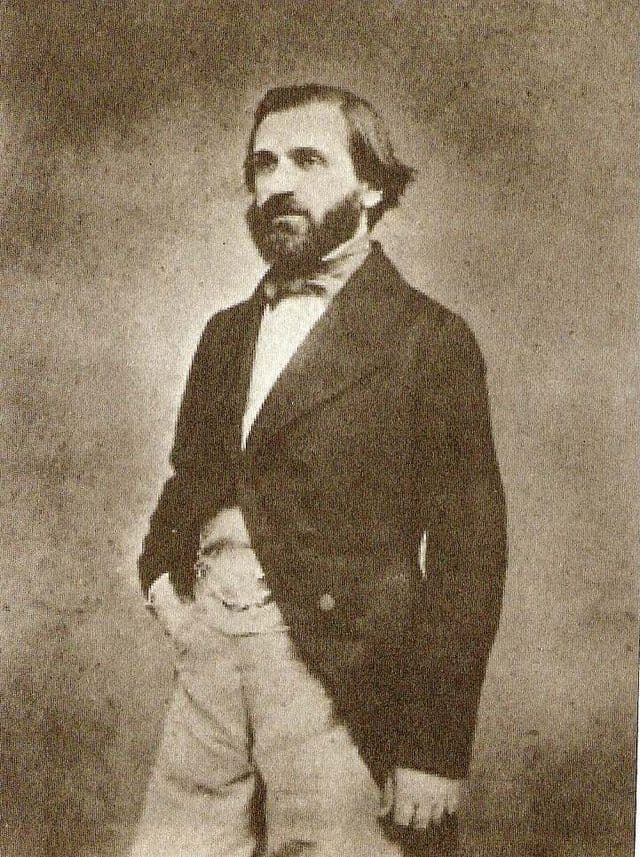
Giuseppe Verdi, 1844
In November 1839, Strepponi sang at La Scala in the debut of Oberto by an up-and-coming composer named Giuseppe Verdi. Her performance was one of the major reasons why the opera was a success.
Historians believe that Strepponi and Verdi met during the rehearsals for Oberto.
Around this time, Verdi was experiencing a string of grievous personal tragedies. He’d recently lost both of his young children: his daughter in August 1838 and his son in October 1839. Then, in the summer of 1840, he lost his wife Margherita, too.
The success of Oberto led to more professional opportunities for Verdi – and another chance for Strepponi to champion his work.
In the spring of 1842, she sang the role of Abigaille at the premiere of Verdi’s Nabucco. She herself had urged impresarios to produce the opera, after Verdi’s previous effort had failed to match Oberto‘s success.
“Anch’io dischiuso un giorno” from Nabucco
Despite health issues, Strepponi sang in all eight of the first run of Nabucco performances. She told her agent, “I dragged myself to the end of the performances.”
It would take her a year to recover from the effort, and three doctors signed a document attesting to the severity of her illness.
However, she had done her job, and the audience was hooked. After summer break, Nabucco returned for dozens of performances. Once she recovered, she appeared in some of them.
These performances helped not only to popularise Nabucco – but Verdi.
Why Did Strepponi Give Up Her Career?
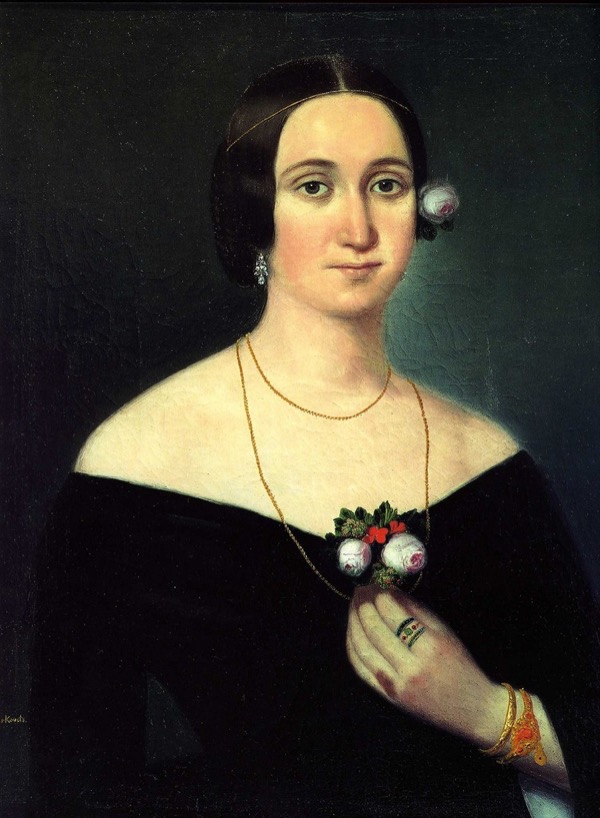
Giuseppina Strepponi
By that point, she found herself having issues with her voice, possibly caused by years of overwork and a series of pregnancies between 1837 and 1841.
She felt compelled to perform to support her family, but those performances clearly came at a great cost. In 1841, she wrote:
“A year at this pace and perhaps I shall be no more, and all claims upon one, all conflicts, end beyond the tomb. My poor children! My poor family!”
Despite the difficulties, she pushed on. But in 1845, she had a disastrous season during which audiences in Palermo booed her. The following October, at the age of 31, she retired from the operatic stage and moved to Paris, where she taught voice.
In 1847, Verdi was on tour in England and came back to Italy via Paris. There the couple, by all accounts, fell in love. For the next two years, they lived together there.
The Scandal of Their Life Together
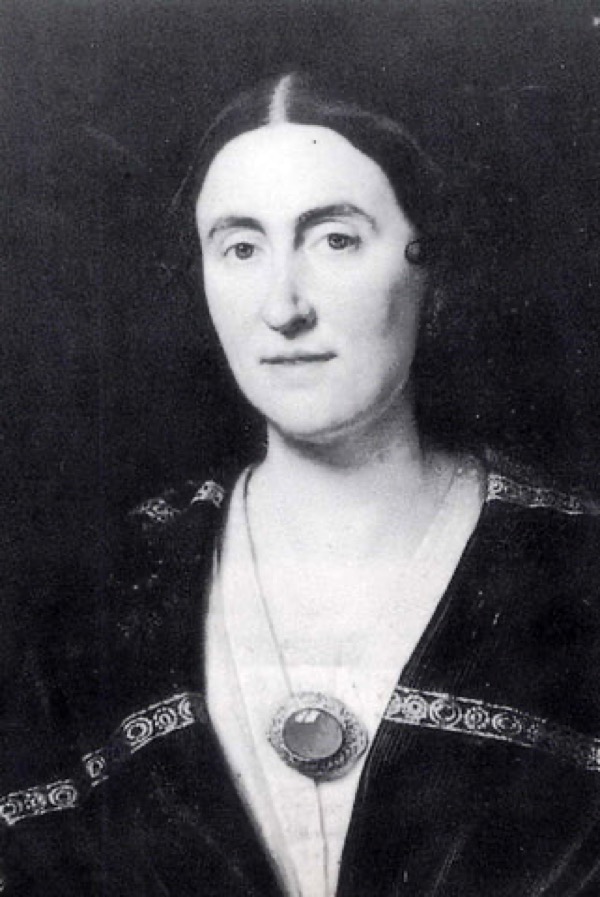
Giuseppina Strepponi
In July 1849, they moved together to Verdi’s small Italian hometown of Busseto – the same small town where his late wife Margherita had grown up.
Two years later, they moved to Verdi’s brand new custom-built house in Sant’Agata, just 3.5 kilometres north of Busseto.
Small town gossip made Strepponi’s life in particular extremely difficult. Not only were the couple not married, but many felt it was disrespectful to Margherita’s memory for Verdi to live with his mistress there.
Still, despite the judgment, she loved Verdi deeply. She wrote to him in 1858:
“Without you I am a body without a soul. I am different (and I think you are too) from those people who need frequent separations to revive their affection. I would stay with you for years, without boredom or satiety.”
When Did Strepponi and Verdi Marry?
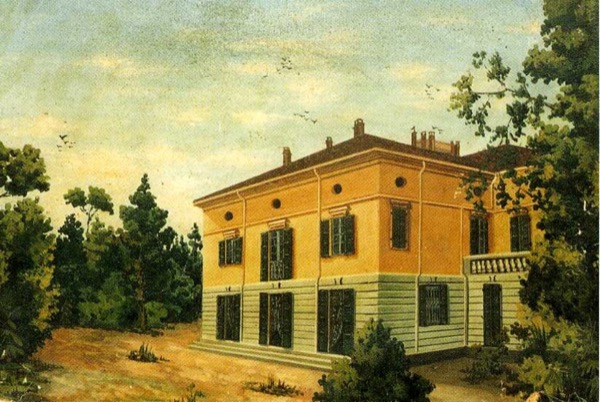
Villa Verdi
The couple did finally marry in 1859 in Savoy, and they remained partners for the rest of their lives.
Their partnership extended into music. Throughout their relationship, Strepponi supported and encouraged Verdi as he wrote his classic operas. She would sit in an armchair while he composed, then offer her feedback.
Anvil Chorus from Il Trovatore
In all likelihood, she was the first to sing and hear decades of his new music: now-classic operas like Rigoletto, La traviata, and Otello.
In 1853, when Verdi wrote Il trovatore, Strepponi clearly felt some sense of ownership over the project: two weeks before the premiere, she sent him a letter reading “hurry up and give OUR Trovatore.”
What Happened to Giuseppina Strepponi?
Giuseppina Strepponi spent the rest of her life playing the longest role of her career: Verdi’s wife. In that function, she threw herself into charitable works, endowing charitable institutions, and at one point, running a soup kitchen.
She also weathered her husband’s late-in-life affair with younger soprano Teresa Stolz, who would premiere the title role in Aida in 1872.
In 1887, Strepponi was present at her husband’s final triumph: the premiere of Otello, after which their carriage – with the Verdis inside – was lifted by the celebrating crowd.
“Già nella notte densa” from Otello
In her final years, Strepponi suffered frequently from stomach problems and arthritis, and during her last year, she could barely move from her bed.
Verdi chose to remain at Sant’Agata rather than travel to Genoa because she was bedridden. Strepponi died of pneumonia on 14 November 1897.
Years earlier, when making her will, she asked to be buried with a letter that Verdi had sent her more than fifty years before.
Conclusion
Giuseppina Strepponi died at Sant’Agata on November 14, 1897. Verdi outlived her by four years.
She is often remembered, when she is remembered at all, as the woman behind the composer – the devoted wife who sat in the armchair while the genius worked.
But the fuller picture is more interesting than that. She was the established star who launched his career. She was the one who pressed impresarios to produce Nabucco. She was the first audience for decades of music the world now considers untouchable.
When she wrote to Verdi, “hurry up and give OUR Trovatore,” she wasn’t being sentimental. She was telling the truth.
For more of the best in classical music, sign up for our E-Newsletter