Some commentators hail Maxim Vengerov, born on 20 August 1974 in Novosibirsk, as “the greatest living string player in the world today.” While such claims must be approached with caution, Vengerov constantly seeks new means of creative expression.
He freely navigates different styles of music, including Baroque, jazz, and rock & roll. Although he wanted to be a conductor, the violin was his first love and his first means of communicating with the audience.
Vengerov has used several exceptional violins throughout his career, choosing them according to repertoire, hall, and artistic needs. To celebrate his birthday on 20 August, let’s feature a brief guide to three of the most important Stradivari violins in Vengerov’s career.
Every Strad Has a Personality
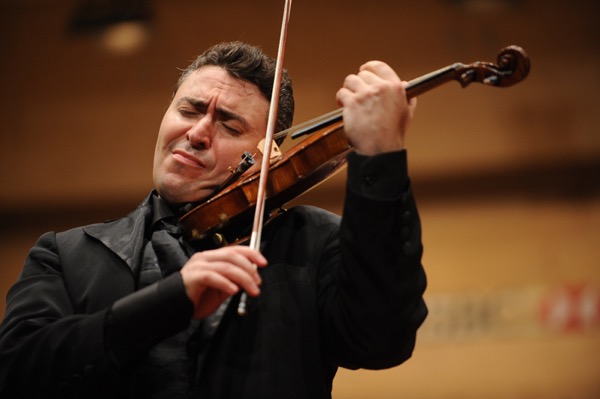
Maxim Vengerov
In a wonderful interview for The Strad Magazine, Maxim Vengerov relates that when he first played a Stradivari violin at the age of ten, he was disappointed. To him, the instrument sounded much worse than his modern violin. It was a question of technique, with Vengerov comparing a Stradivari to a Formula One car; its full potential can only be realised by a musician skilled enough to unlock it. (Vengerov, Me and my Strads, The Strad)
Over the course of his career, Vengerov has probably played around fifty Stradivari violins, each with its own unique personality. Every instrument reveals its true qualities only through years of experience and in close collaboration with expert luthiers. One Strad isn’t simply better than another; much depends on personal preference.
Playing Stradivari violins has greatly influenced his artistic development over the years. As he relates, “it’s all about the player, and whether or not he or she has developed the necessary skills. Little by little I began searching for a new technique that would allow me to get the sound I wanted.” (Vengerov, Me and my Strads, The Strad)
Maxim Vengerov plays Mendelssohn: Violin Concerto in E minor, Op. 64
The 1727 “Le Reynier”
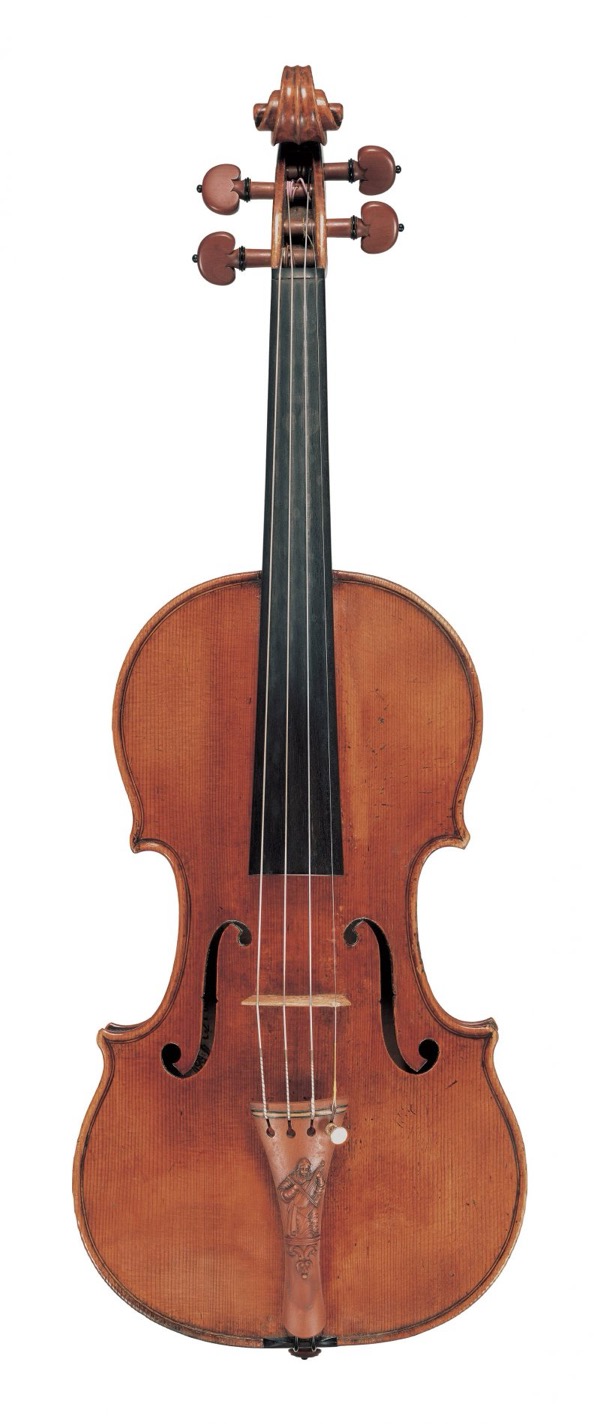
Antonio Stradivari, Cremona, 1727 violin, Sotheby’s, ex-Reynier
This violin, made in 1727 during Antonio Stradivari’s final decade, occupies a very special place in Vengerov’s artistic development. This instrument transformed Vengerov from a young virtuoso into a mature artist.
The instrument, made during the violin maker’s final decade, possesses a broader, darker tonal palette than instruments from his “Golden Period.” With great warmth in the middle register, it has tremendous carrying power, but sounds slightly less brilliant. Yet it is a highly expressive instrument, possibly slightly less brilliant but more complex in colour.
The instrument is named after Léon Reynier, a French violinist who won first prize at the Paris Conservatoire in 1847. It later acquired additional names, including the “Hart,” from a famous London dealer and author, and the “ex-Francescatti,” after the famous violinist Zino Francescatti, who made this instrument internationally famous.
From Virtuoso to Artist
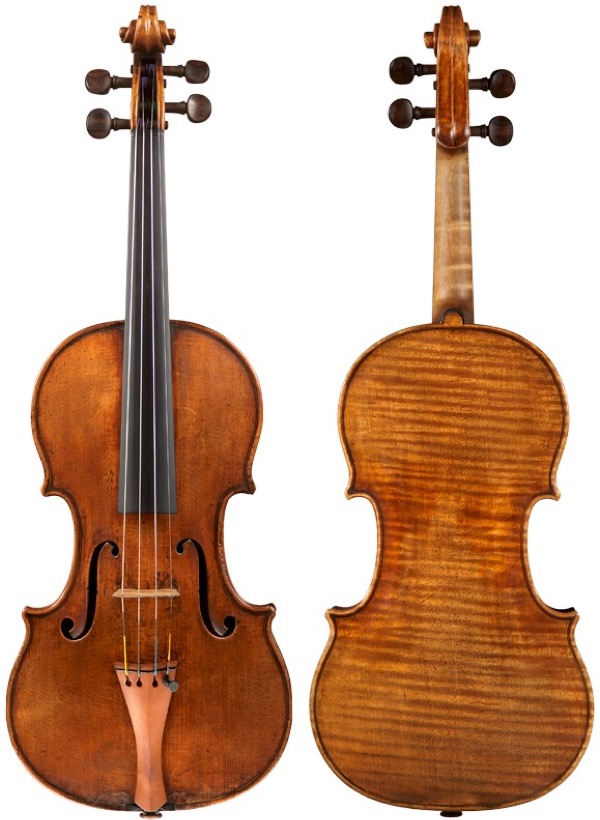
Antonio Stradivari, ex-Kiesewetter
The instrument was acquired by the LVMH (Moët Hennessy Louis Vuitton) group in 1993 and loaned to Vengerov for three or four years from around 1993. It became the principal instrument during his breakthrough years and profoundly influenced his artistic development.
As Vengerov relates, the instrument “forced me to reconstruct everything about my playing and taught me about interpretation and the Italian sound… It was a chameleon capable of producing many colours.” Vengerov credits this instrument for changing the way he thought about music itself.
Henryk Wieniawski: Legende, Op. 17 (version for violin and piano) (Maxim Vengerov, violin; Itamar Golan, piano)
The c. 1723 Kiesewetter
At the age of 22, Vengerov changed to the c.1723 “Kiesewetter” Strad. This instrument is only four years older than the “Le Reynier,” but according to Vengerov, it could not be more different, almost as if they were the works of two separate makers.
This particular instrument, named after the German violinist and composer Christoph Gottfried Kiesewetter, was originally listed as being built around 1731. Later examination, however, placed its construction date at around 1723.
This instrument has an interesting story: it was later owned by the American collector Henry Osborne Havemeyer. After his death, the violin was seized by customs officials, who alleged that Havemeyer had smuggled it into the country.
A Stradivari with a Life of Its Own
One more extraordinary anecdote is attached to this instrument. In 2008, Philippe Quint accidentally left the violin in the back of a New York taxi. Luckily, it was returned the following day.
Vengerov received the instrument in 1996 through the Stradivari Society, founded in Chicago in 1985. It was basically established because the celebrated Juilliard teacher Dorothy DeLay wanted a fine instrument for one of her promising students.
Vengerov was amazed that one violin maker could produce such radically individual instruments. He did not go into detail about its particular sound, but he used it for major recordings at the time. Subsequently, the “Kiesewetter” became associated with Augustin Hadelich, who found the instrument balanced and powerful across all registers.
Antonín Dvořák: Violin Concerto in A Minor, Op. 53, B. 96 (Maxim Vengerov, violin; New York Philharmonic Orchestra; Kurt Masur, cond.)
The 1727 Kreutzer
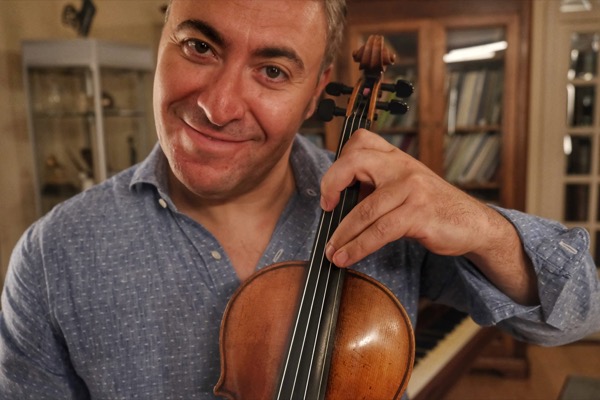
Vengerov, ex-Kreutzer
While the “Kiesewetter” was a loan instrument that Vengerov played for only a few years, the 1727 “Kreutzer” became his own instrument. He bought the instrument, with the help of his patron Yoko Ceschina, at an auction at Christie’s in London in 1998.
The instrument dates from 1727, during the late period of Stradivari’s workshop. The name refers to the French violinist Rodolphe Kreutzer, to whom Beethoven dedicated his Violin Sonata No. 9, Op. 47. Although not conclusively documented, Vengerov believed that this violin had also once belonged to Fritz Kreisler.
When Vengerov first played the instrument, he noted a beautiful spectrum of colours with comparatively little projection. Initially, he thought that it would be an ideal instrument for chamber music.
According to Vengerov, the problem was that the violin had been in a private collection for a long time and had only been played at home, or on the collector’s yacht. It had retained much of its original varnish and was in wonderful condition, but no one had worked on its sound in a big hall for many years.
A Dialogue Across Centuries
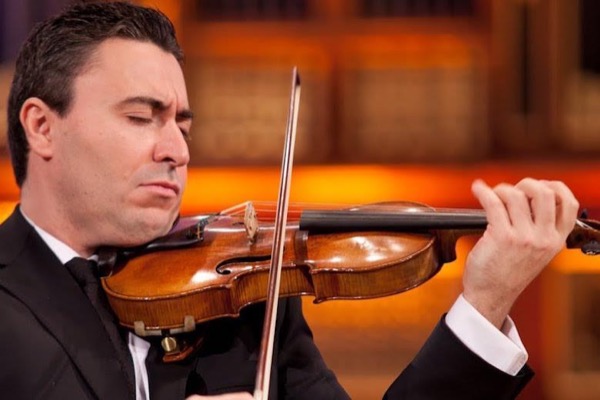
Maxim Vengerov
In the hands of the Israeli luthier Nahum Tukh, the instrument came to life again. Vengerov called him a true magician with fantastically sensitive ears. “Thanks to his work I have been able to use the instrument for most of my performances and recordings over the past two decades; the depth of its sound is impossible to describe.”
As of today, the 1727 “Kreutzer” remains Maxim Vengerov’s principal violin. He has described it as his “faithful companion,” and in 2024 he brought the instrument back to Cremona to visit the historic workshop associated with Antonio Stradivari.
When we look at the three Stradivari instruments that have shaped Vengerov’s career, it becomes clear that a Stradivari is not a magical instrument that instantly creates beautiful sound. Each instrument is highly individual, and it takes time and close collaboration with skilled luthiers to develop a deep partnership between musician and violin.
For more of the best in classical music, sign up for our E-Newsletter