When you ask music lovers to name their favourite violin concertos, they’ll likely mention works by Brahms, Tchaikovsky, or Sibelius.
But venture just a little bit further outside the established canon and you will find fascinating and deeply moving works by women composers, dating from the eighteenth century to the present.
Today, we’re looking at twelve violin concertos written by women composers and the remarkable stories behind each one.
Maddalena Laura Sirmen Lombardini: Violin Concerto No. 5 (ca. 1770)
Maddalena Laura Sirmen was born in 1745 in Venice to a poor but noble family.
She demonstrated musical talent at an early age and was sent to study at the Ospedale di San Lazaro e dei Mendicanti. (This was a Venetian orphanage that trained young women instrumentalists to become virtuosos…and later, tourist attractions who could help fund the charitable work of the institution.)
In 1767, when she was twenty-two, she left the school and married violinist Ludovico Sirmen. They toured and performed across Europe together.
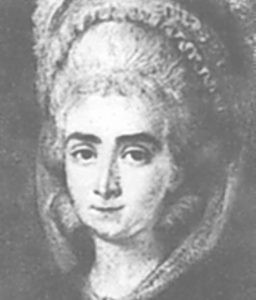
Maddalena Laura Sirmen Lombardini
In 1772, in London, she published a set of six violin concertos. They are a fascinating counterpoint to Mozart’s famous set of five, written around the same time.
Leopold Mozart, Wolfgang’s father and a tough critic, praised her first concerto as “beautifully written.”
Amanda Röntgen-Maier: Violin Concerto (written in 1875)
Amanda Maier was born in 1853 in Sweden. She moved to Stockholm to study a number of instruments there, as well as composition.
She wrote her violin concerto when she was twenty-two. She premiered the first movement and received positive reviews. She wrote an additional two movements, but unfortunately, only the first movement has survived.
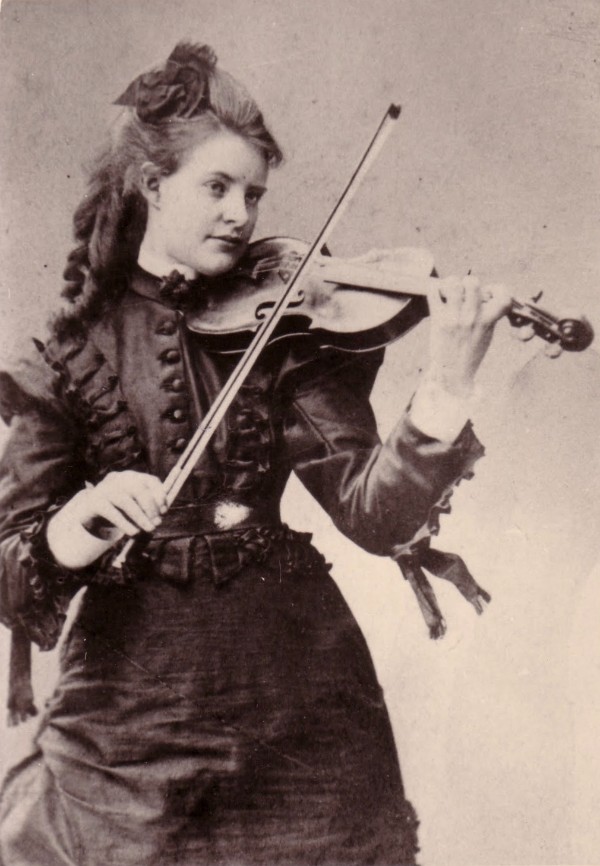
Amanda Röntgen-Maier
The main influences on this work appear to be Mendelssohn and Beethoven. There are many noble and lyrical passages here, with few overtly virtuoso fireworks. The primary emphasis is on the creation of soaring phrases.
Maier would go on to study music in Leipzig, where she would meet and marry her violin teacher’s son, pianist Julius Röntgen.
After her marriage, she largely retired from the stage. She had two children and died of tuberculosis in her early forties.
Elisabeth Kuyper: Violin Concerto in B Minor (1910)
Elisabeth Kuyper was born in Amsterdam in 1877.
She began composing as a young girl and went to study composition in Berlin. One of her teachers there was Max Bruch, whose first violin concerto is one of the most famous in the repertoire.
In 1905, she became the first woman to win the prestigious Mendelssohn Prize. Soon after, she composed this violin concerto. Max Bruch on the podium at the premiere.
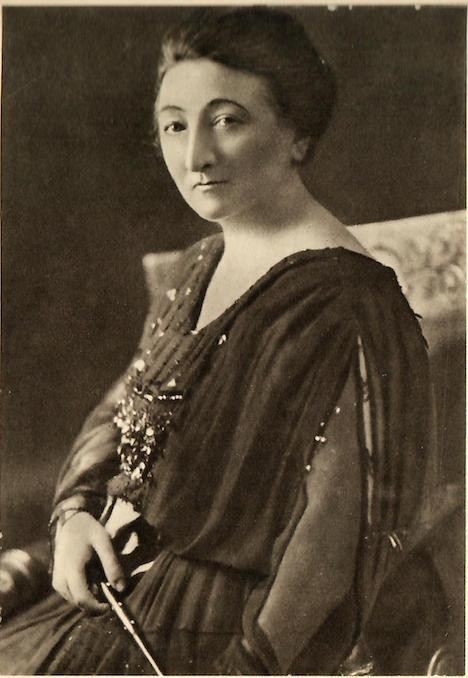
Elisabeth Kuyper
In 1908, she would become the first woman to serve as a Composition and Theory professor at the Hochschule für Musik.
There are hints of both Bruch and Brahms in this dramatic, late romantic work.
Ethel Smyth: Concerto for Violin, Horn, and Orchestra (1927)
We might be cheating a little bit by including this one, since it was written for the unusual combination of both violin and horn, but it’s too good not to list.
Ethel Smyth was a British composer born in Kent in 1858. As a young woman, she insisted that she be allowed to travel to Germany to study music, which she did.
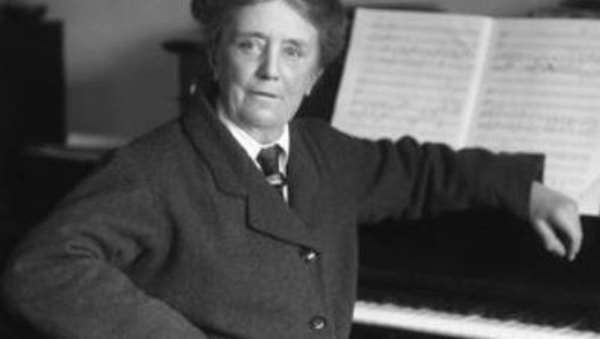
Dame Ethel Smyth
While there, she befriended many of the greatest musicians of the era, including Brahms, Tchaikovsky, Clara Schumann, and others. (She was also friends with Amanda Maier.)
Her concerto for violin and horn was written in 1927, the year she turned sixty-nine, at the height of her fame. By this time, she was going deaf.
The concerto is lush and romantic, maybe a little old-fashioned by 1927’s standards, but it sparkles with Smyth’s characteristic vigour.
Ina Boyle: Violin Concerto (1935)
Ina Boyle was born in Ireland in 1889. As a child, she played both violin and cello. She began studying composition at the age of eleven.
Starting in 1904, she began taking lessons via correspondence with Charles Wood, who was Ralph Vaughan Williams’s teacher. Two decades later, in 1923, she began studying under Vaughan Williams himself.
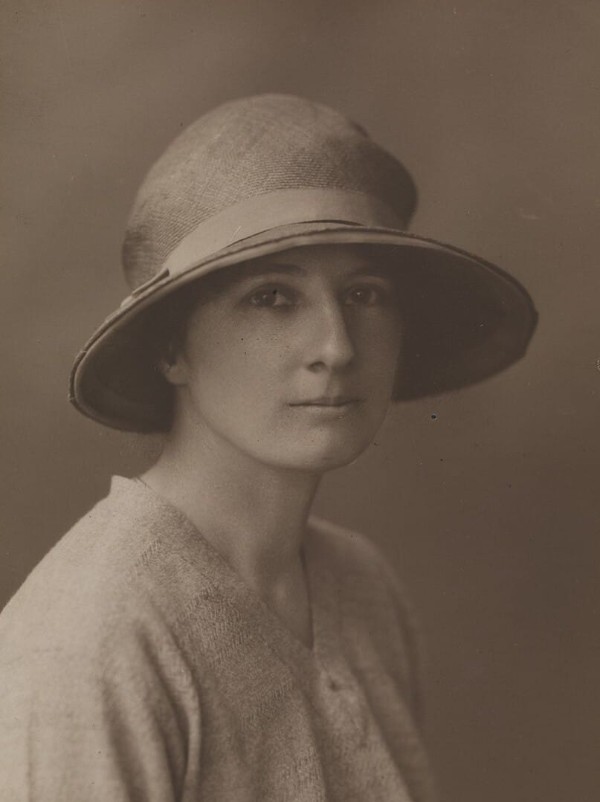
Ina Boyle
She lived a geographically isolated life in Ireland. Between her retiring lifestyle and the difficulties that professional women composers faced at the time, her works were rarely performed during her lifetime, despite their beauty.
The influence of classic works like Vaughan Williams’s The Lark Ascending and Fantasy on a Theme by Thomas Tallis is strong here.
Mathilde Kralik von Meyrswalden: Violin Concerto (1938)
Mathilde Kralik was born to an Austrian industrialist and his wife in Linz in 1857, a year before Ethel Smyth.
Both of her parents were amateur musicians, and growing up, her household was filled with music.
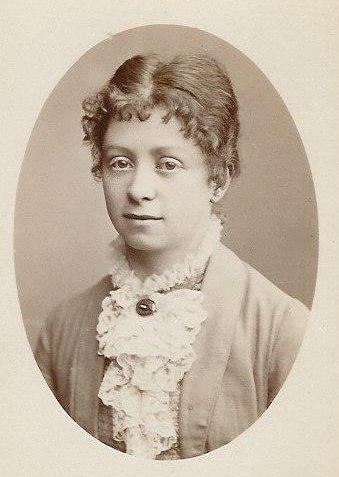
Mathilde Kralik
Mathilde went on to study composition with Anton Bruckner and Julius Epstein, who taught Kralik’s contemporary, Gustav Mahler.
This concerto was written toward the end of her career (she was eighty-one when she wrote it!). It is scored for the unusual combination of soloist, string orchestra, and timpani.
The concerto is bold and energetic, and triumphantly – almost defiantly – romantic.
Ida Moberg–Tondikt: Violin Concerto (ca. 1940)
Ida Moberg was born in Helsinki in 1859.
She was always musical. She began her career as a singer, but after experiencing health issues, she chose to focus on composition and conducting.
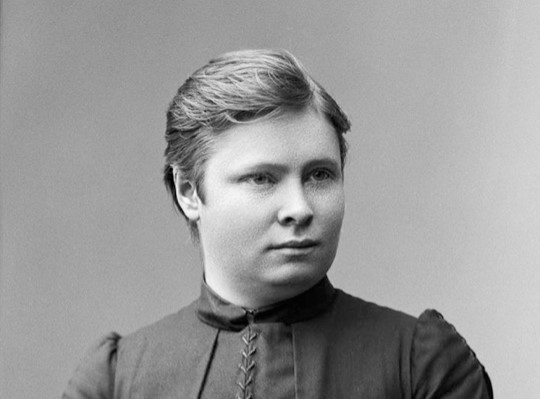
Ida Moberg
In her twenties, she traveled to St. Petersburg to study composition there, then returned home to Finland to study under Jean Sibelius.
Over the course of her career, she became especially interested in exploring the intersections between bodily movement and music, as well as spirituality and music.
Her violin concerto is called “Tondikt”, or Tone Poem. It is loosely structured, feeling almost like a magical improvisation, and calls to mind works by Sibelius and Vaughan Williams.
Grace Williams: Violin Concerto (1950)
Grace Williams was born in Wales in 1906. She was taught music by her musician father from an early age.
She studied at the University of Cardiff for a while before relocating to London in 1926 to study under Ralph Vaughan Williams.
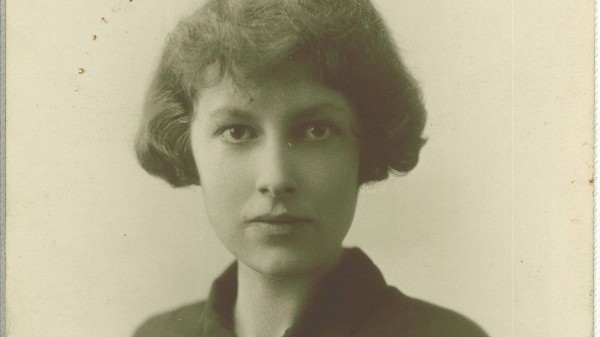
Grace Williams
In 1949, she became the first woman to write a film score for the drama Blue Scar. Her cinematic touch would carry over into her lyrical violin concerto, which dates from 1950.
There are hints here of Vaughan Williams and Benjamin Britten, as well as William Walton and even Korngold.
Florence Price: Violin Concerto (1952)
Florence Price was born in 1887 in Little Rock, Arkansas, in a mixed-race family. She was a child prodigy, and her first composition was published when she was just eleven years old.
She graduated from the New England Conservatory of Music before embarking on a career as a music teacher and composer.
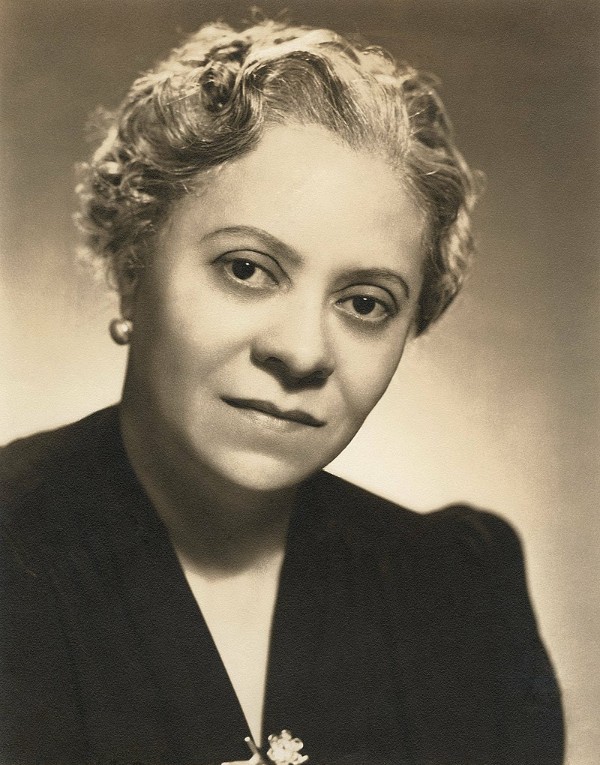
Florence Price
Due to her race and gender, she found it difficult to get her work performed, especially the large-scale ones. One of her career highlights occurred in 1933, when a patron paid to have her first symphony performed by the Chicago Symphony.
Thankfully, her symphonic works have experienced a renaissance over the last decade.
The score to this violin concerto was discovered during a 2009 renovation of a house outside Chicago. (Price had once lived at the property.)
The work is lush and romantic, unconcerned with spiky mid-century aesthetics. Nowadays, that character grants it a kind of timeless quality. The language is so uniquely and firmly Price’s, it is difficult to compare it to any other composer’s work, but Dvorak and Tchaikovsky were clearly inspirations.
Grażyna Bacewicz: Violin Concerto No. 5 (1954)
Composer Grażyna Bacewicz was born in Poland in 1909. She was a pianist, violinist, conductor, and prolific composer.
During her career, she composed seven string quartets, four symphonies, two cello concertos, and seven violin concertos, among countless other works.
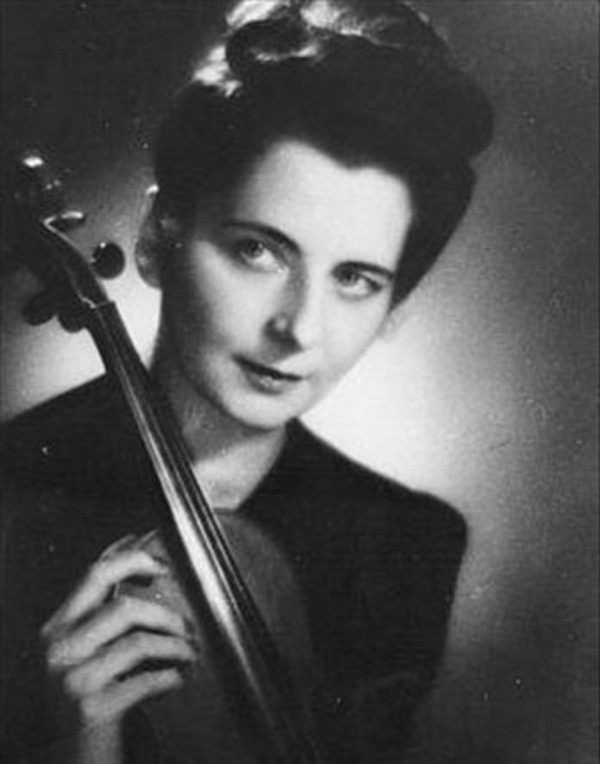
Grażyna Bacewicz
In 1954, the year this concerto was written, she was in a car accident that led her to retire from performing and focus on composition instead.
Her fifth concerto is taut and carefully constructed. The language here calls to mind twentieth-century Soviet composers like Prokofiev or Shostakovich…or even her younger contemporary Witold Lutosławski. The daring, jaunty finale is especially satisfying.
Julia Perry: Concerto for Violin and Orchestra (written between 1963-68)
Julia Perry was born in 1924.
She studied voice, piano, and composition at Westminster Choir College in New Jersey, then continued her education at the Berkshire Music Center and the Juilliard School, studying under composer Luigi Dallapiccola. She also studied in Europe with, among others, Nadia Boulanger.
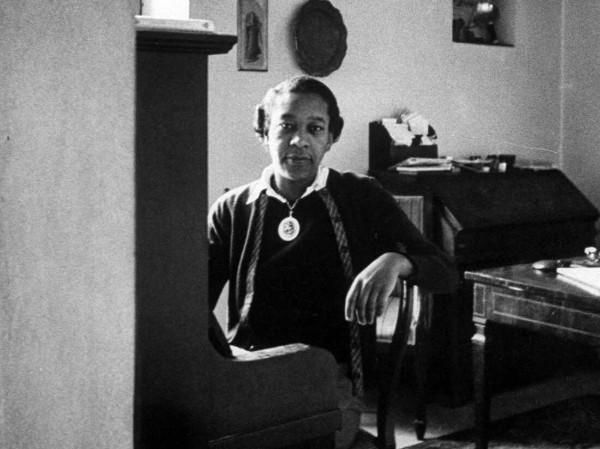
Julia Perry
She would become one of the first Black composers to have work performed by the New York Philharmonic and other major American orchestras.
Her concerto for violin is stormy and strikingly original. It was composed over a period of years in the 1960s, a decade of unprecedented change and upheaval in the United States, and that turbulent mood is reflected in the music.
Carl Fischer, the publisher of the score, wrote about it:
Her Violin Concerto, completed in 1968, shows the influence of Dallapiccola’s teachings: sharp harmonic dissonances organised around specific pitch centres, short repetitive patterns that establish significant musical materials, and contrapuntal textures. Her fastidious performance markings in the solo violin part indicate her profound understanding of the instrument. Angular, muscled, and sparkling by turns, this piece is a sophisticated entry to the serious violinist’s concert repertoire.
There is no indication that the work was ever performed during Perry’s lifetime. Therefore, it is assumed that the first live performance took place in 2022.
Jennifer Higdon: Violin Concerto (written in 2008)
Jennifer Higdon was born in 1962. She was raised in the southern United States and studied flute performance at Bowling Green State University before attending the Curtis Institute. She would later accept a position teaching at Curtis.
Higdon composed her violin concerto in 2008 for violinist Hilary Hahn, a fellow Curtis graduate.
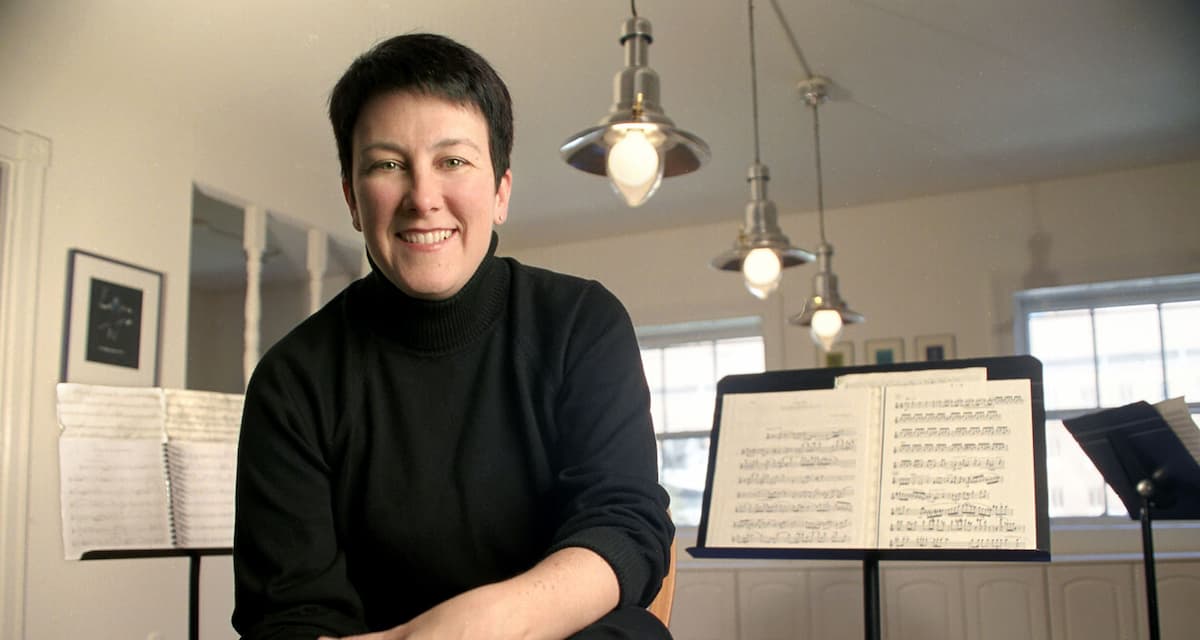
Jennifer Higdon
The first movement of the concerto is titled “1726”: a reference to Curtis’s address, 1726 Locust Street. Its unique harmonies are made up of many sevenths, seconds, and sixths in tribute to the number.
The center movement “Chaconni” is a reference to the Baroque dance “chaconne.” It contains lyrical snippets that call to mind Copland or Bernstein, or perhaps contemporary film music, and contains opportunities for the soloist to interact with the various sections of the orchestra.
The finale is called “Fly Forward”, and it calls to mind the third movement of another Curtis graduate’s violin concerto: Samuel Barber.
In 2010, this concerto won Higdon the Pulitzer Prize for Music.
For more of the best in classical music, sign up for our E-Newsletter