It is always fascinating to look at the dedication page of a music score: who a composer dedicates his or her music to, and what it says about the composer, society, and the dedicatees.
Today, we’re looking at seven of the best pieces of chamber music dedicated to women, dating from 1797 to 1940.
Beethoven: Trio in B-flat major, Op.11 (1797)
Dedicated to Maria Wilhelmine von Thun
Countess Maria Wilhelmine von Thun was more than just a Viennese noblewoman. She was also a renowned pianist, the overseer of a famous Viennese salon, and an invaluable patron of composers like Mozart and Beethoven.
When he was 27, Beethoven dedicated this piano trio to her as a token of his respect.
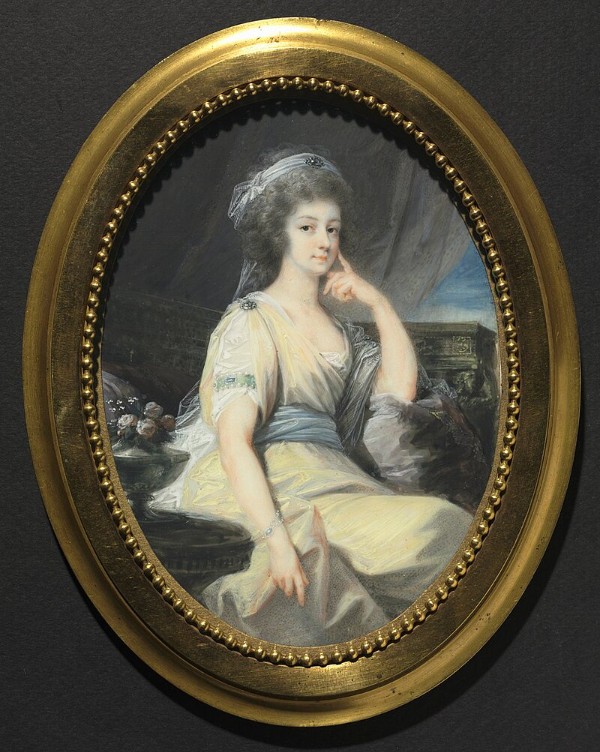
Countess Maria Wilhelmine von Thun
It is scored for clarinet or violin, cello, and piano.
The third movement features variations on a playful popular song of the era, “Pria ch’io l’impegno” (“Before I go to work”), whose lyrics included “before I go to work, I must have something to eat.”
It may not have been the most dignified material originally, but Beethoven turned it into a fitting and joyful tribute.
Farrenc: Piano Quintet No. 2 (1840)
Dedicated to Duchess Helene of Mecklenburg-Schwerin
Louise Farrenc was a virtuoso pianist, composer, and Paris Conservatoire professor who successfully negotiated to receive the same pay as her male colleagues.
In 1840, chamber music was generally a tough sell for French audiences; at the time, the genre was more popular in Germany and Austria.
But Farrenc’s first piano quintet had earned a warm reception, and so she quickly followed it up with this lovely work.
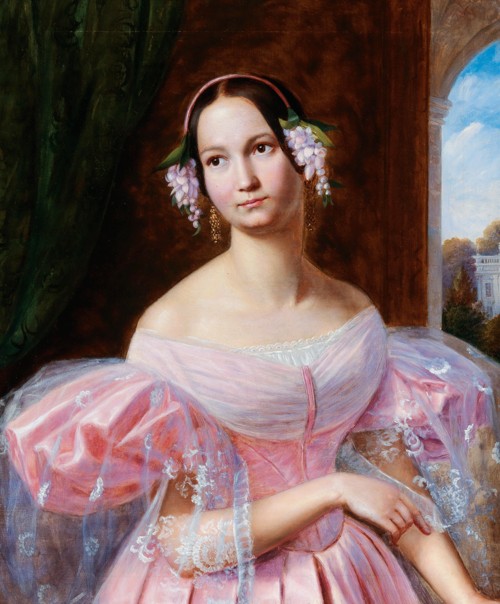
Duchess Helene of Mecklenburg-Schwerin
She dedicated the second quintet to Duchess Helene of Mecklenburg-Schwerin, who had married the eldest son of King Louis Philippe I three years earlier.
The dedication indicates Farrenc’s desire – or maybe obligation – to pay tribute to the royal family. Eight years later, the French Revolution of 1848 would bring the monarchy to an end, but Farrenc’s career would continue.
Borodin: String Quartet No. 2 (1881)
Dedicated to Ekaterina Borodina
Borodin biographer Serge Dianin has suggested that this quartet was a twentieth anniversary gift to Borodin’s virtuoso pianist wife, Ekaterina.
Dianin believes the work portrays the story of the couple’s first meeting in the early 1860s in Heidelberg, Germany, where Borodin had been pursuing postdoctoral work in chemistry…and wooing Ekaterina, who introduced him to the music of Chopin and Schumann.
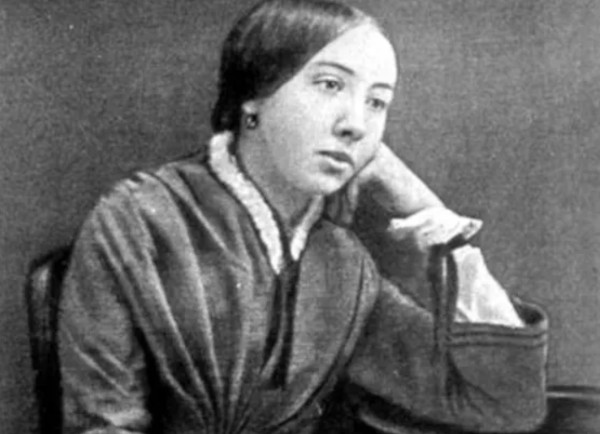
Ekaterina Borodina
It’s important to note that Borodin was unique among major composers in that music was never his day job; chemistry was. He always had trouble balancing the two with his personal life.
He once wrote to his wife: “In trying to be a Glinka [composer], a Stupishin [civil servant], scientist, commissioner, artist, government official, philanthropist, father of other people’s children, doctor and invalid, I end up being the last in line.”
That trouble, combined with his wife’s poor health, resulted in tremendous stress. Not coincidentally, he would die in 1887 of a massive heart attack while at a ball. Ekaterina, distraught, died five months later.
But this quartet, a musical monument to their great love for one another, endures.
Schoenberg: Suite (1924-26)
Dedicated to Gertrud Schoenberg
Gertrud Schoenberg, the composer’s second wife, was a major figure not only in Schoenberg’s personal life, but his professional life, too.
She and Schoenberg married in 1924. Using the pseudonym Max Blonda, she wrote the libretto to Schoenberg’s one-act 1928 opera Von heute auf morgen. It was the first twelve-tone opera ever written.
After his death in 1951, she worked to preserve and promote her late husband’s legacy, founding the Belmont Publishing Company.
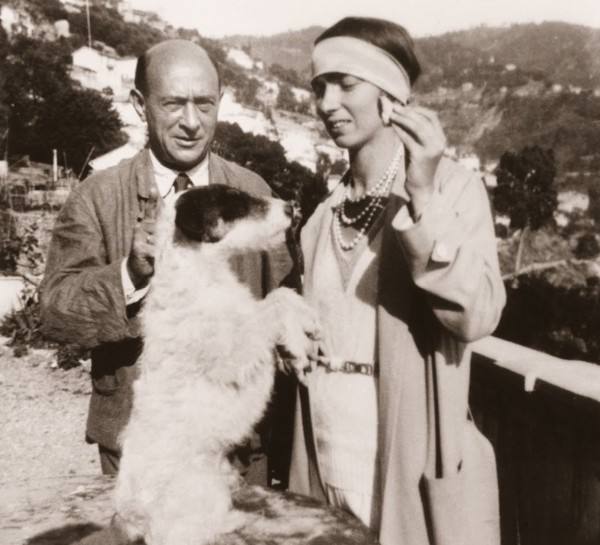
Arnold and Gertrud Schoenberg
Between 1924 and 1926, Schoenberg wrote his “Suite” for piano, violin, viola, cello, E-flat clarinet, clarinet, and bass clarinet. In it, he prominently included her initials, represented by the notes G for Gertrude and E-flat (pronounced “Es” in German) for Schoenberg.
Bartók: String Quartet No. 5 (1934)
Dedicated to Elizabeth Sprague Coolidge
Elizabeth Sprague Coolidge (born in 1864) was, by the 1930s, a wealthy widowed heiress.
She used her fortune to support a number of early twentieth century composers, including Barber, Britten, Copland, Poulenc, Prokofiev, Ravel, and Respighi.
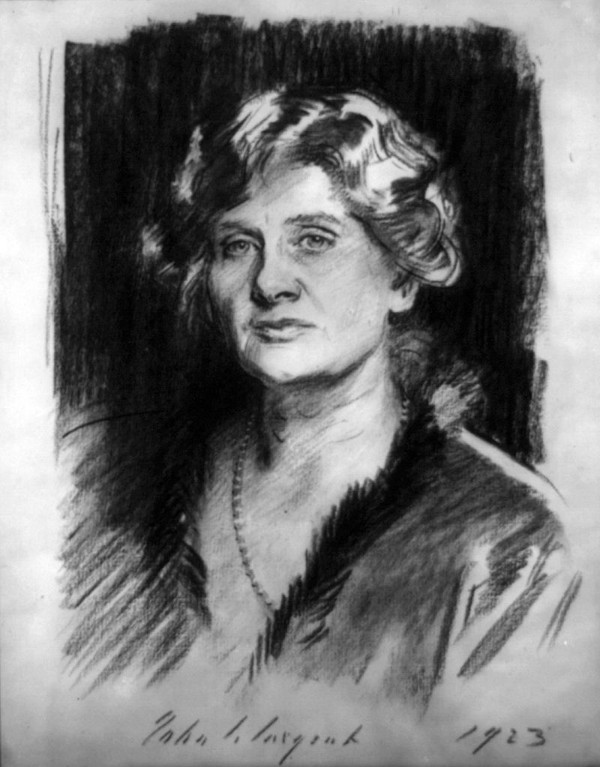
Elizabeth Sprague Coolidge
One of the works she commissioned was this string quartet by Bartók. It boasts his trademark intricacy and spike, as well as a striking five-movement “arch structure”, featuring a central scherzo framed by two slow movements, with fast opening and closing movements.
To express his gratitude for the commission, and maybe her support of the arts generally, Bartók dedicated this quartet to Coolidge.
Martinů: String Quartet No.5 (1938)
Dedicated to Vítězslava Kaprálová
In 1937, Bohuslav Martinů and his wildly talented protege Vítězslava Kaprálová began a romantic relationship. He was married and 48; she was 22.
Given the rise of the Nazis, it was a tumultuous time in European history to embark on a forbidden love affair.
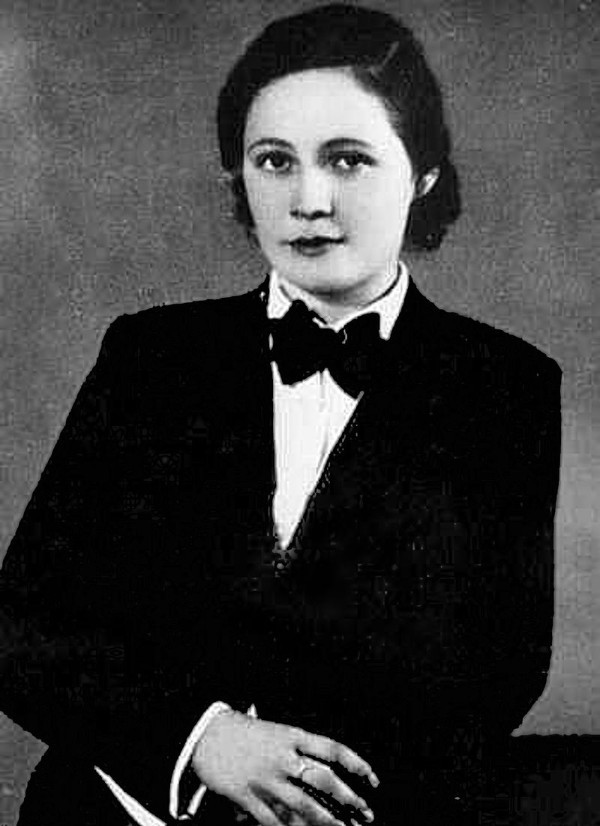
Vítězslava Kaprálová
In 1938, while based in Paris, he began writing his fifth string quartet. He was inspired by the unease he had felt after a visit to Czechoslovakia, which by the autumn was under Nazi occupation.
The entire work radiates fear and unease: emotions that also coloured his affair with Kaprálová.
She would die of tuberculosis or typhoid fever (historians aren’t sure which) in 1940 at the age of 25. By that time, their affair had ended, but Martinů was gutted. And the twentieth century had lost one of its most promising composers and conductors.
Enescu: Piano Quintet, Op.29 (1940)
Dedicated to Elena Bibescu
Romanian princess and pianist Princess Elena Bibescu was one of composer George Enescu’s earliest and most influential champions.
She was born in modern-day Romania in 1855 and went on to study music at the Vienna Conservatory, graduating with a medal. After graduation, she went on to establish a renowned Parisian salon, hosting greats like Liszt, Wagner, and Debussy, among others.
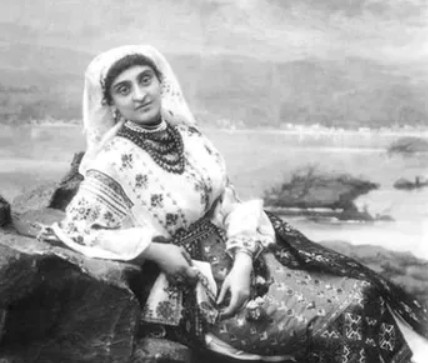
Elena Bibescu
Enescu was born in 1881 and studied in Paris in the late 1890s, when Bibescu took him under her wing.
Princess Elena died of cancer in 1902 at the age of 47, but Enescu never forgot her. Almost four decades later, when he wrote his piano quintet, he dedicated it to her memory.
The quintet has a dark and smoky atmosphere. It often feels like a faded, shadowy memory of a more optimistic, gilded era. It’s fitting that Enescu dedicated this meditative work to the memory of a dead woman.
Conclusion
The dedicatees of a piece of music say a lot about both the music itself and its composer, whether those dedicatees were influential members of the aristocracy, generous patrons, or vitally supportive wives or partners.
As we learn about these women, we also learn about the great works they helped inspire. That knowledge can help us appreciate this music in new ways.
For more of the best in classical music, sign up for our E-Newsletter