Father/son duos loom large in the history of classical music: Johann Sebastian Bach and his multiple composer sons – Alessandro and Domenico Scarlatti – Leopold and Wolfgang Mozart – Johann Strauss I and Johann Strauss II.
But were there ever any mother/daughter composers?
The answer is yes!
Today we’re taking a look at four remarkable composer mothers and their equally remarkable composer daughters.
Juliane Benda Reichardt (1752-1783) and Louise Reichardt (1779-1826)
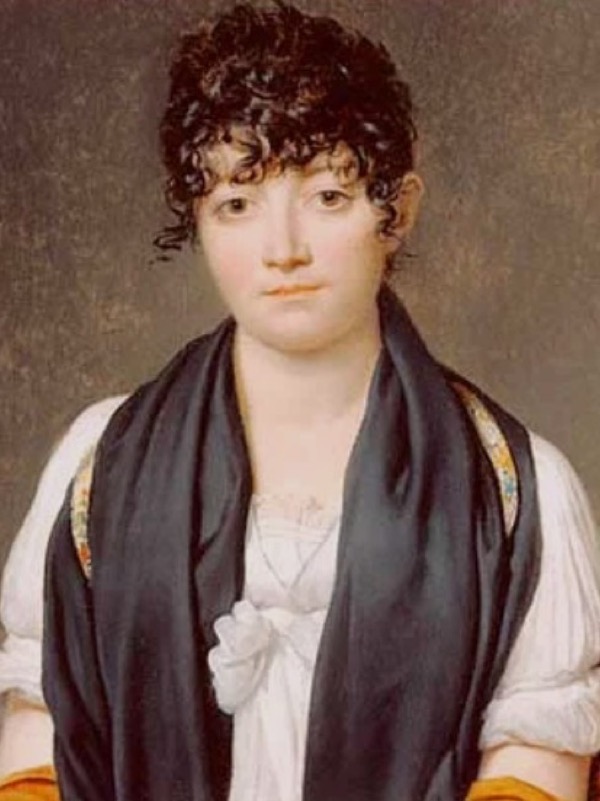
Louise Reichardt
Juliane Benda was born in Potsdam in 1752 to a musical family. Her father, Franz Benda, was the concertmaster at the court of Prussian King Frederick the Great, a famously musical monarch.
Benda taught his children music, including Juliane, who grew up to become a singer and composer.
Juliane Benda Reichardt’s “Sophiens Liebe”
The family lived in the countryside just outside of Potsdam, and their house proved to be a popular destination for visiting musicians and critics.
One of the many visitors was a young writer and composer named Johann Friedrich Reichardt, who was travelling across Europe and meeting musical colleagues like Gluck and Mozart.
On his trip to Potsdam, Reichardt fell in love with Juliane. They married in November 1776, when both were twenty-four.
They had three children together: Friedrich Wilhelm in 1777, Louise in 1779, and Wilhelmine in 1783.
But their happiness was short-lived. Friedrich died at the age of four; Wilhelmine died when just an infant; and then Juliane died soon after of complications from childbirth.
By 1783, the only survivors left were Reichardt and Louise.
As she grew, her grieving father taught Louise the family trade. To demonstrate his confidence in her abilities, he published a collection of their songs when she was 21.
Louise Reichardt: Der Spinnerin Nachtlied (Bettina Pahn, soprano; Tini Mathot, fortepiano)
Louise was engaged twice in her twenties, but both times, her future husbands died before the weddings could take place. After those heartbreaks, she decided to shift her focus from marriage to music.
In 1809, the year she turned thirty, she relocated to Hamburg, Germany, to make a living as a performer, teacher, and composer.
She eschewed seeking a post in a royal court, as her father and grandfather had, instead choosing to blaze an independent path as a freelancer.
Although German culture of the time did not permit women to conduct publicly, her work preparing women’s choruses helped to advance the country’s rich choral tradition, while shaping the musical life of Hamburg in particular.
She died in Hamburg in 1826. Less than a decade later, Johannes Brahms would be born in the same city.
Francesca Danzi Lebrun (1756-1791) and Sophie Lebrun Dülken (1781-1863)
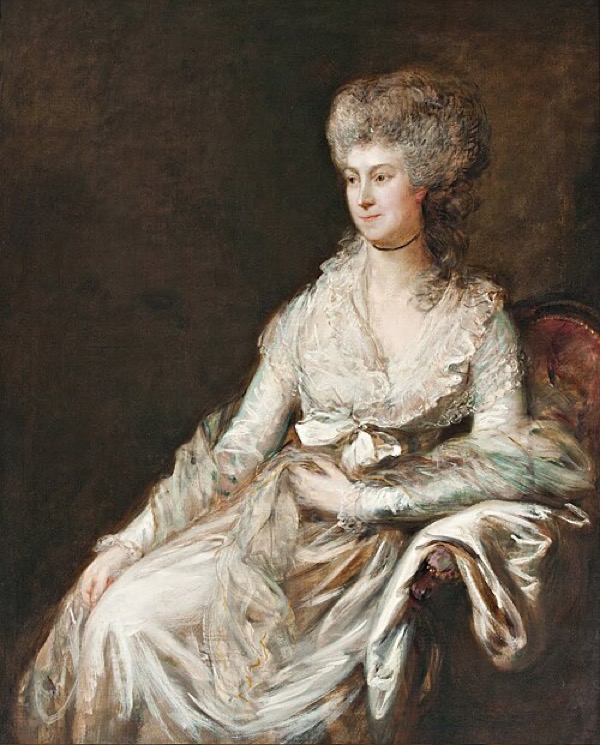
Francesca Lebrun
Francesca Danzi was born in 1756 in Mannheim, Germany. Her parents both worked at the famous court of Mannheim, her father as a cellist and her mother as a dancer.
Her musical talent was obvious from a young age. When she was seventeen, she was hired to sing at the Mannheim Opera, and when she was 21, she travelled to London to sing opera under the baton of J. C. Bach, Johann Sebastian’s son.
Francesca Danzi Lebrun’s Oeuvre II, Sonata I
In 1778, she married oboist and composer Ludwig August Lebrun and embarked on a European tour with him. It was said that they were so in sync with one another that sometimes it was impossible to differentiate what was Francesca’s voice and what was Ludwig’s oboe.
Francesca was also an accomplished composer, publishing twelve sonatas for keyboard and violin between 1779 and 1781.
Francesca Danzi Lebrun’s Sonata for Violin and Piano, Op. 1, No. 3
The Lebruns welcomed daughter Sophie in 1781 in London and daughter Rosine in 1783 in Munich.
They continued touring as a couple until 1790, when Ludwig died in Berlin. Five months later, Francesca died, too, leaving their daughters orphans.
Rosine grew up to become a singer, while Sophie became a pianist and composer. Both girls studied with their maternal uncle Franz Danzi, a well-known composer, and Johann Andreas Streicher, the piano maker.
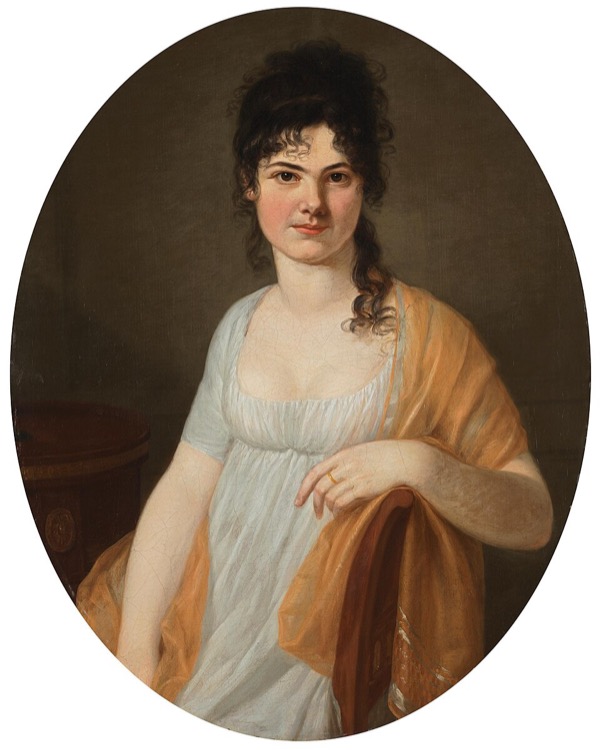
Sophie Dülken
In 1799, at the age of eighteen, Sophie married Louis Dülken, the piano builder to the court of Munich.
She had four children with him, one son and three daughters. All of them carried on the family trade.
Sophie died in Munich in 1863, and her compositions have since been lost.
Pauline García Viardot (1821-1910) and Louise Héritte-Viardot (1841-1918)
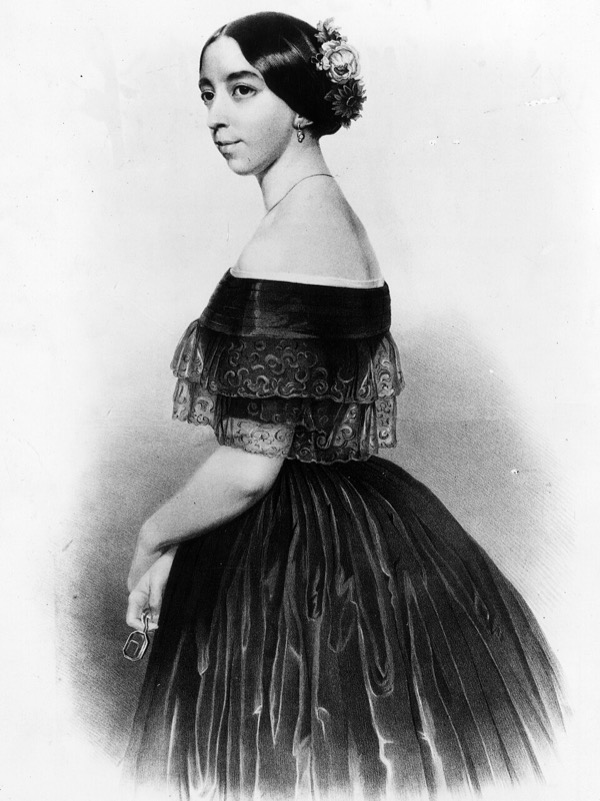
Pauline Viardot
Pauline García was born to operatic royalty in Paris in 1821. Both of her parents – tenor Manuel García and Joaquina García – were renowned opera singers, as was her older sister, Maria Malibran.
As a child, Pauline learned to sing, play the piano, and compose. She also learned six languages – a skill necessitated by her vocal studies that also came in handy during her many international tours.
She made her operatic debut in 1839, when she was eighteen.
Around this time, her friend George Sand suggested that she date their mutual friend, journalist and impresario Louis Viardot. Pauline became pregnant and married him in April 1841.
Despite their age difference – he was two decades her senior – the Viardot marriage was happy and creatively productive, even though she never fell in love with him as deeply as he did with her.
Lamento by Pauline Viardot
Eight months after their wedding, in December 1841, Pauline gave birth to a daughter named Louise.
Louise’s education was well-rounded. In addition to studying piano, singing, and composition, she studied zoology, anatomy, and physiology.
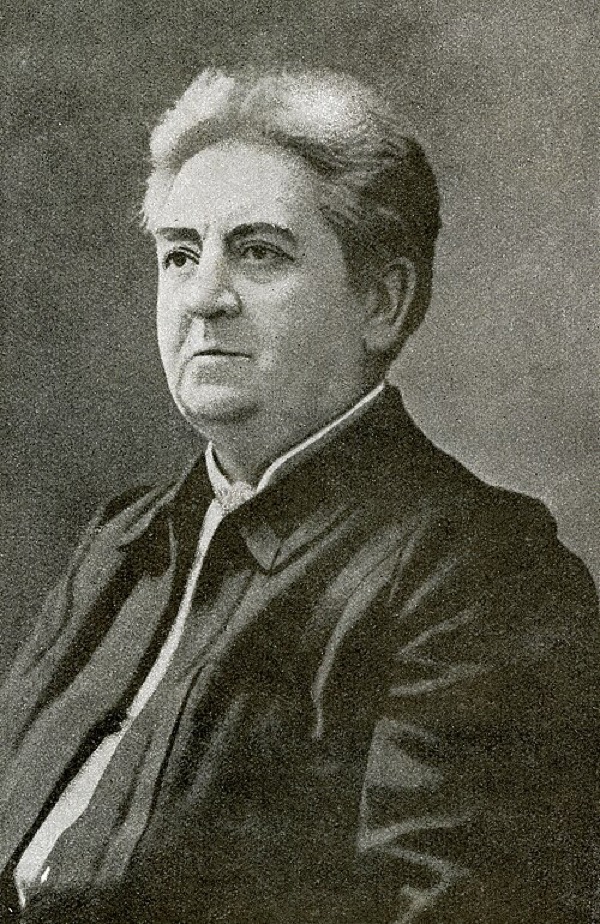
Louise Héritte-Viardot
Ill health kept her from pursuing a career as a performing pianist or singer, so she chose to focus on teaching and composing instead.
Over the course of her career, she wrote in a variety of genres, including piano trios and quartets, string quartets, and sonatas.
Louise Héritte-Viardot’s Spanish Quartet
In 1863, when she was twenty-two, Louise married Ernest Héritte, who worked at the French embassy in Bern, Switzerland.
In later years, she taught in Frankfurt after her close family friend Clara Schumann recommended her for a position at the Hoch Conservatory.
She died in Heidelberg in 1918.
Dame Elizabeth Maconchy (1907-1994) and Nicola LeFanu (1947-)
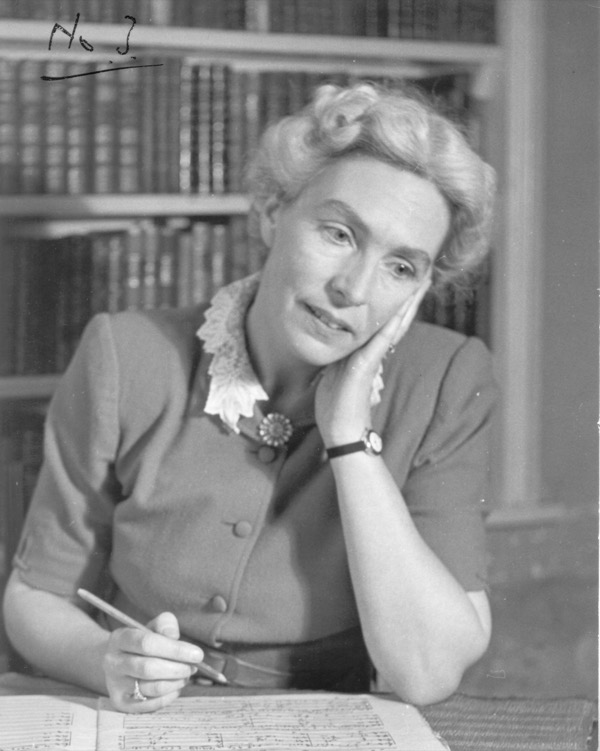
Elizabeth Maconchy
Elizabeth Maconchy was born in England in 1907 to Irish parents. When she was ten, the family returned to Ireland. For the rest of her life, she thought of herself as an Irish composer.
When she was sixteen, she moved to London to study at the Royal College of Music, where her teachers included Ralph Vaughan Williams. She earned scholarships in 1927 and 1930 that enabled her to study in Prague.
Prestigious performances followed, including a 1930 Proms performance of her cantata The Land.
In 1930, she married librarian William LeFanu. They had two daughters together: Elizabeth Anna in 1939 and Nicola in 1947.
Elizabeth Maconchy’s Nocturne for Orchestra
Nicola LeFanu grew up attending concerts and absorbing her mother’s working life from the inside.
She initially hoped to be a playwright, but after she began writing music for her own plays, she realised she was better at composing than at playwriting.
Nicola LeFanu’s Saint Ita’s Lullaby
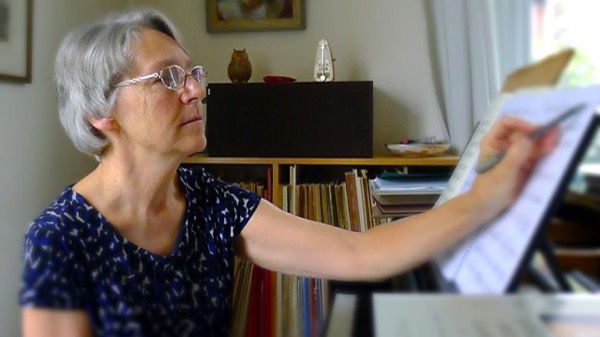
Nicola LeFanu
She wrote about her mother’s approach to her music education:
“She was always extraordinarily supportive, but she didn’t help directly; I think she was very nervous of pushing it… My mother didn’t formally teach either my sister or myself because she thought it was not a good idea for parents to teach their children, but she was very supportive.”
Nicola studied at the Royal College of Music, Oxford, and Harvard, becoming both a professor and composer.
To date, she has written over a hundred works, including eight operas.
Conclusion
What these four pairs share is not just musical talent passing from mother to daughter, but something harder to quantify: determined demonstrations, in each generation, that women could build a life around composition.
None of these daughters had an easy path to becoming a composer. But in the end, they all had proof that the path existed – making their circumstances unique in music history.
For more of the best in classical music, sign up for our E-Newsletter