This might come as a bit of a surprise. Still, during much of the nineteenth century, particularly between the 1830s and Wagner’s death in 1883, Giacomo Meyerbeer was considered the leading opera composer in central and northern Europe, including England, France, Germany, Austria, and Russia.
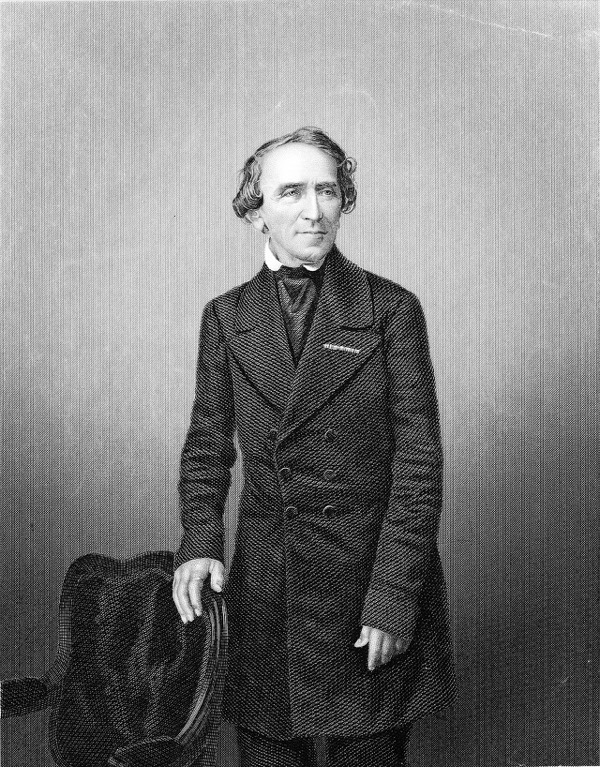
Giacomo Meyerbeer
Born Jakob Liebmann Beer to Jakob Herz Beer and Amalia Liebmann Meyer Wulff, he later adopted the surname Meyerbeer. He first appeared publicly as a pianist at the age of 9, performing Mozart’s D-minor Piano Concerto.
He moved to Italy as a young man, but made Paris his home in the 1820s. Together with Eugène Scribe, he helped shape the grand opera style, creating massive and spectacular shows with huge sets, choirs, and special effects.
Giacomo Meyerbeer: L’africaine, “Act 3 excerpt”
Meyerbeer Unfiltered
Throughout his life and career, Meyerbeer kept meticulous diaries, recording everything from rehearsals and illnesses to his own worries about his reputation. And here comes the quirky bit, as Meyerbeer never intended us to read them at all.
In his 1863 will, Meyerbeer instructed that his “thought books, compositions, and diaries” should be burned if none of his grandchildren proved suitable to become a composer. His widow, Minna, fortunately, ignored the instruction.
To celebrate Meyerbeer’s birthday on 5 September, let’s take a look at some fascinating and occasionally quirky observations contained in his diaries.
Giacomo Meyerbeer: Robert le Diable, “Robert, toi que j’aime”
From Rehearsals to Dinner Tables
The Meyerbeer diaries provide a meticulous report of the practical workings of a composer in the great operatic centres of Paris, Berlin, London, and elsewhere in Europe. Meyerbeer records his day-to-day business, including composing and revising his works.
Also included are negotiations about productions, rehearsals, singers, conductors, librettists, and performances. Meyerbeer also records his impressions of operas and concerts he attended, occasionally commenting on the music, the performers, and the reception.
We also find extended entries on his travels, meetings, meals, family affairs, illnesses, and his meetings with artists, writers, musicians, and politicians. Taken together, these entries provide an extensive portrait of nineteenth-century European cultural and social life.
Giacomo Meyerbeer: Les Huguenots, “Plus blanche que la blanche Hermine”
Meyerbeer and His Critics
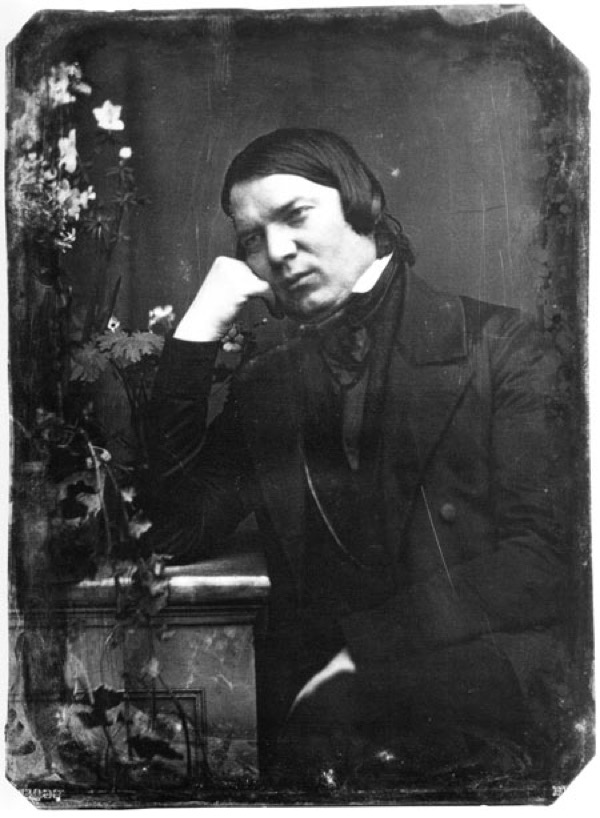
Robert Schumann, 1850
Meyerbeer and Schumann didn’t get along, and when they finally met by accident, they apparently quickly scrambled in a different direction. On 2 February 1850, after seeing Robert Schumann conducting, Meyerbeer wrote in his diary, “I saw for the first time the man who, as a critic, has persecuted me for twelve years with a deadly enmity.”
Schumann essentially considered Meyerbeer one of the clearest symptoms of everything wrong with contemporary musical taste. And to Schumann, that meant cheap popularity and commercial success.
Meyerbeer’s reaction is particularly revealing. He had resolved never to respond personally to attacks on his work or become involved in personal polemics. After all, Meyerbeer had cultivated an enormous social network, and his career depended on maintaining those relationships with considerable tact.
He was also intensely conscious of his reputation, and while he cared deeply about criticism, he also understood that publicly fighting with critics could damage rather than protect his position.
A Handshake with an Agenda
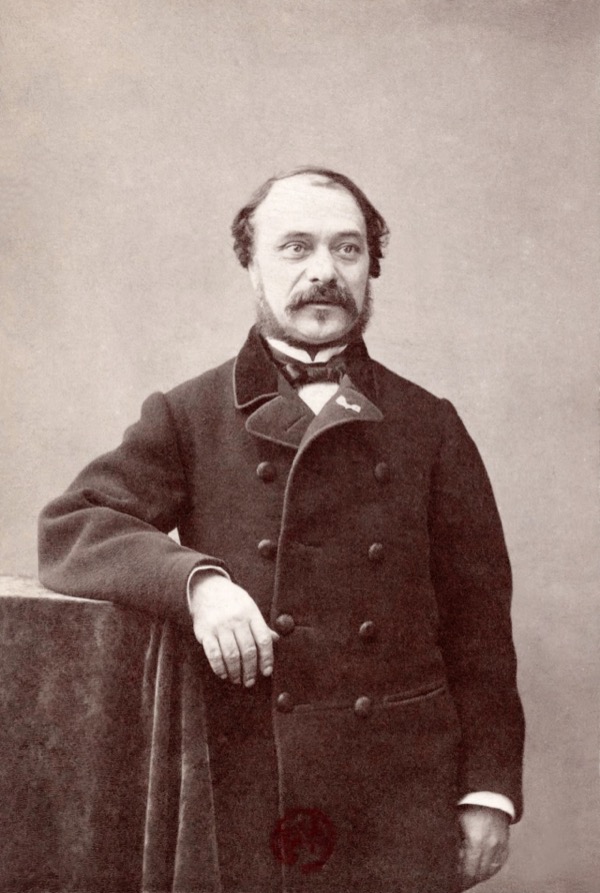
Marie Escudier, by Nadar
When Meyerbeer attended Gounod’s Faust in Wiesbaden, he was approached by Marie Escudier, editor of La France musicale. Meyerbeer records, “During the interval Marie Escudier, who for the past twenty-four years has attacked and persecuted me most brutally, came to me, pressed my hand, behaved as if it gave him endless pleasure to see me again, indeed as if we were best of friends…”
Meyerbeer did not confront Escudier, but let him shake his hand, and carefully observed the hypocrisy. He then wrote down exactly what he thought in his diary. Here he explains why Escudier was suddenly being so friendly. Escudier had married the pianist Rosa Kastner and believed that Meyerbeer could help her concert career in Germany.
Meyerbeer concludes his account of the encounter with a wonderfully curt observation. “A journalist thinks that he is allowed to treat an author in any way he pleases.”
Giacomo Meyerbeer: Dinorah, “Ombre légère”
Friendship with a Price Tag
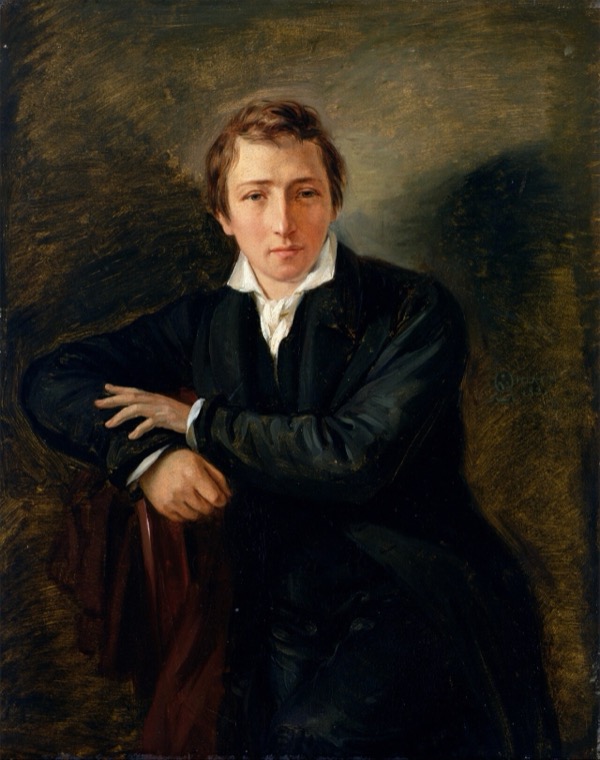
Heinrich Heine, by Oppenheim
Giacomo Meyerbeer and Heinrich Heine had known one another in the Parisian literary and musical world, and their relationship became increasingly complicated. As an influential writer and critic, Heine could be extremely helpful to Meyerbeer. Yet, when things did not go his way, he frequently made Meyerbeer the target of his wit.
Their relationship was based on mutual admiration and practical need. Meyerbeer greatly admired Heine’s poetry and even set some of his verses to music. On the other hand, Heine often struggled financially and needed Meyerbeer as an influential ally and benefactor.
Heine frequently asked Meyerbeer for loans, gifts, and allowances, often disguising his requests. In the end, he asked for his upkeep. Heine was happy to use his pen as leverage, and when Meyerbeer once refused to hand over the requested 500 francs, Heine portrayed him as a corrupting influence on music in a poem.
Giacomo Meyerbeer: Komm, du schönes Fischermädchen (Thomas Hampson, baritone; Geoffrey Parsons, piano)
Act of Forgiveness
Yet, when Meyerbeer heard of Heine’s death in 1856, he wrote in his diary on 23 February, “Peace to his ashes. I forgive him from my heart his ingratitude towards me and the many malicious things against me in his last writings.”
Heine could be extraordinarily condescending towards Meyerbeer’s music. An anecdote relates that Heine attended Les Huguenots with Meyerbeer, joking about the prospect of sitting through the opera for hours. Apparently, someone reminded Heine that he had recently written a splendid review of the work, to which Heine replied, “It was easy to write a good review; I have never heard the opera.”
Meyerbeer understood that Heine could be both affectionate and merciless, yet he maintained the relationship despite the insults. And in his private diary, he both records the injury and ultimately forgives Heine. Meyerbeer could be deeply wounded by criticism, but he was capable of remarkable generosity towards his adversaries.
Giacomo Meyerbeer: Die Rose, die Lilie, die Taube (Sivan Rotem, soprano; Jonathan Zak, piano)
Politics of Gratitude
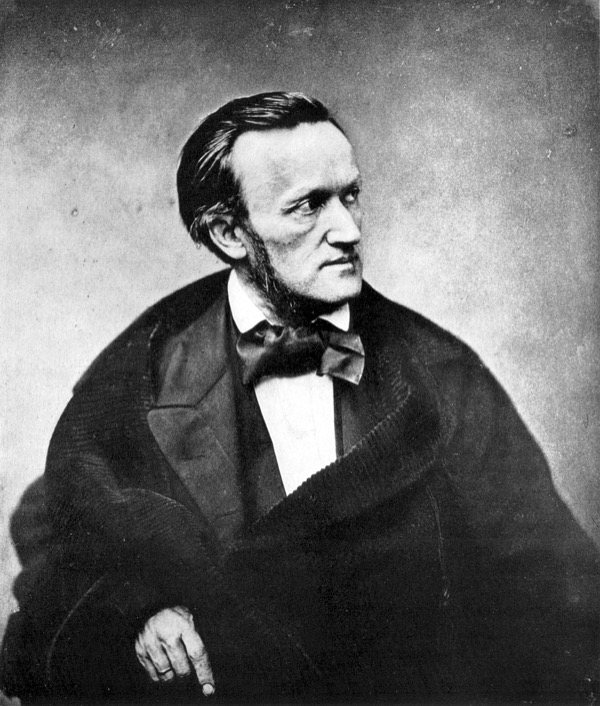
Richard Wagner, Paris, 1861
The relationship between Giacomo Meyerbeer and Richard Wagner is certainly complicated, but Meyerbeer could be surprisingly generous towards Wagner’s music, even after Wagner became openly hostile towards him.
When Richard Wagner arrived in Paris in September 1839, he was received by Giacomo Meyerbeer, who listened to Wagner’s reading of the libretto to Rienzi. In fact, Meyerbeer not only provided letters of introduction to Duponchel and Habeneck, the director and conductor of the Paris Opéra, respectively, but also arranged for Rienzi to be accepted and eventually performed by the Dresden Hofoper.
In May 1840, Wagner sent Eugène Scribe a copy of his sketch of Der fliegende Holländer (The Flying Dutchman) and the following month he mentioned it to Meyerbeer. Meyerbeer introduced him to the new director of the Opéra, Léon Pillet, who bought the story for 500 francs, but essentially nothing came of it.
After two and a half dismal years in Paris, Wagner made his way back to the fatherland. Wagner later blamed much of his Parisian failure on Giacomo Meyerbeer. In his essay Das Judentum in Der Musik, he argues that the “superficial, meretricious values of contemporary art are embodied, above all, in Jewish musicians. The rootlessness of Jews in Germany and their historical role as usurers and entrepreneurs has condemned them to cultural sterility.”
Giacomo Meyerbeer: Robert le diable: Act I Scene 4: Va, dit-elle, va, mon enfant (Alice) (Orchestra Internazionale d’Italia; Renato Palumbo, cond.)
Meyerbeer Kept Listening
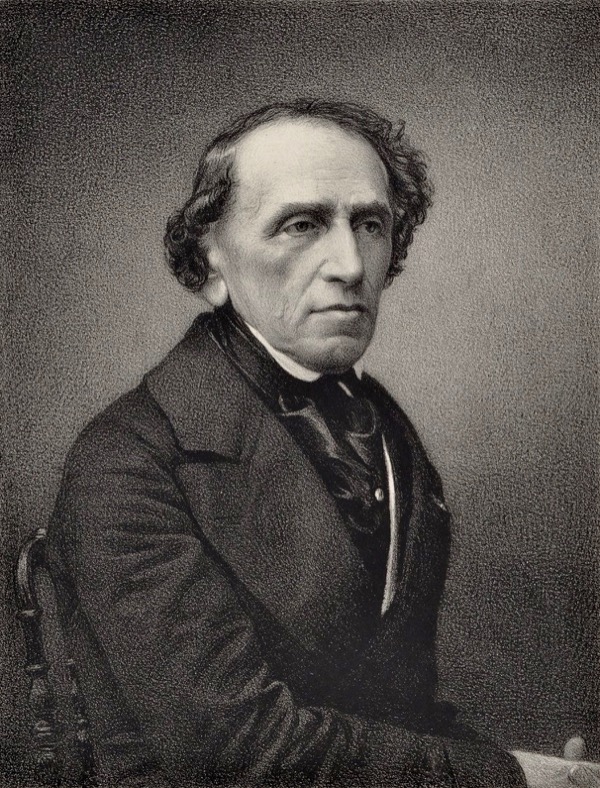
Giacomo Meyerbeer, after P. Petit (1865)
The anti-Semitic tone of this essay was directed at Felix Mendelssohn and Giacomo Meyerbeer, in the latter case stemming from Wagner’s being artistically as well as financially indebted to his compatriot. He had conveniently forgotten that Meyerbeer had financially underwritten the staging of The Flying Dutchman in Berlin.
Wagner also suspected that Meyerbeer had been behind the notorious 1861 Paris performance of Tannhäuser. Yet in his diaries, Meyerbeer suggested that the hostile reaction was not a genuine verdict on the opera.
As he wrote, this “would appear to be the result of a cabal and not a genuine popular verdict. It will only stand the work in good stead at later performances.” Meyerbeer remained interested in Wagner’s music long after their personal relationship deteriorated. Rather than simply dismissing Wagner for personal reasons, he continued to analyse and assess the music.
Meyerbeer last encountered Wagner in London in 1855, and recorded, “We greeted each other coldly, without speaking.” While Wagner had become openly hostile and belligerent, Meyerbeer was capable of separating Wagner, the man, from his music.
Meyerbeer – Les Huguenots – Act II – Finale
Meyerbeer in Private
In public, Giacomo Meyerbeer was diplomatic and controlled, but in his diary he remembered and recorded the critics who had attacked him. He would forgive Heinrich Heine for “many malicious things,” and was capable of separating Wagner, the man, from his music.
In his diaries, we find Meyerbeer conscious of his reputation and easily wounded by hostility. Yet, he was capable of irony, restraint and forgiveness. The diaries reveal the private person behind a carefully controlled public figure. The Meyerbeer diaries are an invaluable treasure for music history, because Meyerbeer himself never intended us to see these most private thoughts.
For more of the best in classical music, sign up for our E-Newsletter