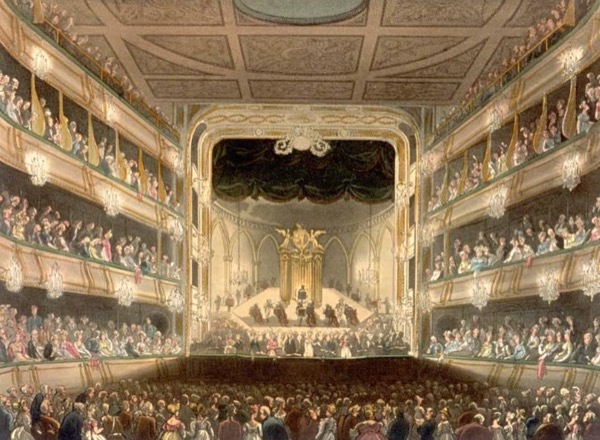
The Vienna Philharmonic New Year’s concert, performed since 1939, is a beloved holiday tradition for classical music lovers around the world.
In 2025, the orchestra programmed the first work by a woman to ever appear on the program of this legendary annual concert: Constanze Geiger’s Ferdinandus Waltz.
Constanze Geiger was a child prodigy who was famous in Vienna in the 1840s, but is almost entirely forgotten today.
However, the Vienna Philharmonic’s Ferdinandus Waltz has sparked new interest in her and her life story.
Today we’re looking at the fascinating life and work of Constanze Geiger.
Constanze Geiger’s Musical Family
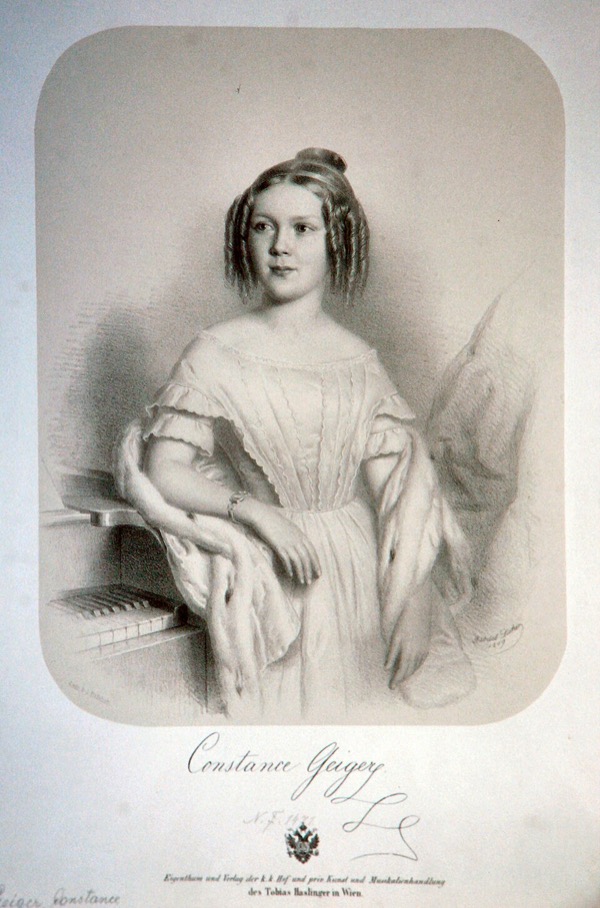
Constanze Geiger
Constanze Therese Adelaide Geiger was born in Vienna on 16 October 1835.
Her father was an ambitious composer and teacher named Joseph Geiger, who taught music to Archduke Franz Joseph, the future Emperor Franz Joseph I of Austria. Her mother was a court milliner and hatmaker named Theresia.
Both parents encouraged Constanze’s musical career. That enthusiastic support helps to explain how she became so successful so early.
Constanze Geiger’s Musical Training
Constanze began studying piano with her father when she was just a little girl.
Later she studied with Johann Wenzel Tomaschek, a brilliant self-taught pianist who became known as the “Musical Pope of Prague.”
She also took piano and composition lessons from Simon Sechter, a future Vienna Conservatory professor – and the teacher of Henri Vieuxtemps, Sigismond Thalberg, and Anton Bruckner, which placed her in an important pedagogical lineage.
Geigers Ein Volkswalzer, Op. 22a
Constanze Geiger’s Debuts and Early Triumphs
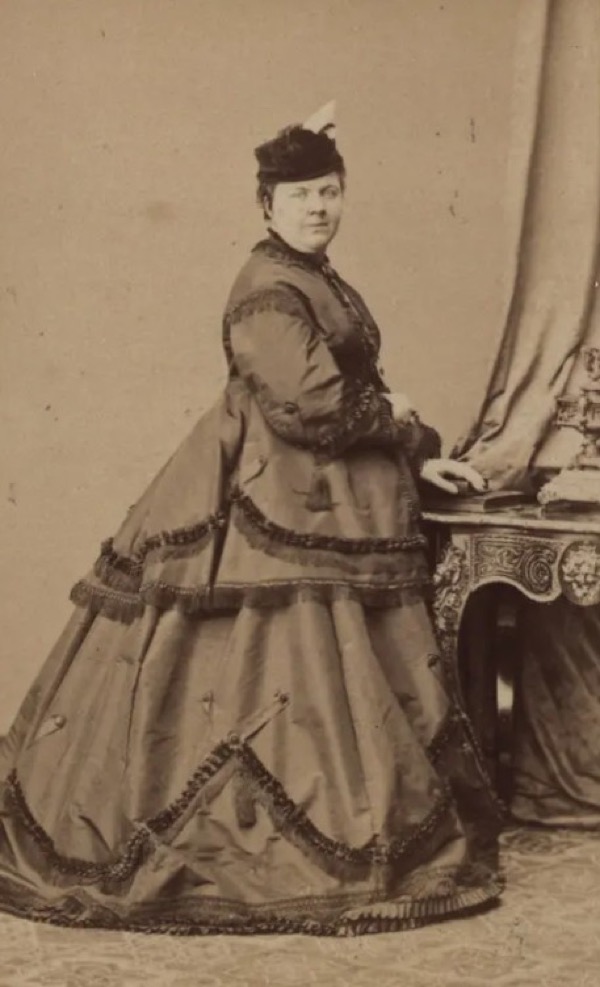
Constanze Geiger
She took to the piano immediately, making her recital debut in Vienna when she was just six years old.
When she was eight, the prestigious publishing house Diabelli accepted her Opus 1 for publication.
A few days after her ninth birthday, she played a recital at which she performed two of her own works, including her recently published op. 1.
Intriguingly, on 20 April 1845, a military band played one of her military marches at a church concert. The audience was appreciative – while critics were taken aback at the idea of a young girl writing military music.
Critics’ Leeriness
Geiger’s “Meine liebste Blume”
Watch the video here.
Her music continued to gain popularity, even as critics lambasted it.
The Allgemeine Wiener Musikzeitung wrote in 1846 that her song “Meine liebste Blume” “is appropriate for the child’s parents and relatives, [but] not for the forum of an art-educated public.”
But music presenters didn’t listen; they were fascinated by the idea of an angelic little girl composing songs and dance music, and continued to program her.
Constanze Geiger’s Sacred Music
She also turned her attention to sacred music.
In 1846, when she was just eleven, she was awarded honorary membership by the Cecilia Society in Rome, an organisation that promoted church music and church musicians.
Her setting of the “Ave Maria” was frequently heard around Vienna around this time.
It became so popular that it was even performed by the Vienna Court Orchestra, with her teacher Simon Sechter on the organ.
Her Works Become Popular
In 1845, Johann Strauss I dedicated his Flora Quadrille to Geiger.
Johann Strauss I: Flora-Quadrille, Op. 177 (Slovak Sinfonietta, Žilina; Christian Pollack, cond.)
But he didn’t stop there. In 1848, Strauss and his famous orchestra played two waltzes by her: her Frühlingsträume Waltz and her Ferdinandus Waltz.
Over the course of her musical career, she would write 34 works with opus numbers, plus other unpublished pieces.
According to the Vienna Philharmonic’s website, she wrote “13 waltzes, six polkas, eight marches, three sacred works, seven songs, and a large number of compositions for piano.”
Branching Out to Acting
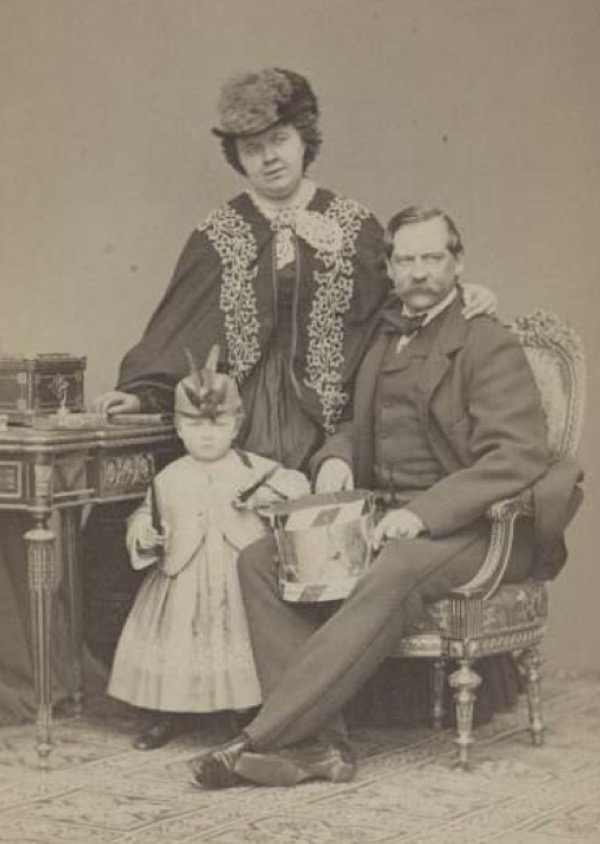
Constanze Geiger and family
Geiger’s “Un instant de bonheur!”
Music was not her only interest. She was also drawn to acting, and she made her stage debut in 1850, the year she turned fifteen.
She appeared in roles that combined acting and piano-playing. For example, in 1853, she appeared in Olomouc, in the present-day Czech Republic, in two different comedies, playing the piano, with an orchestra performing her compositions during the intermission.
In 1852, she appeared at the Theatre an der Wien in Vienna and the Friedrich-Wilhelm-Städtisches Theatre in Berlin.
She would continue to appear on the stage in this dual capacity between 1852 and 1860.
Generally, her piano performances were more critically acclaimed than her theatrical performances, but she was still popular enough that acting was a worthwhile second source of income.
Meeting Her Husband
Her life took a fairy-tale turn in the late 1850s while visiting the Vienna inn Zum Goldenen Lamm (To the Golden Lamb), a favourite gathering spot for musicians such as Beethoven, Strauss, Offenbach, and others. There she met Prince Leopold of Saxe-Coburg and Gotha.
Leopold was the third son of his parents’ marriage, and, as such, was unlikely to ever come into power.
The two fell in love and began a physical relationship. Geiger became pregnant, and in October 1860, a few days before her twenty-fifth birthday, she gave birth to her son Franz Assis Leopold Joseph.
Interestingly, in early 1861, a few months after the birth of Franz, Johann Strauss, Jr. dedicated his Grillenbanner Waltz, op. 247, to Prince Leopold as a sign of support to him during the familial power struggles surrounding his love affair with Constanze.
Johann Strauss II: Grillenbanner (Waltz), Op. 247 (Slovak State Philharmonic Orchestra, Košice; Alfred Walter, cond.)
Leopold’s family was horrified that he wanted to make a life with a musician, but, after many arguments, she and the prince married on 23 April 1862.
The marriage was morganatic, meaning that they were officially married. Still, Leopold’s family would not grant Constanze or Franz any titles or royal privileges, and Franz was excluded from the line of succession.
Constanze was ultimately elevated to the baronage, taking the name Baroness von Ruttenstein.
Her Final Years
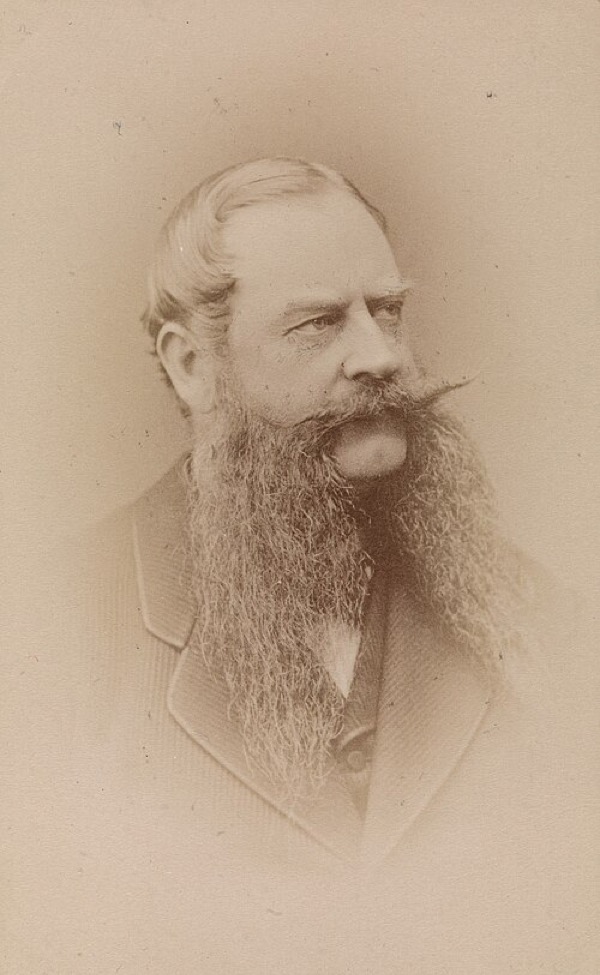
Prince Leopold of Saxe-Coburg and Gotha (1824-1884)
After her marriage, Geiger largely retired from the stage (although she did give private performances in her castle theatre).
Not only did she give up her career as a pianist, but it also seems that she gave up composing, too.
That didn’t keep her ever-popular works from appearing on mid-century German and Austrian concert programs. Her fellow Sechter student Anton Bruckner actually played the organ during a performance of her “Offertorium” in Vienna in 1873.
Leopold died in 1884. Constanze died six years later, in August 1890, in Dieppe, France, from liver disease.
She was buried in Montmartre Cemetery in Paris.
The Modern Revival of Constanze Geiger
Constanze Geiger: Ferdinandus-Walzer, Op. 10 (arr. W. Dörner for orchestra) (Vienna Philharmonic Orchestra; Riccardo Muti, cond.)
Geiger’s composition, the Ferdinandus Waltz, which Johann Strauss I had once championed, was revived in January 2025 for the famous Vienna Philharmonic New Year’s concert.
This particular bit of programming came about after Philharmonic violinist Raimund Lissy published his 2024 biography about Geiger, “Es liegt ein eigener Zauber in diesem Wunderkinde!” (“There is a magic of its own in this child prodigy!”).
The orchestra agreed to program her Ferdinandus Waltz, making it the first work ever written by a woman to appear on a Vienna Philharmonic New Year’s concert program.
That said, the waltz was originally written for piano, not orchestra, and the parts that Johann Strauss II’s orchestra played from have been lost. So Austrian conductor Wolfgang Dörner created an orchestral arrangement.
To supplement the performance of the Ferdinandus Waltz, the Vienna Philharmonic uploaded videos of other chamber music works by Geiger to YouTube.
Her waltz is a reminder of all the fascinating music history just waiting to be discovered, especially regarding the lives and works of women composers.
For more of the best in classical music, sign up for our E-Newsletter
Geiger’s Herzklopfer, Walzer, Op. 29
Watch the video here.