After many years of listening to second-rate orchestras, the joy of hearing one of the world’s finest orchestras live cannot be understated. No 10-minute noise-fest before the concert as the various players give those hard passages one more try in hopes that this time it will work, no dancing conductor who looks great on the podium but isn’t actually affecting the orchestra’s performance, and no ragged start to a standard work.
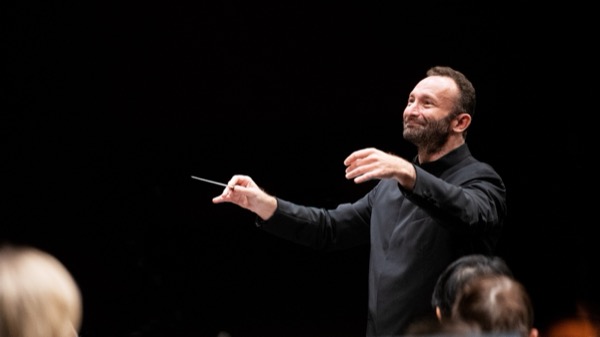
Kirill Petrenko (photo by Monika Rittershaus)
The program was anything but simple: the Beethoven violin concerto with Augustin Hadelich as soloist, followed by Scriabin’s Divine Poème, his Symphony No. 3. Before the performance, there was a pre-concert talk by Susanne Stähr that laid out the structure of both pieces beautifully. In the Beethoven, listen for the 5s: drum rolls, rhythmic patterns, melodic lines, and so on that had a quintuple base, rather than the expected quadruple one. It was a key comment that gave her audience a focus for listening.
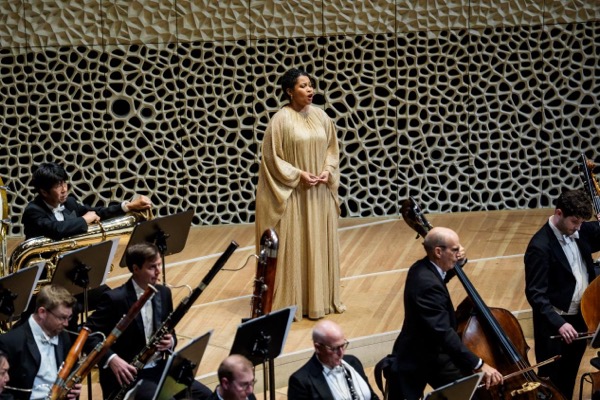
The Berlin Philharmonic was exactly what you would have wanted: disciplined and yet free in their interpretations, following Kirill Petrenko as conductor. No motion was wasted, the sound was clear, and the stepwise organisation of the stage meant that you could watch your favourite instrument (be it the double basses, the timpanist, or the winds) clearly.
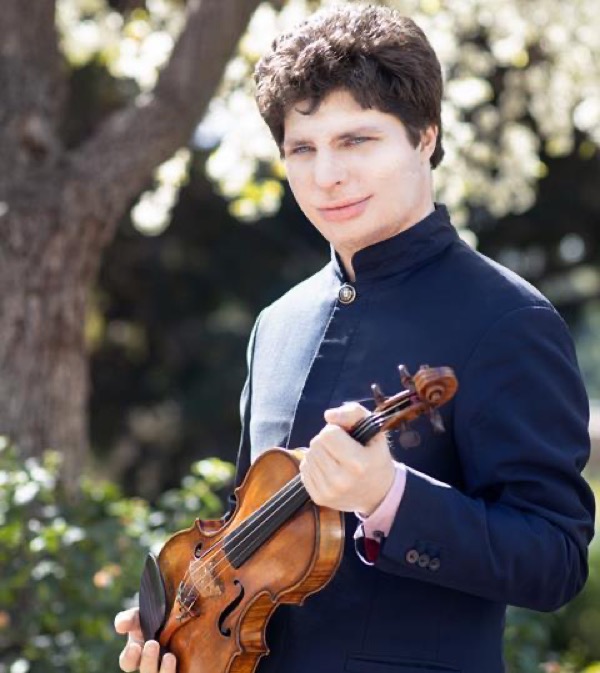
Augustin Hadelich
Soloist Augustin Hadelich’s singing tone met Beethoven’s demands, and his performance of the repetitions and flourishes in the melodic material was masterful. I’m sure it’s a work Hadelich has performed hundreds of times, but he manages to present it as fresh and new. The cadenzas showed individual additions that were perfectly in keeping with the work’s ideas.
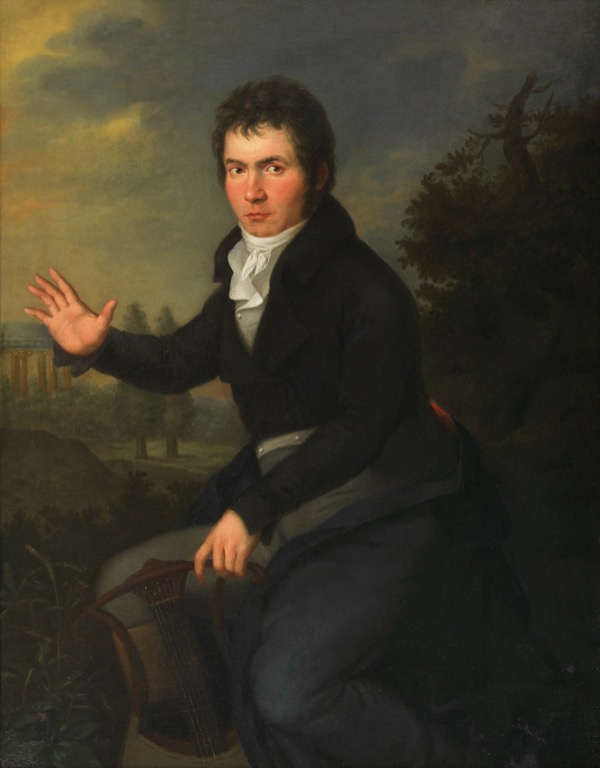
Joseph Willibrord Mähler: Beethoven age 33, 1804 (Wien Museum)
His encore ended in the most exquisite overtone series, both the perfect answer to Beethoven’s demands and a demonstration of how far violin technique had advanced in the decades since Beethoven.
The second work of the evening was Alexander Scriabin’s Symphony No. 3, Le divin poème. It’s a challenging work that veers wildly through the world. We listen to the persona’s struggle in the first movement, marked by fear and insecurity, questioning ‘Am I?’ until arriving at the definitive ‘I AM’.
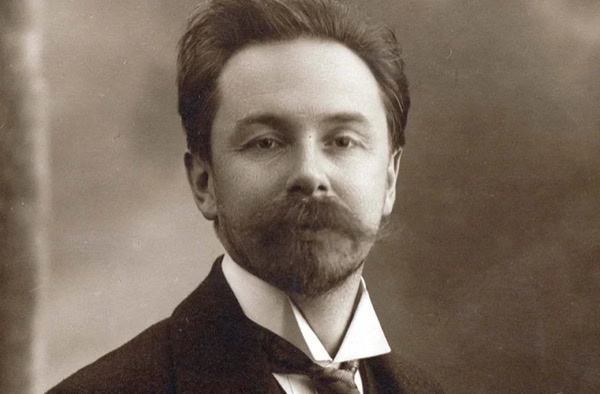
Alexander Scriabin
Scriabin: Symphony No. 3 “Le divin poème” / Petrenko · Berliner Philharmoniker
The second movement, Voluptés [Delights], takes us to heaven. The violin opens with a melody that evolves into a scene with bird song.
In the final movement, Jeu divin [Divine Play], the struggle has achieved its goal. A bit of Wagner from Meistersinger is quoted; themes from the first two movements return before we achieve the final release.
Fine control of dynamics is one of the keys to Petrenko’s mastery of this work. Individual voices have to be heard amid the complex orchestration, and Petrenko brings his vision to creating a work in which sounds emerge and fall back as necessary. The work ends in C major, the most important of the musical keys.
Music brings reinvention, and Petrenko’s Scriabin is the embodiment of that reinvention. Where the Beethoven was absolute mastery of sound and concept, the Scriabin gave us the composer’s permission to achieve our own mastery of self.
It was an outstanding evening of the most perfect music-making one can hear these days—a true delight.
For more of the best in classical music, sign up for our E-Newsletter