In 19th-century Paris, salons were far more than fashionable rooms. Women’s salons became places to connect artists and intellectuals, promote political causes, and shape the direction of art.
The women who ran these gatherings – many of them aristocrats, performers, writers, activists, or some combination – created invaluable spaces where some of Europe’s greatest cultural figures could meet and mingle.
Here are four remarkable women whose Parisian salons helped shape the cultural life of 19th-century Europe, whose influence extended far beyond the drawing room and squarely into classical music history.
Marie d’Agoult (1805–1876): Liszt’s Revolutionary Ex
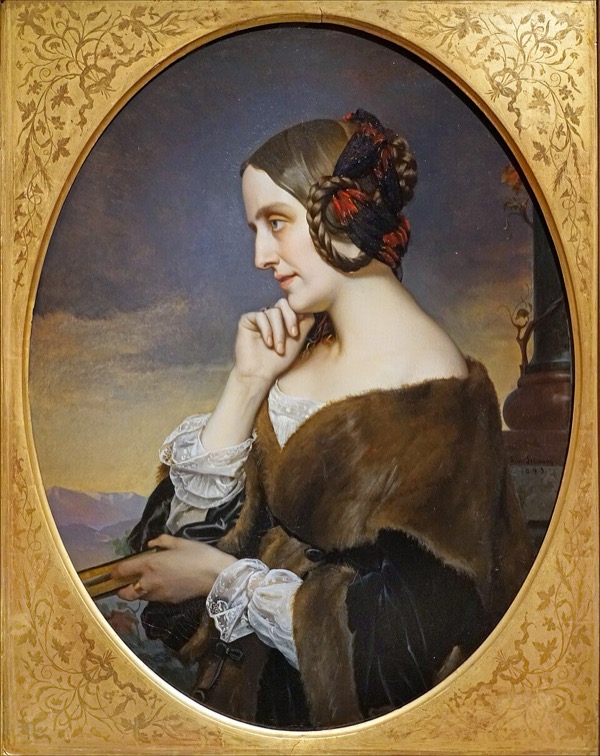
Marie d’Agoult
Marie de Flavigny’s father was a French aristocrat, and her mother the daughter of a German banker and merchant.
At 21, she married the 36-year-old Count Charles Louis Constant d’Agoult. Their relationship was largely a marriage of convenience, and after Marie d’Agoult fell in love with Franz Liszt in the mid-1830s, she left the count for Liszt.
Her scandalous relationship with Liszt lasted until 1844. After their breakup, she focused on her writing career, and in 1846 she published her first novel, Nélida, inspired by her relationship with Liszt.
Her life as a salonnière can be split into two periods. When she was with Liszt, their star power made their apartment an important place for artists and intellectuals to meet and mingle.
They were friends with figures like pianist Frédéric Chopin and author George Sand (who are believed to have met at the Liszt/d’Agoult salon). Chopin even dedicated his Etudes, Op. 25, to d’Agoult.
Chopin’s Etudes, Op. 25
After the breakup, she became more interested in philosophy and progressive politics, intrigued by the forces that would lead to the 1848 revolutions that swept across Europe. During this time, she entertained figures like historian Jules Michelet, politician Edgar Quinet, and poet and critic Heinrich Heine.
After the authoritarian Emperor Napoleon III committed a coup in 1851, d’Agoult and her circle opposed him fiercely. She had outgrown the idea of a salon devoted solely to art or music, instead opting for one that would push for progressive political change.
We wrote about Liszt and d’Agoult’s stormy romance here: https://interlude.hk/franz-liszt-and-marie-dagoult-the-turbulent-romance-that-shocked-europe/.
Cristina Trivulzio Belgiojoso (1808–1871): Italian Activist
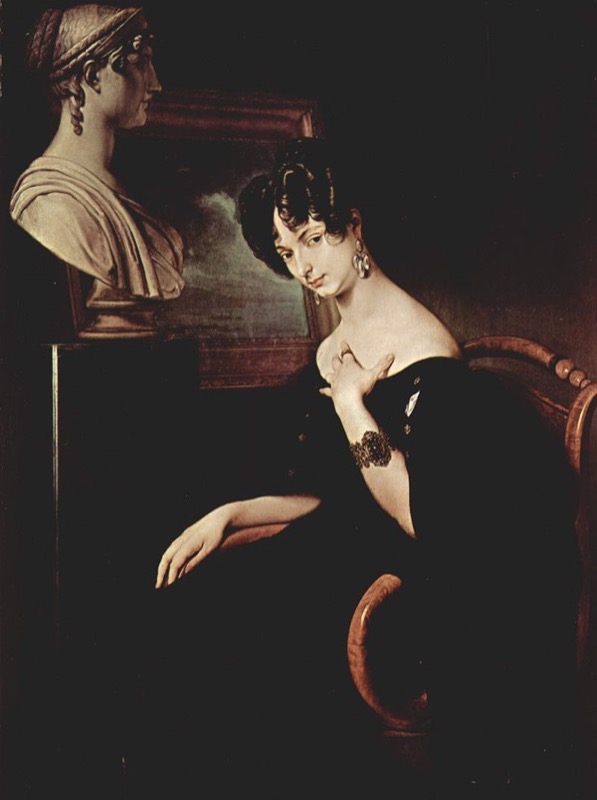
Cristina Trivulzio Belgiojoso
Cristina Trivulzio Belgiojoso was born to Italian nobility in Milan in 1808. Her father died when she was a child, and her stepfather was arrested under suspicion of being involved in riots connected to the Italian uprisings of the early 1820s.
Among the wealthiest heiresses in Italy, with a 400,000 lire dowry, she married in 1824 when she was 16 – but soon separated from her playboy womaniser husband, who reportedly infected her with syphilis.
Despite the strains in the marriage, the couple shared a passion for the Italian independence movement. Authorities noticed her revolutionary sympathies, and she escaped to Paris in the early 1830s. Her husband helped support her new life there.
Her salon became a gathering spot for fellow Italian revolutionaries, who mingled with great composers like Hector Berlioz, Frédéric Chopin, and Franz Liszt.
A dramatisation of the Thalberg/Liszt piano duel from the 1970 film Dreams of Love
The crowning event of her career as a salonniere occurred on 31 March 1837, when she hosted a piano duel between Sigismond Thalberg and Franz Liszt, selling expensive tickets, with proceeds to benefit Italian refugees. Her tactful verdict as to the winner? “Thalberg is the greatest pianist, but there is only one Liszt.”
That same year, she also arranged the composition of Hexaméron, a set of variations for solo piano written by Liszt, Chopin, Thalberg, Pixis, Herz, and Czerny, on a theme from the “March of the Puritans” from Bellini’s opera I puritani. We wrote about the ambitious project here: https://interlude.hk/center-musical-universe-vincenzo-bellini/.
She continued her work as a fundraiser, activist, and writer for the rest of her life.
Franz Liszt: Hexameron – Grandes variations de bravoure sur le marche des Puritains, S392/R131 (Evelyne Dubourg, piano)
Princess Mathilde Bonaparte (1820–1904)
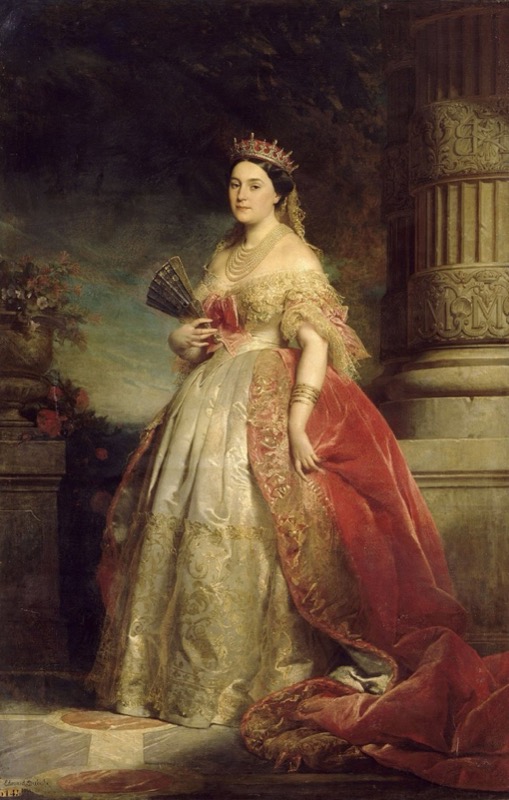
Princess Mathilde
Born in exile in 1820 in Trieste, northeast Italy, Mathilde Bonaparte was Napoleon Bonaparte’s niece through his brother Jérôme Bonaparte.
As a young woman, she became engaged to her cousin Napoleon III, but the marriage was called off after he led a failed coup in August 1840 against King Louis-Philippe. (He would try again – and succeed – in 1851, to Marie d’Agoult’s horror.)
Instead of Napoleon III, Mathilde married a Russian nobleman. Unfortunately, the marriage was unhappy; he kept his mistress, to Mathilde’s humiliation, and once even slapped Mathilde in public.
In response, she took her own lover and fled with him to Paris – taking along valuable jewellery that, technically, belonged to her husband. In the separation, she secured an annual 200,000 franc alimony payment, a sum that helped to bankroll construction of her mansion.
There, she held a weekly salon on Sundays, where she cultivated a more intellectual, more artistic atmosphere.
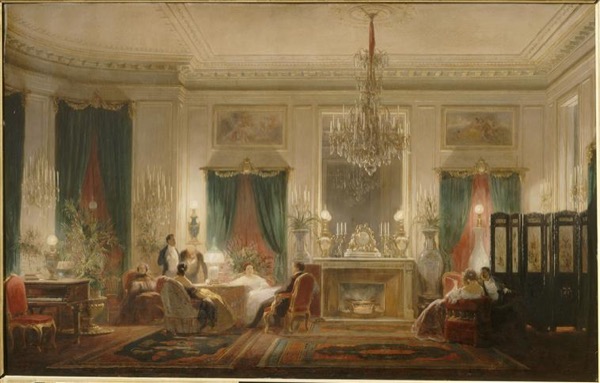
Princess Mathilde’s salon
Although the greatest minds in Paris were all welcome, they were also expected to acquiesce to the wishes of her many dogs, who ruled the house.
Her musical visitors included Georges Bizet, Jacques Offenbach, Gabriel Fauré, and Camille Saint-Saëns, as well as women composers like Pauline Viardot, Clémence de Grandval, and Augusta Holmès. Camille Saint-Saëns dedicated his Serenade for Violin, Viola, Organ and Piano, Op. 15, to Mathilde.
Despite her close connections to the monarchy, she was viewed as a kind of French cultural institution, and she never faced permanent exile.
Camille Saint-Saëns: Sérénade, Op. 15 (version for orchestra) (Basque National Orchestra; Jun Märkl, cond.)
Pauline Viardot (1821–1910)
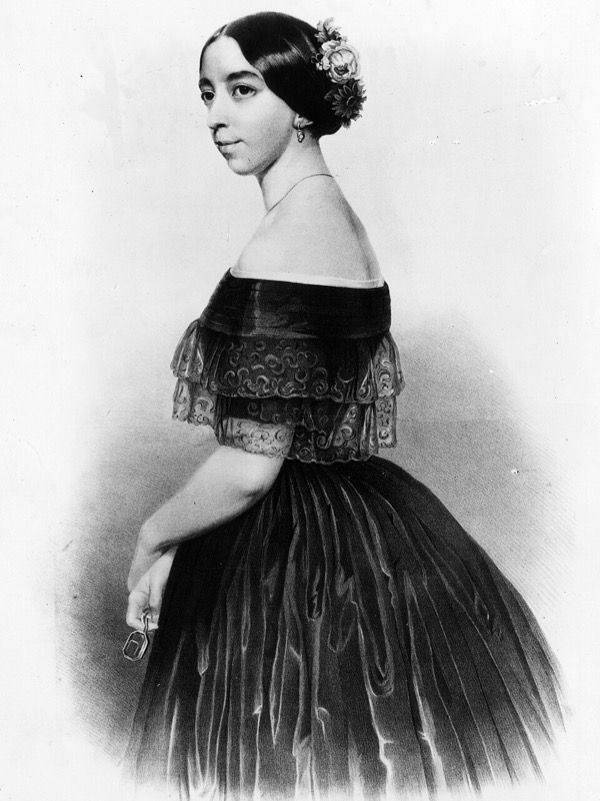
Pauline Viardot
Pauline Garcia was born in Paris in 1821. Both of her parents were acclaimed opera singers. She spent her childhood touring with them and became fluent in Spanish, French, Italian, English, German, and Russian.
She originally wanted to be a pianist, but her mother wanted her to become a vocalist. She made her operatic debut in London in 1839.
The following year, she married 40-year-old Louis Viardot, a critic, journalist, and theatre director. He was always more in love with her than she was with him, and he gave up his theatre director position to support her. One interesting bit of music history trivia: Chopin’s partner, George Sand, urged them to date.
On Thursday nights, Viardot hosted salons attended by major musical figures like Frédéric Chopin, Hector Berlioz, Camille Saint-Saëns, Jules Massenet, and Charles Gounod.
Her daughter was briefly engaged to Gabriel Fauré, but she broke it off in 1877, an event often linked to Fauré’s devastating 1880 Élégie for cello.
Gabriel Fauré: Élégie, Op. 24 (version for cello and orchestra) (Martin Johnson, cello; Ireland National Symphony Orchestra; Jean-Luc Tingaud, cond.)
Viardot paid tribute to Chopin with her 12 Mazurkas de Frédéric Chopin, which reimagined twelve different mazurkas for voice and piano. During his life, the two played duets together and exchanged musical ideas.
A selection of the Chopin/Viardot mazurka arrangements
She also composed music specifically for her salon, including five chamber operas written between 1867 and 1904.
Today she is best known for her multifaceted musical career, as a composer, singer, and teacher who instructed some of the most important vocalists of the 19th and early 20th centuries. But it’s important to remember she was a celebrated salonnière, too.
We wrote about Pauline Viardot’s salons here: https://interlude.hk/muses-musings-salon-pauline-viardot/.
Conclusion
The official history of 19th-century music is filled with famous composers, performers, and critics, with few mentions of women. But without women like d’Agoult, Belgiojoso, Mathilde, and Viardot, who created the rich social world they met in, their output would have been very different.
So the next time you hear a work by Chopin, Liszt, Saint-Saëns, or any other Paris-based composer of the 19th century, remember that some of their most important musical encounters occurred not on tour, not on the concert stage – but in the drawing rooms of the remarkable women who surrounded them.
For more of the best in classical music, sign up for our E-Newsletter