These fourteen cello scores trace not just the career of cellist Mstislav Rostropovich: they trace his life.
His working relationships with composers began when he was barely out of his teens, immediately after the Communist Party’s infamous 1948 denunciation of Myaskovsky, Prokofiev, and Shostakovich. He ended up working with all three as each one tried to write his way back into official favour.
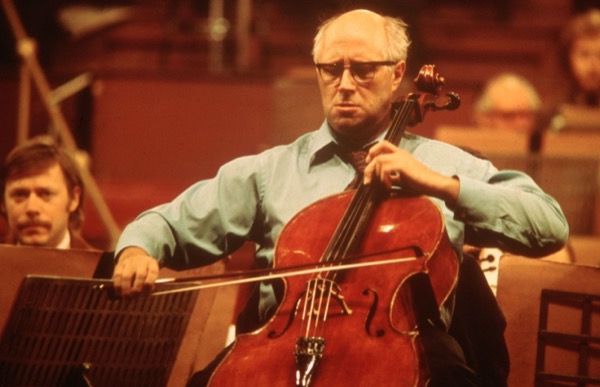
Mstislav Rostropovich
Rostropovich’s network expanded in 1960, when he gave the British premiere of Shostakovich’s Cello Concerto No. 1 in London. Benjamin Britten sat next to Shostakovich and elbowed him whenever Rostropovich’s playing impressed him; afterwards, Shostakovich joked that his whole side was sore. Their friendship produced five more works over the next decade.
By the time Rostropovich left the Soviet Union in 1974, he had partnered with several of the era’s greatest composers, both inside and outside its borders. He knew that wherever he went, he would have musical friends.
Here are five decades of cello works written for Mstislav Rostropovich.
Nikolai Myaskovsky – Cello Sonata No. 2 (1948–1949)
Mstislav Rostropovich was born in 1927. He began studying piano at four and cello at eight, and at eighteen, he won a gold medal in a national competition for young musicians. He graduated from the Moscow Conservatory in 1948.
That same year, one of the Conservatory’s teachers, 66-year-old composer Nikolai Myaskovsky, was reprimanded in the Communist Party’s Resolution on Music, along with Prokofiev and Shostakovich, for writing music that was “formalist” and insufficiently supportive of Stalinist ideology.
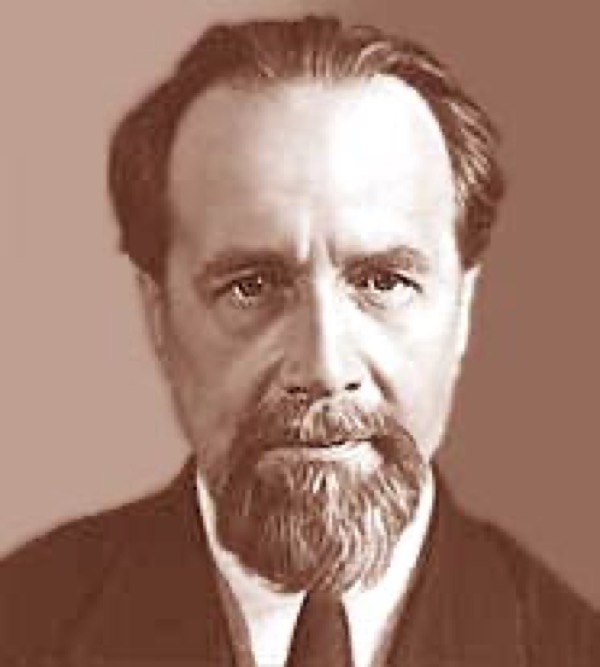
Nikolai Myaskovsky
Myaskovsky responded by creating a more conservative sonata for the 21-year-old Rostropovich. They debuted it together the following year.
Myaskovsky wouldn’t live to see whether the rehabilitation worked; he died of cancer in 1950.
Sergei Prokofiev – Cello Sonata (1949)
Prokofiev was a dear friend of Myaskovsky’s, and the 1948 Resolution on Music condemned both men. The following year, Prokofiev attended the premiere of Myaskovsky’s second cello sonata to support his colleague.
This wasn’t Prokofiev’s first time hearing Rostropovich. In December 1947, Rostropovich played a cello-and-piano arrangement of Prokofiev’s cello concerto for the composer and impressed him.
After hearing Rostropovich’s performance of Myaskovsky, Prokofiev was inspired to write his own work for the cellist. It was darker and rougher-edged than the Myaskovsky sonata: qualities that could make it more objectionable to the Soviet authorities.
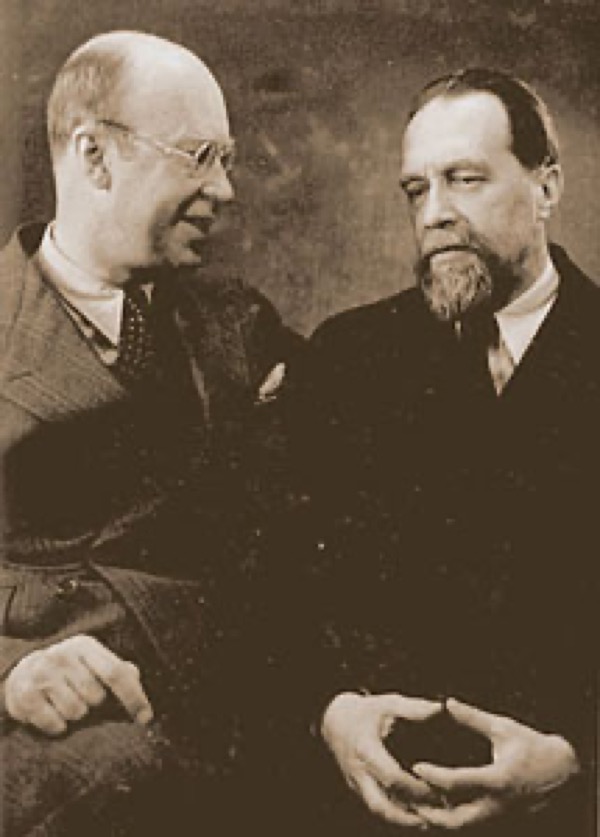
Nikolai Myaskovsky with Sergei Prokofiev
Rostropovich and pianist Sviatoslav Richter played the piece for the Composer’s Union. This panel decided whether new works were, in Richter’s own account, worthy of the state or “hostile to the spirit of the people.” Three months later, they performed it again for a second panel, this one from the Radio Committee. Only then were they cleared to play it in public – on 1 March 1950, at the Small Hall of the Moscow Conservatory.
Sergei Prokofiev – Sinfonia Concertante (1952)
In 1951, the head of the music division of the Committee on Artistic Affairs commissioned Prokofiev to write this work.
While composing, Prokofiev used material from his 1930s cello concerto. He sent the score to the 24-year-old Rostropovich for feedback.
It premiered in Moscow on February 18, 1952, as his second cello concerto, with Richter conducting: the only time in his career he’d stand on a podium rather than sit at a piano. Following a review by the Composer’s Union, Prokofiev revised the piece further and retitled it Sinfonia Concertante.
He never heard the final version performed. Prokofiev died on March 5, 1953. A few hours later, Stalin did, too.
Rostropovich gave the work’s true premiere more than a year and a half later, on December 9, 1954, with the Danish State Radio Symphony Orchestra under Thomas Jensen.
Sergei Prokofiev – Cello Concertino (1953)
Prokofiev left behind an unfinished score to a lighter, cheerier work that counterbalanced the weight of the dark Sinfonia-Concertante.
Before his death, Prokofiev told Rostropovich his plans for the piece. Rostropovich teamed up with Dmitry Kabalevsky, a composer who had narrowly avoided denunciation in 1948, to finish the work.
It was premiered with piano in 1956, and with orchestra in 1960.
Dmitri Shostakovich – Cello Concerto No. 1 (1959)
Rostropovich first met Shostakovich in 1943, when he was a talented teenage student at the Moscow Conservatory, and Shostakovich was a newly hired professor.
Shostakovich was so impressed by Rostropovich’s compositional talent that he actually wanted Rostropovich to pivot from cellist to composer – and called Rostropovich’s mother to tell her so.
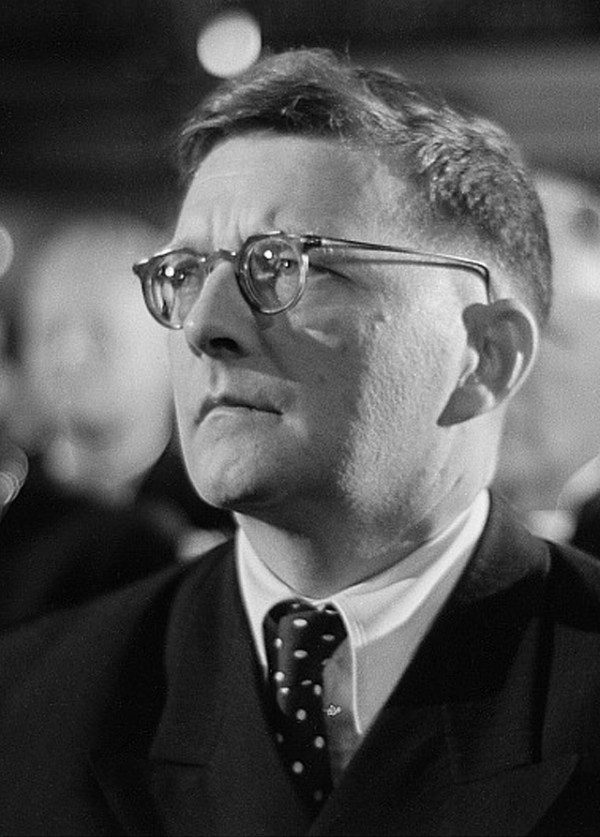
Dmitri Shostakovich © Deutsche Fotothek
In 1954, they became friends while touring and performing Shostakovich’s 20-year-old cello sonata. Rostropovich began longing for a Shostakovich cello concerto, but the composer’s wife advised him not to ask directly.
The long-awaited cello concerto finally materialised in 1959. When Rostropovich heard it, he was stunned: “shaken to the core,” he’d later say. He had the concerto memorised within a few days.
It was premiered at the Leningrad Conservatory in October 1959.
Benjamin Britten – Cello Sonata (1961)
In 1960, Rostropovich and Shostakovich travelled to London for the British premiere. Benjamin Britten’s The Young Person’s Guide to the Orchestra was on the same program.
As mentioned above, Britten was in the audience for that premiere too – elbowing Shostakovich in the ribs hard enough to leave him sore every time that Rostropovich’s playing impressed him.
Rostropovich, celebrated for the many works he’d already commissioned despite his relatively young age of 33, approached Britten and asked him to write a cello work. Britten obliged with his cello sonata, which was premiered in the summer of 1961.
Benjamin Britten – Cello Symphony (1963)
Their partnership was far from over, and Rostropovich clearly wanted a concerto from him. In the spring of 1962, Britten wrote to Rostropovich, “I am determined to write one for you…”
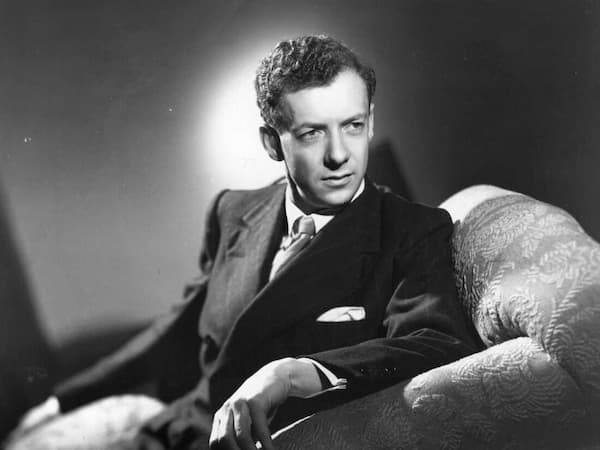
Portrait of Benjamin Britten from 1948 © Denis De Marney/Getty Images
Britten began writing a work for orchestra and cello, but it evolved into something that was not a traditional cello concerto. It was four movements long like a symphony, and featured a rich, important orchestral part. This led Britten to label it a Cello Symphony rather than a concerto.
Britten travelled to Moscow and conducted the premiere in spring 1964. Shostakovich was in the audience and was impressed.
Benjamin Britten – Cello Suite No. 1 (1964), No. 2 (1967), and No. 3 (1971)
Britten’s Cello Suite No. 3
In 1964, Britten wrote a solo cello suite inspired by both Rostropovich and the solo works of J. S. Bach.
Two more followed. The second and third suites are more overtly inspired by Bach’s model, incorporating dance movements that the first suite does not.
The third suite broke from that pattern differently. Written in 1971, it draws on Russian folk melodies and Orthodox liturgical themes.
The first suite was premiered at the Aldeburgh Festival in June 1965, and the second suite was played by June 1968. But the third suite wasn’t performed until December 1974 – by which point Rostropovich had already left the Soviet Union.
Dmitri Shostakovich – Cello Concerto No. 2 (1966)
In 1966, Shostakovich began writing a Largo movement for a new symphony, but ultimately realised it would work better as a cello concerto.
Shostakovich was famous for writing privately and delivering his soloists a completed score. But when composing this concerto, he actually went to Rostropovich for input: evidence of the trust and respect he held for Rostropovich.
In May 1966, shortly after finishing the concerto, Shostakovich suffered a heart attack that nearly proved fatal. When the concerto was premiered in Moscow in September (on his sixtieth birthday, no less), it was his first public appearance since the health crisis.
Henri Dutilleux – Tout un monde lointain… (1967–1970)
Around 1960, Russian conductor Igor Markevitch asked Dutilleux to write a concerto for his orchestra, the Concerts Lamoureux. Rostropovich was earmarked as soloist.
However, Dutilleux didn’t actually compose the work until the late 1960s and didn’t finish it until 1970 – by which point Markevitch had left the orchestra.
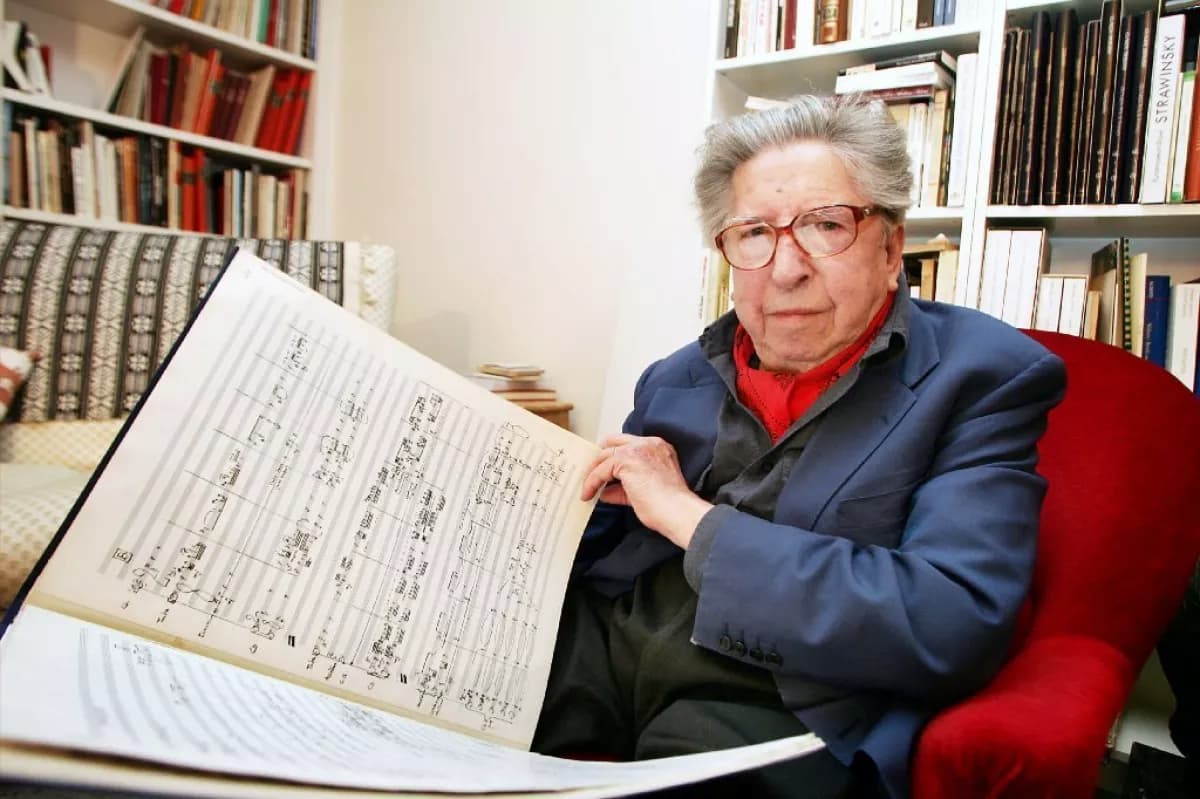
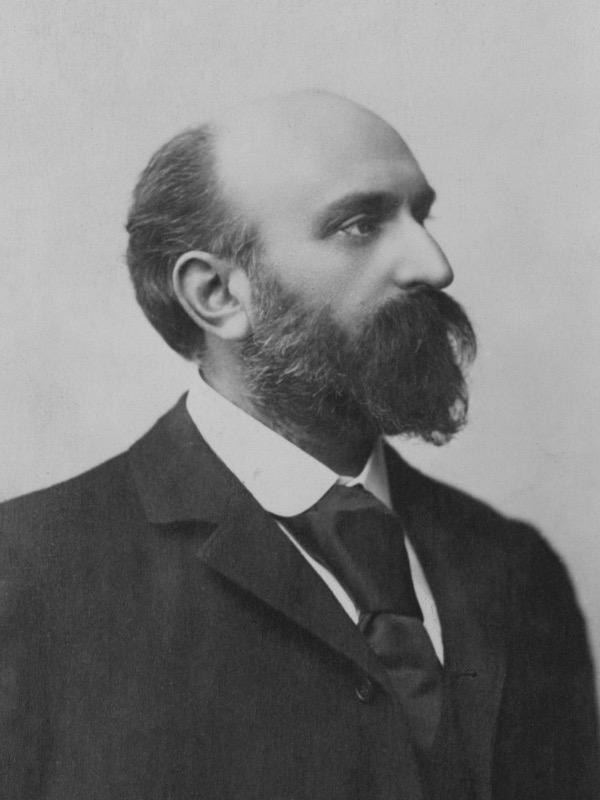
Henri Dutilleux © Jean-Pierre Muller / AFP/Getty Images
Rostropovich was still attached to the project, though. By then, he’d garnered such respect that Dutilleux collaborated closely with him. Rostropovich gave the premiere on 25 July 1970 at the Festival d’Aix-en-Provence, with the Orchestre de Paris under Serge Baudo.
Their friendship continued beyond this project. After Rostropovich became director of the National Symphony Orchestra in Washington, D.C., he programmed Dutilleux’s works.
Witold Lutosławski – Cello Concerto (1970)
This concerto did not originate from a friendship, as many did; instead, the Royal Philharmonic Society of London commissioned it for Rostropovich.
Rostropovich later said he told Polish composer Witold Lutosławski, “Write without thinking about the cello. I am the cello!”
In other words, he wanted Lutosławski to focus more on the music and less on the technical challenges.
Lutosławski responded by writing Rostropovich a letter that described the work’s narrative shape rather than its technical demands – following Rostropovich’s own advice to think past the cello.
When they recorded the concerto, Lutosławski conducted – a clear endorsement of Rostropovich and his work, bringing the work to life.
Sofia Gubaidulina – The Canticle of the Sun (1997)
Composer Sofia Gubaidulina wrote this work as a gift for Rostropovich’s seventieth birthday in 1997.
It sets St. Francis of Assisi’s Canticle of the Sun, a subject she chose because she found Rostropovich’s personality so sunny.
The Canticle consists of parts for cello, choir, and percussion. No orchestra appears, and Gubaidulina did not conceive the work as a concerto.
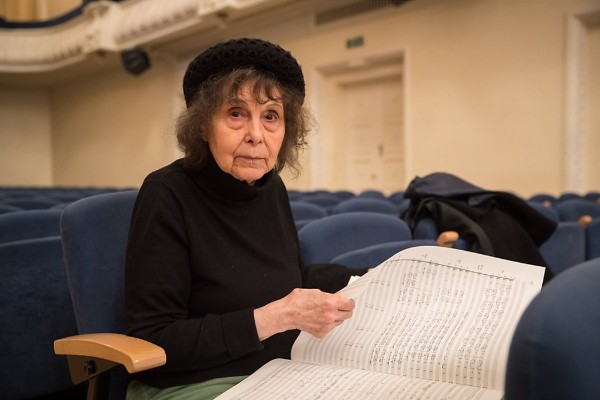
Sofia Gubaidulina
In the middle of the work, the soloist sets down their instrument to play a bass drum and flexatone (a percussion instrument). It can be read as commentary that, in his journey to becoming one of the most inspirational musicians of the 20th century, Rostropovich’s musicianship had expanded far beyond just playing the cello.
Conclusion
By the time that Gubaidulina wrote The Canticle of the Sun in 1997, Rostropovich had built an entire second career outside the Soviet Union, and outside the cello altogether.
He served as music director and conductor of the National Symphony Orchestra from 1977 to 1994, gave a historic impromptu performance at the fall of the Berlin Wall in 1989, and even became an ambassador for UNESCO.
All fourteen of these works chronicle the force of nature Mstislav Rostropovich became over decades: not only as a cellist, but as a musician, collaborator, and human being.
For more of the best in classical music, sign up for our E-Newsletter