The Italian composer Ignazio Albertini (ca. 1644–1685) exists in our libraries through only one publication, his Sonatinæ XII Violino Solo, published posthumously (1692) in Vienna and Frankfurt am Main by Philipp Fieveti. This was a one-off publication by Fieveti, who normally published in the sciences and politics. The discovery is complicated by the fact that very little of his music survives. A copy of the Sonatinae exists in Paris, and one in Russia, but no others are known. From catalogues of other collections, we know a copy once existed in the Kroměříž archive of Karl II of Liechtenstein-Castelkorn, but it is now missing.
Other works by Albertini include the Sonata hyllaris ex C for 10 players, listed in a 1699 inventory of Tovačov Castle, and a suite of seven pieces for 4 players. Both works are now considered lost, too.
The little we know about Albertini comes from some correspondence between Johann Heinrich Schmelzer, one of the most important figures at the Viennese court, and Karl II of Liechtenstein-Castelkorn, bishop of Olomouc and a renowned patron and collector of music. The letters suggest that Albertini committed an unspecified crime and was pardoned. Schmelzer’s letters show that Albertini had a considerable reputation in Vienna. Other sources indicate that he was a chamber musician to Eleanora of Mantua (Eleanora Gonzaga), widow of Holy Roman Emperor Ferdinand III, and remained in her employ until she died in 1686.
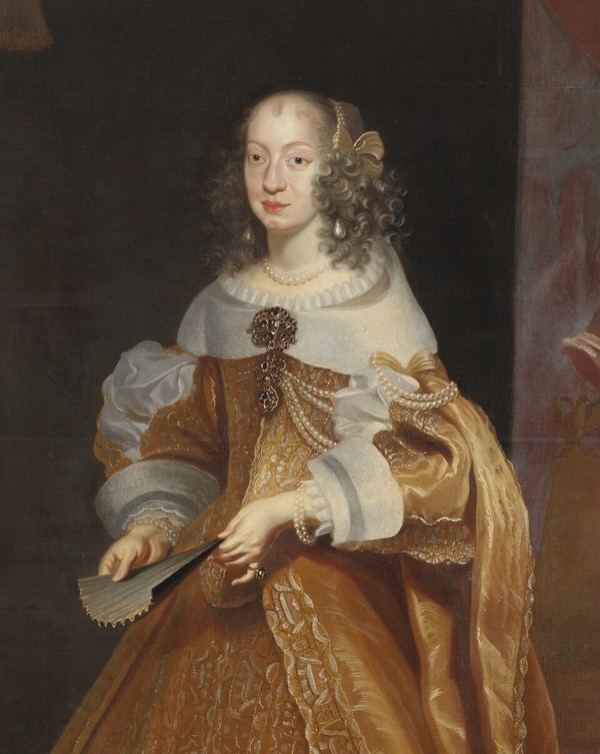
Frans Luycx: Eleanora Gonzaga, ca 1650 (National Portrait Gallery of Sweden)
He mentions Eleanora on the book’s title page, noting his position in her household.
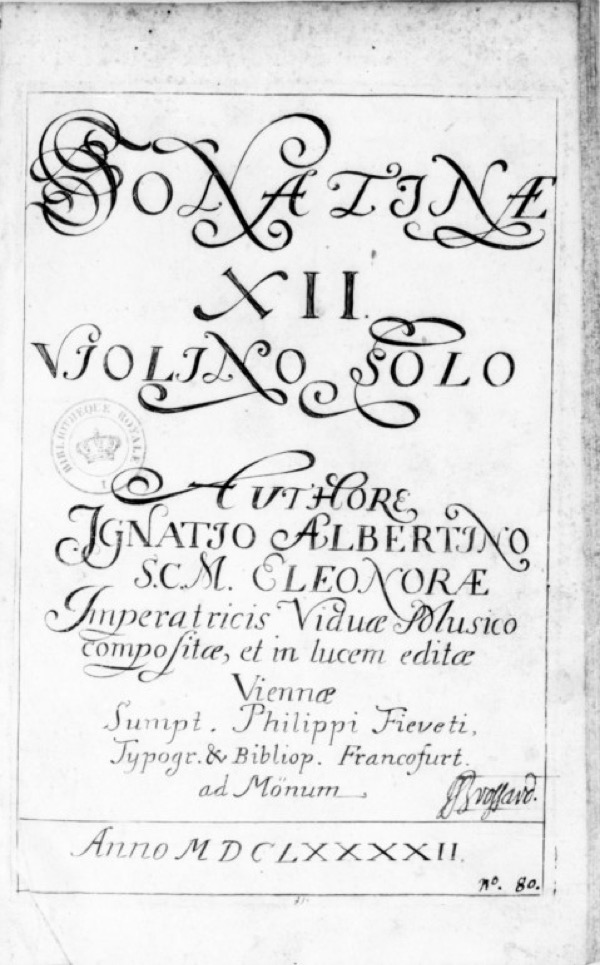
Title Page
If you note the bottom corner of the title page, you’ll see the name ‘Brossard’. This shows that this work was part of the collection of the French music theorist, composer, and collector, Sébastien de Brossard, who gave his entire library and its annotated catalogue to King Louis XV in 1724. This is now part of the Bibliothèque Nationale de France collection.
The music book is dedicated to Eleanora’s son, Holy Roman Emperor Leopold I (1640–1705). Leopold I started his reign in 1658 and was only succeeded in 1705 by Joseph I.
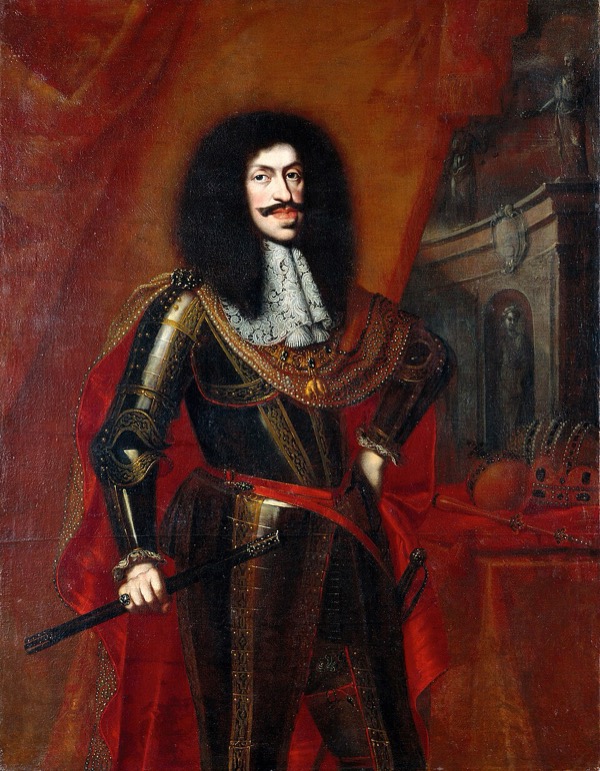
Benjamin Block: Leopold I, ca 1672 (Vienna: Kunsthistorisches Museum)
In his dedication to Leopold I, he mentions his mother, Eleonora Gonzaga, and offers many compliments to the Emperor, comparing him to Apollo (another famous musician). The dedication is signed with Albertini’s name, and it’s thought the edition was prepared before Albertini’s death in 1685 but published only posthumously. Albertini was stabbed to death in Vienna on 22 September 1685, ending a career that seemed to have been quite promising.
The great pity that we don’t know more about Albertini, or have more of his music, is that he was a very accomplished musician. Schmelzer’s 1671 correspondence mentions this and indicates that he was well known in Vienna.
Each sonata poses its own problems for the performer. Sonata No. 9, in its premiere recording here, follows the model of a passacaglia. Canon is an important part of the compositional process, and the balance between the demands of virtuosity and counterpoint is addressed very ably.
Ignazio Albertini: Violin Sonata No. 9
The group Rýnský (Czech for ‘of the Rhine’) brings these works to a modern level. They emphasise the often improvisatory nature of the writing and aim to create a living dialogue with the music through their tempo choices, articulation, and dynamic contrast—the basso continuo shifts from simple accompaniment to a co-conspirator with the violin.
Albertini: Violin Sonatas | Vojtěch Jakl & Rýnský — Album Trailer
The Czech-German ensemble Rýnský, with Vojtěch Jakl on baroque violin, Filip Hrubý on organ and harpsichord, and Michal Raitmajer on violine, is joined by Elias Conrad on theorbo. Discover a long-lost composer whose work rivals the best of Baroque Italian melodic style, mixed with German structure and counterpoint. We have singing cantabiles, extended passages in double stops, and running figures; in short, everything an accomplished performer needs to show off his mastery of the violin not only as a musical instrument but also as a vehicle for expression and drama.
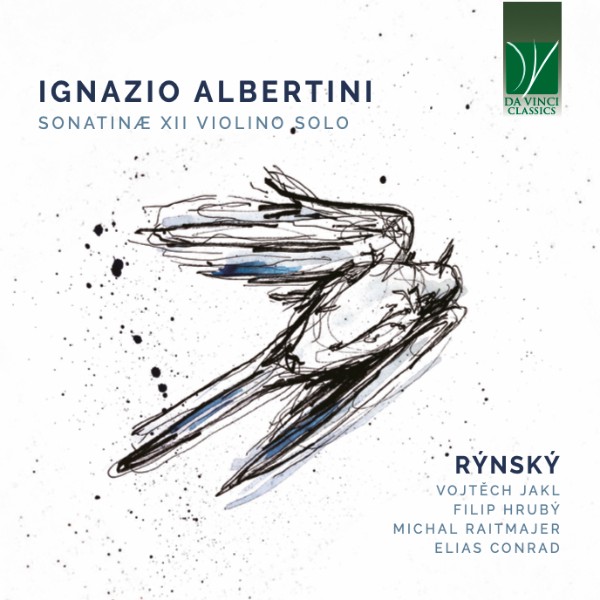
Albertini: Sonatinæ XII Violin Solo
Rýnský
Da Vinci Classics 746160920061
For more of the best in classical music, sign up for our E-Newsletter