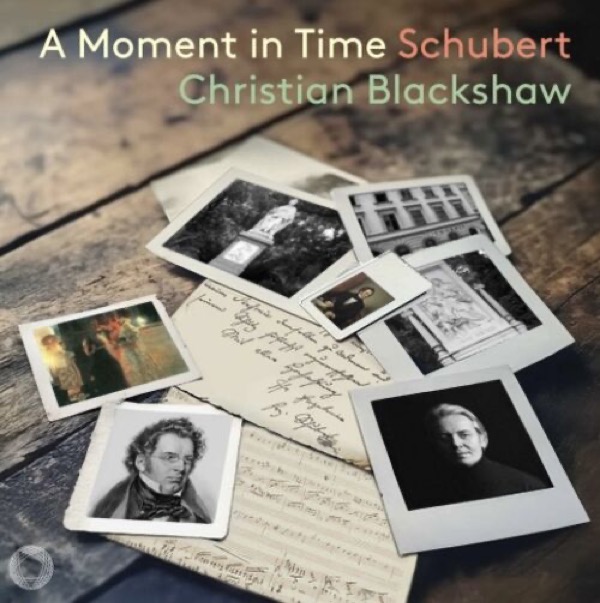
A Moment in Time is pianist Christian Blackshaw’s latest album, featuring Schubert‘s late masterworks. A disciple of Sir Clifford Curzon, Blackshaw was the first British pianist to study at the Leningrad Conservatoire during the Cold War. Between 2012 and 2013 at Wigmore Hall, he recorded a four-volume set of Mozart‘s Piano Sonatas, which Gramophone listed among the Top 50 Greatest Mozart Recordings.
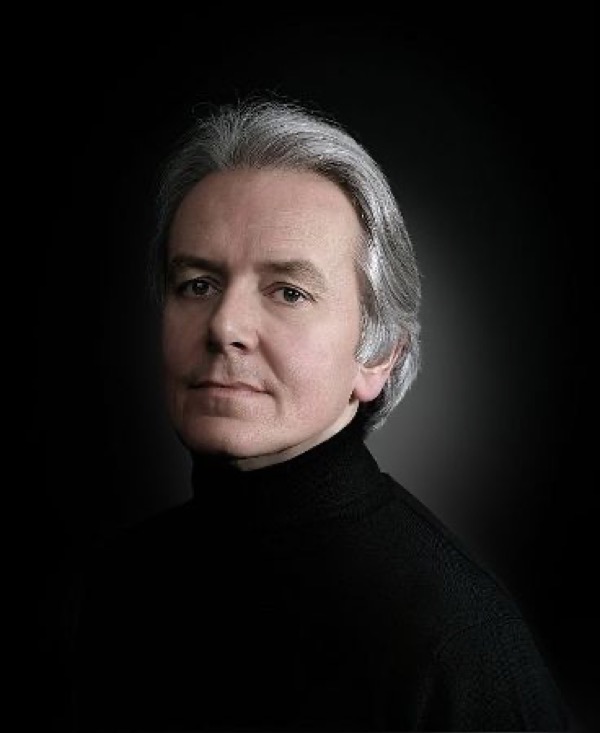
Christian Blackshaw (Photo by Herbie Knott)
Blackshaw has performed in China three years in a row, and each time his unassuming, enveloping tone touched me to the core. Last year, he brought Schubert’s Piano Sonata No. 19 in C Minor, D. 958. This year, he played Schubert’s very last Piano Sonata, in B-flat Major, D. 960, along with two other composers closest to his heart: Mozart and Schumann. Our conversation circled Schubert’s enigmatic nature: so ethereal, yet so eternal.
In the liner notes, you mentioned that you waited almost three decades before performing the B-flat Sonata, D. 960.
When you are a young pianist, and you hear about some of the greatest music ever written for the instrument—the last three Beethoven sonatas, some of Mozart and Haydn, Brahms‘s late pieces, Schumann’s Fantasy, Liszt‘s Sonata, and, of course, Schubert’s B-flat Sonata—you become aware of an enormous tradition.
The B-flat Sonata feels almost like a temple that you cannot enter yet. It is immensely sad, and it raises the question of whether it represents a final thought. Did Schubert really know that he was not long for this world? How can we be sure? That is the enigma of the sonata. It is such a pinnacle of piano art that I did not dare to play it in public. So I looked at it and put it away for probably 30 years.
But eventually you reach a point where you love the piece so much that you have to try somehow. Once you commit to playing it in public for the first time, each successive performance teaches you a little more about what the music is saying. There is also an element of triumph. I think of it as triumph over adversity because it ends on a hopeful note. Perhaps that can mean something to someone who is ill and wishes to become better.
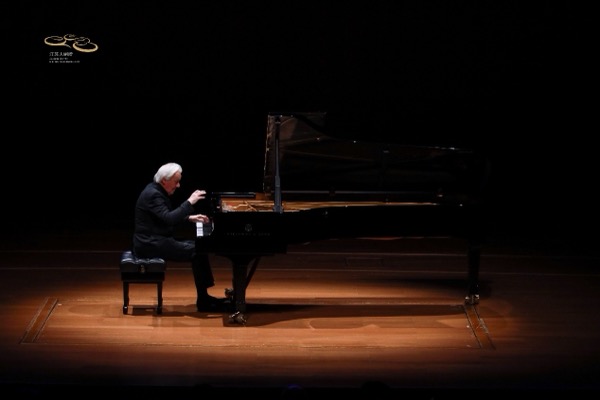
Christian Blackshaw performs in Nanjing in 2026 (Photo by Tu Jingqing)
Do all the musicological commentaries affect the way you approach it?
Certainly, when you are a young musician, you read about these great pieces and hear all the opinions of musicologists and writers. You absorb all that information. Then you look at the score and face a work of such towering genius. I think the sonata has a mystique all of its own, principally because it is Schubert’s final sonata. We don’t know whether he could have written more. But it remains his final one.
Franz Schubert: Piano Sonata No. 21 in B-Flat Major, D. 960: I. Molto moderato (Christian Blackshaw, piano)
Has the sound of the historical fortepiano ever influenced you?
I am interested in hearing artists who play on the fortepiano, but I have dedicated myself to modern instruments. Whether I have been subliminally informed by period performance, I really don’t know. My admiration for many pianists is simply unbounded. I revere pianists such as Clifford Curzon, Sviatoslav Richter, Emil Gilels, Vladimir Horowitz, Arthur Rubinstein, Claudio Arrau, Wilhelm Kempff, and Rudolf Serkin. When you reach a certain age, you remember the marvellous artists you listened to and the memories they created. I don’t know if it is necessarily historical performance that influences me.
How do you approach Schubert’s dynamic markings and accents?
I can only honestly say that I look at the score in detail. Phrasing is one thing, but the little accents you mentioned are a major question. It’s like being a fine chef making a good sauce in French cuisine: How much salt is too much? How much pepper is too little? The same goes for dynamic markings. They are open to interpretation. For some people, you might want a little more; for others, you might want less.
Schubert wrote certain things, such as triplets, and musicologists have offered different interpretations of those dotted signs. Ultimately, it is about what you seriously believe, without ego and without being dogmatic. I have to perform it in the way I hope the composer really wanted. He is telling me how something should be, and I try my best to respect his wishes.
Franz Schubert: Piano Sonata No. 21 in B-Flat Major, D. 960: III. Scherzo: Allegro vivace con delicatezza (Christian Blackshaw, piano)
Do you ever invent narratives to connect the contrasting themes?
Not really. It is all in the score. Remember what the great Maria Callas said: all you have to do is look and listen to what Bellini or Donizetti left us. The composer knows what to do. All you have to do is do what he says. You don’t necessarily need to make up stories. The narrative is already there in what the composer has left.
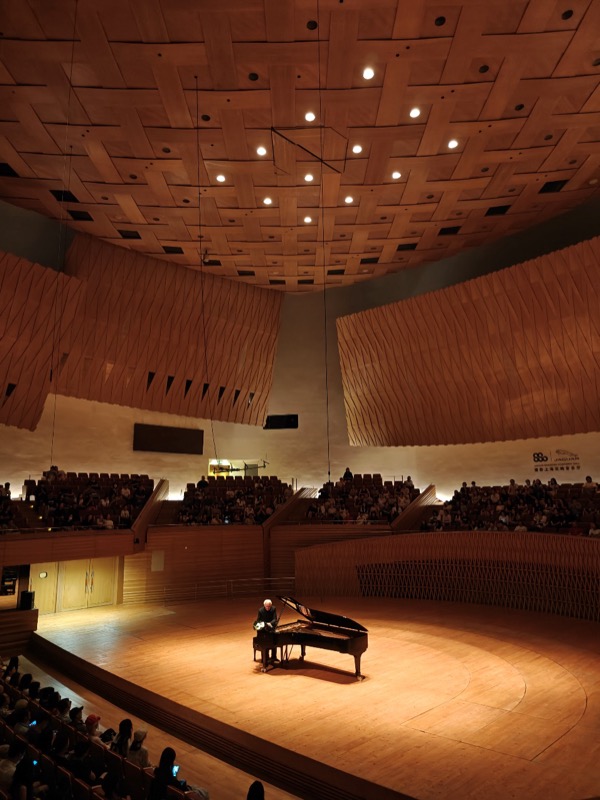
Christian Blackshaw bows to the Shanghai audience in 2026 (Photo by Armonico)
Have you waited long until you approach Schubert’s C minor Sonata, D. 958?
The C minor Sonata is, dare I say, more approachable because of its dramatic nature. Being such a contained work, it says everything about the conflict of fate, especially in the demonic nature of the last movement. To any pianist, the charging-forward, galloping nature of the last movement is incredibly appealing, in parallel with Schubert’s Death and the Maiden String Quartet. The appeal of the C minor Sonata is very strong because it tells you what it needs almost instantly. The B-flat Sonata, by contrast, is much more mercurial and difficult to comprehend.
Do you consider the fate motif in the first movement—the repeated chords—as Schubert’s way of responding to Beethoven?
Possibly. We know of Schubert’s reverence for Beethoven. There is that moving story of Schubert going to meet Beethoven but being unable to knock on the door. He revered this man and yet felt humbled by him. But Beethoven and Schubert have very distinct harmonic languages. Whether Schubert was influenced by Beethoven, who is to say? We can theorise, and there are certainly parallels. My only concern is trying my best to interpret, in my own way, what the composer wanted. It is there on the printed page.
Franz Schubert: 4 Impromptus, Op. 90, D. 899: No. 1 in C Minor (Christian Blackshaw, piano)
Can you talk about the second movement and your tempo choice?
The second movement takes us into something divine and spiritual that speaks to us. The movement’s inventiveness is extraordinary. I find it remarkable how, in the last variation, Schubert reflects on the opening material. There is also this wonderful middle voice, with the almost pizzicato left hand and the celestial soprano line with its mezzo-soprano theme. It is very difficult to achieve on the instrument.
I am very aware that when Schubert introduces the triplet motif in the Adagio, it cannot be too fast. This is dramatic; it is fateful. I want to maintain a continuous tempo. I think that is probably why I chose the slower tempo. I hope it is the right one. If I listened back to the performance and thought it was on the slow side—or too slow—I would be worried. It might be a little different in two months. That is why I don’t like the finality of recording. You always advance. You adapt.
Christian Blackshaw plays Viennese Piano Variations
What kind of dance do you think that is in the third movement?
The third movement is a Minuetto rather than Scherzo, unlike the A major and B-flat Sonatas. I find it such a mystery. It just goes away into nothing, as though it were a little melody disappearing through fog. A minuet is, of course, a courtly dance. Interestingly, Schubert went back to calling this movement a minuet. For some reason, he did not want a lively scherzo. Perhaps—and this is speculation—he was saving that energy for the last movement, which is a whirlwind, almost a moto perpetuo, in six-eight time, constantly oscillating between minor and major. He does that supremely well.
Did Schubert write a minuet and therefore call it a minuet? Or did he put that music down on paper and specifically name it Minuetto rather than Scherzo? That’s like asking which came first: the chicken or the egg. A scherzo literally means a joke, and here in D. 958, this is certainly not a joke. If you think of the scherzo of the A major Sonata, D. 959, that is quite light-hearted. The scherzo of the B-flat Sonata, D. 960, also seems quite light-hearted. But then the cloud comes in the trio; it becomes more mysterious and moves into the minor. Schubert was supreme at changing character. His illness may also have contributed to this.
Christian Blackshaw plays Schubert’s Piano Sonata in D Major, D850, Rondo
Sometimes Schubert’s musical materials almost seem unsure of themselves.
That is the fascination, isn’t it? The never-ending search for what he means when he moves from major to minor. It seems that such music is truly universal and can cross national borders. They convey every kind of human emotion, and perhaps that is what people need. Maybe people need it collectively as well, particularly after coming through the COVID period. It has been written about so much: the joy of being together again. That is why I think any concert—instrumental, chamber, or symphonic—is about coming together to revere the composer, to be with the performer, and simply to be together. It is a magical experience.
For more of the best in classical music, sign up for our E-Newsletter
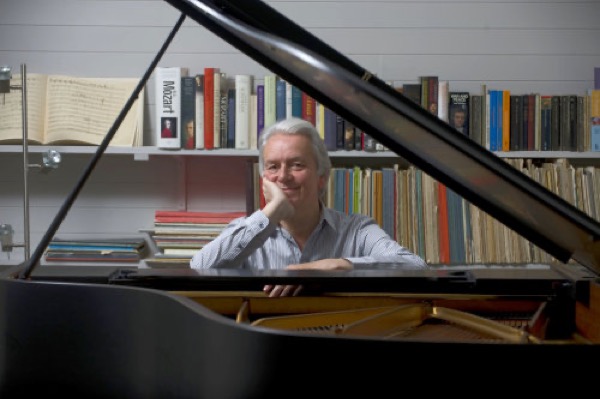
Christian Blackshaw (Photo by Si Barber)