Few halls would be ambitious enough to fill an entire Saturday with three consecutive concerts of György Kurtág’s piano music, but Wigmore Hall does just that, presenting three “Breaths” with the splendid Pierre-Laurent Aimard to celebrate the centenary of this extraordinary living legend.
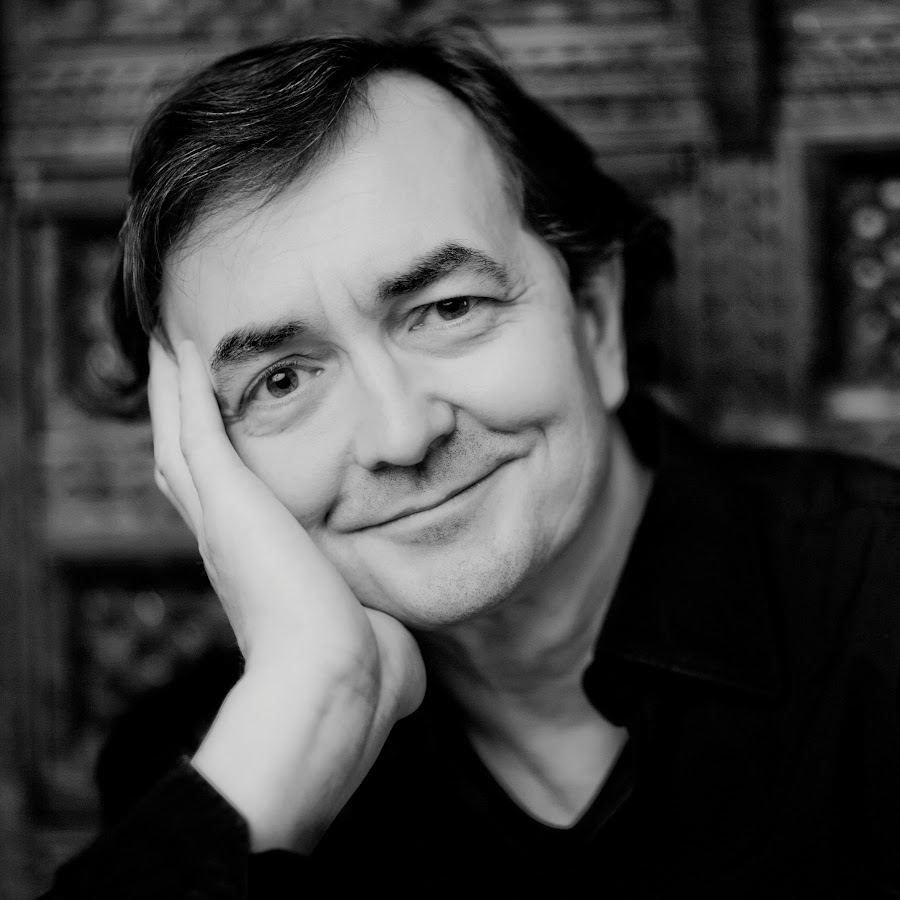
Pierre-Laurent Aimard
From 11:30 in the morning until after 22:00, largely following the chronology of composition, Aimard leads the audience through some six decades of Kurtág’s piano writing, in a programme amounting to some seven hours of music. At its heart are works from the eleven volumes of Játékok (Games), supplemented by other early piano pieces performed by his student Lorenzo Soulès. These miniatures are interspersed with more traditional references: Kurtág’s arrangements (mostly made for himself and his wife Márta) of Bach cantatas for piano duet, alongside Beethoven bagatelles and the opening and final movements of Schumann’s Gesänge der Frühe.
Rooted in Bartók, Kurtág’s miniatures may last from four or five minutes to barely a few dozen seconds, but almost every piece has its own individuality. To perform so many of these “character pieces” requires a performer with genuine character; Aimard is clearly one of the great champions of Kurtág’s music.
In the early volumes of Játékok, Kurtág devotes considerable energy to experimenting with sonority—particularly the expressive possibilities of isolated notes and unconventional playing techniques. Many of these “early” pieces (though Kurtág was already in his forties) were written for children, like Bartók’s Mikrokosmos, and they have a childlike theatricality. Unottan (Bored) allows the ungrown child to wander around the piano and play casually as they pass; Butáskodjunk együtt (Let’s Be Silly Together) encourages wild glissandi; and Hommage à Tchaikovsky explores the sheer force of fortissimo through the slapping of the keys with the palms.
Hommage à Tchaikovsky
Aimard captures their humour and wit vividly (something far less apparent on recordings), but even more impressive is his extraordinary finger technique, which reveals a seemingly inexhaustible spectrum of sound: at one moment thunderous in force, at another barely more substantial than a shadow. Even in simple pieces such as the Virág az ember… (Flowers We Are…) series and Scraps of a Colinda Melody – Faintly Recollected (Hommage à Farkas Ferenc), the latter played with only the two index fingers, he yields a myriad of colours. In the first concert, Aimard is joined by his former student Lorenzo Soulès for the piano duets, while Soulès also performs solo including some of Kurtág’s earliest piano pieces. Soulès displays an equal familiarity with and passion for Kurtág’s writing, with playing distinguished by clarity, intelligence and control.
György Kurtág: Játékok (Games), Book 5: Preludium es koral (Prelude and Chorale) (György and Márta Kurtág, piano)
György Kurtág: Játékok (Games), Book 3: Hommage a Farkas Ferenc 2 (foszlanyok egy kolinda emlekkepebol) (Scraps of a colinda melody – faintly recollected) (György and Márta Kurtág, piano)
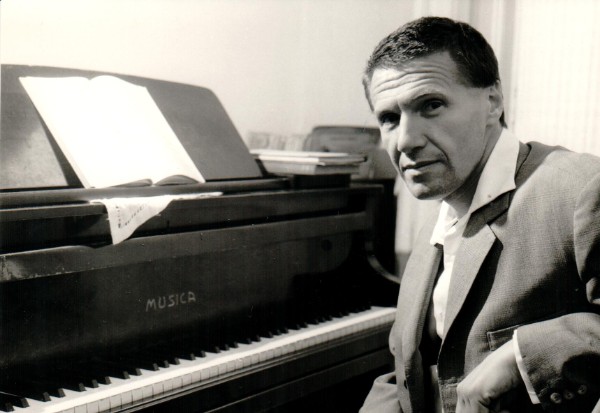
György Kurtág
As the music progresses through the second and third concerts, and therefore into Kurtág’s later years, his writing seems increasingly beyond the rigidity of “form”. The transgressive devices of the earlier pieces, which test the boundaries of conventional pianistic technique, grow less prominent, while the organisation of notes appears to return towards a more traditional notion of “expression”. There is much to admire and enjoy in the harmonic and textural tension of Kurtág’s writing, especially when it is juxtaposed with Beethoven’s Bagatelles. Aimard’s playing brings out the radical side of Beethoven, revealing how he stretches and blurs classical forms in ways that may anticipate Kurtág; at the same time, Kurtág’s concise poetry and beauty of sound find clear points of reference in Beethoven’s world.
György Kurtág: Játékok (Games), Book 3: Harmonika (Harmonica), “Hommage a Borsody Laszlo” (Víkingur Ólafsson, piano)
György Kurtág: Játékok (Games), Book 5: Aus der Ferne II (Voice in the Distance II) (Hommage a Alfred Schlee 85) (Víkingur Ólafsson, piano)
For the final concert, Aimard specially brings in an upright piano fitted with a muting felt for some of the composer’s most intimate works (although the felt does not always seem to respond evenly to forte playing on certain parts of the keyboard). Kurtág and his wife favoured playing on uprights, and left a number of recordings made on such instruments. Here, the piano opens up an entirely different sound world, its intimate, almost domestic character bringing us closer to the atmosphere of Kurtág’s later music. These “Games” resemble what Kurtág elsewhere calls “Messages” (Üzenetek): miniature addressed to close friends and, importantly, to his lifelong partner Márta. Aimard chooses to conclude the concert with Márta’s Ligature, written in memory of Márta in 2020. Played once more on the Yamaha grand, it nevertheless preserves the same intimacy through Aimard’s carefully controlled touch. At the end, Kurtág returns to the utter naïveté of a C-major chord, carrying an emotional force all the more sophisticated in its simple self.
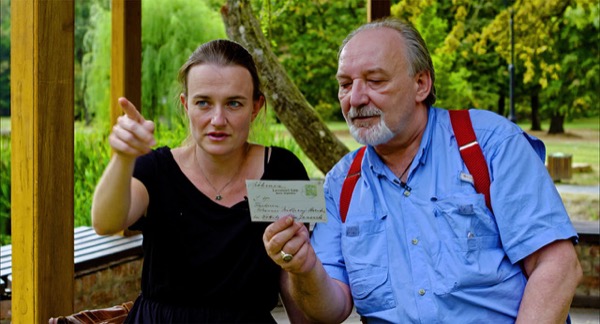
The Kurtag couple playing
A musical survey of this ambition, and playing of such a consistently high level, deserves greater care in its presentation. With so many brief pieces following one another in rapid succession, audience can easily lose their bearings if they do not know Kurtág’s often suggestive titles. Projecting the titles onto the walls, as the hall did for Nicolas Hodges’s performance of Messiaen’s Vingt Regards sur l’Enfant-Jésus in 2024, would have provided an effective point of orientation. Robert Barry’s programme note is informative on Kurtág’s life and background, but offers relatively little detail on the individual works themselves, leaving the audience unguided through such a dense sequence of miniatures. If these wonderful music will be played and heard again – though I would doubt – a bit more extra information would make Kurtág’s world better understood.
For more of the best in classical music, sign up for our E-Newsletter