
Some of the most celebrated composers in classical music history lived and worked with significant disabilities.
From physical injuries to chronic illness to mental health struggles, these composers created enduring work under circumstances that would have ended many careers.
Here are four of their stories – along with some of the work they created.
Frederick Delius
Syphilis
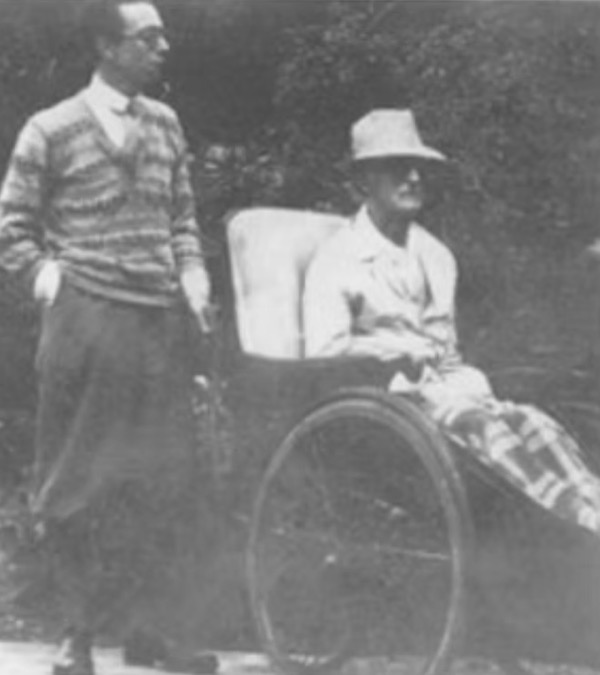
Delius and Eric Fenby
Frederick Delius was born in 1862 in Yorkshire.
As a young man, he spent time in Florida overseeing his father’s orange grove. He later returned to Europe to study music, settling in Paris in 1888.
Delius’s biographer Diana McVeagh has written that during his time there, Delius garnered a reputation as “attractive, warm-hearted, spontaneous, and amorous.” He likely became infected with syphilis around 1890.
In September 1903, he married German painter Jelka Rosen, who studied at the Académie Colarossi in Paris. Her family wealth meant that he could focus solely on composition.
A few years later, he began noticing an uptick in syphilis symptoms, including muscle weakness and loss of reflexes. He was eventually forced to enter a sanitarium in Dresden.
Delius’s Piano Concerto, 1906
Over the next fifteen years, his condition worsened. By 1922, he was using two sticks to help him walk, and by 1925, he was using a wheelchair and losing his sight. He also began suffering from severe abdominal pain and lesions.
Jelka Rosen gave up her career to serve as his caretaker, while Delius’s friends and fans provided discreet financial aid to the struggling composer.
Delius’s Violin Sonata No. 3
A young British organist, singer, and composer named Eric Fenby also joined the household as his helper.
As Delius deteriorated, Fenby helped write out Delius’s compositions by hand; musicologist Christopher Palmer once referred to their work together as “an achievement without parallel in music.”
Delius fell into a coma and died in June 1934.
Syphilis took his sight, his mobility, and eventually his life – but the cello concerto, the third violin sonata, and the Songs of Farewell all came after his diagnosis and the subsequent accommodations made to ensure he could keep composing.
Learn more about his final illness and his death here: https://interlude.hk/on-this-day-10-june-frederick-delius-died/.
William Billings
Limb length discrepancy, monocular vision
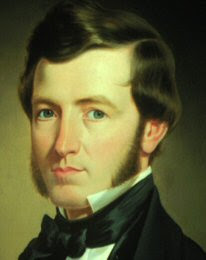
William Billings © boropulse.com
Performance of three songs by William Billings
William Billings was born in 1746 in Boston, Massachusetts. He had sight in only one eye, as well as legs that were uneven in length, which affected his gait.
After Billings’s father died when he was fourteen, he was unable to continue his formal education and was apprenticed as a tanner (someone who makes animal skins into leather).
Ultimately, however, he decided to make a career in music, and by the late 1760s, he had become one of the first professional composers in America.
In 1770, he published a book of his compositions called the New England Psalm-Singer, which featured over 120 pieces.
After his death, an acquaintance of Billings’s named Reverend William Bentley wrote in his diary:
“He was a singular man, of moderate size, short of one leg, with one eye…& with an uncommon negligence of person. Still he spake & sung & thought as a man above the common abilities.”
Unfortunately, American copyright law was in its infancy, and composers rarely saw financial returns from publishing their compositions – including Billings. He died in Boston in poverty and was buried in an unmarked grave.
Friedrich Kuhlau
Monocular vision
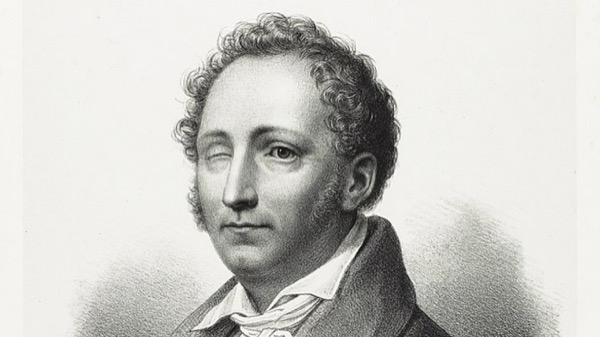
Friedrich Kuhlau
Friedrich Kuhlau was born in Lower Saxony in 1786. He lost vision in his right eye as a seven-year-old boy when he was sent out at night to draw water from the town well, fell on the ice, and injured himself.
In 1802, he moved to Hamburg to study music, and in 1804, he began appearing as a concert pianist.
Kuhlau’s Piano Sonatina in C Major, Movement 1
In 1810, to avoid conscription in the Napoleonic Wars, he relocated to Copenhagen, Denmark, where he would remain for the rest of his career.
He made his living there as a composer and piano teacher, becoming famous for his operas The Robber’s Castle and Elverhøj.
In the 1820s, he visited Vienna and befriended Beethoven. He also became especially famous for his flute music, earning the nickname “the Beethoven of the flute” – even though he didn’t play the instrument.
Robert Schumann
Potential bipolar disorder, potential focal dystonia
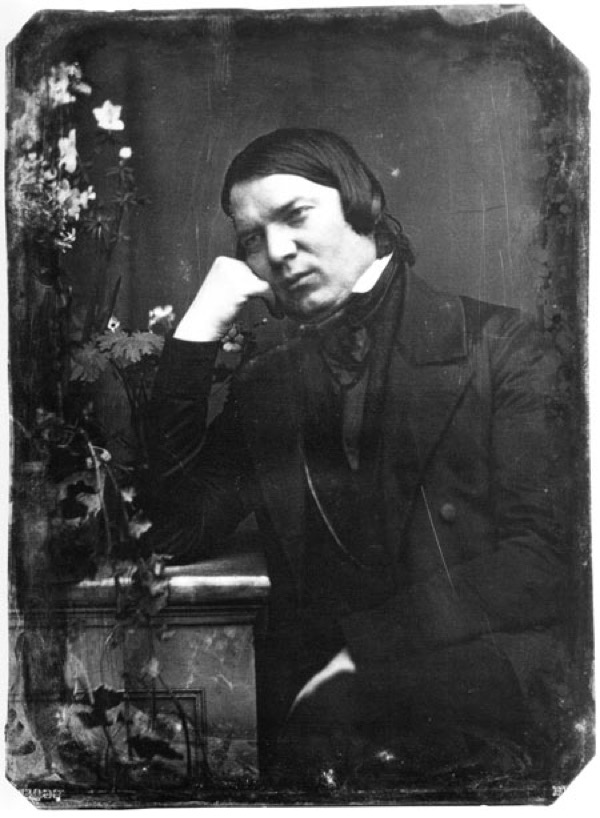
Robert Schumann, 1850
When Robert Schumann was studying piano as a young man, he noticed that the middle finger of his right hand was noticeably weaker than the other fingers. He tried exercising the digit with a finger-stretching device – but only injured himself.
His fine motor skills would never return, and he had to give up on his dreams of becoming a concert pianist.
However, Schumann’s most consequential health struggle was a mental one. Although it is impossible to diagnose people without an exam definitively, many modern-day experts believe that Schumann may have had bipolar disorder, once called manic-depressive disorder.
Throughout his creative life, Schumann endured times of frenetic activity and hyperfocus, followed by periods of depression.
After 1850, he also began experiencing delusions, such as a belief he was being poisoned.
A mini documentary on Schumann’s mental health
In February 1854, he jumped into the Rhine River in an attempt to die by suicide. The attempt was unsuccessful, and he and his family, in consultation with his doctors, decided he should go to a facility to address his mental health.
While there, his condition improved temporarily. He was able to write letters to loved ones and to play the piano.
But the improvement didn’t last, and by 1856, he was suffering from screaming fits and convulsions.
When it became clear that his condition was terminal, his wife Clara was allowed to visit him for the first time in two years. He died that summer without ever regaining his health.
We wrote about his final illness and death here: https://interlude.hk/on-this-day-29-july-robert-schumann-died/.
Conclusion
Delius composed masterworks from a wheelchair. Billings started building American music from scratch with one eye and no formal education. Kuhlau fled war and built a new life and career in a foreign country. Schumann wrote some of the most emotionally searching music of the nineteenth century while battling an illness that would eventually claim his life.
When learning about these composers’ lives and accomplishments, and enjoying their incredible music, it’s important – and fascinating – to acknowledge how disability shaped each of their lives and careers.
For more of the best in classical music, sign up for our E-Newsletter







The narrative about Schumann doesn’t mention neurosyphilis – the most likely explanation for his death at the age of 46, which occurred 25 years after being infected with syphilis at the age of around 21 (on his own testimony to the physician who supervised his “treatment” in the asylum where he died). Whether he had bipolar disorder is uncertain; in any event, this, by itself is not a fatal disease, unlike neurosyphilis.
Mr Heyworth has made the remarks I thought were needed about Schumann contracting syphilis in his youth as poor Schubert before him. It is remarkable that he had so many children with her and she didn’t acquire the illness.
I agree with Mr Heyworth that the article omits to mention that Schumann had acquired syphilis in his early youth. His later pathology is related to the last stadion of the illness.
I have always been surprised that they had eight children and she didn’t have the illness herself.
I always think we are all bipolar: sometimes happy, sometimes depressed and sad. Of course there are pathological exagerations. I don’t discard the possibility that many artists from the Romantic period in music and literature could be called Bipolar: the expression of their feelings is rather dramatic.