Few composers have lived a life as dramatic as Sergei Rachmaninoff.
Born into Russian aristocracy, he survived professional humiliation, revolution, and exile – and still managed to produce some of the most beloved music ever written.
Whether you know him from his thundering piano concertos, his brooding preludes, or the pop songs that quietly borrowed from him, there is always more to discover.
Here are thirteen Rachmaninoff facts that go beyond the music.
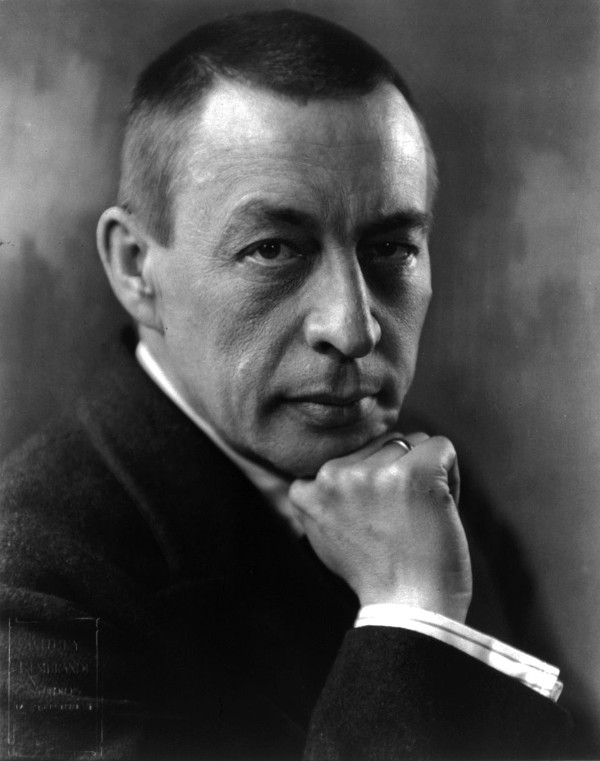
Sergei Rachmaninoff, ca 1921 (Library of Congress, cph.3a40575)
1. His father gambled away the family fortune.
Sergei Rachmaninoff was born into a musical, aristocratic Russian family. Both of his parents were amateur pianists, and his grandfather had taken lessons from composer John Field.
His father, Vasily, had served in the Russian army and hoped that his son could follow in his footsteps.
However, Vasily’s reckless financial ventures and penchant for gambling forced him to sell off the family estates one by one. (Those estates had been a part of Rachmaninoff’s mother’s dowry.)
In the end, he had no money to send his son to military training, and Vasily ended up abandoning the family entirely.
We wrote more about his upbringing here – and who helped to raise Sergei after Vasily left the house: https://interlude.hk/on-this-day-1-april-sergei-rachmaninoff-was-born/.
2. His hands could span 12 notes.
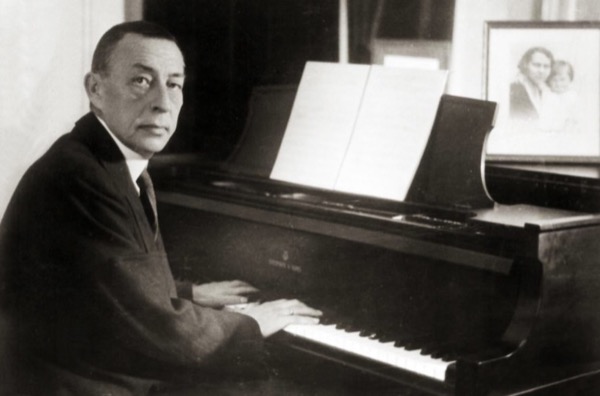
Sergei Rachmaninoff
Rachmaninoff’s hands were legendarily large: he could reach across an octave and a half on the keyboard – i.e., a thirteenth.
This wasn’t just a parlour trick. It shaped the way he composed, writing passages that are difficult for pianists with average hands to manage.
3. A hypnotist helped him recover from a career disaster.
Rachmaninoff – Symphony No. 1
Critics savaged Rachmaninoff’s Symphony No. 1 upon its premiere in 1897.
Composer and critic César Cui wrote one particularly scathing review, claiming that Rachmaninoff’s symphony would delight the inhabitants of Hell.
After this disaster, Rachmaninoff fell into a depression so severe he barely composed for three years. Later he wrote that during this time he was “like a man who had suffered a stroke and for a long time had lost the use of his head and hands.” To support himself, he taught piano.
He began recovering his compositional abilities only after he started working with a family friend, Nikolai Dahl, a physician who specialised in hypnotism.
4. The conductor at that infamous premiere may have been drunk.
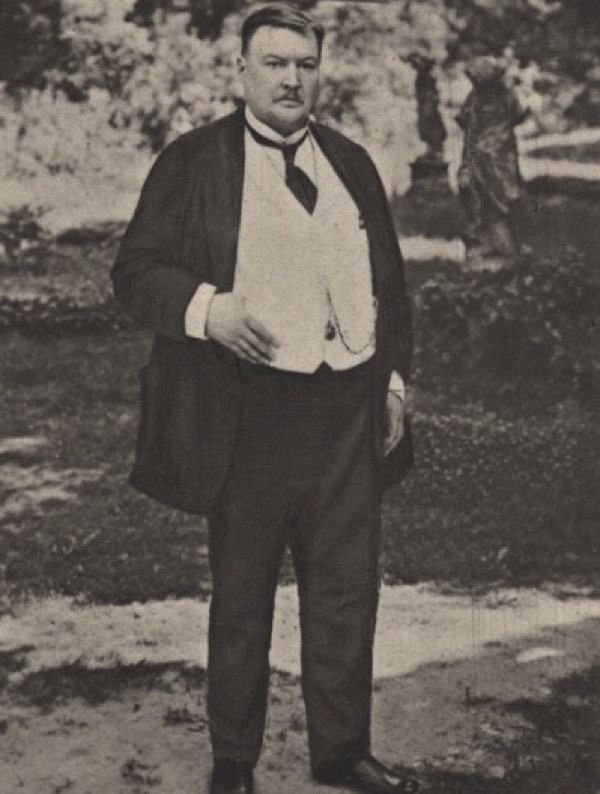
Alexander Glazunov at Bertramka, 1928
The disastrous premiere of his first symphony wasn’t entirely Rachmaninoff’s fault. Conductor Alexander Glazunov struggled with alcoholism and was likely intoxicated during the performance – a fact that lends a whole other dimension to our understanding of the failure of the first symphony.
5. Rachmaninoff married his first cousin.
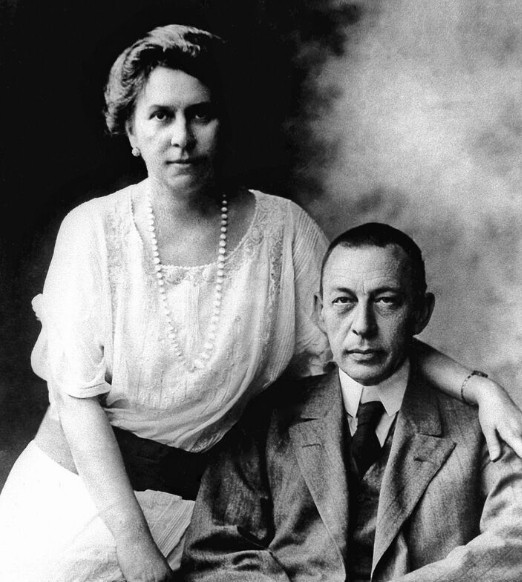
Sergei Rachmaninoff and Natalia Satina
In 1902, Rachmaninoff announced he was marrying Natalia Satina – the daughter of his aunt.
The problem: Russian law forbade first cousins from marrying. The couple had to obtain special permission to wed.
To help avoid some of the requirements of marriage in an Orthodox church, they held the ceremony in an Army barracks.
They may have been an unlikely pair, but the marriage was happy and lasted for the rest of his life.
We wrote about their unusual love story and wedding here: https://interlude.hk/marriage-cousinssergey-rachmaninoff-natalya-satina/.
6. His most famous piece haunted him.
Rachmaninoff’s Prelude in C-sharp minor
Rachmaninoff’s Prelude in C-sharp minor was composed in a flash of inspiration when he was just nineteen years old.
He later remembered, “One day the Prelude simply came, and I put it down. It came with such force that I could not resist it.”
For Rachmaninoff, this Prelude became both a blessing and a curse. It became so popular that audiences clamoured for it at all his concerts, and the composer eventually grew tired of his early hit.
In fact, he confessed in 1912, “Many, many times I wish I had never written it.”
7. Eric Carmen made a pop hit out of his second piano concerto.
“All By Myself”
The melody of Eric Carmen’s 1975 hit power ballad “All By Myself” is based on a theme from the slow movement of Rachmaninoff’s Piano Concerto No. 2.
Carmen initially – and mistakenly – believed the music was in the public domain. It wasn’t, and he eventually paid the estate for having used it.
Powerhouses like Frank Sinatra and Celine Dion have since recorded the song.
We wrote about Rachmaninoff’s star turn in pop music here: https://interlude.hk/sergei-rachmaninoff-power-good-tune/
8. He turned down conducting gigs at major American orchestras – repeatedly.
After the Russian Revolution, Rachmaninoff settled in New York.
He was offered the music directorship of the Cincinnati Symphony Orchestra, as well as 110 concerts to be played over the course of thirty weeks with the Boston Symphony Orchestra.
He declined both opportunities, preferring to focus on performing as a pianist instead.
9. He was impressed by the Hollywood Bowl.
Horowitz playing Rachmaninoff’s Piano Concerto No. 3
Rachmaninoff – a composer we so often associate with moody quintessentially Russian music – lived his final years in Beverly Hills.
While there, he kept up a close friendship with his colleague, pianist Vladimir Horowitz.
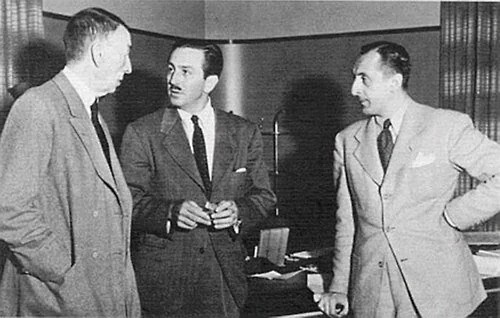
Walt Disney, middle, with Rachmaninoff and Vladimir Horowitz in 1942 © reddit.com
In August 1942, Rachmaninoff attended a performance of Horowitz playing his third concerto at the Hollywood Bowl. He was astonished by what he heard.
“This is the way I always dreamed my concerto should be played, but I never expected to hear it that way on Earth,” he told Horowitz afterwards.
Of the Hollywood Bowl, he once remarked, “You can hear everything in this Bowl of yours.”
10. He was known as “the six-foot scowl.”
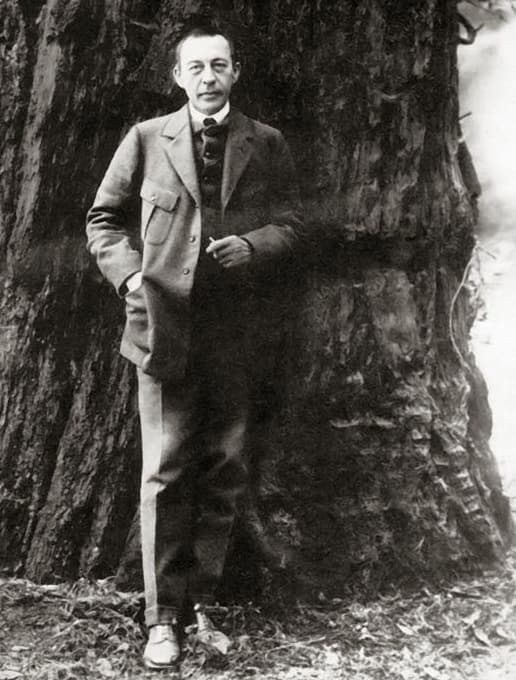
Rachmaninoff in California, 1919
Tall and severe-looking, Rachmaninoff rarely smiled in photographs.
Composer Igor Stravinsky, who was not a fan of Rachmaninoff, dubbed him “the six-foot scowl.”
The nickname followed him through his American years. Friends described him differently – sociable, warm, funny – but the camera caught something else.
11. He loved fast cars, speedboats, and ice cream sodas.
For all his brooding public image, Rachmaninoff had a mischievous streak.
He was passionate about fast automobiles, kept a speedboat (in fact, he was famous for zipping around Lake Lucerne in it), and developed a particular fondness for New York ice cream sodas after he emigrated to America.
He also could appreciate a good crème de menthe.
Find out which of his major works he dubbed the Crème de Menthe Variations: https://interlude.hk/creme-de-menthe-variationssergei-rachmaninoff-rhapsody-on-a-theme-of-paganini/.
12. He only completed a handful of major works after leaving Russia.
His last 25 years were spent primarily performing rather than composing – partly by financial necessity, partly by physical and emotional exhaustion.
That said, two of his best-known works date from late in his career. They include his Rhapsody on a Theme of Paganini (composed in Switzerland in the summer of 1934) and the Symphonic Dances (composed in the United States in 1940).
13. He became an American citizen just weeks before he died.
Rachmaninoff was naturalised as a US citizen in 1943.
He died of melanoma on March 28 of that year – just six weeks after his citizenship was granted, and four days before what would have been his 70th birthday.
Conclusion
Rachmaninoff’s life was full of contradictions. He was a brooding public figure who was warm in private; a Russian soul who spent his final years in Beverly Hills; a prolific composer in his youth who fell nearly silent in exile.
He became an American citizen just weeks before he died in 1943, never having returned to the country that made him. It was a dramatic life, filled with dramatic music, right up to the very end.
For more of the best in classical music, sign up for our E-Newsletter