Why is it that some musical works remain forever, while others slowly fade away? When we look back at the repertoire of Western classical music, what is most striking is how a relatively small selection of pieces has passed the test of time and continues to live as brightly — if not more brightly — than when first composed. Vivaldi, Bach, Pachelbel, Mozart, Beethoven, Tchaikovsky, Debussy, and more recent figures such as Pärt and Einaudi all share the rare privilege of having their music regularly performed, recorded and loved regardless of its age.
What seems certain is that this kind of longevity is neither generational nor tied to a specific historical moment. Time after time, generation after generation, even trend after trend, these works remain. They survive changing tastes, new technologies, shifting audiences and evolving cultural habits. Few artistic creations enjoy such endurance.
Why does this happen? There may be many explanations, but two stand out. The first is that simplicity often prevails over complexity: human connection is more readily made through clear, direct language than through elaborate and overly intellectual systems. The second is that emotional works create stronger memories than purely cerebral ones. Human beings may admire intellectual brilliance, but they tend to remember what they feel.
Many works that have endured carry a universal quality, and this often comes from the elegance of their construction. Consider Bach’s Prelude No. 1 in C major from The Well-Tempered Clavier. Its ingredients are remarkably modest: a constant rhythmic pulse, slow harmonic movement, and a hidden melodic line emerging through broken chords. Yet from these simple materials Bach creates something timeless. Out of the 24 preludes and fugues, it is perhaps this one that has entered public consciousness most completely. It is serene, balanced and instantly recognisable.
J.S. Bach – Prelude in C Major
A more modern example is Pärt’s Spiegel im Spiegel. Once again, simplicity is central: measured pacing, clear repetition, spacious harmony, and a melodic line that unfolds with patience and restraint. The tintinnabuli language gives the work a unique identity, yet it remains accessible to any listener. It asks for no specialist knowledge, only openness. Like much of Pärt’s music, it carries a devotional quality that speaks quietly but deeply.
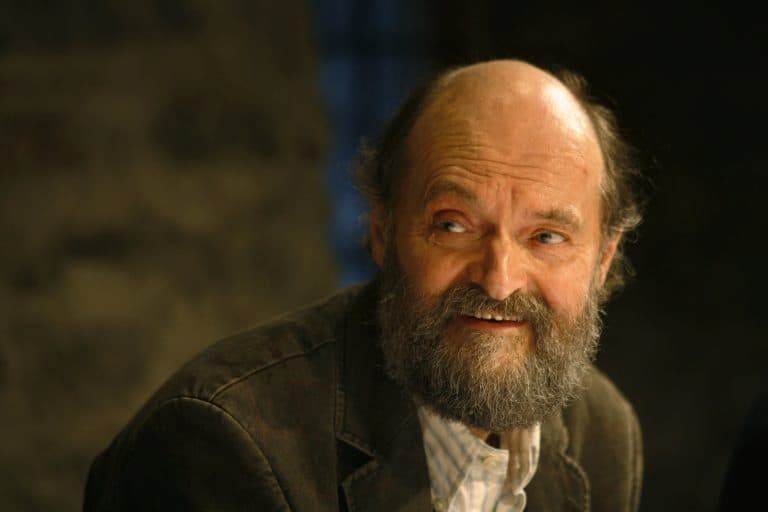
Arvo Pärt
This is often misunderstood. Simplicity does not mean lack of craft. On the contrary, true simplicity is usually the result of refinement — the removal of all that is unnecessary until only what matters remains.
Arvo Pärt – Spiegel im Spiegel
The second explanation lies in emotion. In simpler terms, the heart often wins over the brain. Many works that endure are those that connect immediately with listeners through feeling rather than analysis. They may contain great structural intelligence, but what first reaches the audience is emotion.
Part of Einaudi’s widespread success, for instance, lies in his ability to write music that is evocative and memory-driven. His works are built around clear melodic lines, recurring motifs and gradual variation. Though often criticised for their simplicity, they reveal an understanding of how melody can linger in the mind and trigger personal associations. People return to them because they remember how they felt when hearing them.
Mozart offers another perfect example. The slow movement of his Piano Concerto No. 21, or the Andante from his Piano Concerto No. 23, demonstrates how instrumental music can express tenderness, longing and grace without a single word. The famous Clarinet Concerto, particularly its Adagio, reaches listeners through pure emotional transparency. There is no narrative imposed, no text to explain the feeling — only sound speaking directly to the inner life of the listener. This may explain why Mozart remains so present. Beneath the elegance and refinement of his writing lies a rare emotional clarity.
Wolfgang Amadeus Mozart – Piano Concerto No. 21 – Andante
Another revealing point is the enduring power of instrumental music itself. Unlike words, music is not limited by language. It can cross borders instantly. While many have tried to create universal spoken languages, music has long achieved what language struggles to do: it can be understood and felt by people of entirely different backgrounds.
A melody by Mozart, a prelude by Bach or a miniature by Debussy can move listeners who share no common tongue. Instrumental music allows each person to project their own memories, meanings and emotions into the experience. That openness may be one of the secrets of its longevity.
If specific works endure, their composers often endure with them. Vivaldi and Bach are among the earliest great names in the long history of Western classical music, yet they remain firmly at the forefront. The same can be said of Mozart and Beethoven, whose music still feels central rather than historical.
Interestingly, after the Romantic era, the number of universally remembered works appears to narrow. As music became more specialised, more experimental, or more intellectually driven, fewer pieces entered common memory. Yet whenever melody and emotional narrative return, permanence often follows. Satie’s Gymnopédies are a clear example: simple, direct, atmospheric works that continue to resonate far beyond their time.
Why do some musical works stay forever? Perhaps because they combine what human beings seek most deeply: clarity, beauty, emotion and openness. They do not demand to be admired from a distance; they invite us in. They speak simply without being simplistic, and feel deeply without sentimentality.
Trends pass, fashions shift, and styles evolve. Yet certain works continue to breathe through centuries because they remind us of something constant within ourselves. In the end, the music that remains is often the music that understands human nature best.
For more of the best in classical music, sign up for our E-Newsletter