Commended by the French government in 2020 for her significant contributions to the arts, the Franco-Italian mezzo-soprano Lea Desandre has established herself as a leading voice in early-music performance.
Desandre started her career as a ballet dancer, and to celebrate her birthday on 17 July, let us highlight her journey towards finding her artistic identity through singing.

Lea Desandre (photo by James Bort)
Lea Desandre sings Purcell: Dido and Aeneas, “When I am laid” (Dido’s Lament)
Lea Desandre was born on 17 July 1993 in Paris to French and Italian parents, both of whom worked in the film industry. Her grandmother was a chorister at the Grand Théâtre in Bordeaux, and Desandre started training in classical ballet as a child.
In fact, she would continue dancing until age 19, although by then she had already decided to pursue music. Desandre often describes dance as her first artistic language, and she credits it with instilling a strong work ethic and high standards in herself.
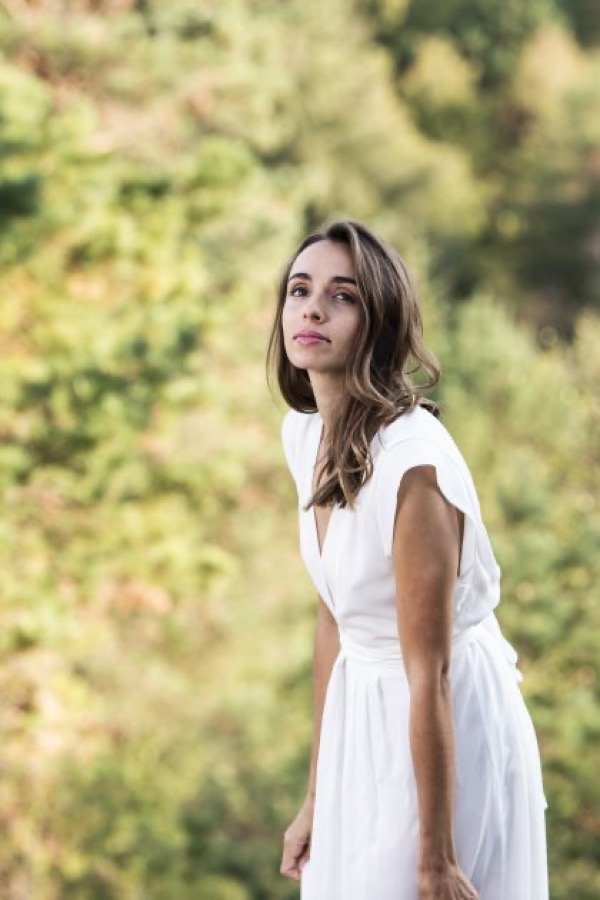
Lea Desandre (photo by Julien Benhamou)
At age 12, her middle school music teacher suggested she join the Paris Opera Children’s Choir. Despite initial rehearsals that she remembers as difficult, especially because she couldn’t yet read music, she was captivated by the world of sound.
Lea Desandre sings Handel: The Triumph of Time and Truth, “Guardian Angels, Oh, Protect me”
As a young chorister, Desandre participated in ensemble performances at the Opéra, and she became obsessed with the world of opera. “Thanks to my youth subscriptions,” she explains, “I went to every venue in Paris to immerse myself in music.”
She attended as many as three opera productions a week, being aware “that I was atypical compared to other teenagers; I was in my own little world.” Natalie Dessay became her first role model, and she began her studies with Sara Mingardo.
Her other teachers included Véronique Gens, Vivica Genaux, and Valérie Guillorit in Paris and Venice, with training emphasising the stylistic nuances of early music, including ornamentation and phrasing.
Lea Desandre sings Vivaldi: Ottone in Villa, “Gelosia, tu già rendi l’alma mia”
In 2015, Desandre was selected for William Christie‘s “Le Jardin des Voix,” a prestigious programme dedicated to young singers specialising in historical performance practise. It is, therefore, no surprise that she considers working with Christie as one of the most important artistic influences in her career.
For Desandre, Christie was never a distant maestro figure but rather a mentor who shaped her understanding of style and musical rhetoric. Working with Christie opened up a very specific artistic world.
In intensely demanding rehearsals, they would focus on text clarity, dance-like rhythm, and the expressive freedom within Baroque phrasing. According to Desandre, Christie always encouraged her to bring personality and spontaneity to the music, and her ensemble work with “Les Arts Florissants” solidified her vocal foundation.
Lea Desandre sings Handel: “Scherza infida”
Desandre participated in the Académie du Festival d’Aix-en-Provence, formerly known as the Mozart Academy, and made her professional debut as Médée in 2016. Just one year later, she made her debut at the Opéra-Comique in Paris, and her international breakthrough took place at the Salzburg Festival in 2018.
Lea Desandre has established a prominent presence in concert and recital settings. As of 2025, she holds artist residencies at Germany’s Konzerthaus Dortmund and at Belgium’s Bozar in Brussels, presenting carefully curated programmes with Thomas Dunford and his ensemble Jupiter.
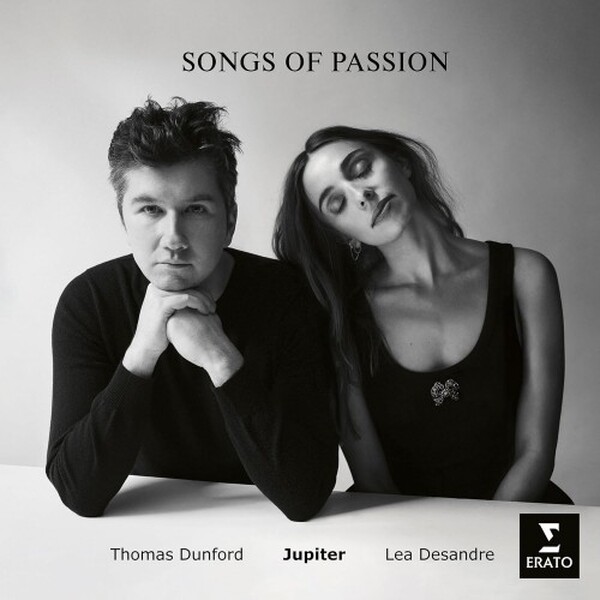
Songs of Passion (Erato Records)
Although her core repertoire retains a Baroque focus, her recordings have also included later Romantic pieces. In addition, she has participated in several notable collaborative recordings focused on expressive continuity across centuries.
For more of the best in classical music, sign up for our E-Newsletter