Every legendary music career has a “Year Zero”—that precise moment when a raw talent transforms into an international superstar. For George Frideric Handel, that year was 1707. He was just twenty-two years old, bursting with ambition, and ready to conquer the musical capital of the world: Rome.
What he created during that hot Italian summer was Il Trionfo del Tempo e del Disinganno (The Triumph of Time and Disillusion). Little did he know, this single piece would become a lifelong obsession, marking both the absolute beginning and the final curtain call of his career as an oratorio master.
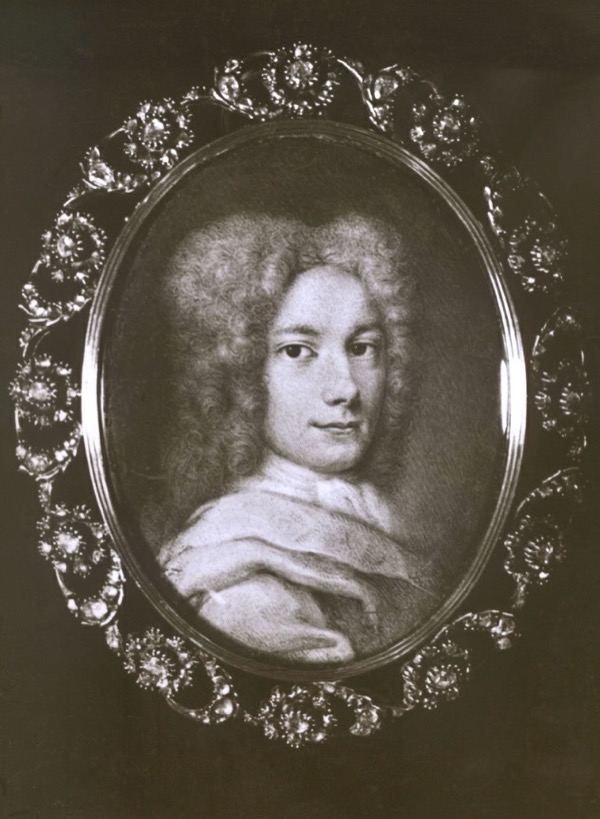
Handel in 1710, from a lost portrait by Christoph Platzer
When a Saxon Prodigy Gatecrashed the Roman Elite
Before arriving in Rome, Handel had been turning heads in Florence. He had gone there at the personal invitation of Prince Ferdinando de’ Medici, the heir to the Grand Duchy of Tuscany. Mainwaring, Handel’s first biographer, noted that the cocky young German initially hesitated to accept the invitation because he openly looked down on Italian music, thinking it lacked intellectual weight. But Prince Ferdinando knew talent when he heard it. Handel’s Florentine stay was a triumph; he left the city one hundred guineas richer.
By the time he rolled into Rome in January 1707, the doors of the heaviest, most exclusive palaces flew open. Rome was a musical paradise, populated by titans like Alessandro Scarlatti and the legendary violinist Arcangelo Corelli. Handel’s primary patron became Cardinal Benedetto Pamphili—a philosopher, poet, and arts patron whose private orchestra was led by Corelli himself. Suddenly, the 22-year-old foreigner was collaborating with the greatest musicians in Europe.
It wasn’t always smooth sailing, though. Handel loved writing in the dramatic, rhythmic French style. During rehearsals, Corelli famously struggled with Handel’s aggressive overture, politely saying, “But my dear Saxon, this music is in the French style, which I do not understand.” Instead of starting a fight, Handel calmly went back to his desk and rewrote the opening in a smooth, elegant Italian style that made Corelli shine. Handel even added a massive violin solo at the very end as a peace offering.
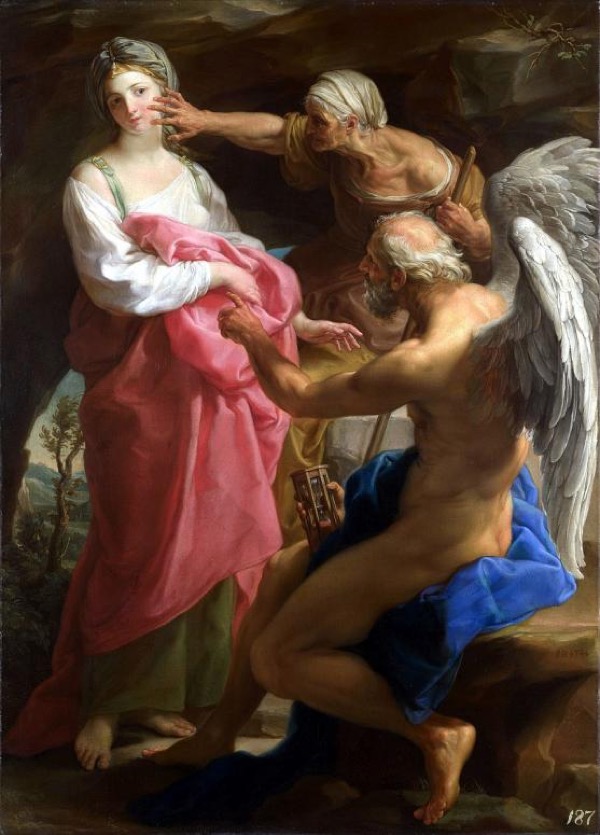
Time orders Old Age to destroy Beauty (1746) by Pompeo Batoni
No Stage? No Problem. The Ultimate Philosophical Debate
So, why did Handel write an oratorio instead of an opera? Simple: the Pope had banned public opera in Rome, calling it immoral. But Roman audiences still craved drama, so composers used a loophole: the oratorio. Cardinal Pamphili wrote the libretto for Il Trionfo, and it reads like a high-stakes psychological thriller. There are only four characters, and they are all allegories: Beauty (Bellezza), Pleasure (Piacere), Time (Tempo), and Disillusion (Disinganno).
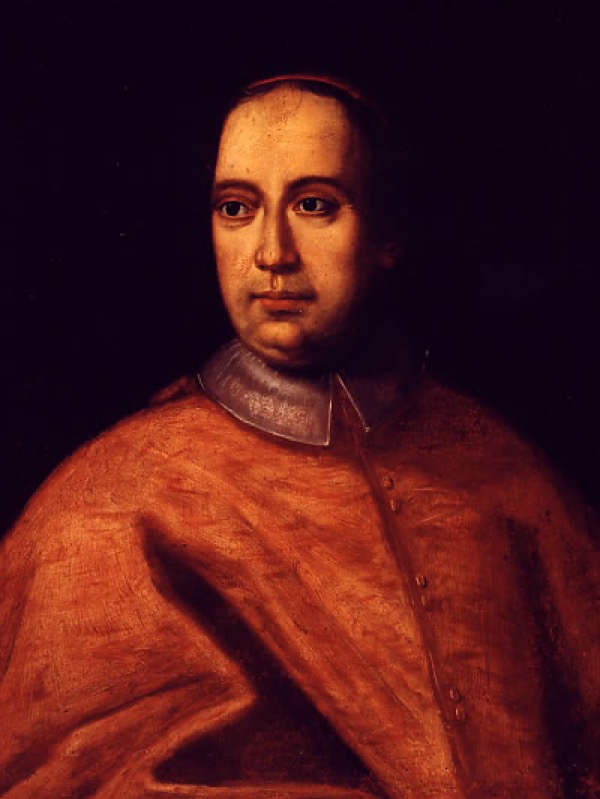
Cardinal Benedetto Pamphili (Wikipedia)
The dramatic tension in the music is astonishing. Instead of a dry theological lecture, Handel stages a visceral battle for Beauty’s soul. In the longest and most gripping recitative of the work, “Questa è la Reggia mia”, Pleasure paints a breathtaking audio-picture of her kingdom of pure indulgence. Right after this, Handel pulls off a historical first: he inserts a dazzling, concerto-like Sonata featuring a solo organ. This was literally the first organ concerto in music history, and Handel was very likely to play the solo himself. Through the music, you can practically see the “graceful youth” at the keyboard, his right hand flying across the keys like it has wings, hypnotising Beauty into staying on the path of sin.
But Time and Disillusion strike back with terrifying musical psychological warfare. When Time sings his warnings, the orchestra mimics the ticking of a cosmic clock and the snapping of jaws. In a brilliant quartet, “Voglio Tempo”, all four voices clash in a frantic, syncopated rhythm—Beauty begs for more time to party, Pleasure egging her on, while Time and Disillusion relentlessly drag the tempo forward, threatening to turn them all to dust.
The psychological climax occurs when Beauty finally cracks under the pressure. In a moment of pure theatrical violence, she sings an aggressive recitative, shatters her vanity mirror against the floor, and strips off her golden curls, realising they are just “chains of wild snakes.” Yet, in the final aria, “Tu del Ciel ministro eletto”, Handel pulls off a magnificent artistic plot twist. The script says virtue wins, but Handel’s music—haunting, tender, and deeply ambiguous—elevates Beauty to a state of sublime, melancholic ecstasy. He lets her choose heaven, but he leaves the audience weeping for her lost youth.
The Ultimate Baroque Alchemy of Reuse
Baroque composers were notorious recyclers, and Handel was the absolute king of the rewrite. Because Il Trionfo was performed at a private palace and didn’t get wide public traction, Handel knew he had a goldmine of unused hits sitting in his drawer. In the 18th century, there was no conceptual wall between sacred and secular music; a good tune was a good tune.
Over the next few decades, he mined this debut oratorio for parts like an old sports car, slipping its melodies into later operatic blockbusters like Agrippina, Giulio Cesare, and Rodelinda. He even took the grand opening symphony, transposed it, and used it to kick off a completely different pastoral piece for a Neapolitan duke.
But the most legendary piece of recycling in music history happens right here. In the second part, Pleasure tries to soothe Beauty with a breathtakingly simple aria: “Lascia la spina, cogli la rosa (Leave the thorn, pluck the rose).“ Handel didn’t actually write this melody for Rome; he had composed it years earlier in Hamburg as a simple instrumental dance tune for his opera Almira. In 1711, he packed it in his suitcase to London, gave it new lyrics, and dropped it into his opera Rinaldo as “Lascia ch’io pianga (Let me weep).“ Today, it is recognised as one of the most heartbreakingly famous melodies ever written in human history—and it got its vocal debut right here, sung by an anonymous Roman castrato.
George Frideric Handel: Almira, HWV 1: Act I Scene 1: Sarabande (Boston Early Music Festival Orchestra; Paul O’Dette, cond.; Stephen Stubbs, cond.)
George Frideric Handel: Il Trionfo del Tempo e del Disinganno, HWV 46a: Lascia la spina, cogli la rosa (Lucy Crowe, soprano; The English Concert; Harry Bicket, cond.)
George Frideric Handel: Rinaldo, HWV 7: Act II Scene 4: Lascia ch’io pianga (Miah Persson, soprano; Freiburg Baroque Orchestra; René Jacobs, cond.)
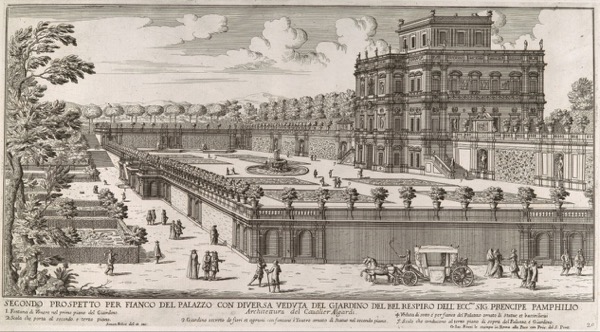
Palazzo Pamphili and its garden (1677)
Full Circle: The First and the Last
Fate has a strange sense of poetry. Il Trionfo was Handel’s very first attempt at an oratorio. He was young, arrogant, and trying to prove he could out-taste the Italians in their own backyard.
Thirty years later, in 1737, Handel was living in London and facing a massive midlife crisis. The opera business was failing, and his health was crashing. Desperate for a hit, he dug up his old Roman manuscript, lengthened it, added big choral numbers, and re-released it as Il Trionfo del Tempo e della Verità.
Fast forward another twenty years to 1757. Handel was now an old man of seventy-two. He was completely blind (he suffered from the same eye doctor as Bach), frail, and nearing the end of his life. He decided to revisit his firstborn child one last time. He dictated changes to his assistant, John Christopher Smith, while a new poet translated the words into English verse. The final version was titled The Triumph of Time and Truth.
It became his final oratorio. The musical journey that had started fifty years earlier in a sun-drenched Roman palace ended in the foggy, theatrical world of London. Il Trionfo uniquely bookended his life: a masterpiece written by a cocky 22-year-old genius, and finished by a blind, legendary master who truly understood the meaning of Time.
For more of the best in classical music, sign up for our E-Newsletter