Beethoven‘s symphonies – and recordings of his symphonies – are ubiquitous in the classical music world, so of course many musicians and music lovers have made lists of their favourites.
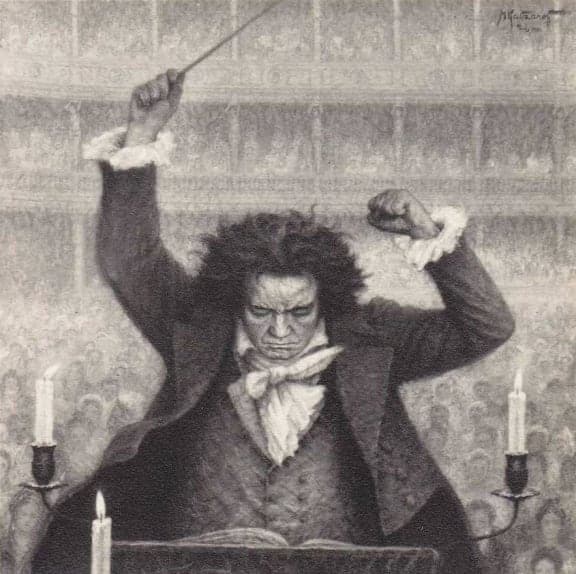
Beethoven conducting
Have you ever wondered if there’s a slightly more objective way of ranking the popularity of these beloved symphonies?
Granted, there are a number of ways you could go about this, but one way would be to find the most popular video of each symphony on YouTube, note how many views that video got, and then list them in reverse countdown order.
And that’s exactly what we did today!
So read on to find out which performances of each Beethoven symphony are the most popular on YouTube, as of early 2026.
9. Symphony No. 8
Frankfurt Radio Symphony – Andrés Orozco-Estrada
745k views
If you want to be a hipster when it comes to Beethoven, championing the symphony out of the mainstream, you should start by embracing his Eighth.
It’s short; it’s quirky; it’s witty…and compared to its siblings, it’s much less popular.
Begun immediately after Beethoven wrote his blockbuster seventh symphony, the eighth is strikingly smaller and less ambitious in scale, but also bursting with humour and invention.
The second movement’s ticking rhythm may be a parody of the newly invented metronome (it starts at 9:28 in this performance), while the finale’s skittering teases and hesitations seem to poke fun at the conventions of symphonic writing (18:30).
Beethoven affectionately nicknamed it his “little symphony in F” to differentiate it from his sixth symphony.
8. Symphony No. 1
Frankfurt Radio Symphony – Andrés Orozco-Estrada
836k views
Beethoven’s First Symphony, composed in the late 1790s, pays homage to Haydn and Mozart while simultaneously heralding a new boldness with its crashing chords and string writing that, for the time, veers on percussive.
Although officially labelled a symphony in C-major, its opening chord contains a B-flat, which is decidedly not in the C-major scale. This dissonance is an audacious choice that would have startled audiences of Beethoven’s time.
This work may be outwardly traditional in structure, but it overflows with innovations: aggressive rhythmic drive, unexpected modulations, and a youthful energy that foreshadows the many Beethovenian revolutions to come. After this, orchestral writing was never going to be the same again.
Nevertheless, despite its fresh, creative voice, it still ranks as one of the least popular Beethoven symphonies.
7. Symphony No. 4
Frankfurt Radio Symphony – Andrés Orozco-Estrada
1.1 million views
Nestled between the epic third symphony and the thunderous fifth, Beethoven’s fourth symphony (written in 1806) is often overshadowed, but it’s one of his most elegantly proportioned works.
The mysterious, slow introduction bursts into radiant B-flat major, and the slow movement sings with lyrical warmth.
It boasts rhythmic surprises and daring harmonic ingenuity, as well as a general operatic atmosphere not often heard in the concert hall.
6. Symphony No. 2
West–Eastern Divan Orchestra – Daniel Barenboim
3.2 million views
The second symphony was composed in 1802 and is astonishingly fleet and cheery.
This is remarkable, given that it was written during his stay in Heiligenstadt – the same town where Beethoven penned his heartbreaking “Heiligenstadt Testament“, in which he discusses his suicidal ideation.
Yet the work defies despair with its manic humour and vitality.
To modern ears, the finale (beginning at 25:25) bubbles over with dramatic but ultimately good-natured chaos.
However, one critic of the day was appalled by what he heard, famously remarking that the symphony was “a hideously writhing, wounded dragon that refuses to die, but writhing in its last agonies and, in the fourth movement, bleeding to death.”
The present-day popularity of the work would beg to differ with that bleak characterisation!
5. Symphony No. 3
Frankfurt Radio Symphony – Andrés Orozco-Estrada
3.7 million views
Beethoven’s Third Symphony (nicknamed the Eroica, or Heroic) was written between 1802 and 1804. Put bluntly, it changed classical music forever.
Originally dedicated to Napoleon Bonaparte, it became a more generalised tribute to heroism after Napoleon declared himself emperor (a turn of events that Beethoven was disgusted by).
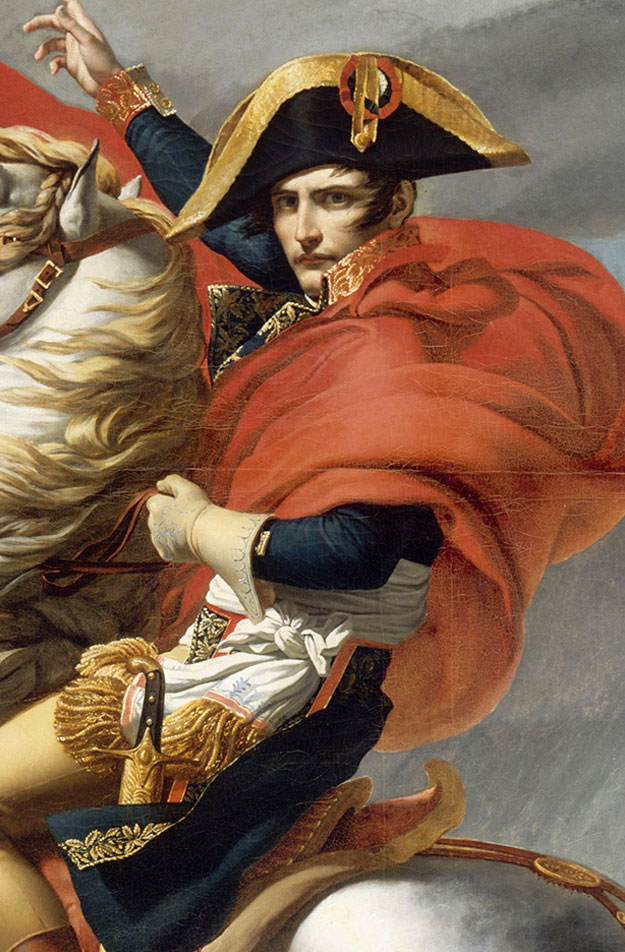
Napoleon Bonaparte
With its unprecedented length and emotional intensity, the Eroica is a great candidate to be considered the first true symphony of the Romantic Era.
The funeral march alone is a universe of grandeur and grief. (That movement begins at 16:13 in this recording.)
Again and again, the evergreen subject matter – and Beethoven’s masterful treatment of it – has proven relevant to music lovers all around the world.
4. Symphony No. 6
West–Eastern Divan Orchestra – Daniel Barenboim
13 million views
Beethoven’s Sixth Symphony, nicknamed the Pastoral, dates from 1808 and is a charming love letter to nature.
Subtitled “Recollections of Country Life,” it unfolds across five very different movements that depict simple scenes of rural joy and contentment: a babbling brook, a thunderstorm, and a peasant dance.
This work is important not only for what it is, but for what its arrival signified: instrumental program music, which would inspire Berlioz, Liszt, Mahler, and countless composers for generations to come.
3. Symphony No. 7
Royal Concertgebouw Orchestra – Ivan Fischer
15 million views
Richard Wagner called Beethoven’s Seventh Symphony (composed in 1812) “the apotheosis of the dance,” and it’s easy to hear why.
From the hypnotic rhythm of its famous second movement to its ecstatic, wild-eyed finale, this is Beethoven at his most electric.
Premiered at a benefit concert for wounded soldiers, it was an immediate triumph. The second movement, Allegretto, was actually encored.
After the Ode to Joy, that Allegretto is arguably Beethoven’s most famous symphonic movement, and for good reason.
2. Symphony No. 5
West–Eastern Divan Orchestra – Daniel Barenboim
21 million views
“Fate knocking at the door”: that’s how posterity interprets the iconic four-note opening of Beethoven’s Fifth Symphony, which dates from 1808.
Over the course of its four movements, the symphony transforms its C-minor doubts and darkness into a blaze of C-major radiance.
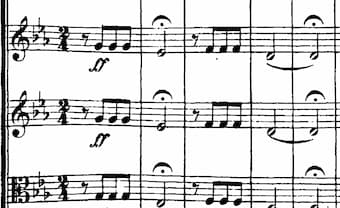
Beethoven’s 5th Symphony famous motif
Its taut structure, obsessive repetitive rhythms, and triumphant finale are classic Beethoven.
No other symphony has had such a hold on popular imagination or pop culture.
Unless, of course, it was the…
1. Symphony No. 9
Chicago Symphony Orchestra – Riccardo Muti
55 million views
At this point, Beethoven’s Ninth Symphony (written between 1822 and 1824) is more than just a symphony.
Written late in his life, when Beethoven was isolated and fully deaf, Beethoven composed this massive – and massively innovative – symphony setting words by poet Friedrich Schiller to music.
This daring melding of chorus and orchestra opened the door for future symphonists to dream big and create ever-larger works.
Its overt message – a celebration of democratic Enlightenment values like brotherhood, freedom, and joy – has resonated in listeners’ minds and hearts for over two centuries.
It makes all the sense in the world that this symphony is the one that’s the most popular.
Conclusion
Even two centuries after they were written, Beethoven’s symphonies continue to captivate audiences across the globe. And thanks to the magic of YouTube, we don’t even have to leave our houses to enjoy them.
There’s a Beethoven symphony for everyone. Whether you’re drawn to the indie wit of the Eighth, the heroism of the Eroica, or the spiritual transcendence of the Ninth, Beethoven’s music has proven to be incredibly resonant and relevant, even when we’re hearing it in the present day through our stereo systems or our phone speakers.
What’s your favourite Beethoven symphony? Are you surprised at where each symphony ended up in the ranking?
For more of the best in classical music, sign up for our E-Newsletter