I. A Peasant’s Ambition in the Eternal City

Justin I, 518–527. Constantinople mint, circa 522–527
When Antonio Vivaldi arrived in Rome for the 1724 Carnival season, he was a composer determined to conquer the prestigious and notoriously fickle Roman opera market. His weapon of choice was Il Giustino, a sprawling dramma per musica that served as a grand synthesis of Venetian tradition and Roman expectation. The libretto, originally penned by Nicolò Beregan in 1683—the same year the Venetians assisted the Holy Roman Empire in resisting the Ottoman Turks at the Siege of Vienna—carried deep political resonance.
The story follows the historical rise of Justin I, a 5th-century Illyrian peasant from the area of Skopje who walked to Constantinople with his fellow countrymen to join the palace guards and eventually became Emperor. To the Roman public, this “rags-to-riches” saga mirrored the high-stakes social climbing of the Papal court. Vivaldi’s version, based on a text revised by Pietro Pariati (and likely further adapted by Antonio Maria Lucchini), infused this political drama with a pastoral sweetness.
The plot is a labyrinth of Baroque spectacle:
The Heroic Arc: Giustino begins the opera at his plough, dreaming of glory. After a series of miraculous deeds—killing a wild bear to save Leocasta and a sea monster to rescue Empress Arianna—he rises through the military ranks.
Conflict and Betrayal: The reign of Emperor Anastasio is threatened by the tyrant Vitaliano, while inside the palace, the treacherous General Amantio sows seeds of jealousy.
The Revelation: In a dramatic third-act turn, Giustino is nearly killed by Vitaliano and Andronico in the wilderness, only for the ghost of their father to reveal that Giustino is their long-lost brother.
This narrative allowed Vivaldi to balance the grit of the battlefield with the ethereal elegance demanded by Roman tastes, creating a work that was as much about psychological depth as about political triumph.
II. The 1724 Premiere: A World Without Women
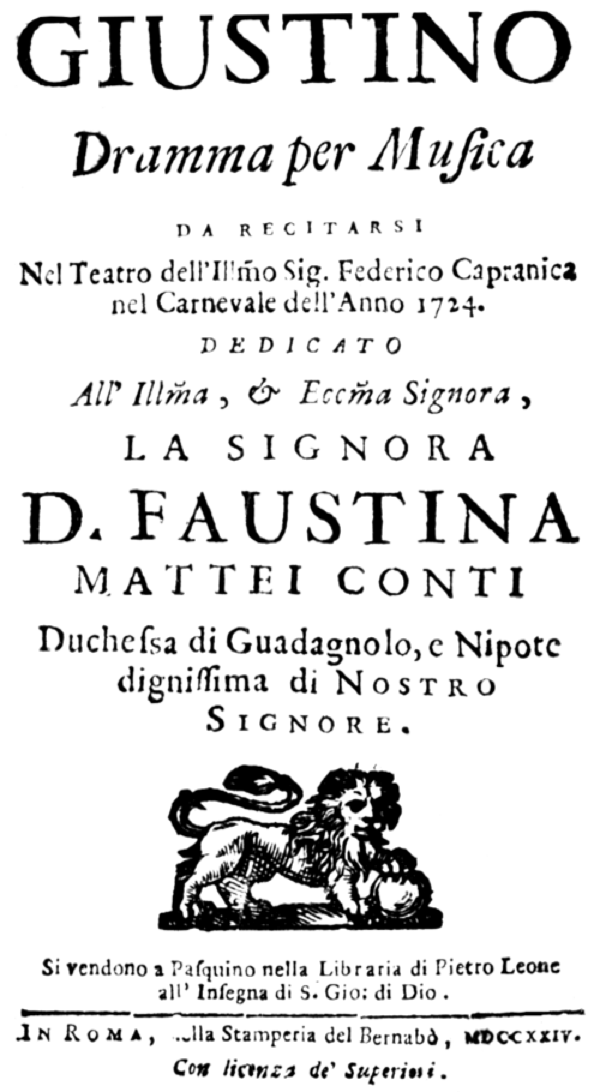
Title page of the libretto for Vivaldi’s Il Giustino, Rome 1724
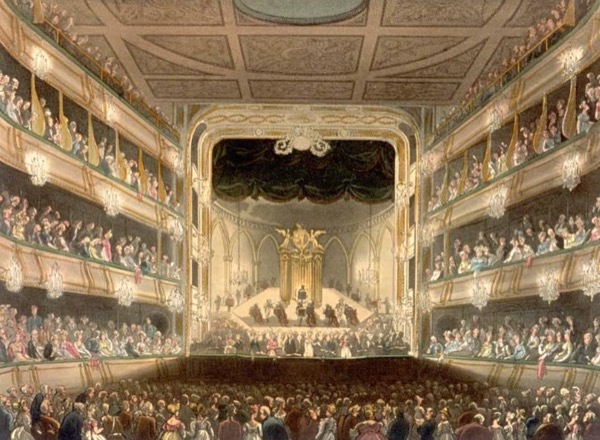
The premiere at the Teatro Capranica was governed by strict Roman laws: a Papal decree banned women from performing on stage. Consequently, the entire cast was male. The female roles, such as the noble Empress Arianna and the spirited Leocasta, were performed by castrati. This vocal artifice was not a limitation but a defining aesthetic of the Roman Baroque.
Vivaldi carefully tailored his music to the specific virtuosos available in the 1723–24 season:
Paolo Mariani (Giustino): A singer of extraordinary range, Mariani was required to ascend into the high falsetto register of an alto castrato in the heroic aria “Su l’altar”.
Giacinto Fontana, “Farfallino” (Arianna): Known for his effusive cantabile style, Fontana’s role was bolstered by newly composed arias like “Mio dolce amato sposo,” which utilised “innovative, rococo-style elements” to emphasise the Empress’s emotional vulnerability.
Girolamo Bartoluzzi, “il Reggiano” (Leocasta): His control of register was showcased in the lament “Senza l’amato ben,” demonstrating Vivaldi’s ability to write for the nuanced expressive powers of the castrati.
Giovanni Ossi (Anastasio): The Emperor’s role was enriched with tearful songs and dual-affect arias that balanced majesty with profound sorrow.
In this hall of mirrors, identity was fluid. The character of Andronico (played by the castrato Francesco Antonio Giovenale) spends much of the opera disguised as a woman named Flavia. This complex layering of gender and sound—a man playing a man who is pretending to be a woman—was the very DNA of 18th-century Roman entertainment.
III. The Sound of the Sublime: From The Four Seasons to the Salterio
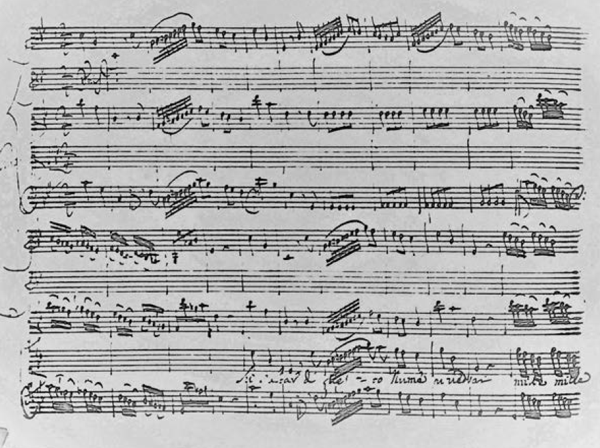
“Su l’altar di questo Nume”: Giustino’s aria (II.8) in Vivaldi’s autograph score. Turin, National and University Library, Ms. Foà 34, fol. 104v
Vivaldi’s Il Giustino is a treasure trove of “sound painting” and instrumental innovation. One of the most striking features for the 1724 audience was Vivaldi’s use of self-quotation to establish his musical brand.
The Arrival of Fortune
In Act I, the Goddess Fortune appears to the sleeping Giustino to promise him a crown. Vivaldi underscores this apparition with the opening ritornello of his violin concerto RV 269—better known today as “Spring” (La primavera) from The Four Seasons. Though the concertos were not yet published, the music was already a sensation in Roman patronal gatherings. By placing Spring in the context of a peasant’s awakening to glory, Vivaldi gave the melody a moral and symbolic weight: the “awakening vigour” of nature mirrored the awakening of a future Emperor.
The Salterio and the Dream
A defining moment in the score is Giustino’s heroic aria at the end of Act II, “Ho nel petto un cor sì forte.” Here, Vivaldi employs a salterio (psaltery)—a metallic, hammered dulcimer—as a concertante instrument. While common in domestic settings, its appearance in the operatic pit was a stroke of genius. Its shimmering, bell-like timbre was used to represent the prophetic and the sublime, painting a psychological landscape that felt both ancient and otherworldly.
Orchestral Dramaturgy
Vivaldi’s mastery of atmospheric orchestration is visible throughout the score:
The Sea Monster: In Act II, as Arianna is chained to a cliff, the harpsichord uses rapid arpeggiations to depict the monster literally crawling up the rock while she prays.
The Ghostly Voice: The tomb of Vitaliano’s father is represented not by grand gestures, but by simple recitative in unexpected keys, creating an unsettling, supernatural atmosphere (voce di dentro).
Nature and Affect: Vivaldi uses recorders and flutes for pastoral scenes, while horns and trumpets mark the imperial and military actions. In the famous “Rain Aria” (Sento in seno), he uses a pizzicato string texture to mimic the relentless, rhythmic fall of rain, mirroring the character’s internal agitation.
IV. From Turin to the Modern Stage: The Long Revival
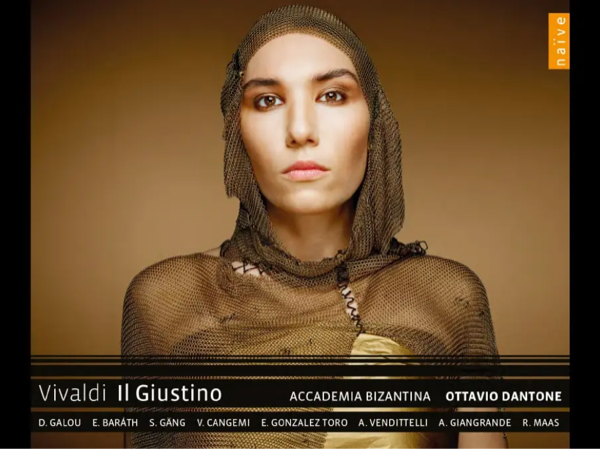
Naïve (Vivaldi Edition) release led by Ottavio Dantone and Accademia Bizantina
For nearly two centuries, Il Giustino remained a silent masterpiece. Its autograph score—compiled in Rome in the frantic weeks before the 1724 premiere—was a patchwork of original genius and borrowed gems. The score lay hidden until the 1930s, when the Foà and Giordano collections were discovered in the Turin National University Library. The modern resurrection of the opera was largely spurred by the scholarship of musicologist Reinhard Strohm, whose critical notes and research into the thematic links between Vivaldi’s sinfonias and arias brought the work back into the light.
Strohm’s efforts led to the first modern staged revival in Houston in 1985. Since then, the work has been reclaimed by the greatest Baroque specialists of our time. From Ottavio Dantone’s definitive recording for the Naïve Vivaldi Edition to recent theatrical reimagining by René Jacobs, Il Giustino has transitioned from a dusty manuscript to a cornerstone of the Baroque revival.
Vivaldi: Il Giustino, RV 717, Act II, Scene 5: Per noi soave e bella (Arianna)
V. Conclusion: The Eternal Return
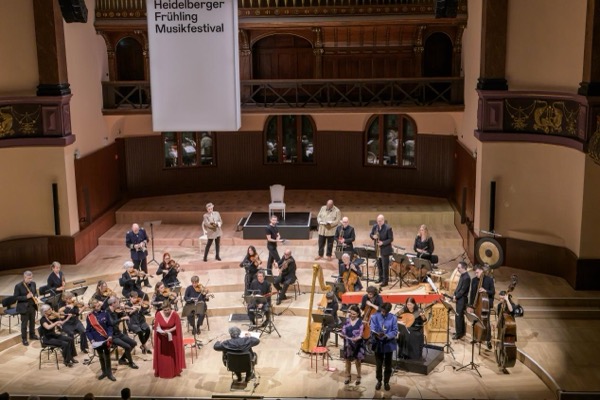
René Jacobs in performance, Heidelberg 2026 (photo by Studio Visuell)
The enduring appeal of Il Giustino lies in its perfect alignment of Vivaldi’s concerto-like energy with the demands of theatrical storytelling. It reflects a moment in history when the Red Priest of Venice proved he could satisfy the sophisticated demands of Rome—integrating Spring, the salterio, and the virtuosic castrati into a unified vision—without losing his signature vitality.
Three centuries later, the opera serves as more than just a historical curiosity. Through the dedication of musicologists and the sensitivity of modern conductors, Giustino’s journey from the plough to the throne continues to resonate. It reminds us that Vivaldi’s true empire was built not of stone or political might, but of enduring melody and dramatic fire.
To experience the contrasting brilliance of this score, one must look to the definitive recording from the Naïve (Vivaldi Edition) release led by Ottavio Dantone and Accademia Bizantina, which offers a sleek, historically rigorous, and impeccably paced reading that captures the work’s Italianate fire. For fans wanting to witness this magic live, the René Jacobs and Freiburger Barockorchester collaboration continues its 2026 European tour across major cultural hubs, providing a rare opportunity to hear Vivaldi’s Byzantine masterpiece through the ears of a modern master.
For more of the best in classical music, sign up for our E-Newsletter