The American cellist Gary Hoffman, who turns 70 in 2026, has followed an unusual career path, and indeed a glorious one. A pupil of the legendary János Starker, he joined the faculty of Indiana University while still in his early twenties, becoming the youngest member in the history of its music school. Opposite to most, he left academia to establish himself fully as a soloist afterwards, and once again started to participate in pedagogy after decades of a busy concert career, joining the faculties of the Curtis Institute of Music and the Queen Elisabeth Music Chapel in Belgium.
During our conversation, Hoffman spoke very little about the technical details of music. He was more interested in ideas about teaching and life—especially the latter. He is clearly someone who knows how to enjoy life. On the day of the interview, the cellist arrived at a luxurious club hotel in London’s Mayfair wearing a stylish leather jacket and boots. It was difficult to believe that he was approaching 70!
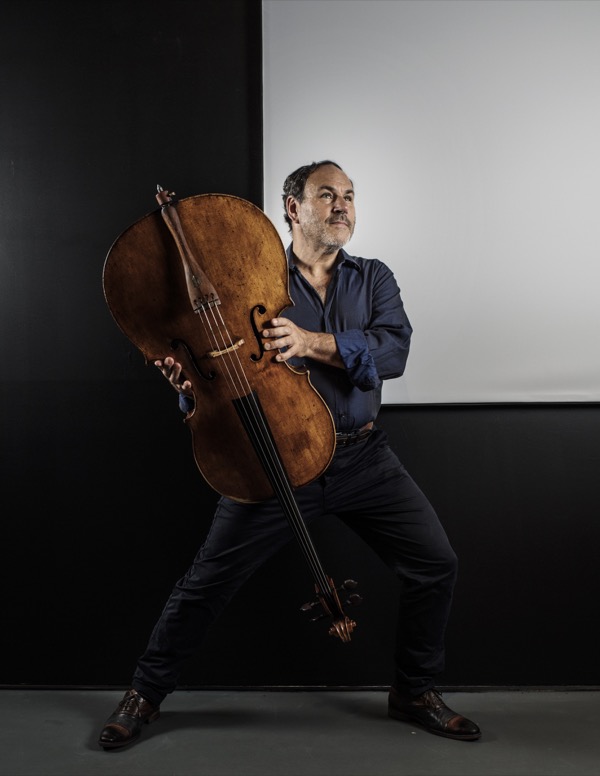
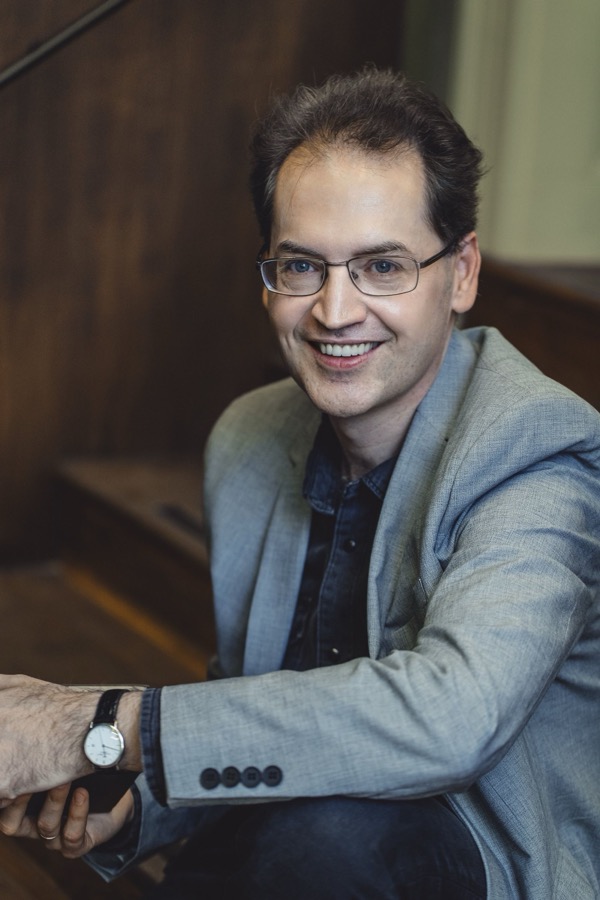
Gary Hoffman (Photo by William Beaucardet)
Family and Teachers
Gary Hoffman was born into a musical family in Vancouver, Canada, in 1956. At the time, his father, Irwin Hoffman, was music director of the Vancouver Symphony Orchestra. In 1964, Irwin became assistant conductor of the Chicago Symphony Orchestra, and the family moved to Chicago. It was there that the young Gary formally began studying the cello.
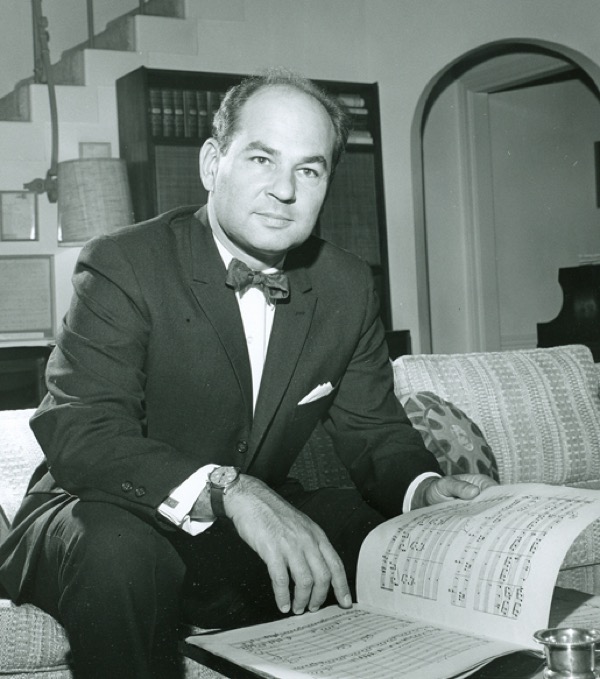
Irwin Hoffman
Hoffman’s first cello teacher was Karl Fruh, a prominent Chicago-area pedagogue who had played in the Chicago Symphony Orchestra. Fruh gave Hoffman a firmly traditional foundation. “Fruh was a very special teacher. His way of playing was extremely natural, and he was known for a singing, expressive style. He called himself ‘the Leonard Rose of the Midwest’—Rose being the synonym of that full sound and vocal quality.”
By a remarkable twist of fate, the Niccolò Amati cello once played by Rose later came into Hoffman’s hands, and he has now played it for more than forty years. “I will never forget hearing Rose perform the Variations on a Rococo Theme with my father in Vancouver. At that point, I had not even thought of learning the cello, but I still remember the sound of that instrument. I could never have imagined that, many years later, it would become mine.”
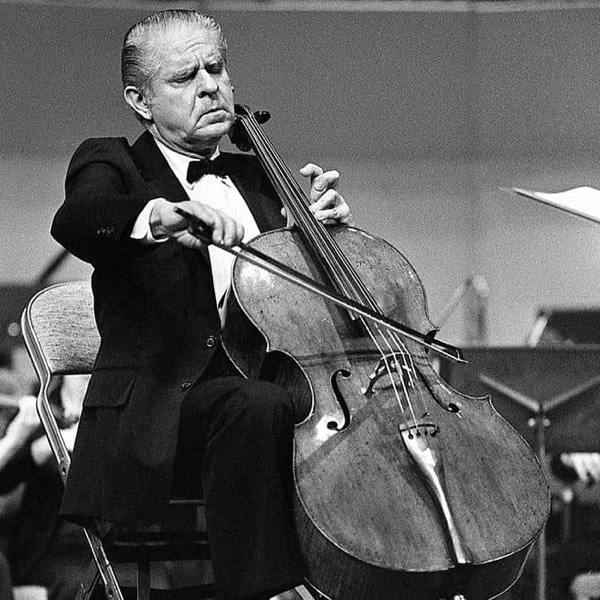
Leonard Rose
Pyotr Ilyich Tchaikovsky: Variations on a Rococo Theme in A Major, Op. 33 – Variation 7 – Coda – Allegro vivo (Leonard Rose, cello; Philadelphia Orchestra; Eugene Ormandy, cond.)
Several years later, the Hoffman family followed Irwin to Florida, where he founded the orchestra now known as the Florida Orchestra. Florida may have been a seaside paradise, but it was hardly a cultural centre, and the young Hoffman went without a teacher between the ages of fifteen and seventeen. “Fortunately, I still had my family. We founded a chamber-music series in St Petersburg, Florida, and I performed while I was still in high school.”
The situation was far from ideal, but a turning point came as Hoffman approached adulthood. “I began thinking about where I should go to university and, above all, with whom I should study. The answer soon became clear: I wanted to study with János Starker. My father knew him well and had worked with him several times. I had even been in a photograph with him when I was twelve. When I was sixteen or seventeen, and he was staying in Miami, I went to visit him. He agreed to give me several lessons and even invited me to stay in his home—without accepting anything in return.”
His parents supported the decision, and Hoffman entered the Indiana University School of Music in order to study with the man he still calls “Mr. Starker.” “Young people now probably do this much less often: they choose a school rather than a teacher. I was different. I was determined to find the teacher I believed was right for me, and that person was Mr. Starker. It was one of the best decisions I ever made.”
Hoffman studied with Starker for five years in Bloomington and gained enormously from the experience. He says that Starker’s artistry was grounded in “musical principles,” such as an understanding of proportion and balance, but that its most important element was an inimitable personal quality.
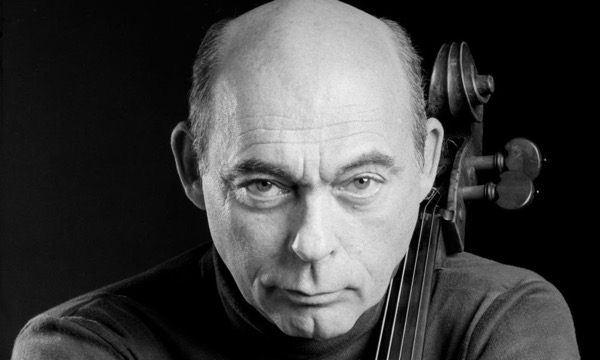
János Starker
This was also evident in Starker’s teaching. On one level, he pushed Hoffman further technically. “Mr. Starker paid extraordinary attention to the principles of physical function: how to use force rationally, how to distribute weight, how to transfer it, how to use the lower body for support, and how to make the instrument part of oneself rather than forcing the body to accommodate the instrument.”
At the same time, he understood how to make a student truly comprehend music. “He did not ask me to play exactly from a part he had marked up. Of course, he had me use his own edition of the Bach Suites, but later, after consulting sources such as Anna Magdalena Bach’s manuscript, I made changes of my own, and he had no objection.
Johann Sebastian Bach: Cello Suite No. 3 in C Major, BWV 1009 (János Starker, cello)
“Mr Starker believed that students had to learn principles and understand why things worked. A model into which a teacher had poured a lifetime of thought could therefore be extremely useful. The problem for most people is that their exploration ends with the model. For me, the model opened other doors. For a time, I resisted my teacher to some extent, although we never quarrelled. But I had to find my own way. That was what he truly wanted.”
University Teacher at 22
After five years with Starker, another major turning point arrived when Hoffman was twenty-two: a cello teaching position opened at Indiana University. He had already spent two years teaching in place of Starker’s assistant, and Starker proposed that he take the post. At twenty-two, Hoffman became a full-time faculty member with a class of his own. “It is almost unimaginable today. Young people now generally remain in education much longer; some of my students are nearly thirty and still studying. It was different then, and I in particular could not wait to make my own decisions.”
The challenge was immediate. “At first, some of the students were older than I actually was, which was not easy for either them or me. Nobody said anything openly, but I could see in their eyes that I had to convince them that studying with me was not a waste of time. Mr. Starker knew perfectly well what kind of situation he was placing me in, but I think he believed I could handle it. It forced me to assume responsibility like an adult.”
Hoffman combined performing and teaching for 7.5 years. Indiana was a large university, and he was expected to carry a workload comparable to his colleagues’. A normal load was eighteen students a week, one hour each; in one year, he taught twenty-five. During the fifteen-week semester, he spent nearly every waking hour at school, beginning six or seven hours of teaching at nine or ten in the morning, then remaining in the practice room, sometimes until two in the morning. “I worked very hard when I was young,” he recalls.
For the young Hoffman, the difficulty was not merely one of scheduling. The deeper challenge in balancing teaching and performing lies in the different attitudes they demanded. “At first, I felt a conflict between teaching and performing. On stage, one should not analyse and calculate. Music should emerge from somewhere deep within; that is our instinct as human beings and musicians. Yet all of this rests on a rational understanding of instrumental playing and interpretation. As a teacher, I had to examine, analyse and address other people’s problems. Perhaps that came too early for me. On the other hand, teaching undoubtedly sharpened my perception and deepened my understanding. Without that intense period of teaching, I might never have developed those abilities.
“Today I can say without hesitation that teaching and performing nourish each other. But it is not easy for a twenty-two-year-old to understand that quickly.”
Finding Your Own Way
At a certain point, Hoffman realised that he had to leave. As long as he remained in Indiana, he could not fully escape Starker’s influence. “Everyone has to leave home at some point. Bloomington was like a second home to me. I needed to leave Bloomington to see who Gary Hoffman is really—as a cellist, as a person, as a musician.”
Bloomington was remote both geographically and culturally, so Hoffman first settled in New York for several years. For the next twenty-five years, he held no permanent teaching post anywhere, apart from giving masterclasses, and made his living entirely through performance. He did not return to a continuing academic role until 2011, when he joined the Queen Elisabeth Music Chapel in Belgium as a Maître en Résidence. In the intervening years, at the age of thirty, he won the 1986 Rostropovich Competition, becoming the first North American ever to take first prize. His trajectory was almost the reverse of the usual one: most musicians enter competitions first, then become soloists, and only later turn to teaching.
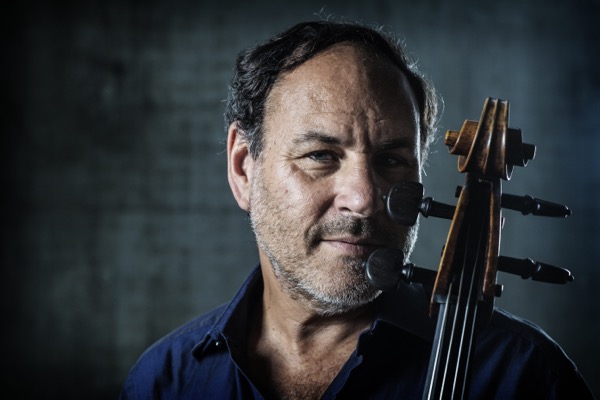
Gary Hoffman (Photo by William Beaucardet)
After leaving university, Hoffman needed a long time to find his own “way”—he corrected me when I used the word “style.” “Obviously, I was deeply influenced by Mr. Starker, but my aim was never to play like him. People often say they can hear traces of my teacher in my playing—and it would be strange if they could not. Yet others hear no similarity at all. I think that was precisely what Mr. Starker wanted, although many people have a mistaken impression: he always wanted me to become independent and to teach myself.”
Hoffman believes his own teaching philosophy descends directly from Starker’s. Like his mentor, he does not want students to depend on a teacher. Instead, he tries to guide them towards a direct relationship with the score through thought, rather than imitation.
“Sometimes I can hear that a student has copied one of my recordings. ‘That is a good fingering. I have never heard anyone else do it that way—except me.’ The student admits it, embarrassed. I tell them not to listen to my recording, or anyone else’s. First, establish your own relationship with the music; only then should you consult other performances. When you watch a film you haven’t seen before, do you want someone to spoil it for you? Probably not. So why treat music that way?”
In Hoffman’s view, the real model a performer should follow is an open mind. “The best thing is to play a work you have never heard, because then you are not constrained by ideas of good or bad, right or wrong. You are forced to look for your own understanding and response. As a musician, you will probably premiere several works in your career, so you’d better be able to do this. And it must be the way we approach all music.”
This is also why he rarely demonstrates in lessons. “I do not want students to be controlled by my playing. I have demonstrated, of course, but when I saw students beginning to write things down, I stopped them. They looked panicked and asked why. I said, ‘If you believe what I am doing has value, you will remember it. If you cannot, then perhaps it has no value.'”
Hoffman is equally critical of colleagues who rely heavily on demonstration. “I once had a student who studied the Schumann Concerto with another teacher during the summer. The teacher played the entire piece for the student. I do not regard that as teaching—or at least it is very far from what I understand teaching to be.”
He recalled another student from his years in Bloomington. “One summer in Bloomington, I taught a student who played very well and had studied with another teacher at the school. That teacher was very old-fashioned: every note had a fingering, an expressive marking, a bowing. The score looked like the Rosetta Stone in the British Museum! When she came to her lesson, she asked what she should learn. ‘Have you played Dohnányi’s Konzertstück?’ She said no. ‘Would you like to?’ She said yes and asked to see my score. I told her, ‘First, I have never played the piece. Second, I do not put fingerings or bowings into my scores.’ Her face was full of shock. ‘Then what am I supposed to do?’ ‘Buy the music, study it, and play it yourself.’ The next week, she returned completely lost. ‘That is all right,’ I said. ‘Let us talk.’ We began with the first phrase. She played, and I kept asking why she had made each choice. By the end of the summer, she could work through a piece of music independently—something she had not learned to do in the previous four years.” Hoffman adds with confidence, “I taught her something important. These things have to become part of our way of being.”
Gary Hoffman Masterclass – Beethoven Sonata No.3
Hoffman has two particular concerns facing the era of the Internet. The first is the misuse of online tools. “Many young people now begin learning a piece by listening to recordings on YouTube. YouTube is a very useful tool, but it has to be used intelligently. Many people treat it as an easy way to avoid thinking. I recognise the danger in that. We must never approach music in that way.”
The second is that the abundance of readily available recordings and videos deprives young musicians of freshness when it comes to canonical works. “By the time a teenager begins learning a Beethoven sonata, they have already heard it so many times that it becomes extremely difficult to remain completely open to it.”
Ludwig van Beethoven: Cello Sonata No. 5 in D Major, Op. 102, No. 2 – I. Allegro con brio (Gary Hoffman, cello; David Selig, piano)
Style and Life
Hoffman has a distinctive and instinctive philosophy of performance. He is less interested in scholarship for its own sake than in the relationship between the human being and life. “We live in an age preoccupied with whether a style is ‘correct.’ Over the past several decades, historical performance has produced a great deal of valuable research, and many people have sought the ‘correct’ answer. Of course, we should be informed. But I believe true performance lies within us. The question is whether we can find it—whether we can discover in the music those things that resonate with us.”
“If you asked me now which Bach performers I admire, I could name several. I do not care about the style in which they play. I care about how they play, how they relate to the music, and whether they are sincere and coherent as human beings. If I feel that they are sincere, then even if the performance does not move me—which is entirely possible—I can still admire it. I do not have to like another person’s playing. I only have to learn to respect it.”
“In fact, Bach is the most open of all composers, perhaps more than anyone else. We hear Bach arranged for harmonica; we hear Stokowski’s orchestral transcriptions. Is that how Bach wrote the music? No, but Bach himself constantly arranged and transplanted his own works, and that proves the universality of his music. Bach is broad enough to contain many different interpretations; so are Beethoven, Brahms and Schumann.”
“The mistake lies precisely in believing that one must discover a single accepted form of ‘correctness.’ Pablo Casals put it beautifully. Someone asked him, ‘Maestro, how do you approach Bach’s music?’ He replied, ‘The same way I approach any other composer.'”
“Yesterday, during the sound check at Wigmore Hall, I played the Courante from the Sixth Suite and heard something in my playing that had never been there before. It came spontaneously. I now tend towards more personal interpretations, but that does not mean imposing my personality on the music. Rather, I recognise certain qualities within the music—some familiar, some immediately congenial—and I feel a closer relationship with it. That is how we should play every composer.”
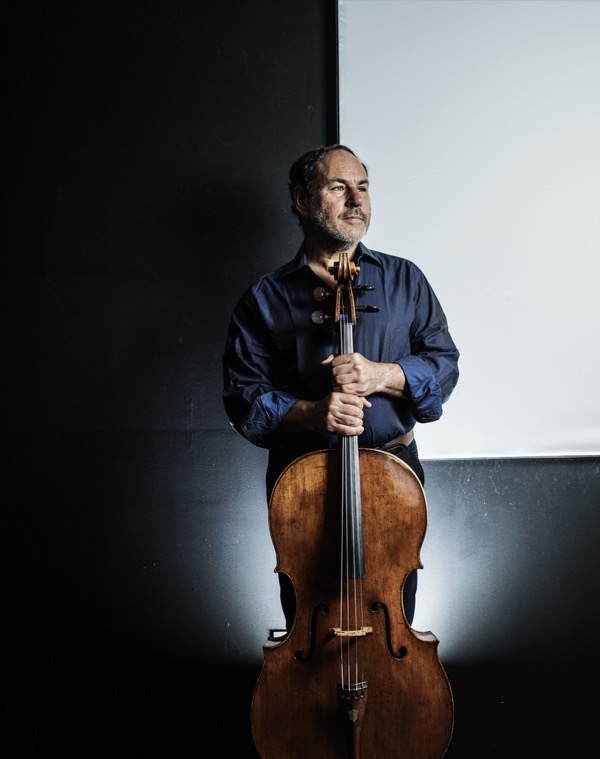
Gary Hoffman (Photo by William Beaucardet)
Gary Hoffman plays Bach Cello Suite No.3 in C Major, BWV 1009
For Hoffman, every interpretative decision must make sense, but that does not mean everything has to be solemn or heavy. “Reading, travelling, watching films, visiting museums—these things outside music are the true sources of our inspiration.”
It therefore came as no surprise to learn that the musician he admires most is Arthur Rubinstein, for “the kind of vision of life and humanity” the latter possessed. The great pianist was famous for living with elegance and relish, qualities reflected in an art of extraordinary vitality and beauty. “I often tell people that Rubinstein was a human being. The music he played was a full extension of the way he thought and felt about life. That is how it should be.”
Hoffman then told a story about Rubinstein. “A friend of mine who worked as a stage manager witnessed one of Rubinstein’s late recitals in Vancouver. My friend helped the pianist find his way around the hall during the sound check. By then, Rubinstein’s eyesight had deteriorated. ‘Could you do me a favour?’ he asked, taking my friend’s arm and having him lead him to the piano. As they walked, Rubinstein counted the steps. ‘Could we do that once more?’ Then he said, ‘Good. See you tonight.’ That was the entire sound check.”
“He has played in thousands of halls and thousands of pianos. His main concern was to find the piano bench and play this concert. The rest is just to go with it.”
“I think Rubinstein was the true model of someone who understood what was essential. A young person might find it difficult to grasp: finding the bench—what use is that? Indeed, it is of no practical use. But what matters is to keep your mind on what’s really important. What matters is not missing this note, spoiling that passage, or wondering whether the style is correct. It’s about deeper things.”
“Rubinstein sat down, and he played, and you sensed this incredible humanity and class, because that was the way he was. That was how he lived. I do not know whether that quality has disappeared, but we don’t see that so much anymore. For me, that’s the real stuff. I always become a little emotional when I tell that story. It reminds us what’s really important. Rubinstein lived life to the fullest.”
“It saddens me when I hear young musicians say that they spend the day of a concert in the hotel or the practice room. One should not devote the entire day to that evening’s concert. Do not miss the city around you. Experiencing the places to which our work takes us is one of the privileges and pleasures of this career, and those become part of your playing and who you are. To use an old American phrase, it is about ‘what you bring to the table.'”
For more of the best in classical music, sign up for our E-Newsletter