Having arrived as the newly appointed Festival Manager, I sat at my desk in the King’s Lynn office, surrounded by the cobbled streets of this historic port town, considering the legacy I now help steward.
King’s Lynn is steeped in stories, from its Hanseatic trading past to its enduring place on the cultural map of East Anglia. It’s an extraordinary time to join the team; we are standing on the threshold of our 75th anniversary in 2026, a milestone where we look back with pride and forward with ambition. What dawns on me is how quickly that threshold could become a precipice.
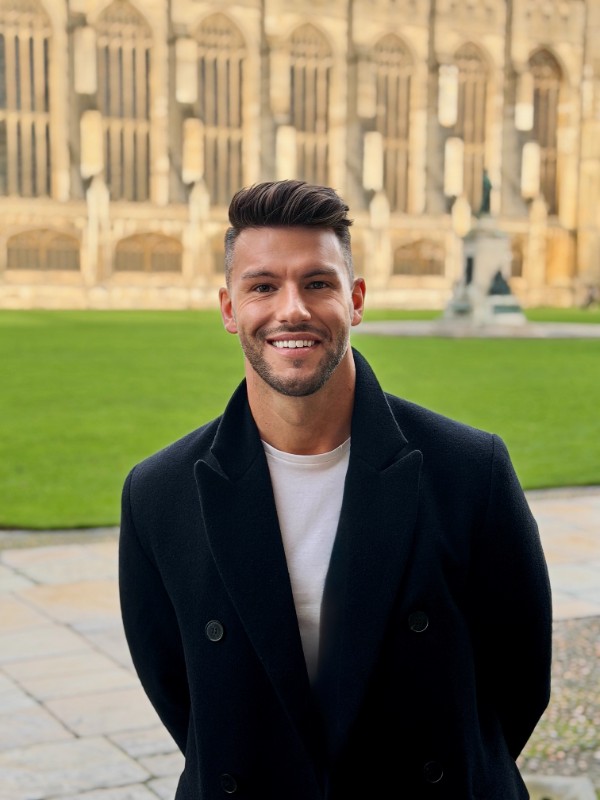
Ben Horden
With portraits of the greats and sometime, festival artists looking down from my office walls — Vaughan Williams, Barbirolli, Britten, Menuhin, Baker, McKellen, Fry, Scales amongst them — I swivel round in my chair to take in the courtyard of the 16th-century Thoresby College and vivid magenta blossom of the stately 100-year-old Judas Tree that presides from its centre. Will someone be doing the same in 25 years with the 100th King’s Lynn Festival on the horizon?
Amongst those joining the centurial elite this year is national treasure Sir David Attenborough. Were Sir David’s documentaries to extend their reach beyond the natural world and into the arts, regional festivals would surely feature amongst his most elusive and endangered creatures. Why? Well, how many are left out there in the wild?
The story of the King’s Lynn Festival is one of the most compelling in the British arts landscape. It was founded in 1951 by Ruth, Lady Fermoy, who understood the unifying power of music and the need for the festival in post-war Britain. Also amongst her mission objectives was to save the historic Guildhall of St George — the UK’s oldest working theatre where The Bard himself is said to have trodden the boards! — and in doing so provide a platform to make classical music and the arts — “nothing but the best” — available to the people of West Norfolk and on their own doorstep.
75 years is a lifetime in the world of regional arts festivals. King’s Lynn is a rare example of one that still exists in a format that’d be recognisable by its founder. That alone is worthy of celebration. With dwindling support from Arts Council England and other similar bodies, and Instagram and TikTok appeal increasingly outweighing artistic integrity, we live in a moment where sustaining a regional music festival is harder than ever. For many, the challenge has been too great: the landscape too brutal, sustenance scarce, and the plume and ritual dance of other species seemingly too alluring.
The achievement speaks not just to survival, but to resilience and the unwavering support of a community that appreciates an ethos to prove that world-class culture thrives beyond the capital and belongs as much to those at the heart of Lynn. Our current Artistic Director, Ambrose Miller, has stabilised the programming for nearly 30 years and has become very much part of the fabric. As custodians of this important festival and legacy, we must resist looking only backwards. Forward is the charge and ambition the battle cry! The question that faces us is how we adapt to the current situation in the UK to create something meaningful, relevant, and lasting.
My own journey to this desk has not been what one might consider typical of an arts manager. As a keyboard player and conductor, my life has been defined by a deep-rooted passion for communication and connection through music: the nuances of interpretation, the dedication in preparing it, and the thrill of sharing it with others. I have spent my career feeding that passion, whether at the keys, at the stand, or at my desk.
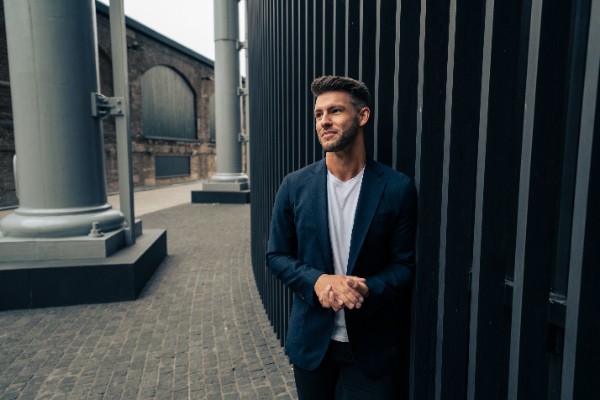
Ben Horden
There is a duality to my July this year. For many, the Festival Manager is a face seen at the planning meetings or greeting audiences. For me, the festival is also where I close the MacBook and take to my scores. As Music Director of King’s Lynn Festival Chorus, I have the extraordinary privilege of performing within the very festival I am managing. This year, we are thrilled to be joined by wonderful artists baritone Roderick Williams, violinist Charlie Lovell-Jones, and pianist Ella O’Neill for Vaughan Williams’ Five Mystical Songs, The Lark Ascending in an arrangement for choir and violin by Paul Drayton, and Elgar‘s Scenes from the Bavarian Highlands.
As well as being fortunate enough to empathise with both artistic and administrative and managerial temperaments, this duality reminds me that every decision made in the office exists solely as a service to that singular moment of magic when the lights go down, and the music begins, and to the investment in the development and future of music-making it symbolises.
The 2026 King’s Lynn Festival brings together a spectacular line-up that goes some way to reflecting the diversity and dynamism of the arts today. Beyond the headline artists — the Kanneh-Masons, Giltburg, Ogden, AAM, the RPO — I am excited about the breadth of our offering. Alongside the classical programming we have a flamenco dance evening, jazz from Gary Crosby’s quartet with saxophonist Denys Baptiste, theatre with Alison Skilbeck’s ‘Are there more of you?’, rising classical stars, folk music, exhibition, film, and much more. Whether it’s King’s Lynn Festival Chorus — with whom I am proud to share the stage —, The Guildhall Singers, or guided tours and walks from local experts, we are also incredibly proud to champion and showcase talent that exists on our own doorstep. Our goal is to ensure a doorway into this festival for everyone and that our “Festival Town” identity remains vibrant, inclusive, and relevant to the lives of the community here.
As we approach opening night, the anticipation becomes palpable. Much like those historic streets that surround me, the journey to it can sometimes be cobbled, yet when the curtain goes up, it’s all worth it.
The 75th anniversary is not the finish line. It presents a vital opportunity to reassess how we adapt to a rapidly shifting cultural landscape. Future success demands a forward-looking strategy led by those plugged directly into today’s evolving musical ecosystem — voices capable of reimagining how we reach and engage a modern, digitally connected, and diverse audience. But a contemporary vision requires a contemporary framework. If a regional festival is to thrive, its governance and artistic leadership must evolve alongside the culture itself; we cannot rely on yesterday’s blueprints to navigate tomorrow’s challenges.
Whether you are a lifelong patron or a first-time visitor, there is a seat for you here to explore the world-class music, stay for the unique atmosphere of our Hanseatic port town, and be a part of the history we are writing together. We look forward to welcoming you to King’s Lynn Festival to share this milestone – 12th to 25th July.
https://www.kingslynnfestival.org.uk
Ben Horden is a multi-faceted classical music professional, organist, chorus master and arts manager. He has a dual role of Festival Manager and Music Director of King’s Lynn Festival Chorus, as well as Concert Manager of King’s College, Cambridge. Equally at home at the organ, piano, harpsichord, and forte piano, he collaborates with both instrumentalists and singers as an accompanist, and as an ensemble and continuo player has worked with notable groups including The Royal Northern Sinfonia, Yorkshire Baroque Soloists, The Sixteen, London Mozart Players, and BBC Philharmonic live on BBC Radio 3. He has studied the organ with Andrew Reid, David Titterington, Ian Curror, Henry Fairs, and Robert Quinney, and harpsichord and forte piano with Peter Seymour.
For more of the best in classical music, sign up for our E-Newsletter