George Xiaoyuan Fu, praised as “one of the most exciting pianists of our time” by The Arts Desk, is a distinctive pianist, composer, and chamber musician. Known for “phenomenal technique” and interpretative clarity, he has gained international acclaim for performances marked by intellectual depth and virtuosity. His awards include a Gramophone Award, a BBC Music Magazine Award, and a Royal Philharmonic Society Award shortlist nomination, with appearances at venues such as Wigmore Hall, Het Concertgebouw, and the Frick Collection.
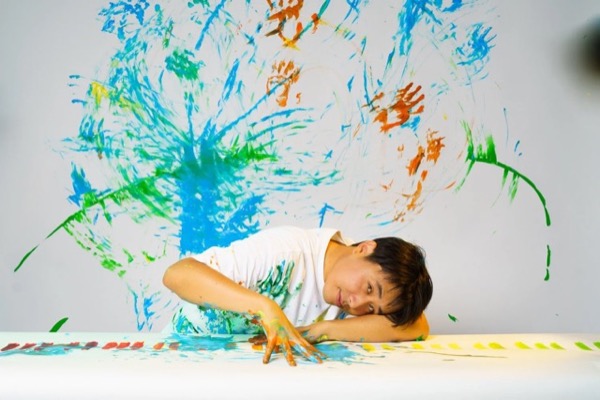
George Fu (Photo by Raphael Neal)
This summer, Fu launches his new album Solitude with Schubert at his Wigmore Hall recital on 13 July. The album features Schubert’s late Sonata in C minor, D.958, alongside selected lieder performed with mezzo-soprano Lotte Betts-Dean, including the lesser-known Einsamkeit. The project grew out of a short film of the same name, which premiered at the Aldeburgh Festival and was later nominated for a Royal Philharmonic Society Storytelling Award. Deeply personal in conception, the album reflects not only Fu’s evolving relationship with Schubert but also a period of profound emotional transformation in his own life.
Franz Schubert: Piano Sonata No. 19 in C Minor, D.958 – IV. Allegro
Born in the United States to Chinese American immigrant parents, both of whom were scientists, Fu describes his introduction to music with characteristic humour. “If you’re a Chinese American immigrant,” he says, “one of the things your parents always want to do is pick some music lessons.” In his case, however, “it just got out of hand.”
What began as childhood piano lessons quickly became an obsession. “I fell in love with it instantly,” he recalls. Although he maintained broad academic interests throughout his youth, music increasingly became central to his identity during his teenage years. However, unlike many young pianists pursuing professional careers, Fu initially chose not to attend a conservatory. Instead, he enrolled at Harvard University to study economics. Yet music remained inseparable from daily life. “I spent the entire time basically practising the piano as much as possible,” he says. Eventually, he realised that his future still belonged to music, leading him to continue his studies at the Curtis Institute of Music before later completing graduate work at the Royal Academy of Music.
Far from viewing his academic background as unrelated to his artistry, Fu believes those experiences profoundly shaped his approach to music-making. At Harvard, he explored philosophy, aesthetics, composition, and conducting alongside economics. “That sort of holistic background,” he explains, “probably informs what I do just as much as the intensive conservatory training.”
These intellectual and emotional dimensions became especially significant during the creation of Solitude with Schubert. Although Fu had studied Schubert’s music throughout his life, he long felt emotionally unprepared to perform the late works publicly. “I knew at some point in my life I wanted to record Schubert,” he says, “but I couldn’t really imagine myself performing it yet.”
That changed during the COVID-19 pandemic following the prolonged illness and eventual passing of his father. During that difficult period, Fu also experienced serious physical injuries brought on by stress and obsessive practising habits. “In order to avoid dealing with whatever was happening, I would just practice,” he recalls candidly. Endless hours at the piano eventually resulted in tendonitis, a pinched nerve, and severe back spasms. “Occasionally, I would actually faint because the pain was so strong.”
Then came the silence of lockdown. “COVID happened, which meant all the concerts were cancelled,” he says. “On the one hand, it was very unstable for all of us musicians. On the other hand, it kind of gave me space to process everything.”
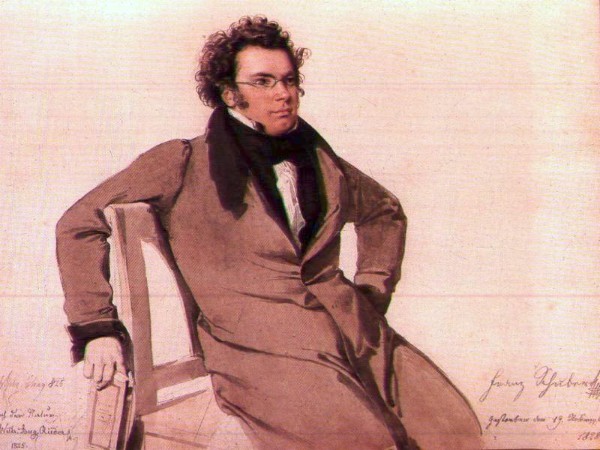
Franz Schubert
It was during this period that Schubert’s late music took on new meaning for him. While Fu resists simplistic interpretations of the repertoire as merely “music about grief,” he acknowledges the deeply therapeutic role the music played during that time. “There was something about it,” he says. “It offered kind of a therapeutic space.” More importantly, the experiences he endured allowed him to discover a new sense of artistic clarity. “Everything that happened to me let me kind of see what I wanted to say with the music.”
Franz Schubert: Schwanengesang, D.957 – 14. Die Taubenpost
The resulting album combines solo piano works with Schubert lieder, reflecting the intimate social and artistic world in which Schubert himself composed. The inclusion of songs was not simply a collaborative choice but a deliberate reflection of Schubert’s identity as a composer profoundly shaped by poetry and language. “I’m very adamant that one doesn’t really understand Schubert until you see that he’s a lyricist,” Fu explains. “He’s so engaged with text.”
For Fu, Schubert’s music exists within a deeply human world of friendship, conversation, and shared artistic experience. He describes gatherings where Schubert and his friends would sing, improvise, and exchange manuscripts before continuing discussions late into the evening. “It was all part of that really public and private world at the same time,” he says.
That intimacy became central to Fu’s interpretation of the composer. “Schubert is not somebody speaking to an auditorium of 500,” he reflects. “He’s speaking one-to-one. He’s talking to you directly.”
The album’s structure was carefully designed through tonal relationships and emotional progression. Beginning in C minor and moving through sonatas, songs from Schwanengesang, and Einsamkeit, the program traces a contemplative journey through solitude and introspection before concluding with the Hungarian Melody. “That’s how it was thematically built,” Fu explains, “as well as the whole musical journey of what it feels like to listen from beginning to end.”
Remarkably, the recording itself was completed in only three days at Wells Cathedral School. Fu selected the venue after hearing pianist Peter Donohoe praise the hall’s piano and acoustics. “We piled into this really lovely hall,” he says. “I spent a day and a half doing the solo work, and then Lotte Betts-Dean came on the final day.”
Whether discussing Schubert, composition, or recital programming, Fu consistently returns to one central idea: music as intimate communication. Beneath the dazzling technique and critical acclaim lies an artist searching not for spectacle, but for connection, one listener at a time.
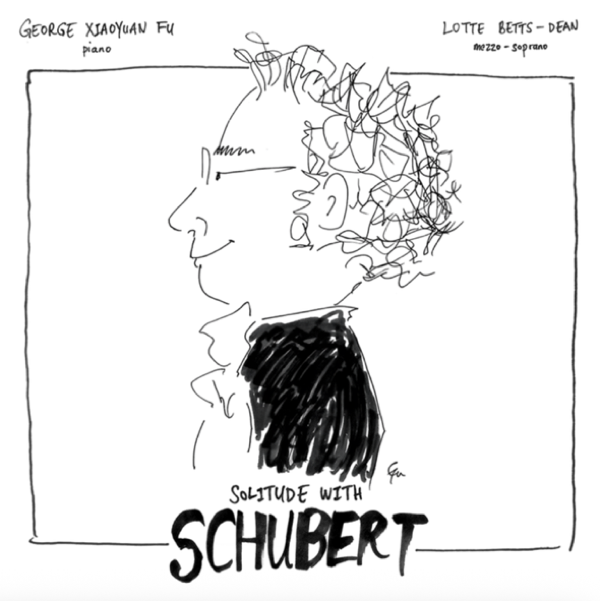
Solitude with Schubert
Performers: George Fu (pianist), Lotte Betts-Dean (mezzo-soprano)
Release date: July 10th, 2026
Catalogue number: PLAT31197
To learn about George Fu and his recital at Wigmore Hall, please visit https://www.georgefupiano.com and https://www.wigmore-hall.org.uk/whats-on/202607131930.
For more of the best in classical music, sign up for our E-Newsletter