The history of classical music is full of tragic stories of composers who died too young: Chopin, Schubert, and Mozart. Sadly, the history of the art is also full of tragic stories of pianists who met the same fate.
From prodigies nurtured by Liszt and Chopin to twentieth-century virtuosos who thrilled audiences from Moscow to New York, these pianists’ careers burned hot and bright before being extinguished before their time.
Today, we’re looking at ten remarkable pianists who died before the age of 35, from Alexei Sultanov, who gave a fiery Rachmaninoff performance at the Van Cliburn Competition, to Carl Filtsch, who (according to Chopin) understood Chopin’s music better than he himself did, to Dinu Lipatti’s final recital, to Youri Egorov’s courageous artistry amid the AIDS crisis.
Here are our picks for ten of the greatest pianists who died young.
Alexei Sultanov (1969–2005), 35 years old
Sultanov’s performance of Rachmaninoff’s Piano Concerto No. 2 at the 1989 Van Cliburn Competition
Born in Tashkent, Uzbekistan, to a cellist father and violinist mother, Alexei Sultanov began piano lessons at the age of six. He later studied at the Moscow Conservatory.
In 1989, when he was just 19 years old, he won the Van Cliburn Competition (a record that was only broken in 2022, when 18-year-old Yunchan Lim won).
In 1995, he added another feather to his cap by taking second prize (no first prize was awarded) at the prestigious Chopin Piano Competition in Warsaw, where he was the public’s clear favourite. He boycotted the winners’ concert in protest of the results.
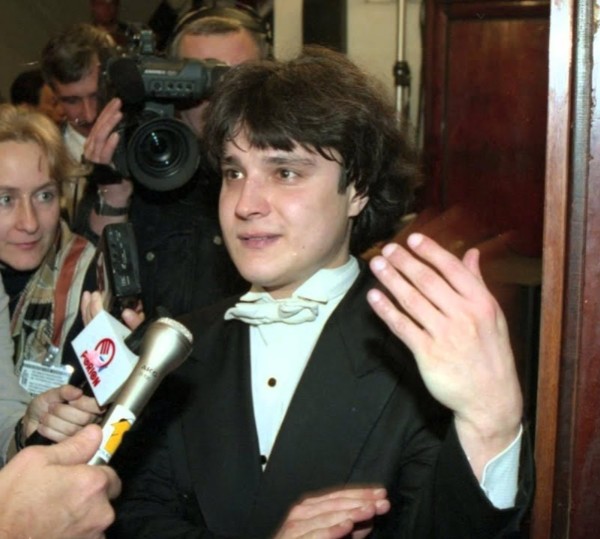
Alexei Sultanov © konkursy.nifc.pl
In 1996, at the age of twenty-six, he suffered a major stroke, the first of several that would impair his mobility.
Determined to continue to play, he returned to the stage and even performed in a wheelchair.
He died in the early morning hours of 30 June 2005 after another stroke at his home in Ft Worth, Texas.
Youri Egorov (1954–1988), 33 years old
Egorov’s performance of Schumann’s Carnaval
Born in 1954 in Kazan, Soviet Union, Egorov was a prodigy. He trained at the Kazan Conservatory from the age of six and later at the Moscow Conservatory.
By his early twenties, he had won major competition honours: fourth prize at the Marguerite Long – Jacques Thibaud Competition in Paris, a bronze medal at the 1974 Tchaikovsky Competition in Moscow, and a prize at the Queen Elisabeth Competition in Belgium.
Egorov was gay, and while he was in Belgium, he was struck by the openness with which queer people could live their lives outside of the Soviet Union. His fear of his orientation being discovered influenced his decision to defect in 1976.
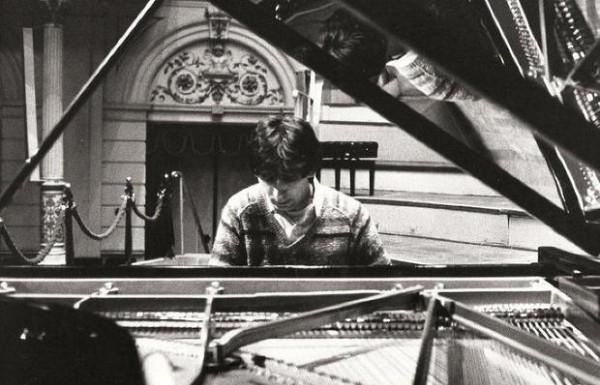
Youri Egorov
He settled in the Netherlands and found a partner, architect Jan Brouwer. Soon, he was dazzling Western audiences in person.
In 1977, Egorov entered the Van Cliburn Competition. Although he didn’t make the finals, his playing inspired such admiration that an ad hoc committee of patrons raised funds equal to the top prize to boost his career. This support led to an acclaimed New York debut in 1978 and a flurry of high-profile performances around the world.
Egorov’s flourishing career was tragically cut short. He had always felt he would die young, and in the mid-1980s, he contracted AIDS. At the time, it was a death sentence.
Youri Egorov died at his home in Amsterdam on 16 April 1988 from complications of AIDS, just weeks before Jan Brouwer also passed away.
His recordings are still deeply loved today.
Dinu Lipatti (1917–1950), 33 years old
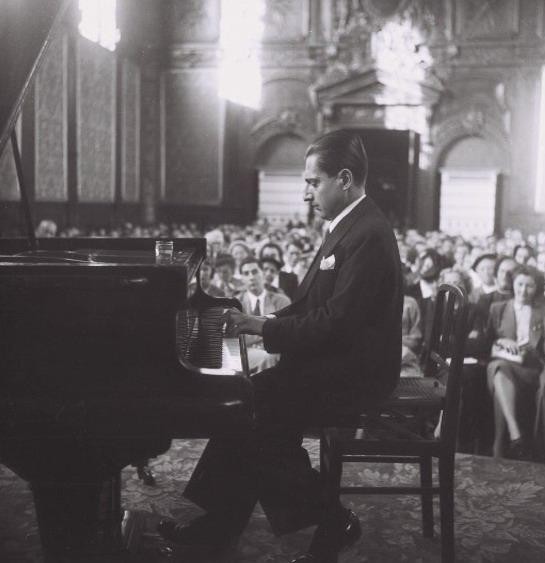
Dinu Lipatti
George Enescu: Piano Sonata No. 1 in F-Sharp Minor, Op. 24, No. 1: II. Presto vivace (Dinu Lipatti, piano)
Born in Bucharest in 1917, Lipatti was a child prodigy from a musical family. His father had studied violin with Pablo de Sarasate; his mother was a pianist; and his godfather was the composer George Enescu.
As a teenager, he earned praise both for his pianism and his compositions.
In 1933, he entered the Vienna International Piano Competition. He earned second prize there, but many, including jury member Alfred Cortot (who resigned from the jury over the controversy), believed he should have won first.
He went to study in Paris with Cortot and the star composition teacher Nadia Boulanger.
By the mid-1940s, despite the multi-year disruption of World War II, Lipatti became recognised as one of the foremost pianists of his generation.
Unfortunately, his career would be tragically cut short by illness. In the late 1940s, he was diagnosed with Hodgkin’s disease, a form of lymphoma.
Determined to continue performing for as long as possible, he gave a now-legendary final recital on 16 September 1950 at the Besançon Festival in France.
While feverish and deathly ill, Lipatti gave sublime performances of Bach, Mozart, and Schubert, and played 13 of Chopin’s 14 waltzes.
When he lacked the strength to continue to the final Chopin waltz, he substituted it with Bach’s “Jesu, Joy of Man’s Desiring” instead…the very same piece with which he had begun his career in 1935.
He died from complications of Hodgkin’s disease that December.
A short documentary about Lipatti’s final performance
William Kapell (1922–1953), 31 years old
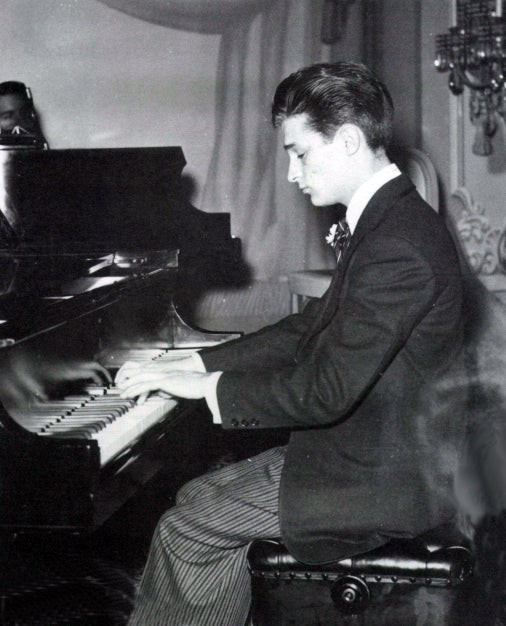
William Kapell
Aram Il’yich Khachaturian: Piano Concerto in D-Flat Major, Op. 38 (William Kapell, piano; Boston Symphony Orchestra; Sergey Koussevitzky, cond.)
Born in New York City in 1922, Kapell studied at the Juilliard School. He won major awards while still a teenager, including the Philadelphia Orchestra’s youth competition and the Naumburg Award in 1941.
By his early twenties, Kapell had risen to prominence thanks in part to his electrifying performances of Aram Khachaturian’s Piano Concerto.
His 1946 recording of the concerto became a best-seller and led to his nickname “Khachaturian Kapell.”
Critics and colleagues recognised Kapell as a major artist: the Washington Post hailed him as “America’s first great pianist” and the New York Times later called him “one of the last century’s great geniuses of the keyboard.”
He had always suffered from asthma, but in 1952, he began having additional issues with his lungs. His doctors told him to ease up on his grueling schedule, which he declined to do. One of his friends later said Kapell had revealed a terminal cancer diagnosis to him, but the official historical record is still murky on the question.
However, it wouldn’t be cancer that killed him. On 29 October 1953, Kapell was traveling home from an Australian tour on British Commonwealth Pacific Airlines Flight 304 when disaster struck. As the plane approached San Francisco in the morning fog, it descended too low and crashed. Everyone on board died.
Noel Mewton-Wood (1922–1953), 31 years old
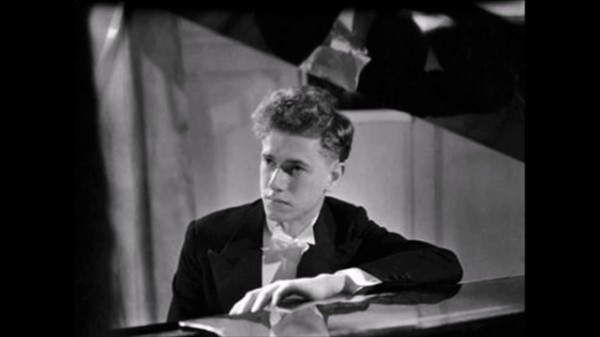
Noel Mewton-Wood
Arthur Bliss: Piano Concerto, Op. 108 (Noel Mewton-Wood, piano; Utrecht Symphony Orchestra; Walter Goehr, cond.)
Born in Melbourne in 1922, Mewton-Wood was a prodigy, making his concerto debut at the age of twelve with the Melbourne Symphony Orchestra.
Supporters recognised his talent. In 1937, they paid to send him to study at London’s Royal Academy of Music.
In 1940, conductor Sir Thomas Beecham auditioned the 17-year-old and declared him “the best talent I’ve discovered in the British Empire for years.”
That same year, he made his formal debut with Beecham at Queen’s Hall, playing Beethoven’s Piano Concerto No. 3 to acclaim.
He was especially admired as an interpreter of modern works: he gave the world premiere of Benjamin Britten’s Piano Concerto in 1943 with Britten himself conducting, as well as premieres of new compositions by Sir Arthur Bliss, including a piano concerto and sonata written especially for him.
By the age of thirty, he had established himself as one of Britain’s most brilliant young pianists and a champion of composers like Stravinsky, Prokofiev, Hindemith, Busoni, and Britten.
In late November 1953, his partner and manager, William Fedrick, died of a ruptured appendix. Mewton-Wood was devastated by his death and blamed himself, feeling he had not done enough to help.
On 5 December 1953, he died by suicide, swallowing cyanide in the London flat he and Fedrick had shared.
A coroner’s inquest recorded that he acted “while the balance of his mind was disturbed” by grief.
Richard Farrell (1926–1958), 31 years old
Farrell’s performance of Tchaikovsky’s Piano Concerto No. 1
Born in Wellington in 1926, Farrell was a prodigy who gave his first public performances as a child in New Zealand and Australia. He made his radio debut at the age of four.
His pianism caught the attention of William Kapell, who became his mentor. Farrell moved to the United States to study at Juilliard under Kapell’s former teacher.
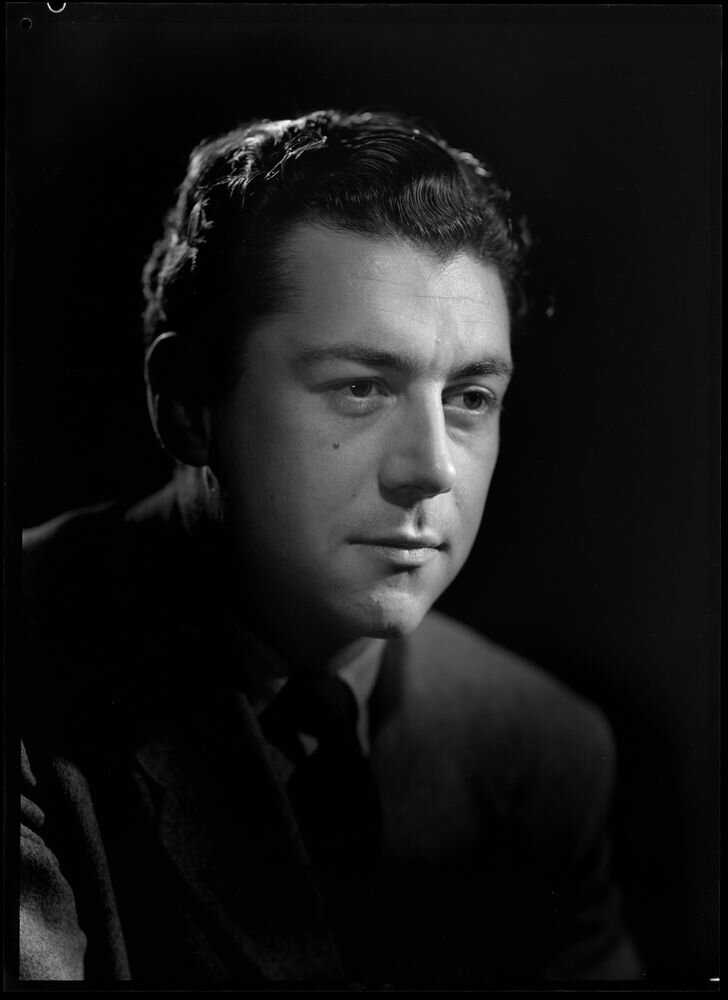
Richard Farrell, 3 August 1951, by Spencer Digby Studios; Spencer Digby / Ronald D Woolf Collection. Gift of Ronald Woolf, 1975. Te Papa (B.076062)
By the late 1940s, Farrell was performing extensively in the U.S. and New Zealand. He made his Carnegie Hall debut in 1948 to glowing reviews.
The legendary Arthur Rubinstein even declared that in the world there were “only three pianists” – Rubinstein himself, William Kapell, and Richard Farrell.
Tragically, his career was about to come to a halt.
On 27 May 1958, Farrell was traveling by car through Sussex when the vehicle veered off the road and struck a tree at high speed. All three occupants of the car were killed. He was just 31 years old.
Carl Tausig (1841–1871), 29 years old
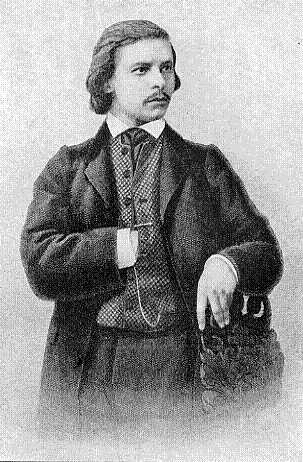
Carl Tausig
Carl Tausig: Fantasia on Moniuszko’s Halka, Op. 2 (Michael Ponti, piano)
Born in Warsaw to a musical family, Tausig met Liszt at the age of fourteen. He accepted Tausig into his studio and quickly became Liszt’s favourite student.
Tausig toured alongside his mentor and studied not only piano, but composition and orchestration under Liszt’s guidance.
Critics in his time marveled at his formidable technique, although some found his early performances brash.
In addition to performing, Tausig briefly ran a piano academy in Berlin and taught a number of notable pianists. However, his heart wasn’t in the project, and it was short-lived.
In his mid-twenties, as he pursued a demanding touring schedule, Tausig’s health began to fail. In June 1871, too weak to perform, he was cared for by friends in Leipzig as he battled illness.
He died in Leipzig of typhoid fever at the age of 29: an early death that shocked the musical world.
Alexandre Levy (1864–1892), 27 years old
Levy’s Symphony in E-minor
Born in São Paulo, Brazil, in 1864 to a French-Jewish immigrant family, Levy was immersed in music from an early age, as his father owned a music shop and concert hall.
He gave his first public performance at the age of eight, accompanying his father’s clarinet playing.
In 1887, he spent a year studying music in Paris before returning to Brazil and focusing on composing.
During the late nineteenth century, Brazil was searching for its cultural identity after the end of the Empire and the proclamation of the Republic in 1889.
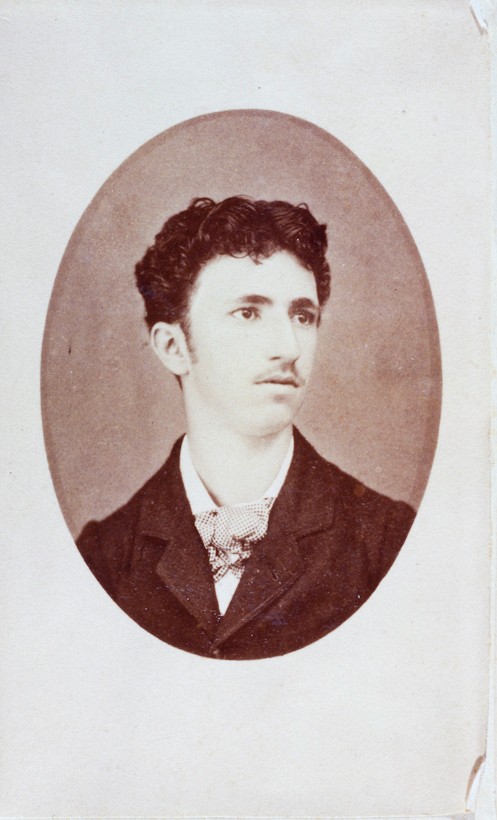
Alexandre Levy
As one of the first Brazilian composers to incorporate Brazilian folk and popular melodies into classical music forms, he became an important cultural figure.
Levy’s promising life and career came to a sudden, mysterious end in early 1892.
On January 17, he was attending a dinner gathering on his family’s country estate when he complained of feeling unwell.
However, before a doctor could be summoned, he collapsed and died very suddenly. He was only 27 years old.
Julius Reubke (1834–1858), 24 years old
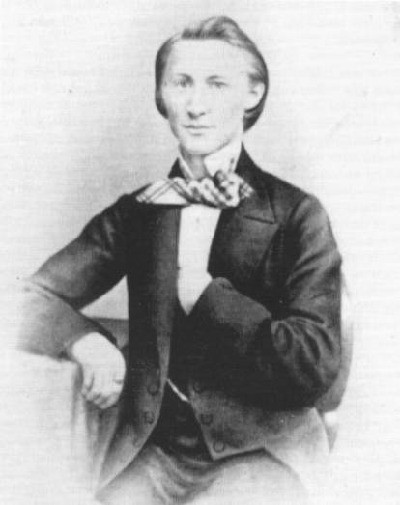
Julius Reubke
Born in 1834 in Hausneindorf, Germany, Reubke was the son of an organ builder and grew up around music and musical instruments.
He studied piano and composition in Berlin, then moved to Weimar to study under Liszt in 1856.
Reubke moved into Liszt’s residence and composed there the two works that have secured his posthumous fame: the Piano Sonata in B-flat minor and the Organ Sonata on the 94th Psalm in C minor.
Liszt was deeply impressed: he added Reubke’s works to his own concert repertoire and considered him one of his most gifted students.
Unfortunately, Reubke was ill with tuberculosis, and by 1857, his health was deteriorating badly.
Hoping to recover, he left Weimar for Dresden and then for a health resort in Pillnitz in the spring of 1858.
Unfortunately, within days of arriving at the spa, Julius Reubke died on 3 June 1858, just a few weeks after his 24th birthday.
Carl Filtsch (1830–1845), 14 years old
Filtsch’s “Adieu”
Born in 1830 in what is now Sebeș, Romania, Filtsch was the son of a Lutheran pastor. He received his first piano lessons from him as a toddler.
His abilities were evident almost immediately. As a small boy, he gave recitals in Vienna, astonishing audiences there.
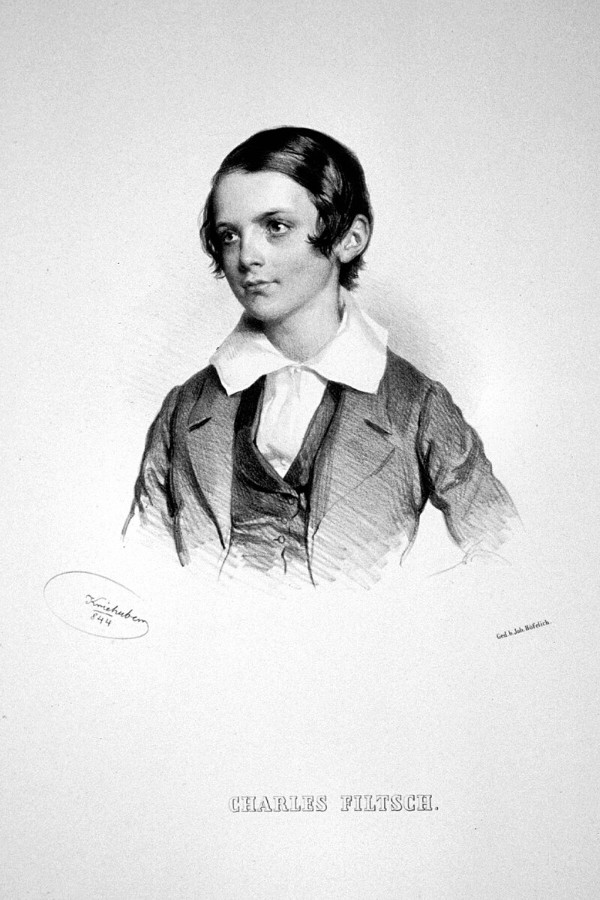
Carl Filtsch
In late 1841, when he was just eleven years old, Carl and his family moved to Paris with one goal: to study with Frédéric Chopin.
Chopin rarely accepted child students, but young Filtsch’s playing convinced him to bend his own rules.
He took the boy under his wing, giving him three lessons a week. Before long, he was his favourite pupil.
In 1843, Chopin reportedly said, “My God! What a child! Nobody has ever understood me as this child has.”
He began touring across Europe when he was just thirteen. In early 1845, while in Venice to restore his health, he was struck by tuberculosis, or possibly peritonitis. His condition worsened rapidly.
Carl Filtsch died in Venice on 11 May 1845. He was just a few weeks away from turning fifteen.
Conclusion
Whether struck down by accident or illness, each of these pianists left a memorable legacy, despite their short careers.
Their losses are devastating to contemplate. But even though their lives were short, the music of Sultanov, Egorov, Lipatti, Kapell, Mewton-Wood, Farrell, Tausig, Levy, Reubke, and Filtsch all survives today, providing a testimony to the power and continued relevance of the art of piano playing.
For more of the best in classical music, sign up for our E-Newsletter