Between 1902 and 1918, seven girls were born who would go on to remake what a career in cello could look like.
One inspired one of the century’s greatest cello concertos; another, some of the best solo cello suites. Yet another played in the soundtracks from the Golden Age of Hollywood. Several fought for principal cello positions in major orchestras – fights that sometimes ended in heartbreak and other times in triumph.
None of these women is household names today, but all of them shaped 20th-century cello playing – as performers, teachers, and even composers.
Marie Dare (1902–1976)
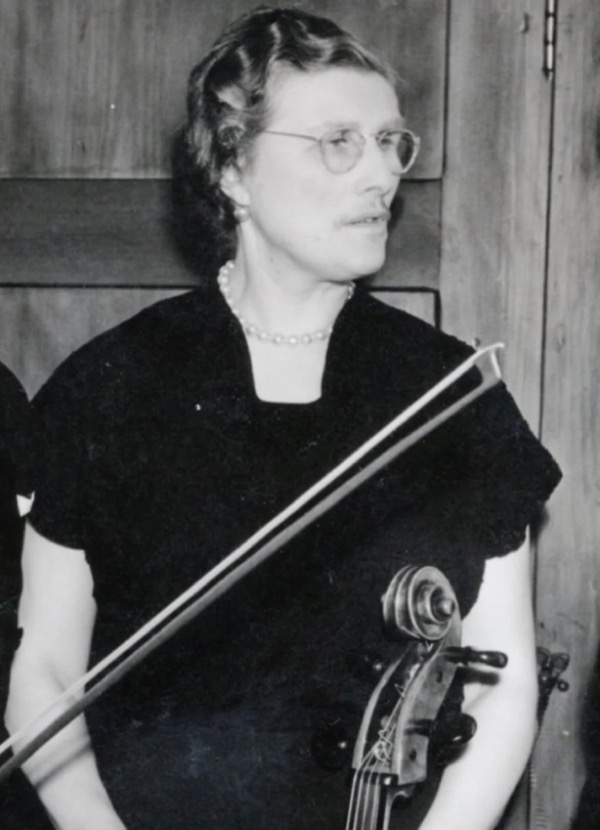
Marie Dare
Marie Dare was born in February 1902 in the coastal Scottish town of Newport-on-Tay.
She began cello studies as a child and later studied in London at the Guildhall School of Music.
From there, she travelled to Paris to study under Paul Bazelaire, who had taught star French cellist Pierre Fournier.
At seventeen, Dare made her debut at the Aeolian Hall in London. Later, starting in the 1920s, she began appearing on British radio. In 1938, she lent her name to the Marie Dare String Quartet, an all-women ensemble.
Marie Dare’s Strathspey & Reel
After World War II (during which she served as a petty officer in the Women’s Royal Navy Service), she joined the Reid Orchestra in Edinburgh as principal cello. She also taught at the Royal Scottish Academy of Music.
Dare was a composer. Although she specialised in short character pieces for cello inspired by Scottish folk tradition, she also wrote for string orchestra, string quartet, and piano trio.
She wrote for double bass, too – an instrument that, delightfully, she took up later in her career.
Elsa Hilger (1904–2005)
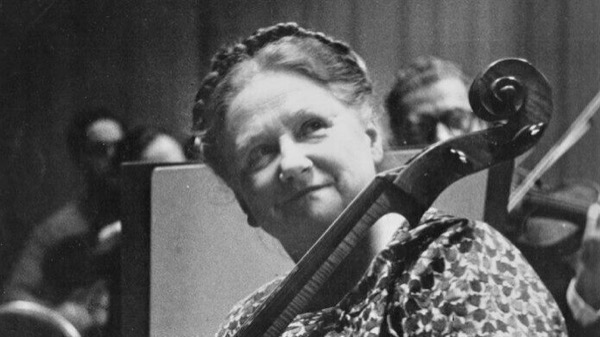
Elsa Hilger
Elsa Hilger was born in 1904 in Trautenau, Austria (present-day Trutnov in the Czech Republic). When she was nine, Otakar Ševčík, her violinist sister’s famous teacher, recommended that Elsa play cello.
After her father died in World War I, Elsa and her two sisters moved to Vienna to attend the Vienna Conservatory. At twelve, she appeared with the Vienna Philharmonic, playing Tchaikovsky’s Rococo Variations.
In 1920, the Hilgers relocated to America, where Elsa began studying with British cellist Felix Salmond (the soloist who had premiered Elgar’s cello concerto) at the Juilliard School.
A performance by Elsa Hilger
In 1934, pianist Olga Samaroff – one of the great American pianists of her day, and the ex-wife of conductor Leopold Stokowski – took note of Hilger’s talent. Always keen to promote talented young people, especially women, Samaroff recommended that Hilger join the Philadelphia Orchestra, where Stokowski was music director.
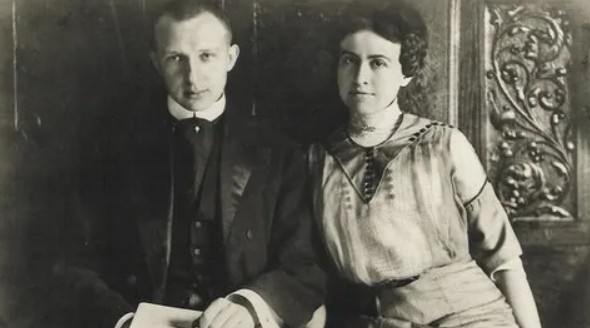
Olga Samaroff and Leopold Stokowski
Hilger made a major impression at two auditions: one for Stokowski and one with the musicians’ union. In the end, she won the job, becoming America’s first woman cellist to play full-time in a major orchestra.
She played with the Philadelphia Orchestra for 35 years, ultimately rising to assistant principal. The only concert she ever missed during those 35 years was the day her son was born.
She retired at 65, per union regulations, and focused on teaching. She died in 2005 at the age of 101.
We wrote about her extraordinary life, including how she lost – and then recognised and recovered – her priceless cello here: https://interlude.hk/forgotten-cellists-ii-elsa-hilger/.
Eva Heinitz (1907–2001)
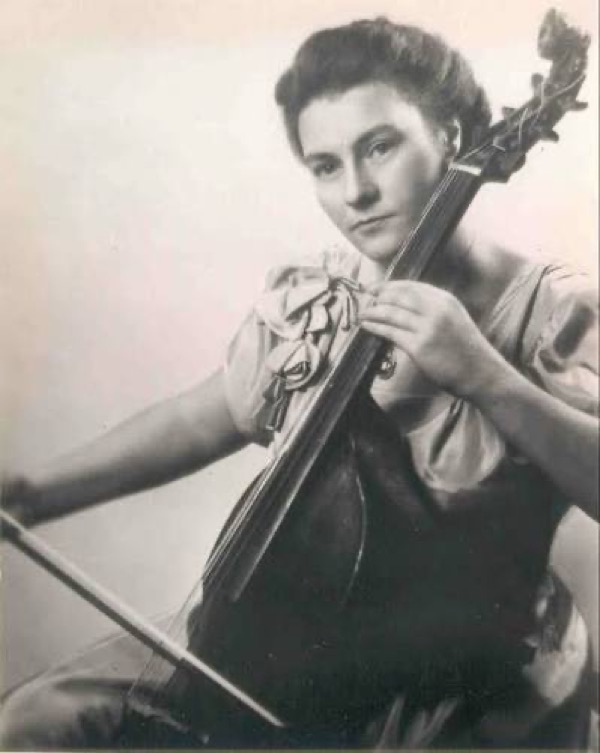
Eva Heinitz
Eva Heinitz was born in Berlin in 1907 to a music lawyer and his wife. She fell in love with the cello and began studying at the Berlin State Academy of Music at age fifteen.
Her teacher was Hugo Becker, whose Romantic-era, rubato-rich playing she was sceptical of; she found herself drawn to more historically accurate methods of interpreting Baroque repertoire. Eventually her tastes led her to take up the viola da gamba, a Baroque instrument that’s a cousin of the modern cello.
In 1933, the year she turned 26, she fled the Nazis due to her half-Jewish ancestry. She spent time in Paris and London, then moved to the United States in 1939.
Heinitz playing Marais’s Prelude in D minor
After arriving in America, conductor Fritz Reiner asked her to join the Pittsburgh Symphony. Like Elsa Hilger, she was promoted to assistant cellist, and Heinitz had her eye on the principal seat.
However, Reiner refused to grant her the title solely because of her gender. She responded by leaving the orchestra (ignoring Reiner’s pleading, she later remembered).
The Pittsburgh Symphony would not hire a woman as a principal cellist until 1979, when Anne Martindale Williams won the seat she still holds today, retiring this October.
Instead, Heinitz moved to Seattle to teach at the University of Washington. During her nearly 30-year tenure there, she helped contribute to the historically informed performance practice movement in the United States.
We wrote about her here: https://interlude.hk/forgotten-cellists-xiv-eva-heinitz/.
Raya Garbousova (1909–1997)
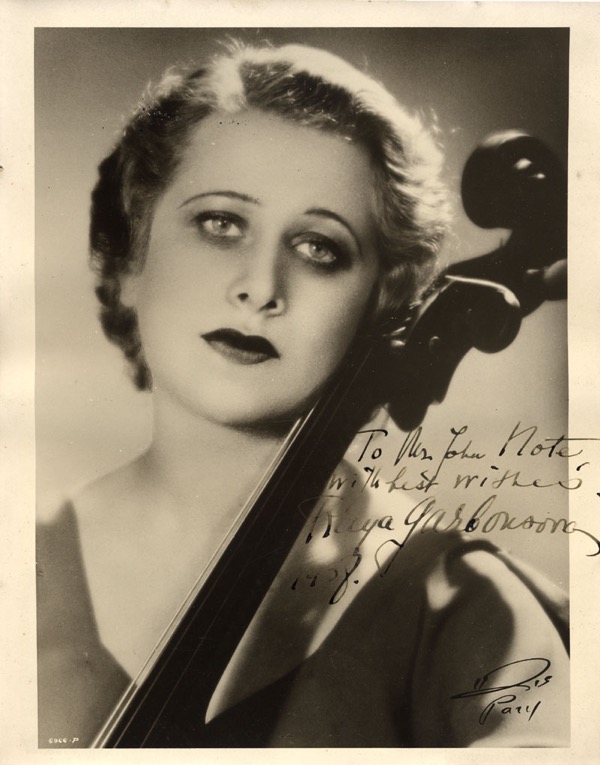
Raya Garbousova
Raya Garbousova was born in Tiflis, now Tbilisi, the capital of Georgia, to the principal trumpet player of the Tbilisi Symphony and his wife. She began playing cello at six after being entranced by bassist Serge Koussevitzky.
She made her debut in Moscow as a teenager in 1923, playing Tchaikovsky’s Rococo Variations. Two years later, she travelled to Leipzig to take lessons from legendary cello teacher Julius Klengel, but he declined to accept her as a pupil, saying he had nothing to teach her.
She debuted in Paris in 1927, then in America, appearing in Boston and New York. She officially emigrated to the United States in 1939.
Garbousova’s performance of Barber’s cello concerto
In 1945, Samuel Barber, one of the leading composers of her adopted country, wrote Garbousova a cello concerto. (Amusingly, Serge Koussevitzky, then music director of the Boston Symphony Orchestra, commissioned it.)
Garbousova married a cardiologist in 1948 and settled with him in DeKalb, Illinois, about an hour outside Chicago.
Between 1973 and 1991, she taught at Northern Illinois University. She also taught at the Hartt College of Music in Hartford, Connecticut.
She died in DeKalb in 1997 and was a widely beloved figure in the classical music world.
Eleanor Aller Slatkin (1917–1995)
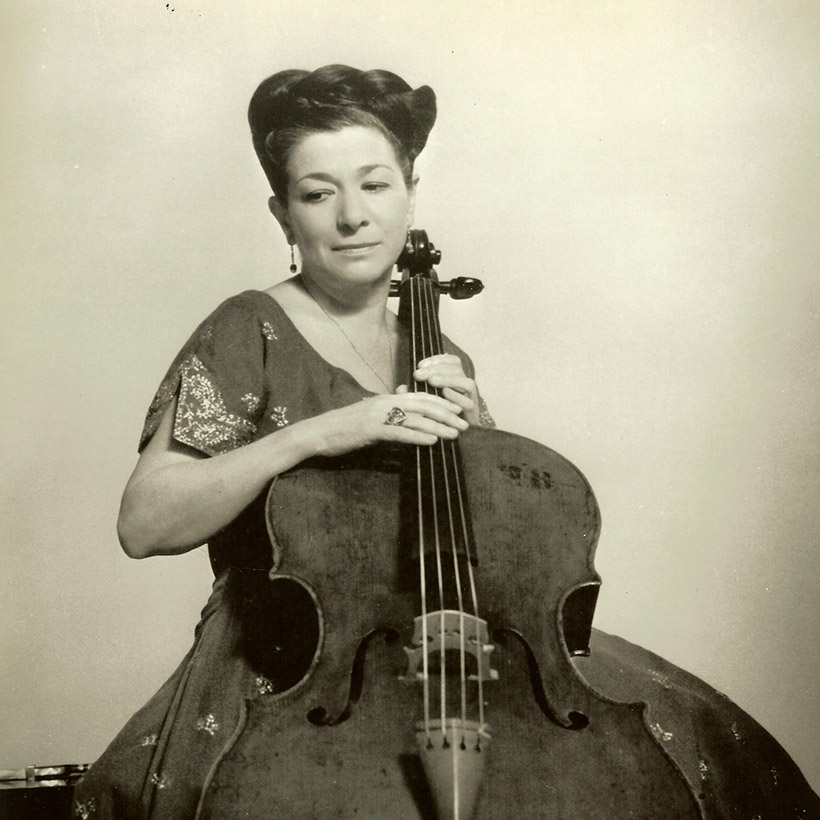
Eleanor Aller Slatkin © leonardslatkin.com
Eleanor Aller was born in New York City in 1917, daughter of a cellist father and pianist mother. She enrolled at the Juilliard School to study under Felix Salmond, the cellist who premiered the Elgar cello concerto.
In 1939, when she turned 22, she became principal cellist of the Warner Brothers Studio Orchestra, the first woman to hold that post.
It was a major accomplishment: we’ve already seen how difficult it was for Hilger and Heinitz to secure that position in two of the major symphony orchestras out East.
A performance by the Hollywood String Quartet
She married violinist Felix Slatkin that same year. Together, they founded the Hollywood String Quartet, which went on to make important recordings of modern quartet repertoire by Walton, Schoenberg, Hindemith, and others.
She appeared on the soundtrack of several landmark movies, including the 1946 Bette Davis film Deception and the 1977 Spielberg film Close Encounters of the Third Kind.
She and her husband had two sons: Leonard Slatkin, the conductor, and cellist Frederick Zlotkin.
Suzette Forgues Halasz (1918–2004)
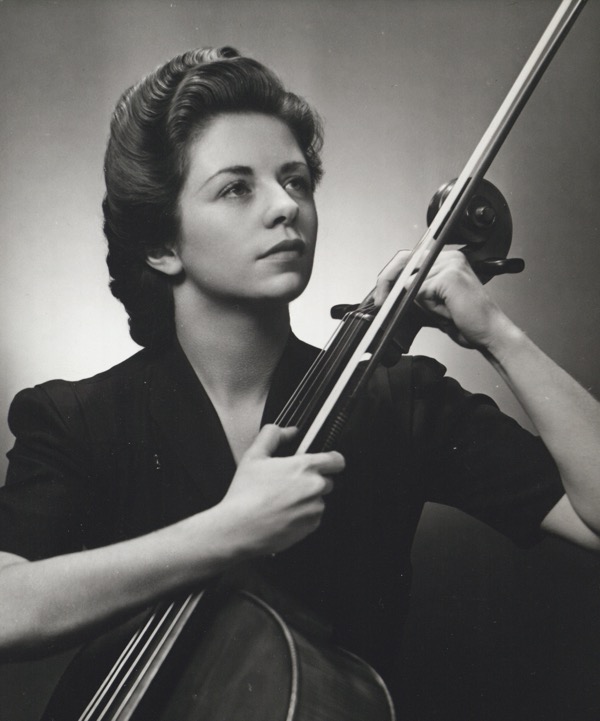
Suzette Forgues Halasz
Suzette Forgues was born in Montreal in 1918. She began playing piano as a toddler and gave her first public performance at four. She later took up the cello and gave her debut cello recital at eleven.
Forgues graduated from the Académie de musique du Québec in 1940. She also studied with Emanuel Feuermann, as well as Felix Salmond, like Hilger and Aller.
In 1942, she returned to Montreal and became the principal cellist of the Montreal Symphony.
A few years later, she married conductor Laszlo Halasz, the first director of the New York City Opera. She moved to New York to join him and became principal cellist of the NYCO orchestra.
In 1954, she stepped back from her performing career to focus on raising her children. She also taught at the music faculty of Queens College, City University of New York.
Zara Nelsova (1918–2002)
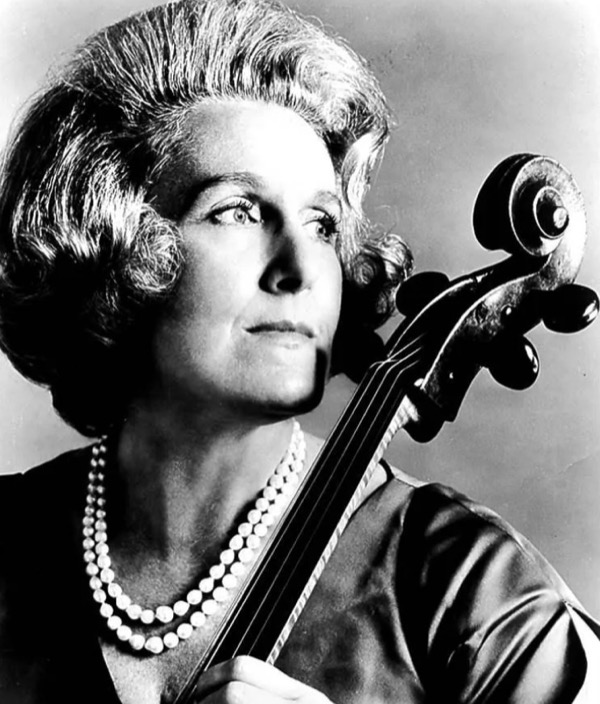
Zara Nelsova
Zara Nelsova was born in Winnipeg in 1918, where she made her first performance at age five. Her family was impoverished, and her father had dreams of fame and fortune, often locking her in her room to make her practice.
She and her parents moved to London, where she studied at the London Cello School. She gave her debut recital there and appeared with the London Symphony Orchestra at thirteen.
During World War II, she returned to Canada. Despite never having played in an orchestra before, she was named the principal cellist of the Toronto Symphony – at the same time that Forgues was serving in the same position in Montreal.
Nelsova plays Bloch’s Schelomo
After the war, she relocated to London, where she performed contemporary works by Hindemith, Shostakovich, and Barber (the same concerto originally written for Garbousova). Ernest Bloch also dedicated three solo cello suites to her.
In 1955, she became an American citizen and appeared with many of the leading American orchestras. She taught throughout her life, and from 1985 until her death, she taught at Juilliard.
Interlude contributor Janet Horvath shared her personal memories of this cello great here: https://interlude.hk/great-women-artists-shaped-music-zara-nelsova/.
Conclusion
Many of these women had orchestral and teaching careers rather than solo ones, which is part of why they aren’t household names today.
But that doesn’t mean their work mattered any less.
Together, through their teaching, concert performances, and sheer dogged persistence, they helped pave the way for the many women cellists active today all around the world.
For more of the best in classical music, sign up for our E-Newsletter