In 2022, filmmaker Tim van Beveren and pianist Kyra Steckeweh released a documentary about composer Dora Pejačević called DORA – Flucht in die Musik (or, in English, Dora – Escape Into Music).
It’s now widely available through Amazon and other distributors.
Music lovers might have some questions. Who was Dora Pejačević? What happened in her career? What does her music sound like? And what did van Beveren and Steckeweh discover about her life while they made the film?
Today, we’re looking at the life of Dora Pejačević and the new and surprising biographical details the filmmakers discovered.
DORA – Escape into Music
Who was Dora Pejačević?
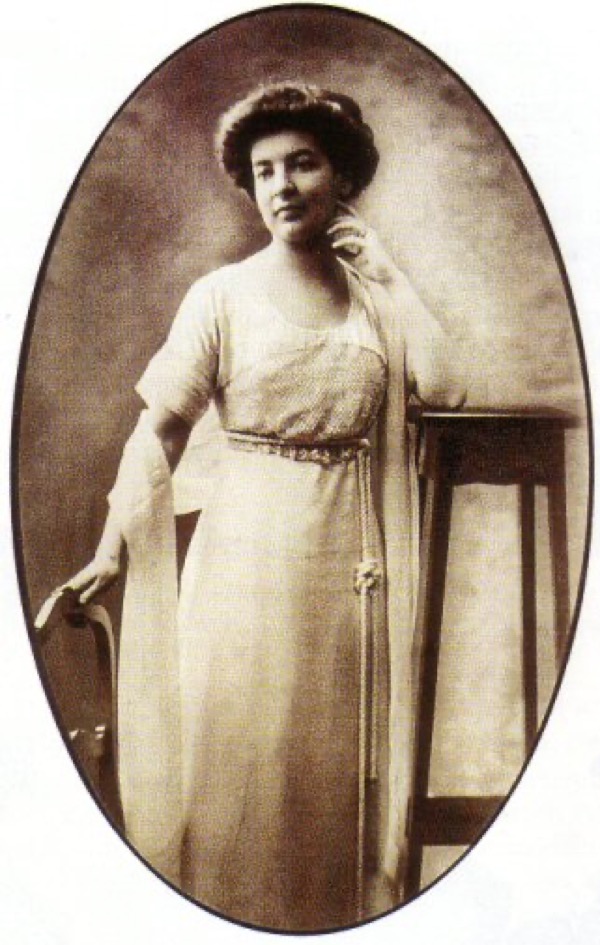
Dora Pejačević
Dora Pejačević was born in 1885 in Budapest to a Croatian count and a Hungarian noblewoman. She and her siblings grew up in a castle in Našice, Croatia.
Instead of being sent to a foreign boarding school, she was taught at home by private tutors.
She showed interest in music from an early age and began composing at the age of twelve.
Throughout her teens and twenties, she spent a lot of time in cities like Vienna, Prague, Munich, and Dresden, studying and soaking in the culture.
What music did she write?
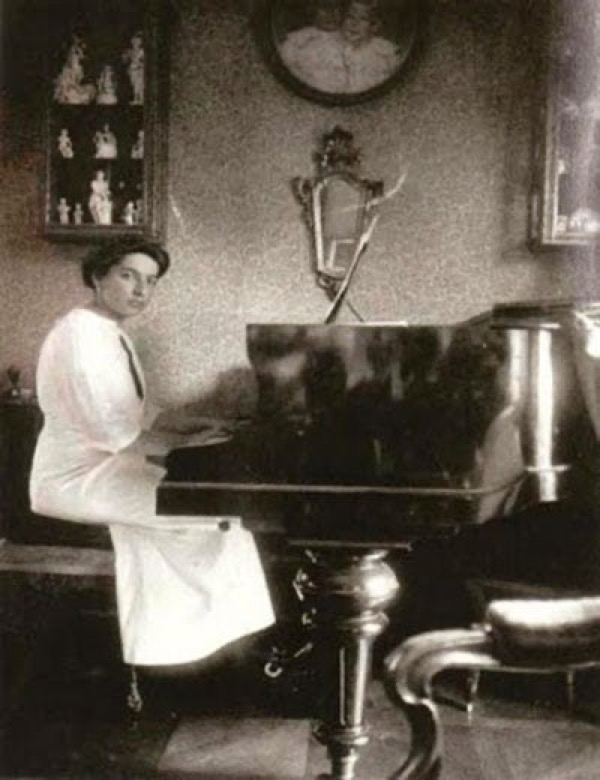
Dora Pejačević at the piano
Because of her family’s wealth and privilege, Pejačević didn’t need to perform or compose for money. Nevertheless, she took her musical life extremely seriously and professionally.
Her music inhabits a late-Romantic world of lush harmonies and expansive melodies, with some similarities to Brahms, Debussy, or early Mahler. Her writing balances a burning emotional intensity with smart structure, often unfolding in long, surging arcs that feel both passionate and quietly defiant.
She wrote a number of chamber works, including piano trios, a piano quartet, a piano quintet, a string quartet, and more.
In 1913, she composed a piano concerto, often cited as the first piano concerto by a Croatian composer, male or female.
After World War I broke out, she volunteered for war relief work. She also focused on composing, writing her Symphony in F-sharp minor.
Pejačević’s Symphony in F-sharp minor
What happened to Pejačević?
Pejačević got married to Ritter Ottomar von Lumbe in September 1921. She got pregnant in the summer of 1922 at the age of thirty-seven.
She had concerns about the pregnancy and feared for her life. Late that year, she wrote a letter to her husband recording her wishes for the child, should she die giving birth. “Treat them equally, whether it be a girl or a boy,” she wrote.
She gave birth in early 1923 and initially survived, but she developed sepsis after childbirth. She died on 5 March 1923.
Her husband sent their son to live with Dora’s mother. He kept his wife’s papers in his apartment. For decades, nobody was alive who wanted to or was able to promote her music, unlike contemporaries like Béla Bartók and Zoltán Kodály.
The rediscovery of Pejačević only started happening in the 1970s.
What secrets about Pejačević did the makers of “Dora” discover?
The documentary Dora delves into the biography of Pejačević, discovering photographs and letters that shed new light on her life and career.
Here are some of the most intriguing takeaways about her life that the filmmakers explore in the film.
Dora Pejačević grew up in a castle, and it impacted her work.
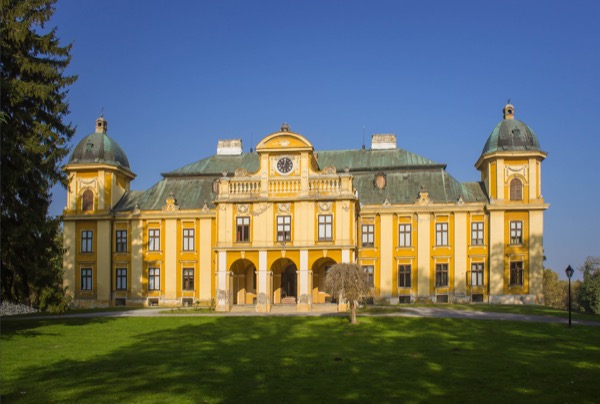
The Pejačević family castle in Našice, Croatia
Although her childhood home is mentioned in her Wikipedia article, it is difficult to wrap your mind around the actual splendour of the home she grew up in.
In the documentary, Tim van Beveren and Kyra Steckeweh visit the grounds of the castle, including a beautiful lake and a composing pavilion next to it.
The film shows how her surroundings enabled Pejačević to compose without distractions, in nature.
Pejačević’s Life of Flowers, Op. 19
Pejačević had a rocky relationship with her mother.
Pejačević’s mother struggled with mental health issues, appeared to have had control issues, and spent time in sanitariums.
Pejačević was miserable living with her, writing to friends about how she was perpetually tempted to cut her out of her life.
But cutting ties with family members was just as – if not more – painful a century ago than it is today.
As a young woman, Pejačević fell in love with Baron Johannes Nádherný.
According to van Beveren and Steckeweh, Pejačević and a baron named Johannes Nádherný enjoyed a warm correspondence for many years.
Sadly, however, it appears that Pejačević felt more love for him than he did for her, and Pejačević’s mother did not approve of the relationship.
In March 1913, Pejačević wrote a letter to Nádherný, thanking him for a sympathy card he wrote on the death of her grandmother, and inquiring about how he was doing and how his winter had gone. Tragically, Nádherný died by suicide before he could respond.
Pejačević had romantic relationships with at least two women.
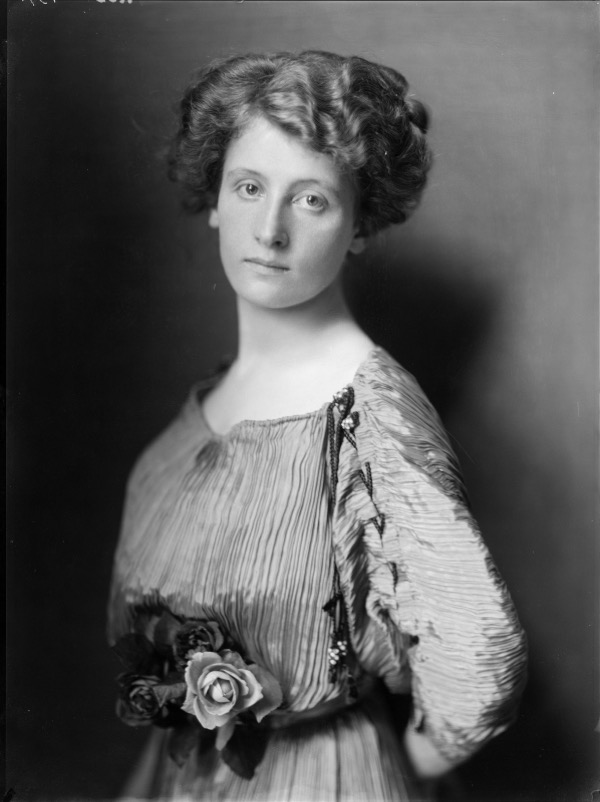
Photo of Sidonie Nádherná von Borutín in 1910
In her twenties, Pejačević spent more and more time with Johannes Nádherný’s sister, Sidonie Nádherná, a beautiful Czech noblewoman who hosted a prestigious salon and had a thrillingly tumultuous on-again, off-again romantic relationship with Karl Kraus.
Kraus grew intensely jealous of the relationship between Sidonie and Dora…and Dora, for her part, wasn’t always happy with Karl. In the Pejačević archives, there is a photograph of the three of them, with Kraus’s image scissored out.
She also had strong feelings for another friend named Baroness Rosa Lumbe-Mladota. She wrote to her in 1920:
“Yesterday evening, between 10 and 11, I composed my second Nocturne. This is the May night with the song of the nightingale. I wrote it in a very ‘soft’ mood, and all my tenderness for you lies in it. That’s why, Rosi, because I composed this Nocturne while thinking of you, and because the first one is so dear to you, both of them should belong to you. I said so much to you in my thoughts. Only later to sadly realise that the distance that separates us is something very real. But still, Rosi, in the feeling lies the spacelessness and the infinite, and my soul always found its way to you. But I know that when the days are so beautifully sunny and peaceful, like now, I long more than ever to see my Rosi again and to bring her everything beautiful that I see and shower her with everything good that flows from my heart when it loves. I always want to know about you, to talk about you, and yet – I keep silent about all this: who understands it except for me, who is experiencing it?”
Her future husband, Ritter Ottomar von Lumbe, was Rosi’s brother. In a letter she wrote while she was pregnant, she begged him to give the baby to Rosi, if she should die in childbirth. However, Dora’s mother was insistent about taking the baby.
We can hear some of the emotion behind these intense relationships echoed in her music.
Pejačević’s Two Nocturnes, Op. 50, No. 2
Today, the quality of her work is challenging pre-existing ideas common in classical music.
There is one especially striking scene when van Beveren and pianist Kyra Steckeweh have a conversation with Tobias Niederschlag, the head of the concert office at the Gewandhaus in Leipzig.
When asked why the Gewandhaus Orchestra so rarely plays works by women, Niederschlag perhaps comes across as a bit stiff and defensive, citing the importance of preserving the established historical canon. He claims:
‘To break through this canon with new works, including historical works, is not that easy. Also, it doesn’t matter whether this is music composed by women or men. So to introduce something into this canon is a challenge, especially because you need to convince those who will have to perform it.”
Woven throughout the documentary is a subplot of van Beveren and Steckeweh attempting to secure a Pejačević performance at the Gewandhaus.
Niederschlag ends up impressed by the quality of Pejačević’s work. But is it enough for the institution to actually program her symphony? You’ll have to watch it to find out.
Pejačević’s Lamentoso, Op.17, No. 4 und Blütenwirbel, Op. 45
So is this documentary worth checking out?
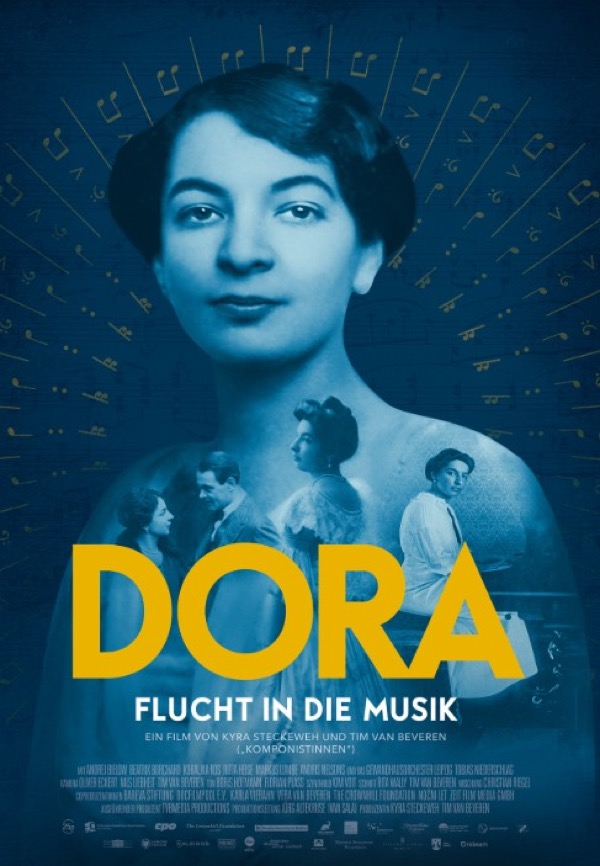
Poster for DORA – Escape into Music (2022)
Absolutely\! It’s an incredible story of a greatly talented composer and sheds invaluable light on the times in which she lived and worked.
By the end, you’ll have a whole new respect for an incredible composer and two talented storytellers in van Beveren and Steckeweh.
For more of the best in classical music, sign up for our E-Newsletter