Some years in classical music history are transitional, but 1826 was seismic.
In a single twelve-month span two hundred years ago, the final pillars of the Classical era were falling, while the Romantic era was being built up by a cadre of talented young composers.
By the end of 1826, the boundary between Classical restraint and Romantic expressivity was visibly cracking – and classical music would never sound the same again.
Today, we’re looking back two hundred years at some of the composers – from Beethoven to Schubert to Weber to Rossini to Berlioz to Chopin to Mendelssohn to Paganini – who made this year such an important one in classical music history.
1. Beethoven was writing his final string quartets.
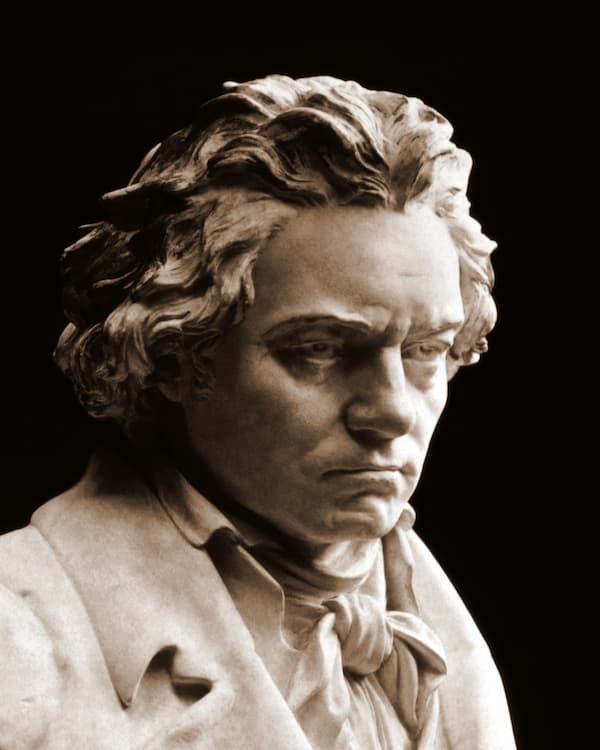
Photograph of bust statue of Ludwig van Beethoven by Hugo Hagen
In December 1825, Ludwig van Beethoven turned 55. By this point, he was completely deaf, relying on his inner ear to compose.
His String Quartet No. 13 in B-flat major (Op.130) had been commissioned a few years earlier by Prince Nicholas Galitzin.
Beethoven finished the groundbreaking quartet in late 1825, and it was premiered by the Schuppanzigh Quartet in Vienna in March 1826.
Beethoven String Quartet No. 13 Op. 130 in B flat major Alban Berg Quartet
The sixth and final movement, the Große Fuge (Gross Fugue), was panned at that first 1826 performance; it was considered to be too incomprehensible, too technically demanding, too avant-garde.
There were rumours that Beethoven had not only lost his hearing, but his sanity.
Beethoven: Große Fuge B Dur Op. 133 Alban Berg Quartett
That autumn, as his health deteriorated, Beethoven wrote a replacement finale. That finale would be the last piece of music he’d ever write, and he died just a few months later.
Beethoven also finished his String Quartet No. 14 (Op.131) in the middle of the year, and his String Quartet No. 16 (Op.135) in October.
Beethoven String Quartet Op. 135 in F Major – Ariel Quartet
These quartets became touchstones for every major chamber composer who followed. Beethoven had rewritten what a string quartet could be: its length, its harmonic language, its emotional intensity, its intellectual rigour, and more.
Igor Stravinsky said a hundred years later that the Große Fuge was “an absolutely contemporary piece of music that will be contemporary forever.” Its shocking premiere – followed by the abrupt end of Beethoven’s output later that year – marked a turning point in musical history.
2. Schubert’s genius was in full flower.
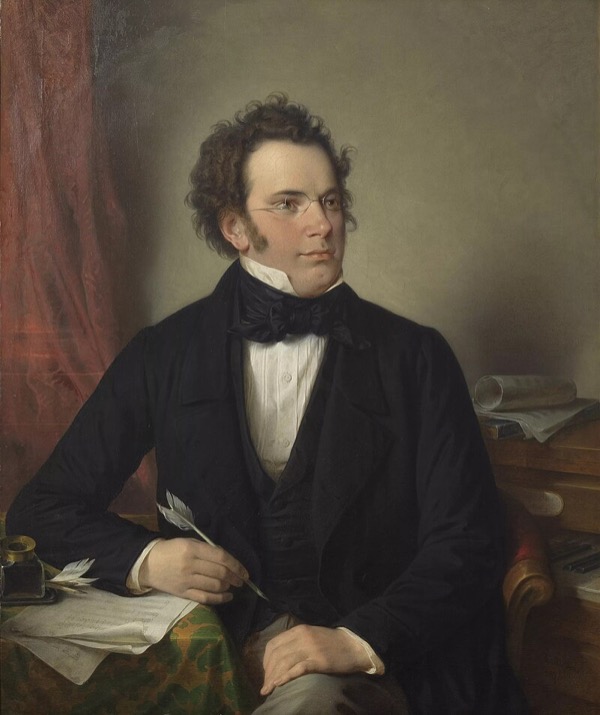
Wilhelm August Rieder: Franz Schubert, 1875 after 1825 watercolour (Vienna Museum)
As the 55-year-old Beethoven was winding down his career, his fellow Viennese composer Franz Schubert, at 29, was hitting a creative stride.
Sketches for his final completed symphony (his ninth, later nicknamed the Great for its scale and ambition) date from 1825, but he finished composing the work in the spring and summer of 1826.
Unable to fund a public performance of the work, Schubert dedicated it to Vienna’s Gesellschaft der Musikfreunde (“Society of Friends of Music”).
In appreciation, the Society gave a private performance the following year. It was determined to be too long and too difficult for the amateur musicians to make sense of.
Unfortunately, although it was later acknowledged to be a masterpiece, the symphony languished in a drawer for years. In fact, it wouldn’t be given its public premiere until 1839, when Mendelssohn presented it in Leipzig. By that point, Schubert was long dead.
Schubert: Große C-Dur-Sinfonie ∙ hr-Sinfonieorchester ∙ Andrés Orozco-Estrada
Schubert didn’t just write his Ninth Symphony that year. His String Quartet No. 15 (D. 887) and Piano Sonata in G major (D. 894) also date from 1826, as well as some of his most memorable lieder, including “Im Frühling” and “Ständchen.”
All of these works would become fixtures of the canon, and all had their roots in the year 1826.
Schubert – Ständchen D. 957, nº 4 | Julian Prégardien (tenor)
3. Romantic opera was developing, spearheaded by Carl Maria von Weber.
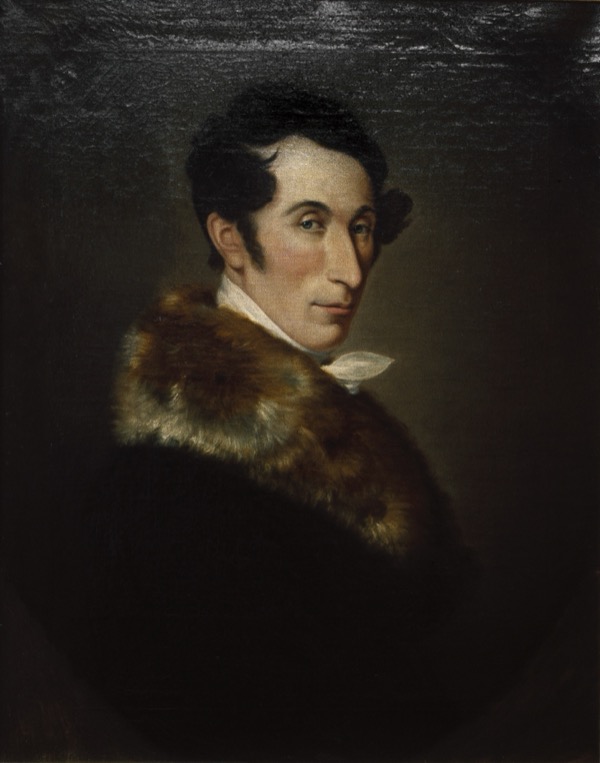
Ferdinand Schimon: Carl Maria von Weber
The most important operatic premiere of the year was arguably that of Carl Maria von Weber’s final opera Oberon, which was presented at Covent Garden, London, on 12 April 1826.
Carl Maria von Weber’s “Oberon” (1986)
The composer fought through late-stage tuberculosis to finish the work and conduct its premiere and early performances. His doctors advised him against accepting the commission, but he ignored their advice because he needed the money.
Unfortunately, the strain of composing, rehearsing, conducting, and schmoozing all combined to devastate his health. He died less than two months after the premiere, on 5 June 1826.
That same year, in October, Rossini mounted his first French opera, Le siège de Corinthe. Although written about ancient events, it was also a topical reference, given that the Greek War of Independence (1821–1829) was in full swing, and France was one of the Greek revolutionaries’ allies against the Ottoman Empire.
Lawrence Brownlee, Michael Spyres – Rossini: Le siège de Corinthe: “Céleste providence”
4. Young Romantic composers were just starting their careers.
That August, three future giants quietly took decisive steps that would dictate the shape of their future careers.
In August 1826, the 23-year-old Berlioz turned away from his medical training and enrolled at the Conservatoire, signalling his intention to become a professional composer.
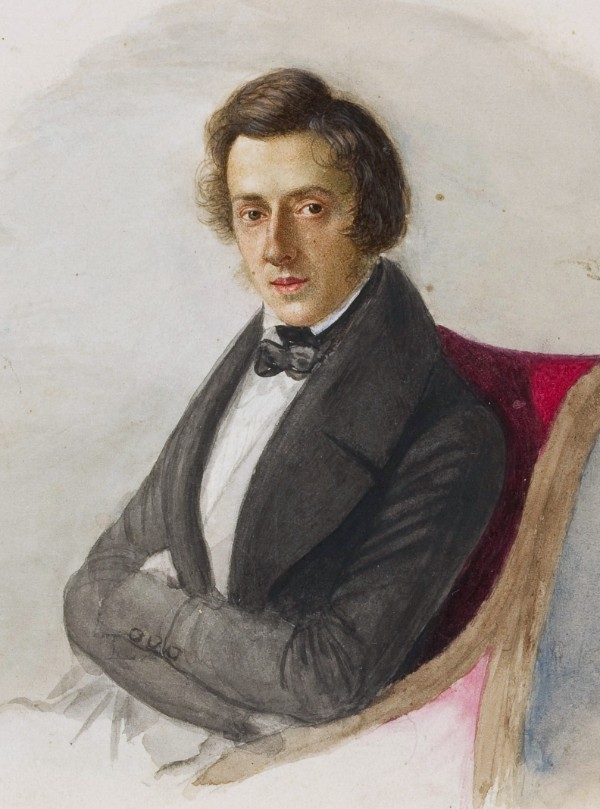
Maria Wodzińska: Frédéric Chopin, 1836 (Wasaw: National Museum)
On August 16th, Chopin gave his first public concert in the Polish spa town of Duszniki-Zdrój.
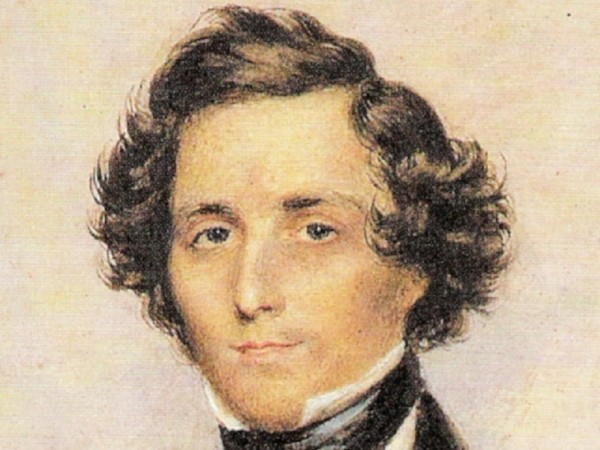
Felix Mendelssohn
Meanwhile, the 17-year-old Mendelssohn was composing one of the most perfectly crafted overtures in all of classical music history: his Overture to A Midsummer Night’s Dream. He finished it on 6 August 1826.
Mendelssohn: A Midsummer Night’s Dream Overture | Orquesta Reino de Aragón
Also noteworthy: although he was on the older end of the cohort of Romantic era composers, having been born in 1782, violinist Niccolò Paganini was writing his second violin concerto in 1826. It featured a famous finale that would come to be known as “La Campanella” (“The Bell”).
David Garrett plays Niccolo Paganini’s La Campanella Opus 7
Franz Liszt, just 15 years old at the time and a budding virtuoso himself, would borrow the theme twelve years later and make it into one of the most striking, and best-known, Romantic era piano showpieces ever written.
Lang Lang Franz Liszt – La Campanella 2012
5. The year exemplified the pivot from the Classical era to the Romantic era.
Beethoven’s deeply personal and expressive late quartets pushed the boundaries of the Classical era, opening new horizons for composers.
Schubert’s “Great” Symphony took the baton from Beethoven’s Ninth, encouraging the development of longer, large-scale works, paving the way for Wagner, Mahler, and other Romantic titans.
Meanwhile, in opera, Oberon and Le siège de Corinthe proved the popularity of folkloric and national heroic themes, helping to open the door to Romantic era grand opera.
Plus, a truly shocking number of great composers were taking their first steps in their careers.
Taken together, these developments make 1826 an important hinge date between the end of the Classical era and the beginning of the Romantic era, paving the way for quartets that shattered form and symphonies that stretched beyond anything audiences had heard before.
The year began with one deaf titan composing in silence; it ended with a generation of musical teenagers just beginning to dream of their futures. Between them all, the sound of the 19th century was being born.
For more of the best in classical music, sign up for our E-Newsletter